
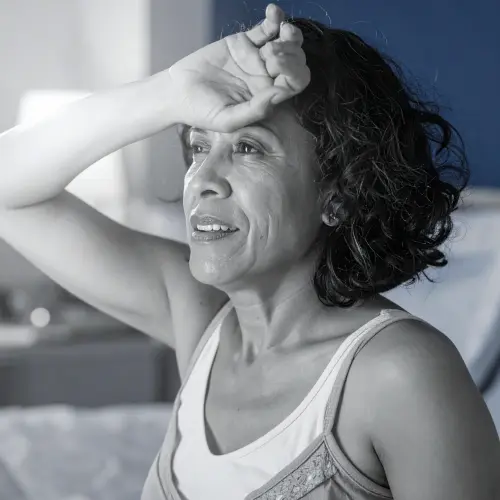
Discover hot flash relief options for menopause, from hormone therapy and Veozah to bed cooling, CBT, and sleep-saving night sweat tips.
Menopause hot flashes are not just brief waves of heat, they can break your sleep, drain your energy, worsen your mood, and make work, exercise, and intimacy harder than you need them to be. The real problem hot flash relief solves is lowering the frequency of vasomotor symptoms and cutting their intensity fast enough so you can function the next day. Current search results and clinical guidance from groups like NAMS, NICE, and major health systems all point to the same theme, the best relief depends on how severe your symptoms are, whether your nights are worse than your days, and whether hormone therapy is safe for you.
It is a sleep and quality of life issue, and both NAMS and Cleveland Clinic frame vasomotor symptoms as clinically meaningful, not cosmetic. Repeated night sweats can fragment your sleep, lift daytime fatigue, and worsen irritability, concentration, and sexual well being. If you’re waking up soaked and cold just a few minutes later only to be wide awake again, the problem is no longer “just menopause,” it becomes sleep loss, and sleep loss can amplify pain, anxiety, appetite changes, and blood sugar swings.
A common misconception is that you should just ride it out because menopause is natural, even though untreated suffering isn’t mandatory. Relief matters because broken sleep sends ripples throughout your day, and some women, especially in the perimenopause phase, may also explore herbal options or natural remedies as a complement to conventional treatments, though you should always discuss these with your doctor.
Hot flash treatment also has to fit your real life. If you have severe daytime flushing, you may need a prescription that reduces episodes throughout the day, while someone whose main problem is overheating at 2 a.m. might benefit most from a cooling strategy that works immediately, even if a medication takes days or weeks to build benefit.
Hot flashes happen because of estrogen-related changes in the hypothalamus, and the Mayo Clinic working with NIH describe this as a narrowed temperature comfort zone. Tiny shifts in your core temperature can trigger sudden heat, sweating, flushing, and chills. Night sweats happen the same way as these symptoms occur while you’re asleep, your body senses heat too strongly, tries to dump that heat fast, and you wake up sweaty. If your room is warm or your bedding traps heat, the episode often feels worse and lasts longer.
A common misconception is that sweat is the root problem, but sweat is simply your body’s way of cooling down, while the real issue is unstable thermoregulation. This is why your bedroom setup matters, because sleep experts commonly recommend a bedroom temperature between 60°F and 67°F, and with a bed fan like the bFan from www.bedfans-usa, many people can raise the room temperature by about 5°F and still sleep cool. Remember, neither a bed fan nor a Bedjet cools the air, they only use the cool air already in the room.
The best options depend on your goal, and both estrogen therapy and the bFan solve different parts of the problem. Hormone replacement therapy (HRT) is still the most effective medical treatment for many women. Systemic estrogen, with progesterone added if you still have a uterus, often cuts hot flash frequency by roughly 70 percent to 90 percent and may improve sleep, vaginal symptoms, and even offer bone protection.
The right choice comes from considering your risk, symptom pattern, and goals, and both NAMS and NICE use that framework. If your symptoms are severe, frequent, or causing sleep destruction, you likely need more than just generic advice to “stay cool.”
Here’s a simple way to approach the decision:
Pro tip, don’t judge a treatment too quickly, because a bed cooling approach works right away while many prescriptions need days to weeks before you really know if they fit.
Hormone therapy is usually more effective overall, and estrogen outperforms paroxetine in most studies. Fezolinetant has narrowed the gap a bit, but hormone replacement therapy still wins for broad relief when it is safe to use. If you can use systemic estrogen, it remains the benchmark, usually starting to work within about 2 to 4 weeks, sometimes sooner, and it helps with sleep, vaginal dryness, and bone health. That broad effect is why it stays first line for many healthy women who are younger than 60 or within about 10 years of menopause onset.
Nonhormonal treatments are often a better choice when hormone therapy is contraindicated, unwanted, or too risky. Fezolinetant is a strong recent example, targeted and nonestrogenic, and relatively fast. SSRIs and SNRIs help some people, though the average effect is smaller, and gabapentin can be a smart pick when nighttime symptoms dominate.
The trade off is simple, hormone therapy usually delivers the biggest relief, but it isn’t right for everyone. Nonhormonal options are safer for many with clot risk, estrogen-sensitive cancer history, or a strong desire to avoid hormones, but they may provide less relief or different side effects.
A common misconception is that low dose vaginal estrogen is great for dryness and urinary symptoms, but it isn’t enough to treat hot flashes.
The best sleep setup follows well-accepted sleep guidance, and most sleep experts recommend a bedroom temperature between 60°F and 67°F. Using a bed fan like the bFan, you can move that cool room air across your body, and many people find they can raise the room temperature by about 5°F while still sleeping comfortably. This is especially useful if you share a bedroom with someone who runs colder or if you’re looking to lower your air conditioning costs.
Pro tip, cooling pillows and mattress pads can help, but if your chest and abdomen are overheating under the covers, direct airflow usually matters more than having a cold surface alone.
For value and simple cooling, a bed fan like the bFan holds a clear edge over BedJet, because one Bedjet is more than twice the price of a single bed fan. Keep in mind, a dual zone Bedjet, which provides dual-zone microclimate control, is over a thousand dollars and more than twice the price of two bed fans, while the bFan offers dual-zone microclimate control using two fans at a much lower cost. The biggest misconception here is that either device makes cold air; neither the bed fan nor the Bedjet cools the air, they only use the cool air already in the room to cool your bed. Remember, the original bedfan came to market several years before Bedjet was even thought of, and the bFan uses only 18 watts on average, with timer controls to ensure you reach optimal sleep conditions when used with tight weave sheets.
They make more sense when hormones are risky, unwanted, or not your main need. Fezolinetant and options like venlafaxine are common examples. Your choice should follow your medical history and specific symptom pattern. If you have a history of blood clots, stroke, estrogen-sensitive cancers, or simply do not want hormone therapy, nonhormonal prescriptions take priority. Fezolinetant is especially relevant because it targets vasomotor symptoms directly and is neither an antidepressant nor a hormone. If you also struggle with anxiety or depression, an SNRI like venlafaxine might give you two benefits at once, while gabapentin at night can be more practical if your biggest problem is waking up sweaty and unable to fall back asleep. Keep in mind that SSRIs and SNRIs can cause nausea, sexual side effects, or sleep changes, and gabapentin might cause dizziness or sedation, so the side effect profile matters.
A common misconception is that “nonhormonal” means “side effect free,” when it really just means the side effects are different.
A good visit is specific, and your OB GYN or primary care clinician can make faster decisions if you bring concrete details. Menopause care works better when you lead with your symptoms, safety history, and the impact on your sleep.
Pro tip, be sure to mention directly if sleep is your main issue, because that one sentence often changes the treatment choice.
Some lifestyle changes can help, and data from WHI with CBT trials show strong support for weight loss, exercise, and coping strategies. Lifestyle care is rarely enough for severe symptoms, but it can make moderate symptoms far easier to manage. Stress management techniques such as structured cognitive behavioral therapy, mindfulness, or even practices like hypnosis and acupuncture can play a role for some women, along with natural remedies like herbal supplements or vitamin E. Always consult your doctor before trying something new. Weight matters because higher body fat tends to be linked with worse vasomotor symptoms, and even modest weight loss can improve your hot flash burden. Exercise is beneficial too, not because it “sweats out” menopause, but because it improves sleep quality, mood, insulin sensitivity, and body temperature regulation over time. CBT is not about positive thinking, it is a structured way to reduce stress, anticipatory anxiety, and sleep disruption that can amplify hot flash suffering, with trial data often showing roughly 30 percent to 50 percent improvement in distress and coping. Triggers vary from person to person, and while alcohol, spicy food, hot drinks, smoking, and stress are common, keeping a diary beats guessing. And remember, your sleep environment counts too. Sleep experts recommend 60°F to 67°F, and a bed fan like the bFan can often let you keep the room about 5°F warmer while still cooling your body enough for deeper sleep, which can mean real savings on air conditioning, especially in warm climates.
Most supplements are weaker than advertised, and black cohosh with soy are the two names most often mentioned. Soy may help a little in some cases, while black cohosh has mixed evidence and rare liver safety concerns. To put it briefly, no supplement matches the effect of hormone therapy. Soy isoflavones may offer mild benefit, but results are usually modest and inconsistent. Some women feel better on them, while many do not notice enough change to justify the cost. Black cohosh is even more uneven, with some trials showing small improvements and others showing no meaningful benefit compared to a placebo. Supplement quality varies widely, so what you buy may not always match what the label promises. A common misconception is that natural means automatically safer; supplements can interact with medications, affect the liver, and even delay the use of treatments that actually work. If you want to try a supplement, do it with a plan, give it a defined trial period, tell your doctor, and stop if it isn’t clearly helping.
If you’re exploring more natural remedies, you might consider additional alternative approaches. Some women report that herbal supplements, including vitamin E, or complementary therapies such as acupuncture and hypnosis, can help ease the discomfort of hot flashes, and these options might be used as part of a comprehensive stress management plan during perimenopause. While the evidence for these natural remedies is generally not as robust as that for conventional treatments, they can sometimes be used alongside standard hormone replacement therapy (HRT) or nonhormonal medications. As always, discuss these options with your doctor to determine the best approach for you.
Hot flashes are usually related to menopause, but conditions like thyroid disease and lymphoma can mimic these symptoms and matter greatly. New episodes of drenching sweats accompanied by fever, weight loss, chest symptoms, or medication changes definitely deserve a thorough medical review. Most midlife night sweats are vasomotor symptoms, yet not every episode of sweating is due to menopause. Hyperthyroidism, infection, obstructive sleep apnea, medication side effects, low blood sugar, and even some cancers can cause nighttime sweating. Here’s a practical rule: if your symptoms start suddenly, feel out of pattern, and come with fever, unexplained weight loss, a racing heartbeat, cough, swollen lymph nodes, or severe daytime weakness, it’s time to get evaluated. The same applies if you are taking a medication known to trigger sweating, including some antidepressants, steroids, diabetes drugs, and pain medicines. Also, ask for help if your hot flashes are causing insomnia, mood changes, or relationship strain, even without those red flags. You do not have to wait until symptoms become extreme.
The core answers are consistent across NAMS and Mayo Clinic guidance, but the best choice still depends on your sleep, risk profile, and symptom severity. Short answers help, yet the pattern of your symptoms usually decides the right plan.
These sources, including NAMS and NICE, reflect current evidence on menopause treatment, sleep temperature, and nonhormonal options. They are good places to verify treatment claims and compare your choices with guideline-based care.
Remember, if you’re looking for a direct, quiet, and low-energy solution that has been around the block, check out the bFan from www.bedfans-usa, a sensible solution that many people find helpful for those pesky night sweats while keeping sleep quality high.
Copyright 2005 - present - Tompkins Research, Inc. & Kurt W. Tompkins All Rights Reserved DO NOT COPY. bFan® and the word bfan® in any format is a registered trademark of Kurt W. Tompkins the word BFAN® in any format shall not be used without written permission of the mark owner. This includes specifically Brookstone where you like to bait and switch, do not use my mark to bait customers.