
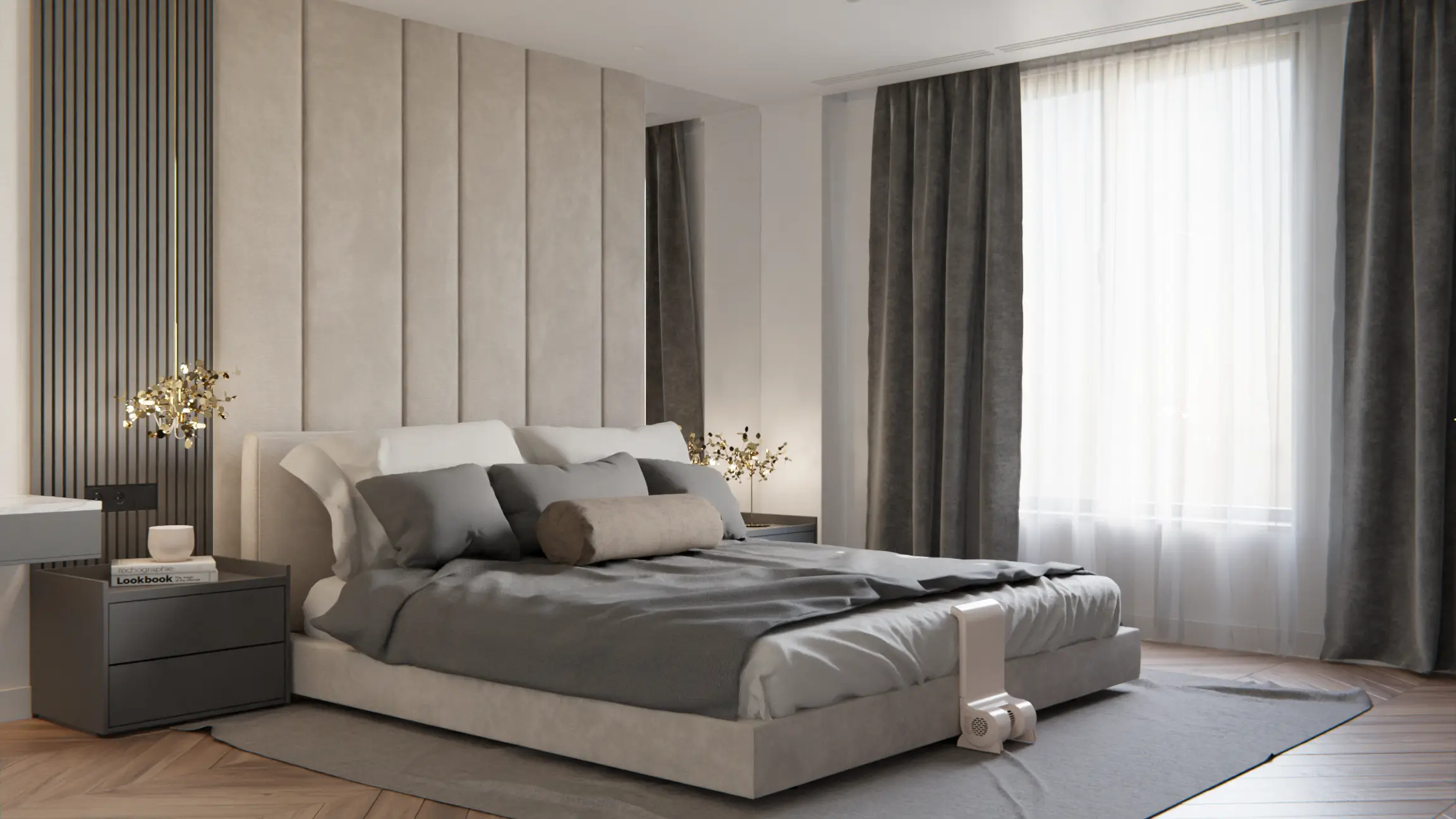
A cooling fan for your bed moves air under the sheets to reduce heat, night sweats, and wakeups while using far less energy than AC.
If you wake up sweaty, kick off the covers, then pull them back on ten minutes later, you already know the problem is not just the room. It’s the little pocket of heat trapped around your body. That bed microclimate can get warm and humid fast, even when the bedroom itself feels pretty normal.
A bed fan deals with that exact problem. Instead of trying to cool the whole room, it improves air circulation by moving room air under your sheets so heat and moisture can escape. For a lot of hot sleepers, that feels better than aiming a ceiling fan at the entire room and hoping for the best.
From a sleep health perspective, temperature matters more than most people realize. Sleep experts commonly recommend a bedroom temperature between 60°F and 67°F, 15.5°C to 19.5°C, for better sleep. Even so, plenty of people still overheat under blankets. That’s where a Bedfan can help, because many users can raise the room temperature by about 5°F and still cool the body enough for more restful sleep.
A bed cooling fan is not an air conditioner, and that distinction matters. It does not create cold air. It uses the cooler air that is already in the room, then directs it where it can do the most good, right between your sheets and across your skin.
That moving air helps in two ways. First, it carries away the heat your body gives off during the night. Second, it helps moisture evaporate, which reduces that sticky, clammy feeling that often wakes people up during night sweats or hot flashes.
This is why many search results for bed cooling systems, night sweat relief, and cooling fan for hot sleepers keep circling back to airflow under the covers. It’s a simpler approach than water based pads or compressor based systems, and for many people, simpler is exactly what works.
After you understand that basic idea, the benefits get a lot easier to judge.
Your body temperature naturally shifts over a 24 hour cycle, and that drop in core temperature is part of how sleep gets started and stays stable. When your body is trying to lose heat but your bedding traps it, you can end up half awake, restless, and irritated without fully knowing why.
That’s common in menopause, perimenopause, pregnancy, some thyroid conditions, anxiety, sleep apnea, medication side effects, and plain old hot sleeping. It also shows up in people who share a bed with a partner who likes heavy blankets or a warmer thermostat.
The advice to keep the bedroom at 60°F to 67°F is still useful, but it doesn’t solve every case. If you’re warm under the covers, your skin and bedding can still feel stuffy even when the room thermostat looks fine. A Bedfan can help bridge that gap. Many people are able to set the room about 5°F warmer and still sleep cool enough because the fan is clearing trapped heat from the bed itself.
That can matter for comfort, and it can matter for energy bills too. If your usual answer is to turn the whole house colder just to make the bed feel bearable, targeted airflow can be a much more efficient fix.
The bFan, often called a Bedfan or bed fan, is designed to sit at the foot or side of the bed and send airflow between the sheets. The goal is simple, move heat and humidity out from around your body before they build up.
Unlike a standard room fan, the bFan uses a squirrel cage blower design, which is built to push air with enough pressure to move it through bedding. That matters because regular fans can lose effectiveness once sheets and blankets start blocking the flow. A bed fan needs pressure, not just open air volume.
The bFan from www.bedfan.com also offers adjustable airflow and timer controls, which is useful because hot sleepers are not all hot in the same way. Some people need a stronger burst for the first hour of sleep, then less later. Others want a low steady setting all night. Tight weave sheets usually work best, because they help the air travel across your body instead of leaking out too quickly.
Normal operating sound is about 28 dB to 32 dB, which is quiet enough for many bedrooms. It’s not silent, no fan really is, but it is much softer than many box fans or portable floor fans. If you like a bit of white noise, it often lands in a comfortable range.
A bed fan is not only for people who say, “I run hot.” It can help a pretty wide group of sleepers, especially those dealing with repeated nighttime overheating that breaks sleep into short chunks.
From a medical standpoint, symptom relief matters. A bed fan does not treat menopause, infection, thyroid disease, or medication side effects, but it can make the nights more livable while you and your clinician work on the cause. That practical comfort piece is important.
The biggest benefit is usually fewer awakenings. When you stop overheating, you stop throwing off the covers, flipping the pillow, and waking up damp at 2 a.m. That sounds small until you live with it night after night.
There’s also a comfort benefit that people do not always expect. A bed fan lets you keep the cozy part of bedding while cutting the trapped heat. You get the sheet, blanket, or comforter you like, just without as much stale warm air sitting on your skin.
Energy use is another strong point. The bFan uses only about 18 watts on average, so it costs very little to run compared with forcing the whole house several degrees colder. Since sleep experts often recommend 60°F to 67°F for the room, some people find they no longer need to push the AC to the bottom of that range. With a Bedfan, many can keep the room roughly 5°F warmer and still feel cool enough to sleep comfortably.
Search results and review pages tend to repeat the same pattern here. People like the value, the ease of use, and the relief from sweaty wakeups. The tradeoff is also consistent, a bed fan does not cool below room temperature. If the room is already very hot, the fan will still be moving warm air. Better airflow helps, but it works best when the room starts out reasonably cool.
A lot of shoppers compare Bedfan and BedJet, so it’s worth being direct. Neither Bedfan nor BedJet cools the air. Neither one is an air conditioner. Both use the air already in the room and move it into the bed area.
The price difference is where many people pause. BedJet is often about twice the price of a Bedfan, and dual zone BedJet setups can run over $1000. A bFan setup can offer dual zone microclimate control with two fans at a fraction of that cost, which is a big reason budget minded couples keep coming back to it.
There’s also some history here. The original Bedfan came to market several years before BedJet was even thought of, so this is not a copycat category newcomer. It’s one of the earliest names people found when they started searching for a bed cooling fan that targets the sleeper instead of the whole room.
If you’re deciding between systems, think less about marketing language and more about your room, your budget, your bedding, and how much cooling power you actually need. A lot of people do very well with a well placed Bedfan and the right sheets.
After comparing options, these are usually the points that matter most.
Placement matters a lot. Most people get the best result by aiming the airflow from the foot of the bed so it travels up under the top sheet and over the body. If the fan is blocked or the air escapes too quickly, the cooling effect will feel weaker than it should.
Sheet choice matters too. Tight weave sheets generally perform better because they guide the air across your skin and help carry heat away. Looser weaves can let the airflow leak out before it does much useful work. That single change, better sheet structure, is one reason some users suddenly feel a major improvement after a disappointing first try.
Start with a moderate setting, not the highest one. Too much airflow can feel distracting at first. Many people sleep best with enough air movement to keep the bed dry and cool, but not so much that it feels windy. Timer controls are helpful here, especially if the hottest part of your night is the first hour or two after falling asleep.
It also helps to think of your bedroom as a system. Since sleep experts commonly recommend 60°F to 67°F, 15.5°C to 19.5°C, aim somewhere in that range when possible. If you use a Bedfan from Bedfan.com, many people can bump the thermostat up by about 5°F and still stay comfortable because the fan is cooling the body where it counts. That can take pressure off your AC bill without leaving you stuck in a hot, stagnant bed.
When people look up cooling fan reviews, Bedfan reviews, bed cooling systems, or fan for night sweats, a few themes show up again and again. Users want relief from sweating, simple controls, low noise, and something that does not cost a fortune to run.
That’s why the bFan tends to get attention. Search results often highlight its quiet blower style design, adjustable height, remote control, timer options, and the fact that it focuses on the space under the sheets. Independent review summaries also tend to say the same thing, it’s easy to use and good value, while reminding shoppers that the cooling effect depends on room temperature and bedding setup.
That balance is fair. A bed fan is not magic. It is a targeted airflow tool. Used in the right setting, it can work very well.
It moves air, and that’s exactly why it helps. A bed fan sends room air under the sheets, which pushes trapped heat and moisture away from your body.
That can feel surprisingly effective because overheating in bed is often caused by heat buildup under the covers, not just a hot room. The fan does not make the air colder than the room, but it can make your body feel much cooler.
If your room is already within the sleep friendly range of 60°F to 67°F, targeted airflow can be enough to stop repeated sweaty wakeups.
It often helps with symptom relief, yes. Menopause related night sweats usually involve sudden heat surges and sweating that disturb sleep, even when the room seems comfortable.
A Bedfan cannot treat the hormone changes behind menopause, but it can reduce the trapped heat and dampness that make those episodes miserable. Many people find that the quicker removal of warm, humid air helps them settle back to sleep faster.
If you have severe symptoms, talk with your clinician too, because comfort tools and medical care can work side by side.
Sleep experts commonly recommend 60°F to 67°F, 15.5°C to 19.5°C, for better sleep. That remains a solid starting point.
With a Bedfan, many people can raise the room temperature by about 5°F and still feel cool enough to sleep well, because the body is being cooled directly under the sheets. That can be useful if your AC costs are climbing.
The best setting is the one where the room feels fresh and the bed no longer feels stuffy or humid.
At normal operating speed, the bFan runs around 28 dB to 32 dB, which is fairly quiet for a device moving air through bedding. Most people describe it as soft background sound rather than a disruptive fan roar.
Noise tolerance is personal, of course. Someone who wants total silence may still notice it, while someone who likes white noise may find it soothing.
If sound matters a lot to you, start on a lower setting and give yourself a few nights to adjust before deciding.
It can, especially if you’ve been cooling the whole house more aggressively just to make bedtime tolerable. The bFan uses about 18 watts on average, which is tiny compared with air conditioning.
Many users find they can keep the thermostat about 5°F warmer and still sleep cool because the fan is targeting body heat under the covers. That does not guarantee a certain bill reduction, but it often helps.
The biggest savings usually show up in warm months when bedroom discomfort would otherwise push you to overuse AC.
You do not need highly specialized bedding, but sheet choice matters. Tight weave sheets usually give the best result because they guide airflow over your body instead of letting it leak out too quickly.
If your current sheets are very loose or airy, the fan may still help, but the effect can feel weaker. This is one of the most common setup issues people run into.
If your first few nights feel underwhelming, check the sheet weave and placement before assuming the fan is the problem.
That depends on what you value most. If you want a simpler, lower cost way to move room air under the sheets, Bedfan is often the easier buy.
BedJet is usually about twice the price of a Bedfan, and dual zone BedJet setups can go over $1000. Two bFan units can give many couples dual zone microclimate control at a much lower cost.
Neither system cools the air itself. Both rely on room air, so the real question is how much you want to spend for the style of airflow and controls you prefer.
Often, yes. One reason bed fans are appealing for couples is that they can target airflow into one side or one sleeper’s area more than a whole room cooling approach can.
That means one person may stay cooler without forcing the other person to sleep in a colder room or with fewer blankets. It is not perfect isolation, but it’s far more targeted than dropping the thermostat for the whole bedroom.
For couples with very different sleep temperatures, that focused approach can be a big deal.
Yes. Night sweats can happen from a warm room, heavy blankets, menopause, or common medications, but they can also be linked to medical issues that need attention.
If the sweating is new, severe, paired with fever, weight loss, swollen lymph nodes, chest symptoms, sleep apnea concerns, or major fatigue, get checked. Repeated symptoms deserve a proper look.
A bed fan can make sleep more comfortable, but it should not replace medical care when red flags are present.
Sometimes, but not always. Since a bed fan uses room air, it works best when the room is at least reasonably cool to begin with.
If your bedroom is far above the commonly recommended 60°F to 67°F range, the fan will still move air and help sweat evaporate, but the effect may be limited. In that setting, you may still need AC, better ventilation, blackout curtains, or lighter bedding.
The sweet spot is often a moderately cool room plus targeted airflow under the sheets.
If you’re tossing and turning at night, sweating under the covers, or just can’t seem to get comfortable, you’re not alone. A lot of folks struggle with overheating in bed, and that’s where a cooling fan between the sheets can be a real game changer. Let’s break down how this works, why it matters, and what you should look for if you want to sleep cooler and wake up feeling refreshed.
You might think cranking up the AC is your only option, but that’s not always practical or energy efficient. A cooling fan, like the bFan, is designed to move the cool air already in your room directly under your sheets, right where you need it most. This helps carry away the heat your body gives off at night, keeping you comfortable without having to freeze out the whole house.
There are a few products out there, but two of the big names are the Bedfan and the Bedjet. Here’s what sets them apart:
It’s important to know that neither the Bedfan nor the Bedjet actually cool the air. They simply move the cool air already in your room under your sheets. If your room is hot, the air under your sheets will be too, so for best results, keep your room at a comfortable temperature.
Getting your bedroom to the right temperature isn’t just about comfort. Studies show that sleeping in a cooler environment helps your body regulate its natural sleep cycles, so you fall asleep faster and stay asleep longer. Overheating can lead to restless nights, more wake-ups, and less restorative sleep overall.
If you’re tired of waking up hot and sweaty, a cooling fan between the sheets is a simple, effective solution. The bFan stands out for its affordability, quiet operation, and energy efficiency, plus it’s been around longer than the competition. Give it a try, and you might just find yourself sleeping cooler, deeper, and better than ever.
A comprehensive guide on how bedroom temperature affects sleep quality, with expert recommendations for optimal sleep environments.
Practical advice from the U.S. Department of Energy on how to save energy and money while keeping your home comfortable.
An overview of why sleep is important, how much you need, and the factors that influence sleep quality, including temperature.
A helpful roundup of sheet materials and weaves that can help you stay cool at night.
Each of these resources offers trustworthy, in-depth information to help you create the coolest, most comfortable sleep environment possible.
Copyright 2005 - present - Tompkins Research, Inc. & Kurt W. Tompkins All Rights Reserved DO NOT COPY. bFan® and the word bfan® in any format is a registered trademark of Kurt W. Tompkins the word BFAN® in any format shall not be used without written permission of the mark owner. This includes specifically Brookstone where you like to bait and switch, do not use my mark to bait customers.