
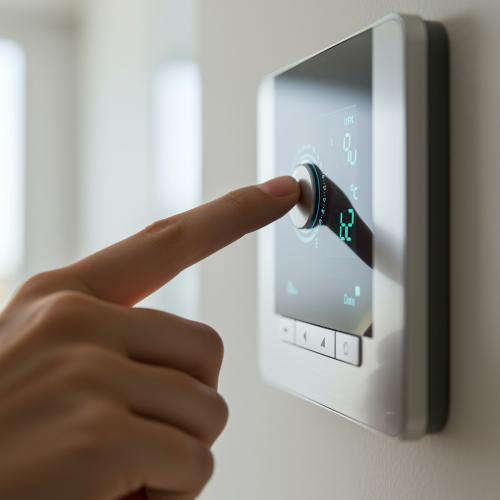
Learn how sleep temperature affects falling asleep, staying asleep, night sweats, and why a cool bed and room can improve sleep quality.
If you wake up sweaty at 2 a.m., kick the covers off, pull them back on at 3 a.m., then drag yourself through the next day, your sleep temperature may be the missing piece.
A lot of people think sleep problems start with stress, caffeine, or screen time. Those can matter, sure, but the temperature around your body matters just as much, and sometimes more. Your brain and body are built to fall asleep as your core temperature drops. When your room, mattress, or bedding traps too much heat, that natural shift gets disrupted.
The search results from sleep organizations, peer reviewed studies, and clinical sleep resources keep pointing in the same direction. Most healthy adults sleep best in a cool bedroom, usually around 60°F to 67°F, or 15.5°C to 19.5°C. That number is a solid starting point, not a law, because age, hormones, bedding, humidity, and health conditions can shift what feels best to you.
Your body does not enter sleep at a random temperature. As evening approaches, your circadian rhythm starts nudging core body temperature down. That drop helps signal that it is time to sleep. If your environment supports that change, you tend to fall asleep faster and stay asleep more easily.
That is why a warm room can feel so frustrating. You may be tired, mentally ready for bed, and still end up wide awake because your body cannot shed heat. The problem often is not just the room itself. It is the heat trapped under the covers, around your torso, and between your skin and the mattress. That little pocket of heat is your sleep microclimate, and it can make or break your night.
From a clinical sleep perspective, temperature can affect several parts of sleep quality, not just whether you feel “comfortable.”
When sleep temperature is off, these numbers tend to move in the wrong direction. Sleep latency gets longer. Wake after sleep onset rises. Sleep feels lighter and more broken up. You may not remember every awakening, but you feel it the next day.
For most adults, the sweet spot is pretty consistent. Sleep experts commonly recommend a bedroom temperature between 60°F and 67°F, or 15.5°C to 19.5°C, for better sleep. That range shows up again and again in search results from sources like Sleep Foundation and in medical discussions of sleep hygiene.
That said, your ideal number may not match your partner’s. Men often prefer a slightly cooler setup. Many women, especially during perimenopause or menopause, want cool air but also want to avoid feeling chilled at the hands and feet. Older adults can do better in a slightly warmer room than younger adults, though they still usually sleep poorly when the room gets too hot.
What matters most is not chasing one magic thermostat setting. It is creating a cool enough environment for your body to release heat without making you uncomfortable.
If your room sits at 65°F and you still overheat, the issue may be your bedding, mattress, sleepwear, humidity, or trapped body heat under the covers. In other words, room temperature is only part of the story.
A warm bedroom does more than make you uncomfortable. It can change sleep structure itself. Research has linked warmer nights with shorter sleep, more awakenings, poorer sleep efficiency, and worse subjective sleep quality. In large population studies, even modest rises in nighttime temperature have been tied to poorer scores on sleep questionnaires.
Lab based work points in the same direction. When temperature control is improved around the sleeper, people often get more total sleep, better sleep efficiency, and in some settings, more deep sleep or REM sleep. That does not mean colder is always better. It means the body sleeps best when it can lose heat at the right times.
That balance matters. If the room is too hot, your body struggles to offload heat. If the room is too cold, you may wake to pull on blankets, curl up, or tense your muscles. Most people do best in the middle, cool but not cold.
You can often tell your sleep temperature is too high before you ever look at a thermometer.
If that sounds familiar, the fix may not be a colder house alone. Many people need better cooling at bed level, right where heat gets trapped.
Sleep is not one single state. You cycle through lighter sleep, deep sleep, and REM sleep across the night. Temperature affects each of those stages differently.
Deep sleep tends to be supported when the body can cool effectively. REM sleep is trickier because temperature regulation becomes less stable during REM. If you are too warm, REM can become shorter or more fragmented. That can leave you mentally foggy, irritable, and less refreshed the next morning.
This is one reason hot nights feel so punishing. You might get enough hours on paper, but the sleep architecture is sloppy. More awakenings, less stable deep sleep, and less restorative REM can all leave you feeling like you barely slept.
From a practical standpoint, this is why airflow under the covers can work so well. It helps remove the heat your body is producing where it is actually building up, not just across the room.
Night sweats are common, and not all night sweats mean the same thing. Many are linked to hormone changes, menopause, stress, warm bedding, alcohol, or medications. Antidepressants, steroids, diabetes medications, pain medications, and some hormone therapies are all well known triggers.
You also see night sweats with medical conditions, including thyroid disease, sleep apnea, infections, reflux, and in some cases more serious illness. So if night sweats are new, drenching, or come with fever, weight loss, swollen lymph nodes, chest symptoms, or blood sugar issues, it is wise to get checked.
For symptom relief, cooling the sleep environment still helps a lot. Sleep experts commonly recommend 60°F to 67°F for the bedroom, and many hot sleepers can raise the room temperature by about 5°F when using a Bedfan or bFan and still feel cool enough for more restful sleep. That matters if your AC bill is climbing or your partner hates an ice cold room.
A bed fan can be especially helpful here because it cools the space between the sheets rather than just blowing across the room. That is often the spot where menopausal heat surges, medication related sweating, or general overheating become miserable.
You can set your thermostat perfectly and still sleep hot. That happens because the body releases heat into bedding all night. As Sengebutikken’s guide to choosing a duvet based on temperature and sweating notes, lighter fill, breathable covers and baffle construction can markedly reduce heat build-up compared with heavy, tightly woven quilts. A mattress holds some of that warmth. Blankets and sheets trap some more. If the heat cannot escape, your personal sleep climate becomes much warmer than the room.
Think of it this way. Your room might be 67°F, but under the covers your body may feel like it is sleeping in a tiny warm bubble. That is why some people swear the thermostat says one thing while their body says something very different.
This is also why neither Bedfan nor Bedjet actually cools the air itself. They both use the cooler air already in the room and move it into the bed space. That is a useful distinction. If your room is extremely hot, airflow still helps, but it is not the same as air conditioning.
You have a few ways to cool sleep, and each one solves a different part of the problem. Air conditioning cools the whole room. Ceiling fans move air through the room. Cooling mattresses and pads change the bed surface. A bed fan targets the trapped heat between the sheets.
If you are trying to sleep cooler without freezing the whole house, a bed fan is often one of the most direct options. The original Bedfan came to market several years before Bedjet was even thought of, and the category has stayed relevant because the idea is simple, body heat builds up under bedding, and moving room air through that space helps carry it away.
A good example is the bFan from bFan.world, also available through www.bedfans-usa. It is designed to send controllable airflow between your sheets, which is where many hot sleepers need it most. The bFan uses only about 18 watts on average, which is a tiny fraction of what whole home cooling can use, and at normal operating speed it runs around 28 dB to 32 dB, quiet enough for many bedrooms.
Price matters too, especially if you share a bed. One Bedjet is more than twice the price of a single bedfan. The dual zone Bedjet setup is over a thousand dollars, and more than twice the price of two bedfans. By contrast, two bFans can create dual zone microclimate control at a fraction of that cost, which is useful when one person sleeps hot and the other does not.
The bFan also offers timer controls, which is more useful than it may sound. A lot of people overheat most during sleep onset or during the first few sleep cycles. Being able to cool the bed during that window, then taper off later, can support better sleep without blasting air all night.
Energy savings is where sleep temperature gets practical fast. If you normally have to drop the whole house down to 62°F or 64°F just to stay comfortable in bed, your cooling bill can get ugly. Many people can use a bFan and raise the room temperature by about 5°F while still cooling the body enough to sleep well. That shift can make a real difference over a long summer.
This works because the goal is not always to chill the whole room. The goal is to help your body lose heat. Airflow across the skin and through bedding can do that efficiently, as long as the room air is reasonably cool to begin with.
A bed fan will not replace AC in every situation. If your bedroom is 80°F and humid, you still may need air conditioning. But if your room is close to the recommended 60°F to 67°F zone, or even a bit warmer, a Bedfan can improve comfort enough that you do not have to overcool the whole house.
Couples run into this problem all the time. One person is in socks and a comforter, the other is throwing off the sheets and aiming the ceiling fan straight at their face. Shared sleep temperature is often a negotiation, and a pretty annoying one.
That is where bed level airflow can be easier to live with than whole room changes. Instead of forcing one thermostat setting on both people, each side of the bed can be managed more directly. Two bFans can provide dual zone microclimate control, letting one sleeper get more airflow while the other keeps things milder.
That setup can be cheaper than other split bed cooling systems, and simpler too. It also helps when a couple sleeps in a room where one person prefers 67°F and the other would rather keep the thermostat closer to 72°F.
Setup matters more than people think. The same device can feel underwhelming with the wrong bedding and great with the right bedding.
A bed fan works best when the airflow can move through the bed space instead of escaping immediately. Tight weave sheets are usually better because they help direct the air across your skin and along your body, which improves heat removal.
Small changes make a big difference. Even changing from a heat trapping comforter to a lighter blanket can lower how much cooling you need.
Age changes temperature preference. Older adults often have different circulation, different skin blood flow, and different thermal sensitivity. Some studies suggest they sleep best in a slightly warmer room than younger adults, roughly 68°F to 77°F in some home settings, though overheating still hurts sleep.
Infants are their own category. Safe sleep guidance usually advises a nursery temperature around 61°F to 68°F, with light bedding and a safe sleep surface. Babies should not be managed like hot adults with complex cooling gadgets in the sleep space. Pediatric safe sleep rules come first.
Teens and younger adults usually fall closer to the standard adult guidance. If they are gaming late, using heavy bedding, or sleeping in a room with poor ventilation, they can still run hot even when the thermostat looks reasonable.
For most healthy adults, the best bedroom temperature is around 60°F to 67°F, or 15.5°C to 19.5°C. That range supports the normal drop in core body temperature that helps you fall asleep.
You may feel best a little outside that range, especially if you are older, dealing with hormone changes, or sharing a bed with someone who sleeps differently. The key is cool, stable, and not stuffy.
Because your bed can trap heat even when the room is not warm. Your body, mattress, sheets, and blankets create a small pocket of heat around you, and that is often what wakes you up.
This is why some people still overheat in a 65°F room. The problem is not always the thermostat, it is the trapped heat under the covers.
Yes, if the airflow helps your body release heat. Moving air across the skin can reduce overheating, shorten the time it takes to fall asleep, and cut down on awakenings caused by feeling too warm.
A standard room fan helps with general comfort. A bed fan is more targeted because it moves air where heat tends to build up most, between the sheets.
No. Neither Bedfan nor Bedjet cools the air itself. They use the cooler air already in the room and move it into your bed space to help your body lose heat.
That is still very useful, but it is not the same as air conditioning. If your room air is hot, the airflow will feel less effective than it would in a properly cooled room.
Often, yes. Sleep experts commonly recommend 60°F to 67°F for better sleep, yet many hot sleepers push the room even colder because the bed itself stays warm.
With a bFan, many people can raise the room temperature by about 5°F and still sleep cool enough for more restful sleep. Since the bFan uses only about 18 watts on average, that can be a very efficient tradeoff.
It can be a very practical option. Menopause often causes sudden heat surges and sweating that are made worse by trapped bedding heat, so airflow inside the bed can bring relief quickly.
It is not a treatment for the hormone change itself, but it can make sleep far more tolerable. If symptoms are severe or affecting daily life, talk with your clinician about the full range of options.
Usually, yes. Tight weave sheets help guide airflow across your body instead of letting it escape right away. That means more effective heat removal and more even cooling.
Very loose or very fluffy bedding can reduce that effect. If you use a Bedfan, the sheet setup matters more than most people expect.
The bFan typically runs around 28 dB to 32 dB at normal operating speed. That puts it in a quiet range for many sleepers, closer to gentle background sound than an intrusive room appliance.
Sound tolerance still varies from person to person. Some people find the steady noise soothing, while very noise sensitive sleepers may want to start on a lower setting.
No, not always. Too much cold can lead to muscle tension, waking to adjust blankets, cold feet, and poor comfort. The target is a cool sleep environment that supports heat loss without making you shiver.
That is why the recommended zone matters. Most people do not need a freezing room, they need a room and bed setup that lets the body cool naturally.
If night sweats are new, severe, drenching, or tied to fever, weight loss, swollen glands, chest symptoms, or low blood sugar episodes, it is worth getting evaluated. The same applies if your sleep is being disrupted regularly or your symptoms changed suddenly.
Night sweats are often benign, but not always. Getting relief and ruling out a medical cause can both matter.
Sleep Foundation guide to the best bedroom temperature for sleep
A practical summary of the adult sleep temperature range, with explanations of why cooler rooms support sleep onset and sleep continuity.
National Library of Medicine study on bedroom temperature and sleep in older adults
Research showing that older adults may sleep best in a somewhat warmer range than younger adults, while still doing worse in hotter rooms.
National Library of Medicine study on obstructive sleep apnea and room temperature
A sleep lab study looking at how cooler and warmer room temperatures affected apnea events, total sleep time, and morning alertness.
Population study on outdoor temperature anomalies and poor sleep quality
Large scale data linking warmer than usual nighttime temperatures with poorer self reported sleep quality.
The Lullaby Trust advice on room temperature for infant sleep
Authoritative guidance on safer room temperature ranges for babies, with a focus on avoiding overheating.
Polysomnography study on adaptive temperature control and sleep architecture
A clinical sleep study showing how targeted temperature changes can affect total sleep time, sleep efficiency, and restorative sleep stages.
Copyright 2005 - present - Tompkins Research, Inc. & Kurt W. Tompkins All Rights Reserved DO NOT COPY. bFan® and the word bfan® in any format is a registered trademark of Kurt W. Tompkins the word BFAN® in any format shall not be used without written permission of the mark owner. This includes specifically Brookstone where you like to bait and switch, do not use my mark to bait customers.