
Menopause night sweats can wreck sleep. Learn common triggers, effective treatments, cooling tips, and when to see a doctor.
If you wake up soaked, throw the covers off, cool down, then pull them back on ten minutes later, you already know how disruptive menopause night sweats can be. They are common, they can hit hard, and they can turn a full night in bed into a string of short naps.
They’re also more than a comfort issue. Repeated nighttime overheating can chip away at sleep quality, mood, concentration, patience, and energy. Over time, poor sleep can make everything feel harder, from work and exercise to blood sugar control and stress.
The good news is that menopause night sweats are treatable, and there’s rarely just one path to relief. Some people do best with hormone therapy. Others do well with non hormonal medication, bedroom cooling, lighter bedding, trigger control, or a mix of those steps. In many cases, practical cooling changes make a real difference right away, especially if your body feels trapped under warm bedding even when the room itself is not that hot.
Menopause night sweats are part of a group of symptoms called vasomotor symptoms, which also includes hot flashes. The main driver is falling and fluctuating estrogen. As ovarian hormone production changes, the brain’s temperature control system becomes more reactive than it used to be.
The area involved is the hypothalamus, which acts a lot like your internal thermostat. During menopause, that thermostat becomes less tolerant of small changes in body heat. A slight rise in core temperature, stress, a warm room, alcohol, or heavy covers can be enough to set off sweating and flushing. Research also points to changes in brain signaling chemicals, including serotonin and norepinephrine, along with activity in KNDy neurons, which help regulate temperature and hormone signaling.
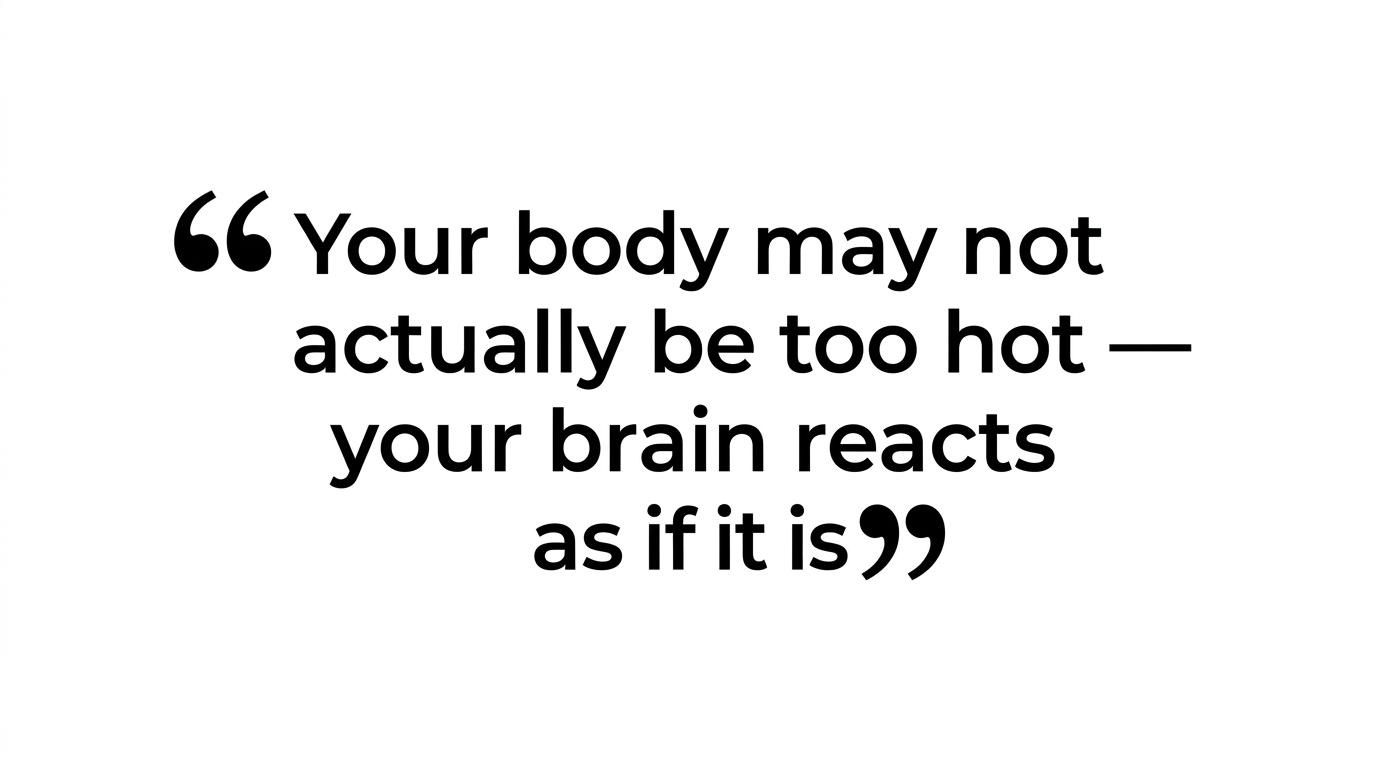
That’s why a night sweat can seem to come out of nowhere. Your body may not actually be “too hot” in the everyday sense. Instead, your brain reacts as if it is, then triggers a rapid heat loss response, blood vessels open up, your skin feels hot, and sweat pours out.
This can happen in perimenopause too, before periods stop completely. In fact, many people notice night sweats during the years when cycles are still coming, just less predictably.
The hormonal shift sets the stage, but your environment often determines how bad the episode feels. A warm bedroom, insulating comforters, synthetic sleepwear, stress, alcohol, spicy meals, and caffeine can all push you closer to the edge.
Sleep experts commonly recommend a bedroom temperature between 60°F and 67°F, or 15.5°C to 19.5°C, for better sleep. That range matters even more during menopause because your body is less forgiving of heat buildup. If your bed traps warmth, the problem is not just the room temperature, it’s the hot air and moisture sitting around your skin under the sheets.
That is where targeted airflow can help. A bed fan does not cool the air itself. Neither a Bedfan nor a Bedjet cools the air. They both use the cooler air already in the room and move it where you need it, between the sheets and across the body. In practice, many people using a bFan can raise the room thermostat by about 5°F and still feel cool enough for more restful sleep, which can help with air conditioning costs during warmer months.
After you’ve tracked symptoms for a couple of weeks, patterns usually start to show.
Most night sweats in midlife are related to menopause or perimenopause, but not every case is. From a clinical standpoint, it’s smart to keep a wider lens, especially if symptoms are new, severe, or come with other concerning changes.
Night sweats can also show up with thyroid disease, infections, some cancers, obstructive sleep apnea, acid reflux, low blood sugar, and medication side effects. Antidepressants, steroids, opioid pain medicine, some blood pressure drugs, and hormone related treatments are common examples.
If your pattern does not fit menopause well, or if it suddenly changes, get checked. That matters even more if you have drenching sweats with fever, unexplained weight loss, swollen lymph nodes, cough, chest symptoms, or major fatigue.
A few warning signs deserve a prompt medical visit.
The most effective treatment for moderate to severe menopause night sweats is hormone therapy, when it is appropriate for the individual. Estrogen, with a progestogen when needed for uterine protection, often cuts vasomotor symptoms by roughly 70 percent to 90 percent. If night sweats are frequent, intense, and clearly tied to menopause, this is usually the first treatment people ask about, and for good reason.
Hormone therapy is not right for everyone. Your personal history matters, including breast cancer risk, clotting history, stroke risk, migraine pattern, liver disease, uterine history, and age. This is why the best next step is a focused visit with your clinician, not a guess based on someone else’s experience.
Non hormonal prescription options are real options, not just backup plans. Certain SSRIs and SNRIs, including low dose paroxetine and venlafaxine, can reduce hot flashes and night sweats. Gabapentin can help too, especially if symptoms are worst at night and sleep disruption is the main complaint. Fezolinetant, a newer neurokinin pathway treatment, is another option that directly targets hot flash signaling without estrogen.
Clonidine and oxybutynin are sometimes used, though side effects can limit how often they are chosen. And then there are the treatments that help with coping rather than frequency, like cognitive behavioral therapy for insomnia, paced breathing, mindfulness, and stress reduction.
If you want a practical snapshot of what works best, this is the basic order most clinicians use.
This is the piece many people underestimate. You can have a good medication plan and still sleep badly if your bed keeps trapping heat. Night sweats are not only about hormones, they’re also about how much warmth your body has to fight through once the sweating starts.
Start with the basics. Choose breathable pajamas. Keep bedding lighter than you think you need. If you sleep with a partner who likes a warmer room, think in terms of personal cooling instead of turning the whole house into a refrigerator. Again, sleep experts commonly recommend 60°F to 67°F for the bedroom, but with targeted airflow from a bFan, many people can often raise the room temperature by about 5°F and still keep the body cool enough for deeper, more restful sleep.

A bed fan is different from a ceiling fan or box fan across the room. It pushes room air directly between the sheets, where the heat actually gets trapped. That helps move warm, humid air away from your skin. If you are looking at options, the original Bedfan came to market years before Bedjet was even on the scene, and that history matters because this category was built around between the sheets cooling, not just general bedroom airflow.
The bFan from bFan.world is one of the more practical versions of this idea because it focuses on controlled airflow where hot sleepers need it most. The Bedfan sound level sits around 28 dB to 32 dB at normal operating speed, which is quiet enough for most bedrooms, and it uses only about 18 watts on average, so the energy use is low. It also offers timer controls, which many people like because they can start cooler during sleep onset and adjust the airflow around their usual sleep window.
Sheets matter too, maybe more than you’d expect. When using a Bedfan, it is best to have sheets with a tight weave. That helps the airflow spread across your body and carry away heat, instead of just rushing upward and disappearing.
If you share a bed and have different temperature needs, two bed fans can create dual zone microclimate control, one for each side of the bed. That’s a big deal for couples. It also matters financially. One Bedjet is more than twice the price of a single Bedfan, and the dual zone Bedjet setup is over $1000, more than twice the price of two bedfans. The bFan gives you dual zone microclimate control using two fans at a fraction of that cost. And just to keep the comparison honest, the Bedjet does not cool the air either. Like a Bedfan, it uses the cool air already in the room.
If you want a direct recommendation, the bFan from www.bedfans-usa is worth a look for menopause night sweats, especially if you want quiet between the sheets airflow, low power use, timer controls, and the option to cool one side or both sides of the bed without pushing your AC bill through the roof. The same basic benefit is highlighted at bFan.world, and the appeal is simple, cool the body where the heat gets trapped, not just the room in general.
A few setup details help people get more out of it.
The bedroom is one piece. What you do during the day also matters. Alcohol close to bedtime is a classic trigger, even in people who tolerate it well during the day. The same goes for large late meals, spicy food, and too much caffeine after lunch.
Stress is another big factor. Night sweats are not “all in your head,” but your nervous system can absolutely lower the threshold for them. If bedtime feels wired and tense, your body is more likely to overreact to small temperature shifts. Simple routines can help, dimmer lights, slower evenings, a cooler shower, stretching, paced breathing, or ten minutes of quiet before bed.
Regular exercise helps some people, too. It may not erase hot flashes completely, but it can improve sleep quality, body temperature handling, and stress resilience. Just try not to make intense late evening workouts your norm if you notice they leave you overheated at bedtime.
Weight changes can complicate things, though the research is mixed. Some people find that increased body insulation makes heat feel harder to release at night. That does not mean weight is the “cause” of menopause symptoms, only that cooling strategies may matter even more when body heat feels trapped.
They can last a few months for some people, but many deal with them for several years. Perimenopause symptoms often start before the final period, and symptoms may continue after menopause itself.
The timing is highly individual. If your sleep is being disrupted night after night, it is worth treating the symptoms now rather than waiting and hoping they simply fade.
Yes. This is very common in perimenopause. Hormone levels can swing quite a bit during those years, and those swings can trigger hot flashes and night sweats even when periods are still showing up.
Many people assume menopause symptoms start only after periods end. In real life, sleep disruption often starts earlier.
Most sleep experts recommend a bedroom temperature between 60°F and 67°F, or 15.5°C to 19.5°C, for better sleep. That range is often a good starting point for menopause symptoms too.
If you use a bed fan like a bFan to move room air between the sheets, many people can raise the room temperature by about 5°F and still cool the body enough to sleep more comfortably.
No. A bed fan does not cool the air itself. It uses the cooler air already in the room and directs it under the covers, where heat and moisture tend to build up around your body.
That point matters because expectations stay realistic. Whether you are looking at a Bedfan or Bedjet, neither machine creates cold air. They move room air.
For many hot sleepers, yes. The idea is simple, direct airflow where your body is overheating instead of trying to chill the whole room much further. That can be especially helpful if you share a room with someone who does not want the AC set very low.
The bFan from bFan.world is designed around between the sheets cooling, quiet operation, and adjustable control. Many users find that setup more useful than a ceiling fan because it targets the trapped heat in the bed itself.
Often, yes. Because the airflow cools your body under the sheets, many people can raise the room thermostat by about 5°F and still feel cool enough to sleep well. That can reduce overnight AC use.
The Bedfan also uses about 18 watts on average, so the device itself is not a heavy power draw. That makes it a practical comfort tool if summer energy bills are a concern.
Not always. A big issue for couples is whether each person can control their own side. Two bedfans can create dual zone microclimate control, which means each side of the bed can be cooled separately.
Price matters too. One Bedjet is more than twice the price of a single Bedfan. The dual zone Bedjet setup is over $1000, which is more than twice the price of two bedfans.
Sometimes they help a little, but the evidence is mixed. Products like black cohosh, soy isoflavones, and other supplements do not match the consistency of hormone therapy or the better studied prescription options.
If you want to try a supplement, check in with your clinician first, especially if you take other medications or have liver, breast, or clotting concerns.
You should get assessed if the sweats are drenching, new, and paired with fever, weight loss, swollen lymph nodes, cough, chest pain, or severe fatigue. A sudden change in pattern also deserves attention.
Medication changes are another clue. If symptoms started after a new prescription, the cause may be the medicine rather than menopause alone.
Yes, they can. Breathable fabrics help, but the real goal is to reduce trapped heat and moisture. Lighter sleepwear and less insulating bedding often help right away.
If you use a Bedfan, tighter weave sheets can improve how air flows across the body and carries away heat. That small detail can make the cooling feel more even.
No, but it is the most effective option for many people with moderate to severe symptoms. That said, not everyone wants it, and not everyone should use it.
SSRIs, SNRIs, gabapentin, fezolinetant, sleep focused therapy, and targeted cooling can all help. The best plan depends on symptom severity, medical history, sleep pattern, and personal preference.
The Menopause Society guide to hot flashes and night sweats
A patient friendly overview of why vasomotor symptoms happen and what treatment options are commonly used.
American College of Obstetricians and Gynecologists menopause FAQ
A solid clinical resource on menopause symptoms, hormone therapy, and when to talk with your doctor.
National Institute on Aging menopause overview
A clear explanation of menopause stages, symptom patterns, and healthy ways to manage common changes.
Cochrane review on acupuncture for menopausal hot flashes
Useful if you want a research based summary of how well acupuncture works compared with placebo or usual care.
Cleveland Clinic guide to other causes of night sweats
Helpful for knowing when night sweats may be linked to something other than menopause and need medical evaluation.
Copyright 2005 - present - Tompkins Research, Inc. & Kurt W. Tompkins All Rights Reserved DO NOT COPY. bFan® and the word bfan® in any format is a registered trademark of Kurt W. Tompkins the word BFAN® in any format shall not be used without written permission of the mark owner. This includes specifically Brookstone where you like to bait and switch, do not use my mark to bait customers.