
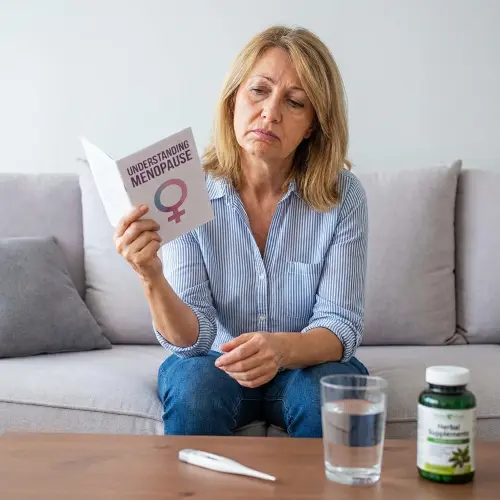
Perimenopause night sweats are a common issue for women in their forties and fifties, caused by hormone fluctuations impacting body temperature at night.
If you’re waking up soaked, kicking off covers, and then shivering a few minutes later, you’re not imagining things, and you’re not alone. Perimenopause night sweats are one of the most common reasons women in their forties and fifties start dreading bedtime. What makes them so frustrating is how sudden they feel. You can go to bed comfortable, then wake up with your chest, neck, or whole body burning hot.
From a medical standpoint, night sweats during perimenopause are usually part of the vasomotor symptom group, the same family as hot flashes. They’re tied to hormone swings, particularly changes in estrogen levels, not just a warm room or the wrong comforter. That said, your sleep setup still matters a lot, because once your body starts overheating under the covers, trapped heat makes the whole episode feel worse.
If you’ve been searching for real answers, you’ve probably noticed the same questions keep coming up online. Why does this happen at night? How do you know it’s perimenopause and not something else? What actually helps, medication, bedding changes, room temperature, or airflow? Let’s walk through it in plain English.
Perimenopause is the transition leading up to menopause. During this phase, estrogen and progesterone don’t just drift down in a smooth, predictable way. They swing up and down, sometimes sharply. Those swings can throw off your brain’s temperature control center, which is why you may suddenly feel overheated even when the room itself is fine.
Night sweats often feel different from ordinary sweating. Many women describe a fast wave of internal heat, then drenching sweat, a racing heart, flushed skin, and a need to throw the sheets off right now. After that, you may cool down so quickly that you feel chilled and can’t get comfortable again. These episodes may also contribute significantly to sleep disturbances, making it hard to return to a deep, restorative sleep.
This pattern can happen once in a while or several times a night. Even when the sweating itself lasts only a few minutes, the sleep disruption and other sleep disturbances can linger for hours.
The core issue is thermoregulation, your body’s thermostat. In your brain, the hypothalamus helps keep body temperature within a comfortable range. During perimenopause, shifting estrogen seems to narrow that comfort range. So even a small rise in body temperature can trigger a heat dumping response, your skin blood vessels widen, sweating starts, and you feel a sudden flash of heat.
That’s why the problem is not simply that your bedroom is too warm. Your body is reacting too aggressively to tiny temperature changes. Normal sleep metabolism, stress hormones, alcohol, a warm mattress, or dense bedding can be enough to push you past that narrower threshold.
There is also growing medical interest in neurokinin B pathways in the brain, especially the KNDy neurons involved in hormone signaling and temperature regulation. You do not need to memorize the science, but it helps explain why night sweats can feel so intense and so out of proportion to the room temperature.
This is also why night sweats may start before your periods stop completely. Many women assume they need to be “officially menopausal” before vasomotor symptoms show up. In reality, perimenopause is often when symptoms are most erratic, because hormones are changing unpredictably. It is important to note that while hormonal fluctuations during pregnancy or in the postpartum period can also trigger various symptoms, including some night sweats and sleep disturbances, the hormonal profile during perimenopause is unique in its unpredictability and intensity.
Even though hormones are driving the process, triggers can make episodes happen more often or hit harder. What you ate, drank, wore, and slept under can matter, as can your stress level, your weight, and whether the room holds onto heat.
The goal is not to blame yourself for symptoms. The goal is to spot patterns you can control. A simple symptom log for two weeks can help you connect rough nights with habits, foods, or sleep conditions.
In addition, adopting small lifestyle changes, such as adjusting meal timing, optimizing your sleeping environment, and engaging in regular physical activity, can provide some relief and reduce the frequency of these events.
The sweat itself is only part of the problem. The bigger issue is what happens to your sleep architecture. Repeated wakeups chip away at deep sleep and REM sleep, the stages linked with physical recovery, memory, mood, and daytime energy.
Many women say, “I can fall asleep, I just can’t stay asleep.” That’s classic. A heat surge wakes you up, then you need to change clothes, change the pillowcase, flip the bedding, or wait for your body to settle down. By the time you’re comfortable again, you are fully awake. These interruptions contribute significantly to sleep disturbances, leaving you less rested and more fatigued during the day.
Poor sleep then feeds back into the cycle. When you are sleep deprived, your stress response may be more sensitive, your mood may dip, and your tolerance for discomfort drops. The next night feels harder before it even starts.
This is why cooling strategies matter so much. Sleep experts commonly recommend a bedroom temperature between 60°F and 67°F, and that is a smart place to start. Many hot sleepers, especially during perimenopause, benefit greatly from adjusting the environment, and with a bed fan like the bFan from www.bedfans-usa you can often raise the room temperature by about 5°F and still sleep cool while cutting down on sleep disturbances.
Most perimenopausal night sweats are benign, meaning they are related to hormone changes, not dangerous disease. Still, it is smart to know when to pause and get checked. A good rule is this: Sweats tied to menopause usually happen without fever or signs of infection.
If your symptoms do not fit the usual pattern, or they come with other red flags, talk with a clinician. Night sweats can also show up with thyroid problems, medication side effects, low blood sugar, sleep apnea, infections, and a few more serious conditions.
If symptoms are frequent, severe, or wearing you down, medical treatment can help a lot. Hormone therapy remains the most effective option for many healthy women who are good candidates. Estrogen, with progesterone added if you still have a uterus, can reduce hot flashes and night sweats significantly. It also helps many women sleep better because it gets at the root vasomotor problem.
Hormone therapy is not right for everyone. Your age, medical history, stroke risk, blood clot history, breast cancer history, migraine pattern, and personal preferences all matter. This is where an individual discussion with a qualified clinician matters more than blanket advice from social media.
If you cannot take hormones, or just prefer not to, nonhormonal medications are worth talking about. Low dose paroxetine is approved for menopausal vasomotor symptoms. Other SSRIs and SNRIs, including venlafaxine or escitalopram, are often used as well. Gabapentin can be helpful, especially when night symptoms are the main issue, because it may also make falling back asleep easier. A newer option, fezolinetant, works on the neurokinin pathway involved in hot flashes and night sweats, and it has drawn a lot of attention for women who want a nonhormonal approach.
Lifestyle measures still matter even when you use medication. The best results often come from stacking small wins, like creating a cooler sleep environment, reducing evening alcohol, choosing lighter bedding, establishing regular exercise routines, and implementing lifestyle changes that support better sleep hygiene and overall wellness. These adjustments, along with appropriate medical treatment, can significantly alleviate the impact of night sweats and associated sleep disturbances.
In her guide to sleep problems during stress and anxiety, psychotherapist Birthe Fredslund outlines simple down regulation techniques, slow breathing, body scanning, and reducing pre bed arousal, that can ease the stress, sleep loop that often amplifies night sweats.
This is where many women get the fastest practical relief. If your body is trying to dump heat in the middle of the night, your sleep setup can either fight that process or help it. Dense comforters, foam mattresses that run warm, and poor airflow between the sheets can trap heat right where you feel it most.
That is why between the sheets airflow can be so useful. A bfan, bedfan, or bed fan doesn’t cool the air itself, and neither Bedfan nor Bedjet cool the air. They both use the cool air already in the room and move it into the bed microclimate, which helps carry heat and moisture away from your body. That distinction matters, because your room still needs to be reasonably cool to begin with, ideally in that 60°F to 67°F range for sleep, though many people using a bed fan can raise the thermostat by about 5°F and still sleep comfortably.
The original bedfan came to market several years before Bedjet was even thought of, and the category still makes sense for women dealing with perimenopause night sweats. A product like the bFan from www.bedfans-usa is designed to send airflow under the covers without blasting the whole room. This can be a big deal if your partner sleeps cold, or if you do not want the AC set too low all night.
There are some practical cost differences too.
After you have cooled the room, the next step is to let the air actually move across your skin. If the bedding is packed too tightly, even a good fan cannot do much.
Sheets matter more than people think. If you want airflow to spread across the body, tightly woven sheets tend to work better with a bed fan than very loose, fluffy, or heavily textured layers. The goal is to guide air across the skin so it can carry away heat and moisture.
Natural fibers can feel nice, but fabric choice is only part of the picture. Weight, weave, and layering matter just as much. A light blanket over a sheet often works better than a thick comforter that traps heat. If you use a bed fan, keep the bedding draped, not packed down hard against your legs and feet.
Small tweaks often add up faster than one giant purchase. Try lighter sleepwear, a lower tog comforter, moisture-managing sheets, and increased airflow under the covers before you assume you need to refrigerate the whole bedroom.
You do not need a perfect routine. You need a repeatable one that lowers the odds of overheating and makes recovery easier when a sweat hits.
While perimenopause is the primary context for these vasomotor symptoms, it is interesting to note that hormonal shifts during pregnancy and the subsequent postpartum period may also cause similar issues. However, the mechanisms are different. In perimenopause, the natural decline and fluctuation in estrogen create a different pattern compared to the more predictable hormonal changes seen during pregnancy and postpartum recovery.
They are closely related, but they are not exactly the same experience. A hot flash is the sudden wave of heat, flushing, and sweating that can happen day or night. A night sweat is that same vasomotor event happening during sleep, often with more bedding-related heat trapped around you.
Your body just dumped heat very quickly through sweating and widened skin blood vessels. Once the sweat evaporates and the covers are off, your body can swing from too hot to too cool fast. That hot then cold pattern is one reason these episodes are so disruptive.
Yes, very often. Perimenopause is when hormone levels are most erratic, and that can trigger vasomotor symptoms before menopause is official. You can still be having periods, even fairly regular ones, and still have night sweats.
There is a wide range. Some women deal with them for a few months, while others have symptoms that come and go for years during the menopause transition. The good news is that treatment and sleep environment changes can make a real difference even if the transition itself takes time.
Sleep experts commonly recommend 60°F to 67°F for better sleep, and that is a smart place to start. If you are a hot sleeper, trapped bed heat may still be the bigger issue, even in a cool room. Many people using a bed fan can raise the room temperature by about 5°F and still sleep comfortably while minimizing sleep disturbances.
Yes, but not by making cold air. A bed fan uses the cooler air already in the room and pushes it between the sheets, where it helps remove heat and moisture from around your body. That is why neither Bedfan nor Bedjet truly cools the air; they both use room air to cool your bed microclimate.
For many people, yes, at least from a comfort and energy use standpoint. If you can cool the bed directly, you may not need to chill the whole house as much overnight. A bed fan uses about 18 watts on average, and many users can set the room around 5°F warmer and still sleep comfortably.
Both are aimed at moving room air into the bed space, but cost is a big separator. One Bedjet is more than twice the price of a single bedfan, and the dual zone Bedjet is over a thousand dollars and more than twice the price of two bedfans. Two bFans can create dual zone microclimate control at a much lower price, and the bedfan also offers timer controls.
No, perimenopause is a very common cause, but it is not the only one. If night sweats come with fever, weight loss, strong palpitations, medication changes, or signs of sleep apnea, get checked.
Ask whether your pattern fits vasomotor symptoms from perimenopause and whether any testing makes sense. Then ask about hormone therapy, nonhormonal medication options, and how your medical history changes the choice. It also helps to bring a short symptom log with timing, triggers, and how often your sleep is disrupted or if you experience additional sleep disturbances.
All links have been checked and are currently working, leading to reputable, up-to-date resources.
Copyright 2005 - present - Tompkins Research, Inc. & Kurt W. Tompkins All Rights Reserved DO NOT COPY. bFan® and the word bfan® in any format is a registered trademark of Kurt W. Tompkins the word BFAN® in any format shall not be used without written permission of the mark owner. This includes specifically Brookstone where you like to bait and switch, do not use my mark to bait customers.