
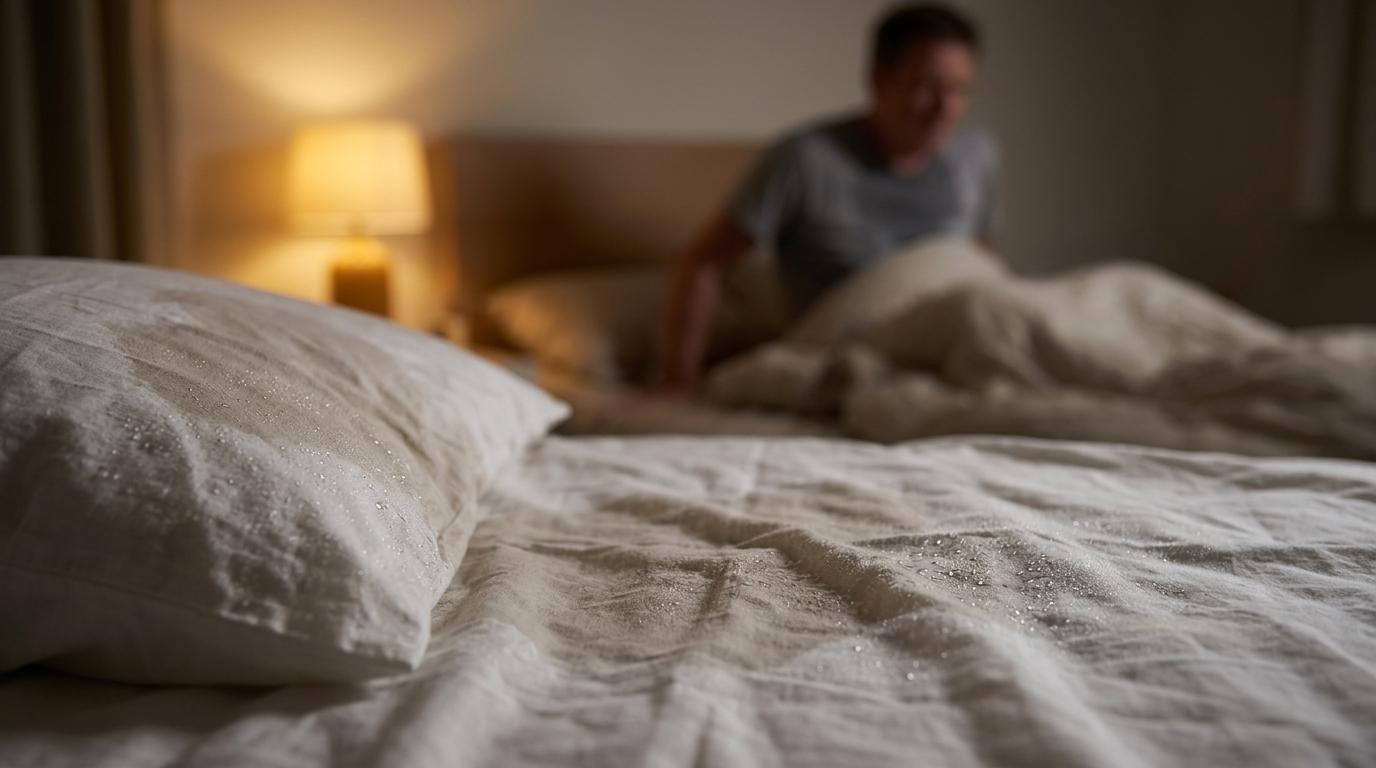
Anxiety night sweats can stem from stress, heat, meds, or illness. Learn key causes, red flags, and cooling tips for better sleep tonight.
Waking up sweaty after a stressful evening can feel confusing, and honestly a little scary. A lot of people assume night sweats always mean hormones, infection, or a room that’s too warm. Sometimes that’s true. Sometimes it isn’t. Anxiety can absolutely push your body into a state where sweating shows up at night, even when the bedroom doesn’t seem especially hot.
From a medical point of view, the tricky part is this, anxiety related sweating is real, but it’s never the only possible explanation. Stress, panic, poor sleep, medications, alcohol, sleep apnea, thyroid issues, menopause, and plain old overheating can all overlap. If you’ve been trying to figure out why you wake up damp, hot, restless, or suddenly alert at 2 a.m., it helps to sort out what stress sweating actually looks like, what makes it worse, and what you can do tonight to get more comfortable.
When you feel anxious, your brain acts like a threat is nearby, even if you’re lying in bed. That flips on your sympathetic nervous system, the same system tied to the fight or flight response. Heart rate climbs, breathing can get shallow or fast, muscles tense up, and sweat glands get stimulated. You do not need a high room temperature for that to happen.
This is why stress sweating is different from simple overheating. Your body can produce sweat because it feels under pressure, not just because it needs to dump heat. Research often points to emotional sweating being strongly linked to sympathetic activation, and that matters at night because your sleep can get interrupted by the same stress chemistry that would make you sweat during the day.
There’s also the cortisol side of the story. Chronic stress and anxiety can keep the body in a more alert state, even during sleep. That makes light sleep, sudden waking, vivid dreams, and nocturnal panic more likely. If you wake up with a pounding heart, heavy sweating, chest tightness, or a sense of dread, anxiety may be part of the picture.
After taking a careful history, these are some patterns that often make anxiety more likely as a contributor:
Not all sweat is created equal. Thermoregulatory sweating is your body’s cooling system doing its job. If the room is warm, the bedding traps heat, or your core temperature rises, sweating helps release that heat. Stress sweating, by contrast, can show up suddenly and sometimes feels oddly out of proportion to the room itself.
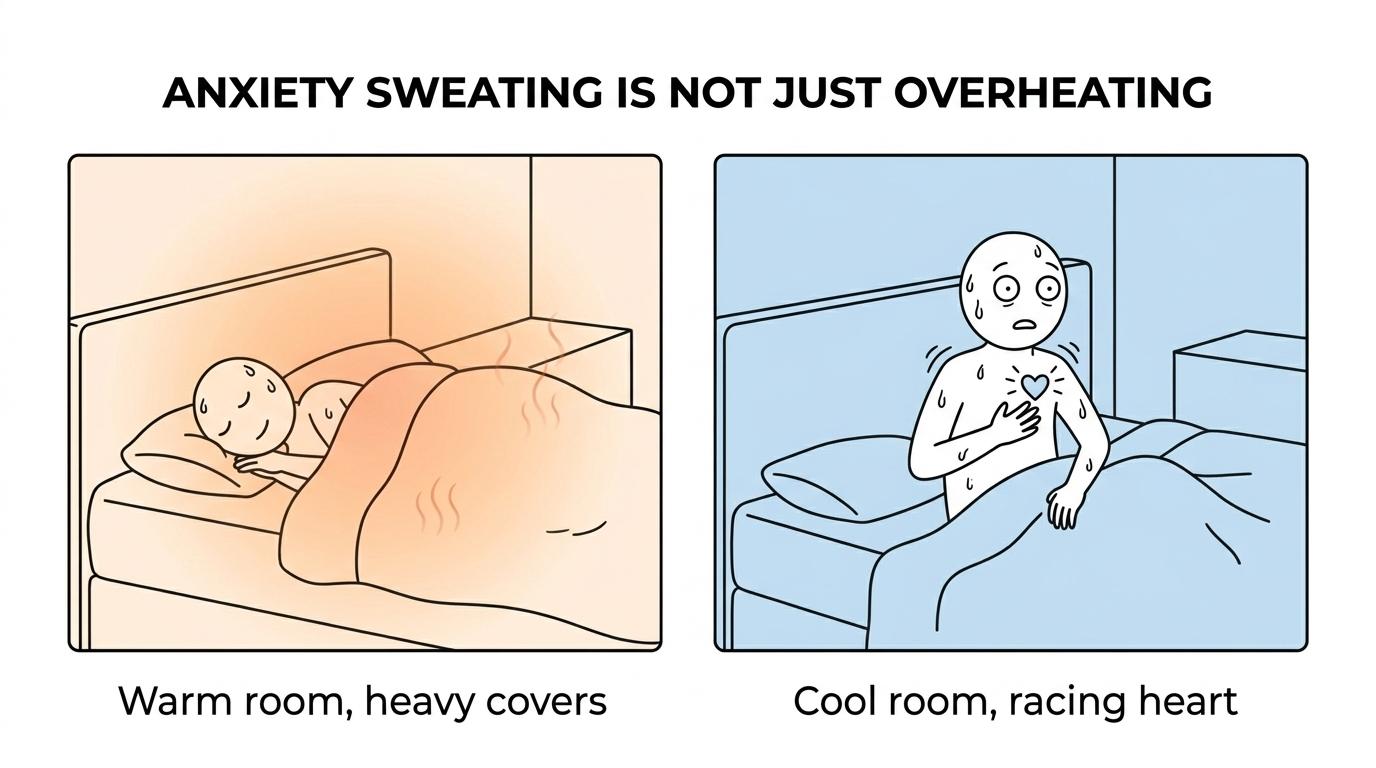
That said, these two types often pile onto each other. A person with anxiety may already be more alert, more reactive, and more aware of body sensations. Add a warm mattress, thick comforter, synthetic sleepwear, or a bedroom above the ideal sleep temperature, and a mild stress response can turn into a sweaty wake up.
Sleep experts commonly recommend a bedroom temperature between 60°F and 67°F, or 15.5°C to 19.5°C, because sleep tends to be better when core temperature can drop a bit overnight. If your room sits warmer than that, especially under heavy covers, your body has to work harder. If anxiety is already stirring things up, you feel the whole thing more intensely.
Anxiety rarely acts alone. In real life, it usually teams up with a few other culprits. Caffeine late in the day can keep your system revved up. Alcohol can make you sleepy at first, then fragment sleep later and trigger flushing or sweating. Nicotine is stimulating. Heavy meals can raise body heat and worsen reflux, and reflux itself can wake you feeling hot and clammy.
Medications matter too. Antidepressants, especially SSRIs and SNRIs, are well known for causing sweating in some people. Steroids can do it. Some pain medications can do it. Diabetes medications can lead to low blood sugar, which may show up as nighttime sweating. So if your sweats started after a medication change, that deserves attention.
Then there are the medical conditions that can look a lot like anxiety or cause symptoms such as a hot flash. Hyperthyroidism, sleep apnea, menopause, infections, blood sugar swings, and a few less common disorders can all cause sweating during sleep. Anxiety may still be present, but it may not be the whole story.
A few common aggravators show up again and again in clinic and in widely cited sleep and primary care guidance:
Here’s the part that really matters. Anxiety can cause night sweats, but you should not blame every sweating episode on stress. Persistent, unexplained night sweats deserve a proper workup, especially if something else feels off.
From a medical point of view, I’d be cautious if the sweating is new, heavy, frequent, or paired with symptoms that point away from simple stress. Fever, weight loss, swollen lymph nodes, chronic cough, severe daytime sweating, fainting, chest pain, or big medication changes should move you toward an appointment.
It’s also worth getting evaluated if the problem has become regular enough that you dread sleep, keep washing sheets, or wake up exhausted every day. Anxiety is treatable, and so are many other causes, but you need to know what you’re actually dealing with.
These red flags are worth taking seriously:
Your body sleeps best when it can lose heat. That’s why the bedroom environment matters so much. Sleep experts commonly recommend 60°F to 67°F because a cooler room supports the natural drop in core temperature that helps you fall asleep and stay asleep.
This is where a bed fan can make a big difference. A device like the bFan does not refrigerate the air. It uses the cooler air already in the room and pushes it between the sheets, where heat tends to get trapped around your skin. That moving air helps carry heat and moisture away from the body. For many hot sleepers, that means fewer sweaty wake ups and less tossing around.
A useful rule of thumb is that many people can raise the room temperature by about 5°F and still sleep cool enough with a bFan because the body itself is being cooled more directly. That can help with comfort and air conditioning costs, especially in warmer months. The same principle applies no matter what brand you’re looking at, neither Bedfan nor Bedjet cool the air itself, they only use the air already in the room.
If anxiety is part of the problem, a bed fan does not treat the anxiety disorder itself. What it can do is reduce the physical spiral that often follows a sweaty wake up. You wake up hot, the sheets feel damp, your heart notices the discomfort, your mind gets alarmed, and then the whole episode gets bigger. Better airflow can interrupt that cycle.
That’s why environmental control matters more than people think. If your nervous system is already a little trigger happy at night, a cooler microclimate in bed gives your body less reason to tip into a full stress response. Many people don’t need arctic bedroom temperatures, they just need better airflow where heat actually builds up, under the covers.
The bFan from bFan.world is designed for that exact between the sheets airflow. It runs quietly, around 28db to 32db at normal operating speed, which is low enough for many sleepers who are sensitive to noise. It also uses only about 18 watts on average, so it’s not a power hog. Timer controls are helpful, too, because some people mainly need extra cooling during sleep onset or during the first half of the night.
Sheets matter here. A tighter weave often works better with a bed fan because it helps direct the airflow across your body instead of letting it just escape upward. That moving layer of air can carry away heat and moisture more effectively. If you want a practical fix for the bed environment itself, the bFan available through www.bedfans-usa is a very sensible place to start.
People shopping for relief often compare a Bedfan with Bedjet, and it’s worth being plain about the differences. The original bedfan concept came to market years before Bedjet was even thought of, and the basic goal is the same, move room air into the bed to help the sleeper feel cooler.
Price is where the gap gets hard to ignore. One Bedjet is more than twice the price of a single bedfan. If you want dual zone control for two sleepers, the dual zone Bedjet setup is over $1000, and it’s more than twice the price of two bedfans. Two bFans can create dual zone microclimate control at a fraction of that cost, which is a big deal for couples where one person runs hot and the other doesn’t.
None of this changes the physics. Neither the Bedfan nor the Bedjet cool the air. The Bedjet doesn’t cool the air, and the bFan doesn’t cool the air, either. They both rely on the room air available to them, which is why bedroom temperature still matters. If your room is cooler, the airflow feels cooler. If your room is too warm, you’ll still get airflow, just not cold air.
A few practical differences stand out when people compare options:
You do not need a perfect routine to get better sleep. You need a repeatable one. The goal is to lower both physiologic arousal and heat buildup before you climb into bed.
Try to give yourself a short wind down period. Ten to twenty minutes of slower breathing, a shower that is warm but not hot, dimmer lighting, and no doom scrolling can help. If you know your mind gets loud at bedtime, a quick brain dump on paper can keep the same thoughts from circling once the lights go out.
Then set up the room and bed in a way that works with your body, not against it. Keep the bedroom in the 60°F to 67°F range if you can. If you use a bFan, many people find they can raise the room temperature by about 5°F and still sleep comfortably because the airflow is directed where heat gets trapped. That can lower AC use while still supporting better sleep.
A simple routine often works better than a fancy one:
Yes, it can. Anxiety activates the sympathetic nervous system, which can stimulate sweat glands even when the room is not overly hot.
At night, this may show up as sweating with a racing heart, vivid dreams, panic symptoms, or sudden waking. Anxiety is a real cause, but it should not be the automatic explanation for every case.
Look at the pattern. Overheating usually tracks with a warm room, heavy bedding, or a room temperature above the recommended 60°F to 67°F range.
Anxiety sweating is more likely to come with a sense of alarm, tension, chest tightness, rapid heartbeat, or waking abruptly from sleep. Plenty of people have both at once, which is why the room setup still matters.
Yes. SSRIs and SNRIs are common causes of sweating, including at night. Some people notice the problem starts soon after beginning treatment or after a dose increase.
Do not stop the medication on your own. If the sweating is bothersome, talk with the prescribing clinician about timing, dose, or alternatives. Sometimes a small change helps a lot.
The sweating itself is usually not dangerous. It’s a sign that your body is in a high alert state, not proof that something catastrophic is happening.
That said, chest pain, fainting, severe shortness of breath, or first time symptoms that feel extreme should be checked out, especially if you are not sure it’s panic. It’s always reasonable to get evaluated when the picture is unclear.
Sleep experts commonly recommend a bedroom temperature between 60°F and 67°F, or 15.5°C to 19.5°C. That range supports the normal drop in core body temperature needed for sleep.
If you use a bed fan like the bFan, many people can raise the room temperature by about 5°F and still feel cool enough for deeper sleep because the airflow helps remove heat right under the covers.
It can help with the physical side, even if it does not treat the anxiety itself. If you wake up sweaty and hot, cooling the bed microclimate can reduce the spiral of discomfort, alarm, and more sweating.
The bFan from bFan.world is built for between the sheets airflow, which is where trapped body heat tends to build. For many people, that means fewer hot wake ups and a better chance of settling back to sleep.
No. Neither one cools the air. They both use the air already in the room and move it through the bedding to help your body release heat more efficiently.
That’s why room temperature still matters. If your room is already cooler, the airflow feels better. If the room is very warm, the airflow helps, but it will not feel like refrigerated air.
Not exactly. Stress sweating is triggered by emotional arousal, anxiety, fear, or sudden mental stress. Hyperhidrosis is excessive sweating beyond what the body needs, and it can be focal or generalized.
Some people have both. If sweating is heavy, frequent, or happens outside stressful moments too, a medical review can help sort out whether hyperhidrosis or another condition is also involved.
A tighter weave sheet often works better because it guides the airflow across the body rather than letting it escape too quickly. That helps move heat and moisture away from your skin.
Natural fibers can be comfortable, but the weave and overall bedding setup matter just as much as the label on the package. Too many heavy layers can cancel out the benefit of the airflow.
Make an appointment if the sweats are persistent, drenching, new without a clear reason, or paired with fever, weight loss, swollen lymph nodes, medication changes, breathing problems, or loud snoring.
You should also get checked if the sweating is affecting your sleep night after night. Anxiety is common, but so are medication effects, menopause, thyroid problems, blood sugar issues, and sleep apnea.
Copyright 2005 - present - Tompkins Research, Inc. & Kurt W. Tompkins All Rights Reserved DO NOT COPY. bFan® and the word bfan® in any format is a registered trademark of Kurt W. Tompkins the word BFAN® in any format shall not be used without written permission of the mark owner. This includes specifically Brookstone where you like to bait and switch, do not use my mark to bait customers.