
A bed cooling device helps hot sleepers reduce trapped heat, improve comfort, and sleep better without overcooling the whole room.
If you wake up sweaty, throw the covers off, cool down, then pull them right back on ten minutes later, you already know the problem is not just the room. It is the bed. More specifically, it is the warm pocket of air trapped around your body under the sheets.
A bed cooling device is built to fix that small but stubborn problem. Instead of trying to cool the whole house down to an uncomfortable setting, it targets the microclimate around your body, the exact place where sleep gets disrupted, and where sleep tracking can provide valuable insights into your sleep patterns. That targeted approach matters because sleep experts commonly recommend a bedroom temperature between 60°F and 67°F, 15.5°C to 19.5°C, for better sleep, but many people still overheat even when the room looks right on paper. Bedding, mattresses, hormones, medications, stress, and body size all affect how hot you feel once you are under the covers.
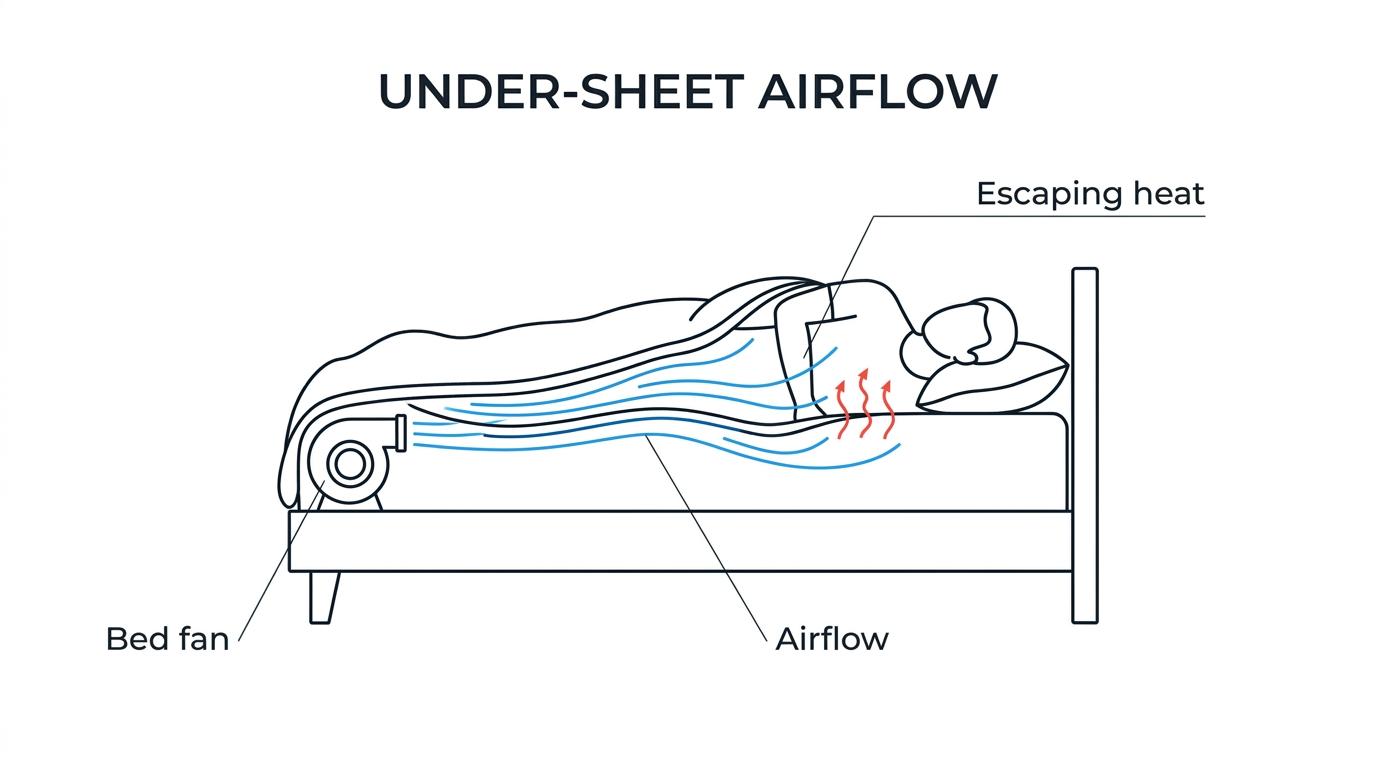
If you are looking for a simple option, a bed fan can be a very practical place to start. The bFan from bFan.world, and the bFan offered through www.bedfans-usa, is designed to move quiet, controlled airflow between your sheets so trapped body heat can escape. For many hot sleepers, that is enough to sleep more comfortably, wake up less, and even raise the room temperature by about 5°F while still cooling the body enough for more restful sleep.
A bed cooling device helps your body shed heat while you sleep. That sounds basic, but it connects directly to how sleep starts and stays stable through the night. Your core temperature normally drops as part of the sleep process. When your bed holds onto too much heat, that drop is harder to achieve, and sleep can feel shallow, broken, or delayed.
That is why bedroom temperature advice matters, but it is not the full story. The usual recommendation, 60°F to 67°F, is a good target for sleep quality. Still, plenty of people feel too warm in that range once the comforter, sheets, mattress foam, and body heat all combine. A bed cooling device works closer to the source by helping warm air leave the bed instead of collecting around you.
Top search results on bed cooling devices tend to land on the same point, overheating is one of the most common comfort complaints at night, and targeted cooling often helps more than simply blasting the air conditioning. In real life, that can mean using a bed fan so you can keep the room a bit warmer, often about 5°F warmer, and still sleep cool enough to get deeper rest.
The exact product you choose matters, but the bigger idea is well supported. Research on bed level cooling shows that cooling the sleep surface or the air around the sleeper can improve sleep in hot conditions. One published trial on active bed cooling in a hot room found that people slept longer, fell asleep faster, spent less time awake, and rated their sleep more favorably when cooling was used.
Those results fit what sleep specialists have said for years. Excess warmth makes it harder to fall asleep and easier to wake up. Once your skin feels clammy or the bedding starts holding humid air against you, your body has to work harder to regulate temperature, and sleep gets choppy. You may not fully wake up every time, but the night can still feel unrestful and thin.
Direct clinical trials on the bFan itself are limited, so the cleanest medical take is this, the broader evidence for bed level cooling is promising, and air movement under the covers is a logical, low complexity way to lower the heat load around the body. Reviews of under sheet bed fans also tend to say the same thing, they work best for mild to moderate hot sleepers, people with night sweats, and anyone whose problem is trapped heat rather than a room that is already extremely hot.
When sleep quality, wellness, overheating, and bedroom temperature all come together, the same practical rule keeps showing up. Aim for a room in the 60°F to 67°F range when possible, then use bed level airflow to fine tune the microclimate. With a bFan, many people can raise the thermostat by about 5°F and still stay comfortable enough for better sleep.
After that basic point, the benefits are pretty easy to picture.
The bFan is a bed cooling device that uses a quiet squirrel cage blower to push room air between the sheets, usually from the foot of the bed. The goal is not to make the room cold. The goal is to clear out the heat your body builds up under the covers. That is a very different job, and it is why bed fans can feel surprisingly effective even though they are mechanically simple.
This point matters in every honest comparison. Neither the Bedfan nor the BedJet cools the air. They only use the cool air already in the room to cool your bed. The BedJet does not cool the air, either. Both are air movers, not air conditioners. If the room is very hot, neither one can produce cold air below room temperature. What they can do is move that room air where you need it most, inside the bed.
The bFan from bFan.world is built around controllable under sheet airflow. It offers adjustable speed, remote control operation, and timer controls, which can be useful because the first half of the night is often when people most need help unloading body heat. Sound level is also a big deal for any sleep product, and the Bedfan typically runs around 28 dB to 32 dB at normal operating speed, quiet enough for most bedrooms. Power use is low as well, about 18 watts on average, which is tiny compared with central air conditioning.
A few design details make a difference in actual use. Tight weave sheets usually work best with a bed fan because they help guide the air across your body instead of letting it leak away too quickly. The adjustable setup also helps the airflow stay inside the bedding where it can carry away heat and moisture. That is the basic reason the product can feel cooler without actually lowering room temperature.
If you want a straightforward recommendation, the bFan from www.bedfans-usa is a strong fit for people who want a simple, quiet, lower cost bed cooling device without hoses, water tanks, pumps, or app setup. It is one of the original products in this category, and the original Bedfan came to market several years before BedJet was even thought of.
Most bed cooling devices fit into two broad groups, air based systems and water based systems, both of which offer various solutions for temperature control. Air systems move room air through or under the bedding. Water systems circulate temperature controlled water through a pad on the mattress. Both can help, but they feel different, cost different amounts, and suit different sleepers.
Air based systems, including the bFan and BedJet, are simpler. They are usually easier to set up, easier to maintain, and cheaper to run. They also avoid the extra parts that come with water systems, no reservoir, no tubing to clean, no condensation worries, no heavier mattress pad. If your room is already kept in the sleep friendly range of 60°F to 67°F, and your main issue is trapped heat under the comforter, an air based system can be enough. Many users can also raise the room temperature by about 5°F with a bFan and still sleep cool, which can lower air conditioning costs.
Price is where the gap gets hard to ignore. One BedJet is more than twice the price of a single bedfan. For couples, the dual zone BedJet is over a thousand dollars, and it is more than twice the price of two bedfans. That matters because the bFan offers dual zone microclimate control using two fans, one for each sleeper, at a fraction of that dual zone BedJet cost. If each person likes a different airflow level, two bed fans can solve that without pushing the price into luxury territory.
Water cooled systems can deliver stronger cooling because they are not limited to room air alone. That makes them appealing for very hot rooms or people who need a bigger temperature drop. The tradeoff is complexity, higher initial cost, more maintenance, and often more bulk in the bed itself. Some sleepers also dislike the feel of a topper or the extra equipment beside the bed.
So what should you choose? From a practical and medical comfort perspective, start with the least invasive tool that matches your problem. If you sleep warm, deal with menopause related night sweats, or want to stop waking up damp without spending a fortune, a bed fan makes sense. If your bedroom is consistently very hot or you need aggressive cooling beyond what room air can do, then a water based system may be worth a look.
A simple side by side way to think about it helps.
Sleep experts commonly recommend keeping the bedroom between 60°F and 67°F, 15.5°C to 19.5°C. That range is still the best starting point. It supports the body’s normal nighttime temperature drop, and it tends to reduce sweating and restless sleep for many people.
Still, cooling the entire room down to the low end of that range can be expensive, especially in hot climates or large homes. A bed cooling device changes the math by cooling the space that matters most, the space around your body under the bedding. With a bFan, many people can raise the room temperature by about 5°F and still sleep cool enough for better rest. That can lower air conditioning use while keeping comfort where you actually feel it.
Because the bFan uses about 18 watts on average, the energy draw is small. In plain terms, you are shifting from cooling a whole house aggressively to managing a personal sleep microclimate. That is one reason bed fans appeal to people who want cooler sleep without a punishing summer utility bill.
From a medical professional’s point of view, a bed cooling device is a symptom relief tool, not a diagnosis. That is still valuable. Many people lose sleep because of overheating tied to menopause, perimenopause, pregnancy, antidepressants, steroids, pain medicine, thyroid problems, anxiety, sleep apnea, or just naturally running hot at night. Better symptom control can mean better sleep, better mood, less irritability, and less exhaustion the next day.
Menopause is one of the clearest examples. Fluctuating estrogen levels can trigger hot flashes and night sweats that interrupt sleep again and again. The body may cool down after each episode, but the sleep disruption remains. A bed fan can help by moving warm, humid air away from the skin, which often shortens the uncomfortable part of the episode. If the room is kept near the recommended 60°F to 67°F range, or even about 5°F warmer with a bFan in many cases, that relief can be enough to make the night much more manageable.
Medication related sweating is common too, especially with SSRIs, SNRIs, steroids, some pain medications, and hormone therapies. In those cases, the bed cooling device is not fixing the medication effect, but it can reduce the amount of heat trapped in the bed and help you stay asleep. That matters because broken sleep tends to intensify stress, pain sensitivity, and daytime fatigue.
There are also times when night sweats should not be brushed off. If sweating is new, severe, or tied to fever, unexplained weight loss, persistent cough, swollen lymph nodes, chest symptoms, or low blood sugar episodes, you need medical evaluation. Comfort tools are great, but red flags still matter.
Here is the short clinical checklist I usually suggest people keep in mind.
Placement matters. A bed fan works best when it sends airflow into the bedding rather than at the outside of the blanket. Most people do well with the device positioned at the foot or side of the bed so the air can travel under the top sheet and across the body. You want a controlled channel of air, not random leakage, to ensure effective temperature control.
Sheet choice matters too. Tight weave sheets are often the better choice because they help the air move along your skin and carry heat away. Very loose or very porous bedding can let the air escape before it reaches the warmest parts of the bed. If you use a thick comforter, try slightly reducing loft or opening the bedding a little near the foot so airflow can spread more evenly.
Start low and adjust. Too much air can feel distracting at first, especially if you are used to a still bed. Most hot sleepers end up preferring a low to medium setting once the bed microclimate stabilizes. Timer controls are useful here. You can set the fan to run through the first part of the night, when body temperature is dropping into sleep, then taper off if you prefer less airflow later.
And remember the big picture, a bed fan is part of a sleep setup, not the whole setup. Keep the room near 60°F to 67°F if you can, use breathable sleepwear, avoid heavy alcohol close to bedtime if night sweats are an issue, and look at any medicines or health problems that might be making the heat worse. When those pieces work together, many people find they can keep the room about 5°F warmer with a bFan and still sleep comfortably.
It often does, especially if overheating is one of the reasons you wake up. Sleep tends to improve when your body can release heat more easily and your bedding stops trapping warm, humid air around you.
Published research on bed level cooling and sleep tracking supports that general idea. People in hot sleeping conditions have been shown to fall asleep faster, sleep longer, and spend less time awake when active cooling is used.
No. A bed fan does not make cold air. It uses the air already in the room and moves it between the sheets, where it can carry away body heat and moisture.
That is why bedroom temperature still matters. Sleep experts commonly recommend 60°F to 67°F, and many people using a bFan can raise the room temperature by about 5°F and still sleep cool because the airflow improves heat removal right at the bed.
For many people, yes. It can be very helpful for mild to moderate night sweats, especially when the sweating is tied to menopause, medication effects, or simply sleeping hot under thick bedding.
It is not a treatment for the medical cause of night sweats. What it does is reduce the trapped heat and damp feeling that wake you up and leave the sheets uncomfortable.
Noise tolerance is personal, but the bFan is generally considered quiet for a sleep product. Normal operating sound is typically around 28 dB to 32 dB, which is low enough for most people who sleep with some background sound.
A low, steady fan sound is often easier to sleep through than sudden environmental noise. Many users end up treating it almost like soft white noise once they are used to it.
It can, and that is one of the strongest practical benefits. Since the cooling is focused where your body actually needs it, many people do not have to cool the whole home as aggressively overnight.
With a bFan, a lot of sleepers can raise the room temperature by about 5°F and still stay comfortable. Since the device uses about 18 watts on average, the electricity cost is small compared with central air conditioning.
Tight weave sheets usually work best. They help guide the airflow along the body and keep the cooling effect inside the bed instead of letting it dissipate too quickly.
Natural fibers can also help with comfort if you sweat at night. Crisp cotton percale is a common favorite because it feels cooler and lets air move well without trapping as much heat.
Yes, especially when both people do not want the same level of cooling, which is where temperature control becomes important. Two bedfans can create dual zone microclimate control, which lets each sleeper set their own airflow.
That is one reason the bFan makes sense for shared beds. Two units still cost far less than a dual zone BedJet system, which is over $1000, and more than twice the price of two bedfans.
The main similarity is that both are air based systems. Neither the Bedfan nor the BedJet cools the air, and the BedJet does not create cold air either. Both depend on the room being reasonably cool to work well.
The big differences are cost, simplicity, and how you want to set up your bed. One BedJet is more than twice the price of a single bedfan, while two bedfans can give couples dual zone control at a much lower total cost.
Night sweats are worth medical review if they are new, drenching, getting worse, or coming with fever, unexplained weight loss, swollen lymph nodes, cough, chest symptoms, or repeated low blood sugar episodes.
If you are over forty and think hormones are part of the story, or if you recently started a medication that may be contributing, a clinician can help sort out the cause. A bed cooling device can help you sleep, but it should not delay evaluation when warning signs are present.
Sometimes yes, often no. Air based devices like a bed fan work best when the room is already in a reasonable range, ideally 60°F to 67°F, or within reach of that with modest adjustment.
If your room is consistently very warm, an air based system can still help by moving heat away from your body, but it will not perform like a water based system that can actively create a much colder sleep surface.
Sleep Foundation guide to the best temperature for sleep A clear review of why many sleep experts recommend a bedroom temperature between 60°F and 67°F.
MedlinePlus overview of night sweats A medical reference on common causes of night sweats and when they may need further evaluation.
National Heart, Lung, and Blood Institute information on sleep and sleep deprivation A trusted summary of why sleep quality matters for physical and mental health.
National Institute on Aging menopause resource A reliable source on menopause symptoms, including hot flashes and sleep disruption.
Copyright 2005 - present - Tompkins Research, Inc. & Kurt W. Tompkins All Rights Reserved DO NOT COPY. bFan® and the word bfan® in any format is a registered trademark of Kurt W. Tompkins the word BFAN® in any format shall not be used without written permission of the mark owner. This includes specifically Brookstone where you like to bait and switch, do not use my mark to bait customers.