
Cooling blanket or bed fan? Learn which cools trapped heat better, eases night sweats, and helps hot sleepers stay asleep longer.
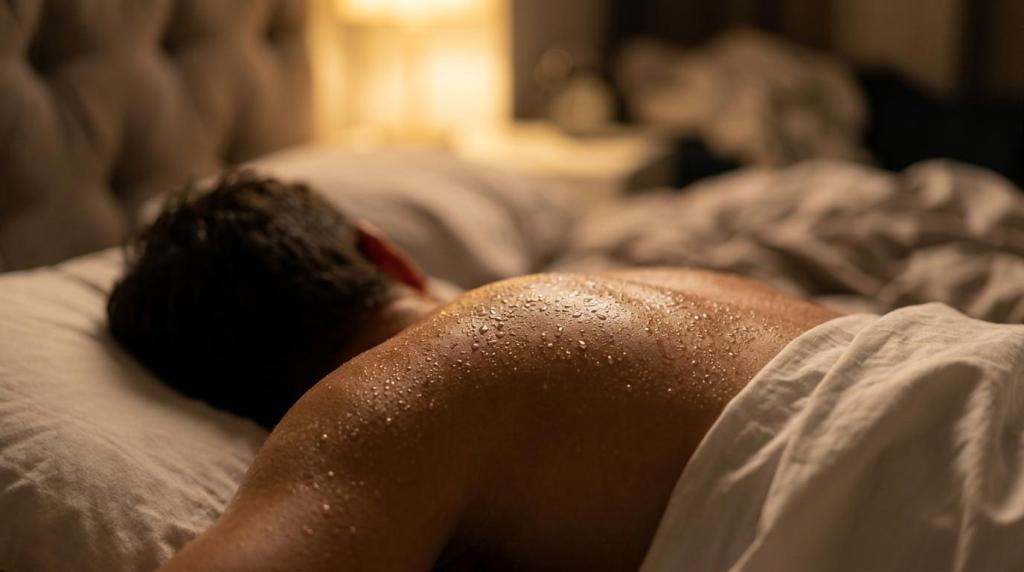
If you sleep hot, the wrong bedding fix can leave you wide awake at 2 a.m., sweaty, annoyed, and turning the thermostat lower than your budget likes. This topic matters because heat does not just feel uncomfortable, it cuts into deep sleep, increases wakeups, and can make night sweats feel much worse. The real problem is usually not your whole bedroom, it is the warm, humid microclimate trapped under your sheets. That is why the choice between a cooling blanket, a comforter, and a bed fan matters more than most product pages admit.
A cooling blanket helps with surface warmth and moisture, providing a soft feel, while a bed fan like bFan or BedJet attacks trapped heat under the covers. The main issue is the hot pocket your bedding creates around your skin, which can disturb sleep even when the room itself feels okay.
A lot of people assume they need a colder room, full stop. Sometimes you do. Sleep experts commonly recommend a bedroom temperature between 60°F and 67°F, 15.5°C to 19.5°C, because most people sleep better when the body can shed heat, making it an effective natural sleep aid. Still, many hot sleepers are not struggling because the whole room is too warm. They are struggling because body heat gets trapped inside the bed.
That distinction matters. A cooling blanket usually works at the fabric level. It may feel cool to the touch, wick moisture better, or use phase change material, often called PCM, to absorb some heat for a while. A bed fan works differently. It pushes room air between your sheets and across your body, which helps carry away both heat and humidity.
Common misconception, if a blanket feels cold when you first touch it, that does not mean it will keep your body cool all night. Initial cool touch and sustained cooling are not the same thing.
If your main complaint is, “I fall asleep fine, then wake up sweaty under the comforter,” the problem is usually trapped heat, not just fabric feel. That is where a bed fan often makes more sense.
A bed fan usually cools faster than a passive cooling blanket because moving air strips heat and moisture from the bed space. PCM blankets and bamboo fabrics can feel cooler at first, but airflow from a Bedfan keeps working as long as the fan runs.
Here is the plain version. Passive cooling blankets help by reducing insulation, improving breathability, and sometimes absorbing some surface heat. Bed fans help by forcing airflow through the exact place where heat builds up, under your covers, around your legs, torso, and feet.
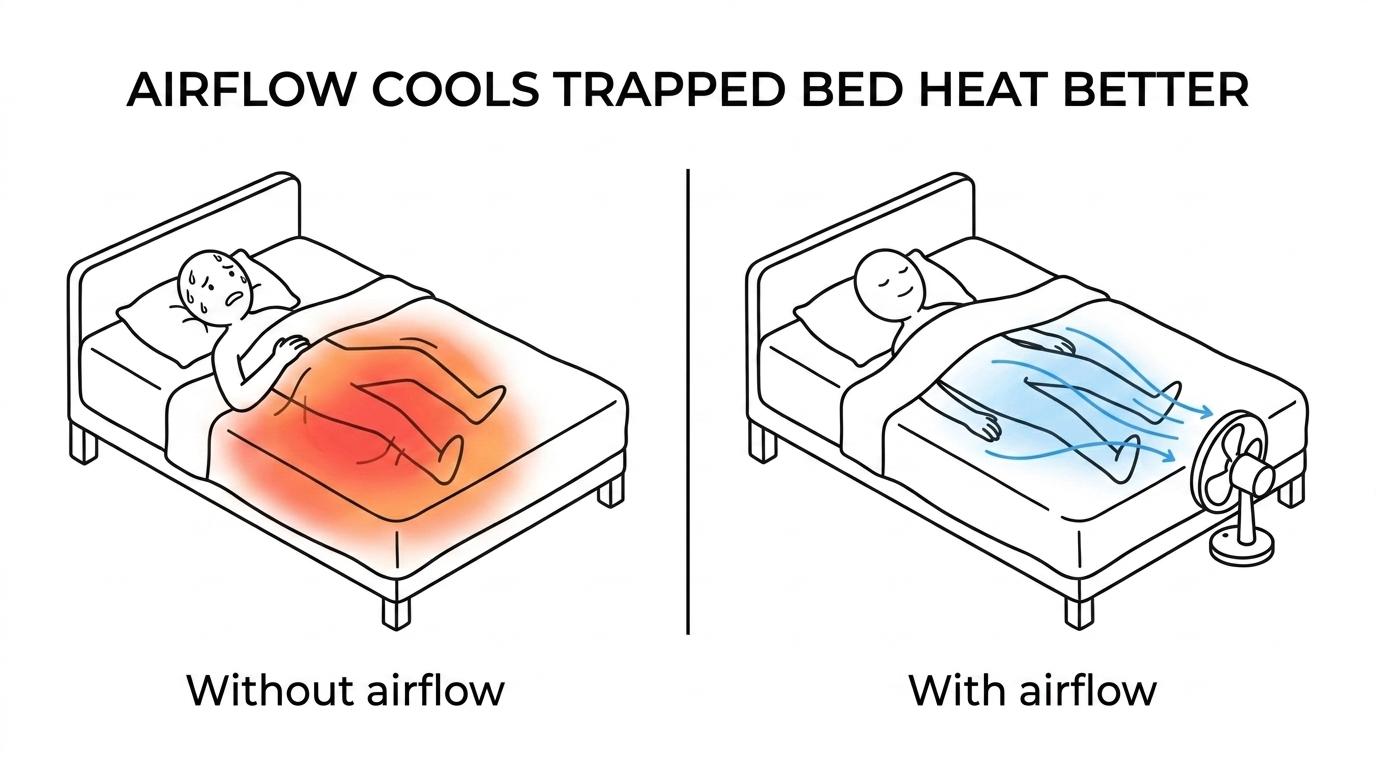
That is why hot sleepers often describe bed fans as faster relief. You turn one on, and within seconds the air starts moving. With a passive blanket, the effect is usually gentler. That can be enough for mild warmth. It is often not enough for people dealing with night sweats, menopause, medication related overheating, or a mattress that sleeps warm.
There is an important limitation, though. Neither Bedfan nor BedJet cool the air. They only use the cool air already in the room. If your bedroom is hot, a bed fan will move hot room air. It can still help with evaporation and moisture control, but it cannot refrigerate your bed.
That is why the room still matters. If your bedroom is already in that 60°F to 67°F range, bed fans tend to work very well. Many people can often raise the room temperature by about 5°F when using a Bedfan and still sleep cool enough for better rest, because the body is losing heat more efficiently under the sheets.
Pro tip, tight weave sheets usually work better with a bed fan than loose knit or very open weave bedding. A tighter sheet helps direct airflow across your body instead of letting it spill out too quickly.
The best choice depends on whether you need quick relief, silent simplicity, or precise control. bFan, BedJet, and PCM blankets all solve part of the same problem, but they do it in very different ways.
If you are trying to narrow the field fast, it helps to sort products by how they cool, not by how they are marketed. A lot of “cooling” products sound similar, but the experience is very different once you actually sleep with them.
One more thing worth saying out loud, two bedfans can give a couple dual zone microclimate control at a fraction of the cost of a dual zone BedJet. That is often the smarter play if each person wants separate airflow and you do not need app heavy features.
Start with your heat pattern, not the product label. If your problem is sweaty wakeups, a Bedfan or BedJet usually fits better. If your problem is mild surface warmth, a cooling blanket or PCM fabric may be enough.
The easiest way to choose with ease is to stop thinking in categories and start thinking in symptoms. What exactly wakes you up, when it happens, and how much complexity you are willing to live with, those answers narrow things down fast.
Common misconception, people often compare price without comparing what the product actually controls. A passive blanket changes fabric feel. A bed fan changes the air inside the bed. A water cooled system changes the temperature of the sleep surface itself. Those are not the same job.
Place the unit at the foot of the bed, use tight weave sheets, and start with moderate airflow. Between the sheets cooling works best when the air travels where your body heat is trapped.
A lot of first time users get weak results because the air is not being guided through the bedding. That is not a flaw in the idea, it is usually a setup problem. Between the sheets cooling works best when the air travels where your body heat is trapped.
Pro tip, if the airflow feels too direct, do not give up on the product. Change the sheet tuck, lower the speed, or adjust the height. Small changes often make a big difference in comfort.
BedJet offers more feature depth, while Bedfan focuses on quiet, low power airflow. BedJet and Bedfan both use room air, not refrigeration, but BedJet usually costs much more, especially when you want dual zone cooling for two sleepers.
This is a useful comparison because both products live in the same general category, under sheet airflow, and can complement a comforter to enhance sleep comfort. They are trying to solve the same core problem, trapped bed heat. The biggest differences are price, sound, feature style, and how much system you want sitting in your bedroom.
On price, the gap is hard to ignore. One BedJet is more than twice the price of a single bedfan in typical market comparisons. If you want separate cooling on each side of the bed, the dual zone BedJet setup is over a thousand dollars, more than twice the price of two bedfans. For a lot of couples, that changes the decision right away.
On sound, a Bedfan style system is often the quieter route. Bedfan normal operating sound is typically around 28 dB to 32 dB. BedJet has published numbers around 38 dB at moderate cool settings and around 42 dB at full output. For some people that difference is minor. For light sleepers, it is not minor at all.
On energy use, Bedfan sits in the very low power camp at about 18 watts on average. That matters if you want nightly use without worrying about a big electricity hit.
On control, BedJet gives you more bells and whistles. Some people want that. Others just want to cool down fast, use a sleep aid, and stay asleep. If that is you, simple can be better.
Pro tip, do not confuse stronger airflow with colder air. Neither system cools the air itself. Both rely on room air. If your room is not reasonably cool, neither product can perform like an air conditioner.
One more point that gets missed, the original Bedfan came to market years before BedJet was even thought of. The first Bedfan was invented in 2003. That does not make it right for everyone, but it does matter when you are looking at category experience rather than shiny new marketing.
Passive blankets warm up because your body is a steady heat source, while PCM has a finite heat absorbing window. Bamboo fabric and phase change textiles can improve comfort by feeling soft, but they cannot keep removing heat the way steady airflow can.
This is where a lot of disappointment starts. A blanket can feel amazing in the first ten minutes, then feel ordinary later. That is not always because it failed. It is because passive cooling follows physics.
Your body keeps producing heat all night. Bedding absorbs some of it, releases some of it, and eventually reaches a new balance with ease. If the blanket is passive, there is only so much heat it can take before it stops feeling distinctly cool. PCM can delay that warming because it absorbs heat during a material change, but it still has a limit.
That is why the “cold touch” promise can be misleading. Cool touch describes how the fabric feels at contact. It does not guarantee sustained overnight cooling. A hot sleeper needs continued heat removal, not just a nice first impression.
Water cooled systems handle this better because they keep circulating temperature controlled water. Bed fans handle it better than passive blankets because they keep moving air through the bed as long as they are on. Passive blankets rely on material properties alone.
That does not make cooling blankets useless. It just tells you where they fit. They are great for mild warmth, travel, low fuss setups, and people who hate feeling airflow, especially when paired with a comforter for added snugness. They are weaker for repeated sweaty wakeups, hormonal hot flashes, or heavy bedding that traps warmth.
Common misconception, breathable does not always mean cooling. A blanket can be breathable and still not remove enough heat for a true hot sleeper.
A bed fan can lower cooling costs because targeted airflow lets many people raise the thermostat about 5°F and still sleep comfortably. bFan and similar Bedfan units use about 18 watts on average, which is tiny compared with pushing whole home air conditioning harder all night.
This is one of the biggest practical wins with a bed fan. You are not trying to cool the whole house to satisfy one overheated body under a blanket. You are cooling the sleep microclimate directly. That is far more efficient when the rest of the room is already close to reasonable.
Sleep experts often recommend 60°F to 67°F for better sleep, and that is a great starting point. Still, many people find that once a Bedfan is moving air under the sheets, they can ease the thermostat upward by around 5°F and still feel cool enough to sleep well. That can be meaningful during hot months when your AC is doing the heavy lifting.
Pro tip, if your bedroom is already hot and stale, a bed fan will not perform miracles. The sweet spot is a reasonably cool room plus targeted airflow where your body needs it most.
A cooling blanket is better when you dislike airflow, need portability, or only run a little warm. Passive blankets, PCM fabrics, and lightweight cotton make the most sense for mild overheating, travel, and quiet bedrooms where drafts or fan sound would bother you.
Cooling blankets have real advantages, and it is worth being fair about them. They are simple. No power cord, no placement, no timer, no intake to keep clear. If you live in multiple places, travel often, or just want something you can fold up and move, a cooling blanket is easier.
They also make sense for people whose heat issue at sleep onset could benefit from the additional warmth of a comforter combined with a cooling blanket. Some sleepers are warm when they first get into bed, then stabilize once asleep. A lighter, more breathable blanket can be enough there, especially if the room is already within the common 60°F to 67°F range.
A cooling blanket is also the better choice if you are very sensitive to air movement. Some people cannot stand any draft on their feet or legs, even if they are technically cooler. If airflow distracts you more than heat does, a blanket will likely feel better.
Where cooling blankets fall short is sustained symptom control. If then you wake drenched, have repeated hot flashes, or feel like the bed turns into an oven by 1 a.m., the blanket may improve comfort but still not solve the actual problem.
If you want maximum cooling without airflow, that is the point where a water cooled system enters the chat. It is not really a simple blanket anymore, but it is the strongest non fan route for sustained temperature control.
Frequent night sweats change the goal from comfort to symptom management. Menopause, SSRIs, prednisone, and sleep apnea can all trigger overheating, and a bed fan often helps because it removes humid, trapped heat right where sweats happen.
If you are dealing with night sweats tied to menopause, perimenopause, hormone shifts, antidepressants, steroids, pain medicines, thyroid issues, or other medical causes, you usually need more than a blanket that feels cool for a few minutes. You need a way to move heat and moisture away from the body fast enough that you can stay asleep.
That is where a bed fan often stands out. Sweat makes evaporation possible, and airflow helps that evaporation happen. In real life, that means less clammy skin, less trapped humidity in the sheets, and a better shot at going back to sleep after a heat surge.
Still, comfort tools are not a substitute for medical attention when the pattern is new, intense, or unexplained. Night sweats can be linked to common life stages and medications, but they can also point to infections, endocrine issues, or sleep disorders. If your symptoms change suddenly, are drenching, or come with weight loss, fever, or breathing issues, it is time to talk with a clinician.
One last misconception to clear up, persistent overheating at night is not always “just how you sleep.” Sometimes it is. Sometimes it is not. The product choice should help you rest, but it should not stop you from checking why the problem is happening.
Systematic review on ambient heat and sleep, a PubMed indexed review showing that warmer environments generally hurt sleep quality and duration.
Systematic review on bedding, sleepwear, and sleep outcomes, a useful source on how fabrics and thermal comfort connect to sleep.
PubMed listing for a phase change cooling blanket study, relevant for how PCM materials can absorb heat and improve cooling comfort.
PubMed listing for a high heat capacity mattress study, helpful background on how controlled heat removal can support deeper sleep.
PubMed listing for a temperature controlled mattress cover study, a look at active sleep surface temperature control in healthy adults.
JAMA Network Open study on electric fan use in heat, useful context on when airflow helps and when very hot dry conditions can reduce its benefit.
Copyright 2005 - present - Tompkins Research, Inc. & Kurt W. Tompkins All Rights Reserved DO NOT COPY. bFan® and the word bfan® in any format is a registered trademark of Kurt W. Tompkins the word BFAN® in any format shall not be used without written permission of the mark owner. This includes specifically Brookstone where you like to bait and switch, do not use my mark to bait customers.