
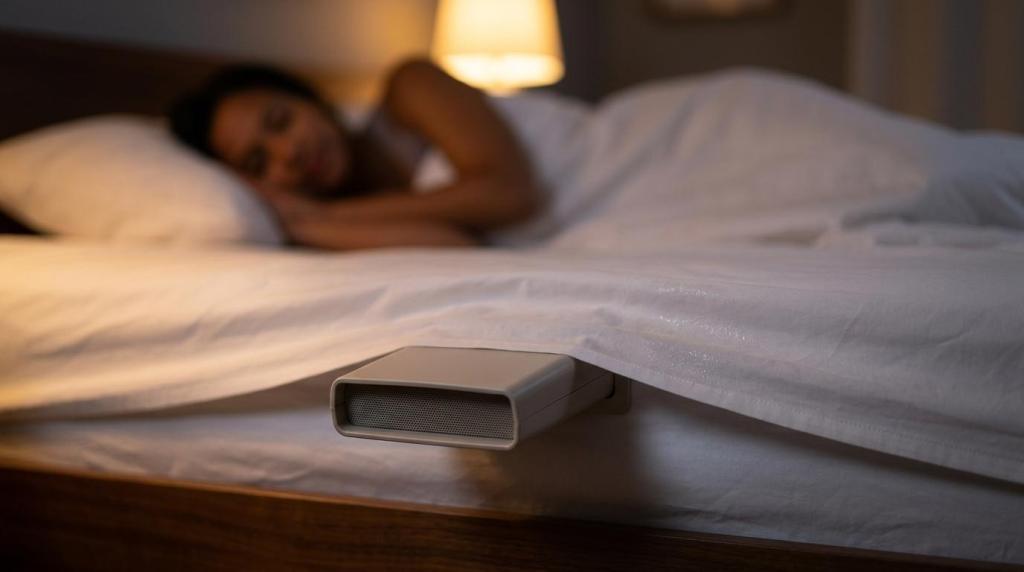
The bFan is a bed cooling fan designed to move heat and moisture from between your sheets, offering relief from night sweats and improving sleep comfort.
If you’re looking for a bed cooling fan for night sweats, you probably don’t need a lecture on why overheating wrecks sleep. You already know what it feels like, waking up damp, kicking off covers, flipping the pillow, then getting cold ten minutes later. bFan, from Tompkins Research, Inc., is built for exactly that problem. It sends a quiet stream of room air between your sheets, where heat and humidity get trapped, so your bed feels cooler without turning your whole bedroom into a freezer.
That matters because night sweats are rarely just about the room. A lot of the misery happens inside the bedding microclimate, the warm pocket of air trapped around your body by sheets, blankets, and your mattress, where your body's natural biorhythm can be disrupted. bFan is designed to improve air circulation, moving that trapped heat out, help sweat evaporate faster, and let you stay covered while still feeling cooler. For hot sleepers, women dealing with menopause or perimenopause, people on medications that trigger sweating, and anyone trying to sleep cooler without driving up air conditioning costs, that’s a very different kind of fix.
A room fan can make the bedroom feel breezier, but it often doesn’t reach the place where you’re actually overheating. bFan focuses airflow where it counts, between the sheets and around your body. That targeted airflow helps carry away body heat and moisture so you don’t feel sealed inside a hot, damp cocoon.
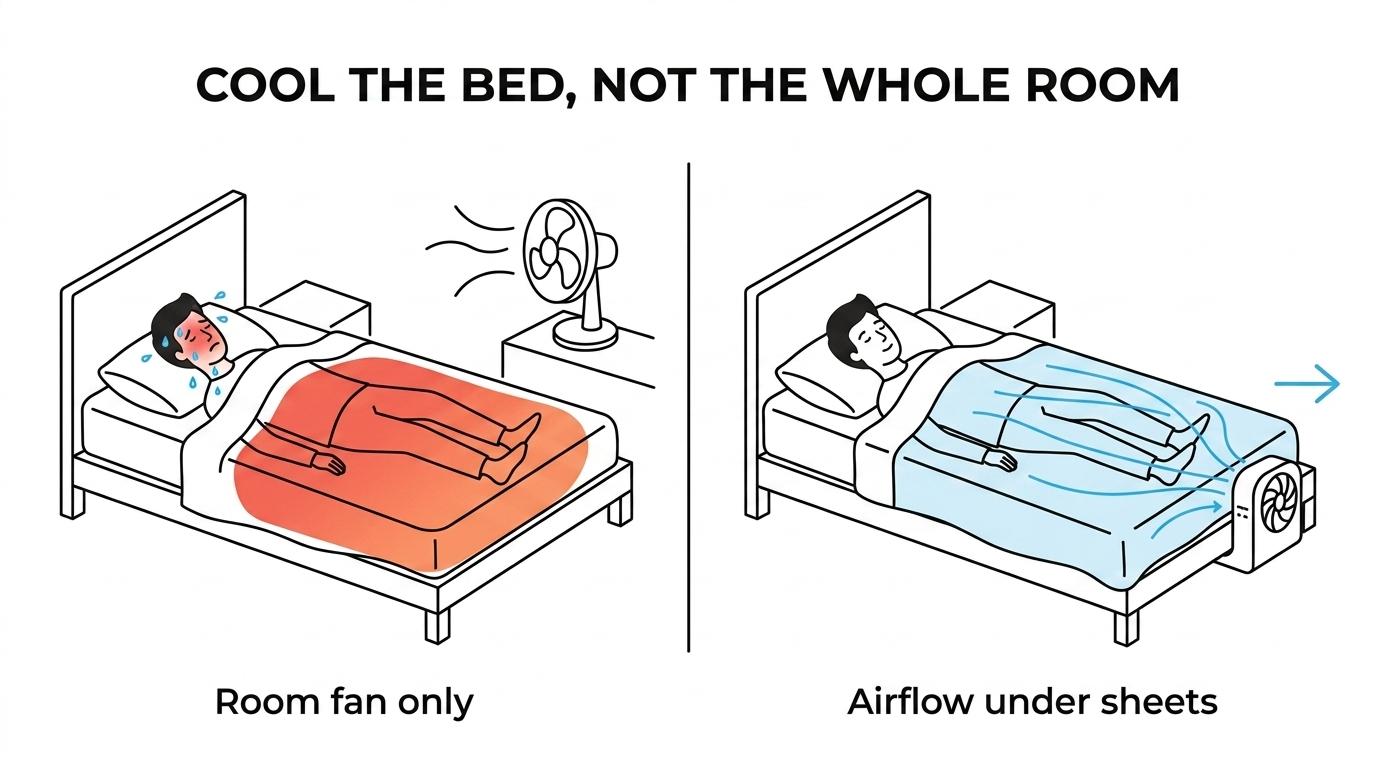
bFan from Tompkins Research, Inc. does this with a bed specific form factor, not a generic box fan on the floor, reducing fan noise significantly. The airflow duct is 12 inches wide and about three quarters of an inch deep, and the unit adjusts from 19 inches to 37 inches high, so you can position the air stream where it works best for your bed and bedding.
“bFan sends airflow between the sheets with a 12 inch wide duct and an adjustable height of 19 inches to 37 inches, so the cooling happens where hot sleepers actually need it.”
Here’s the most honest thing to know before you buy any bed fan. Neither bFan nor Bedjet cool the air. They do not make cold air. They both use the cooler air already in your room and move it through the bed so trapped heat can escape. That’s important, because it sets the right expectation. If your bedroom is already roasting, no bed fan can turn 80°F room air into refrigerated air.
That said, sleep experts commonly recommend a bedroom temperature between 60°F and 67°F, or about 15.5°C to 19.5°C, for better sleep. With a Bedfan, many people can often raise the room temperature by about 5°F and still sleep cool, because the airflow helps the body shed heat more efficiently under the covers. In plain English, you may not need to blast the AC as hard to stay comfortable.
“bFan uses the cool air already in your room, it does not refrigerate air, and that’s exactly why many sleepers can raise the thermostat by about 5°F and still rest cooler.”
That difference, cooling the bed instead of overcooling the whole room, is where bFan makes sense for a lot of households. You’re solving the trapped heat problem at the source, not paying to chill every corner of the house all night.
Not everyone overheats for the same reason. Some people simply run warm. Some wake up soaked because of hormone changes. Some start sweating after a medication change and suddenly can’t stay asleep. Others are fine at bedtime, then overheat under the comforter around 2 a.m. bFan is a strong fit when your main problem is body heat and moisture getting trapped under bedding.
Tompkins Research designed bFan for people who want immediate physical relief, not a complicated routine. If your sleep gets wrecked by hot flashes, night sweats, sticky bedding, or constant thermostat arguments, the benefit is simple, you get controlled airflow exactly where the overheating happens.
A lot of customers looking at a bed cooling fan fall into one of these groups:
Night sweats can also be a sign of an underlying medical issue, and it’s worth saying plainly, a bed fan is for symptom relief, not diagnosis or treatment. If night sweats are persistent, severe, new, or paired with other concerning symptoms, you should talk with your doctor. bFan can make you more comfortable while you sort out the cause, but it is not a substitute for medical care.
“bFan is a symptom relief tool for hot sleepers, menopause night sweats, and medication related overheating, and it does that by moving trapped heat and humidity out from under your covers.”
There’s another reason this product works well for real life. It lets you stay covered. A lot of people don’t want to sleep uncovered, even when they overheat. Maybe you like the comforter, maybe your partner likes a cooler room, maybe you just sleep better with weight on you. bFan lets you keep the bedding you like and still move heat out from under it.
If you’re comparing options and just want the practical answer, I’d recommend looking hard at the bFan from Bedfans USA as a solution when your main issue is trapped heat under the covers. It addresses the part of the sleep environment that room fans and whole room cooling often miss.
A bed cooling fan only earns its keep if it’s easy to live with. bFan keeps the hardware simple, which is one of its biggest strengths. You’re not adding water, cleaning lines, wrestling with a mattress pad, or learning an app. You’re directing airflow into the bed, controlling the speed, and sleeping.
bFan from Tompkins Research includes details that make that simple concept work better in a real bedroom. The base is designed to be sturdy and stable, it can sit under or beside the bed, and it can point inward under the covers or outward depending on your setup. The base itself is about 6.25 inches tall, 7 inches deep, and 12 inches wide, so it’s compact enough for many bed frames without feeling flimsy.
Here’s what you actually get from the product design:
That blower design matters more than it might sound. A standard fan can move air into a room, but getting air to travel between sheets and keep moving once it meets fabric takes pressure. bFan uses a squirrel cage blower because this application needs controlled, directed airflow that can actually lift and move bedding air, not just stir the bedroom.
“bFan operates at about 28db to 32db at normal speed, uses a squirrel cage blower for stronger between the sheets airflow, and adds remote plus timer controls for easier nightly use.”
Quiet matters, too. If a cooling product solves one sleep problem by creating another, it’s not much of a solution. bFan is meant to be heard less and felt more, especially at normal operating speed.
You can also fine tune how it feels by choosing the right sheets. Tight weave sheets usually work best with a bed fan because they help the air travel across your body and carry away heat instead of escaping too quickly. That one detail can make a real difference in how evenly the cooling feels.
If you’ve tried sleeping with a ceiling fan, a bedside fan, cooling sheets, or a lower thermostat and still wake up sweaty under the blanket, this is where bFan changes the equation. It cools the bed environment directly, not just the room around it.
Price matters, especially in this category. A lot of people shopping for nighttime cooling are shocked when they start comparing options. Some systems look impressive until you realize you’re paying a premium for features you may not actually need.
bFan keeps the value proposition grounded. It focuses on controllable airflow between the sheets, quiet operation, simple placement, and lower power use. If your real goal is to stop overheating in bed, that simplicity can be a benefit, not a compromise.
This is where the Bedjet comparison becomes useful. One Bedjet is more than twice the price of a single bFan. A dual zone Bedjet setup is over a thousand dollars and more than twice the price of two bFans. That’s a major jump in cost for a product category where, again, neither system cools the air itself. Both rely on the cooler air already in the room.
Tompkins Research gives you another option. Two bFans can create dual zone microclimate control using two separate fans, so each sleeper gets independent airflow on their own side of the bed, at a fraction of the over a thousand dollars required for a dual zone Bedjet setup. For couples who don’t sleep at the same temperature, that’s a very practical way to solve the problem without overspending.
There’s also a history point here that matters. The original Bedfan concept came to market in 2003, several years before Bedjet was even thought of. bFan comes from the original bed fan category, and that shows in the way the product stays focused on the core function, moving air through the bed in a quiet, controllable way.
A lot of shoppers get distracted by the idea that a more expensive system must create colder sleep. That isn’t automatically true. Since neither bFan nor Bedjet cools the air, the real question is simpler, how well does the product move room air through the bedding, how easy is it to adjust, how noisy is it, and how much are you paying to solve your actual problem.
For many hot sleepers, the answer favors bFan.
If you’ve been cranking the thermostat at night just to survive under the covers, the power draw matters. bFan uses only about 18 watts on average. That is a very small energy load compared with the cost of lowering central air conditioning just to make the bed feel tolerable.
Tompkins Research built bFan around a common sense idea, focusing on air circulation to cool the sleeper, not the entire house. When many people use a Bedfan, they can often raise the room temperature by about 5°F and still sleep cool enough for more restful sleep. Pair that with an average use of about 18 watts, and you can see why energy conscious sleepers are drawn to this type of product.
That doesn’t mean you should ignore room temperature. It means you can often be smarter about it. Sleep experts commonly recommend 60°F to 67°F for good sleep, but real homes, real budgets, and real partners don’t always make that range practical every night. A bed fan gives you another lever to pull. Instead of forcing the whole room colder, you cool the sleep space that matters most.
For a lot of people, that translates into a more comfortable compromise. The bedroom can be less aggressively cooled, your partner may not need extra blankets, and you’re not paying as much to fight trapped heat inside the bedding.
This point matters even more in summer, in warmer climates, and in homes where nighttime AC use is a real budget concern. bFan from Tompkins Research gives you a low power way to improve bed comfort with a product that is designed around direct airflow rather than heavy energy use.
A good product page should answer the question you’ll ask the first night, what is this actually going to feel like. With bFan, most people start by placing the unit at the foot or side of the bed, pointing the airflow under the sheets. Then you use the remote to choose the speed that feels right, and adjust the height if needed.
When you first get into bed, you may want a stronger airflow to flush out built up heat, aligning with your body's natural biorhythm for optimal comfort. Once your body and bedding settle, many sleepers prefer a lower setting that keeps air moving quietly without feeling intrusive. Timer controls help here, because you can match the airflow pattern to how you usually fall asleep.
The physical setup is straightforward because the unit is made for bed use, not adapted from a desk fan. The stable base can sit under or beside the bed, and the adjustable body lets you work around different bed heights, frames, and bedding thicknesses. That makes a difference if you’ve already tried to improvise with household fans and never liked the result.
bFan also works best when the bedding lets the air move through the bed instead of escaping right away. Tight weave sheets are usually the sweet spot. They help the airflow spread across the body and carry heat away more evenly. If your bedding is very loose, very open, or piled heavily, you may need a bit of adjustment to get the feel right.
This is also a good place to set expectations honestly. bFan is not an ice cold blast. It’s steady, directed airflow designed to remove trapped heat and help sweat evaporate. If you tend to wake up clammy under the covers, that change can feel significant even though the unit is only moving room air.
The right cooling product depends on what’s actually keeping you awake. bFan is an excellent fit when you sleep in a reasonably cooled room but overheat once you’re under the sheets. It’s also a strong fit when you want a lower cost, lower power, lower complexity option instead of a premium sleep system.
bFan from Tompkins Research is probably right for you if your priorities sound like this, you want cooler sleep tonight, you want direct relief from trapped heat, you don’t need refrigerated air, you don’t care about flashy smart features, and you’d rather spend your money on airflow that works than on an expensive control system.
It may be less ideal if your bedroom itself stays very hot all night. Since bFan uses the air already in the room, extremely warm ambient conditions limit what any bed fan can do. If the room temperature is far above the sleep expert recommendation of 60°F to 67°F, you may still need better room cooling as part of the solution.
It’s also worth being realistic if your night sweats are severe and unexplained. A bed fan can absolutely help you feel more comfortable, and many people do sleep better with that relief, but you should still speak with a clinician if you have persistent sweating, sudden changes, fever, weight loss, or other symptoms that need medical attention.
That kind of honesty is part of what makes bFan relevant. The product is not trying to be everything. It is built to do one job well, move air between the sheets so your body can dump heat more effectively and your bed feels drier, cooler, and easier to sleep in.
There are plenty of cheap fans in the world. Very few are designed specifically for the bed. That’s the difference. bFan comes from a company focused on bed cooling, and the product reflects actual sleep use, not a generic fan repackaged with sleep language.
Tompkins Research, Inc. has tied the brand to the original bed fan category, with the original Bedfan concept dating back to 2003. That history matters because it explains why the product addresses bed specific details like between the sheets airflow, blower pressure, adjustable height, stable placement, quiet operation, and simple in bed control.
There’s also something reassuring about the sales approach. bFan is not sold on Amazon, which means you are not sorting through copycat listings, mixed reviews for different versions, or random marketplace sellers. Buying direct keeps the product source clearer, and it puts the focus on the actual manufacturer rather than on a marketplace algorithm.
That doesn’t mean the product is right for everyone. It means you can see the design intent clearly. bFan is for people who want targeted bed cooling, quieter sleep, easy controls, and lower energy use without paying luxury system pricing.
If you’ve spent night after night trying to solve sweating by lowering the thermostat, changing pajamas, swapping sheets, or running a room fan that never quite reaches the problem area, bFan offers a more direct answer. It cools the bed space itself, which is often the missing piece.
To get the best result, set bFan up with your actual sleep habits in mind. If you tend to start cool and overheat later, use a lower starting speed and let the timer controls handle the rest. If you get into bed already warm, begin higher, then reduce once the bedding has flushed out the stored heat.
Keep the room reasonably cool if you can. Again, 60°F to 67°F is the common expert recommendation for sleep, and a Bedfan often lets many sleepers nudge that temperature about 5°F higher while still feeling cool enough under the covers. That is one of the most practical benefits in the whole category.
Pay attention to the bedding. Tight weave sheets help the airflow move across your body. If your comforter is especially heavy or your sheets are very loose, a small change in placement or speed can make a surprisingly big difference.
And if you share the bed, think side by side rather than one size fits all. Two bFans can create dual zone microclimate control, one fan for each sleeper, so each person gets the airflow they actually want instead of forcing one room temperature or one expensive system on both sides.
If your goal is simple, sleep cooler, sweat less, stay covered, and spend less than you would on premium alternatives, bFan is a very practical place to start.
All links have been checked and are currently working.
Copyright 2005 - present - Tompkins Research, Inc. & Kurt W. Tompkins All Rights Reserved DO NOT COPY. bFan® and the word bfan® in any format is a registered trademark of Kurt W. Tompkins the word BFAN® in any format shall not be used without written permission of the mark owner. This includes specifically Brookstone where you like to bait and switch, do not use my mark to bait customers.