
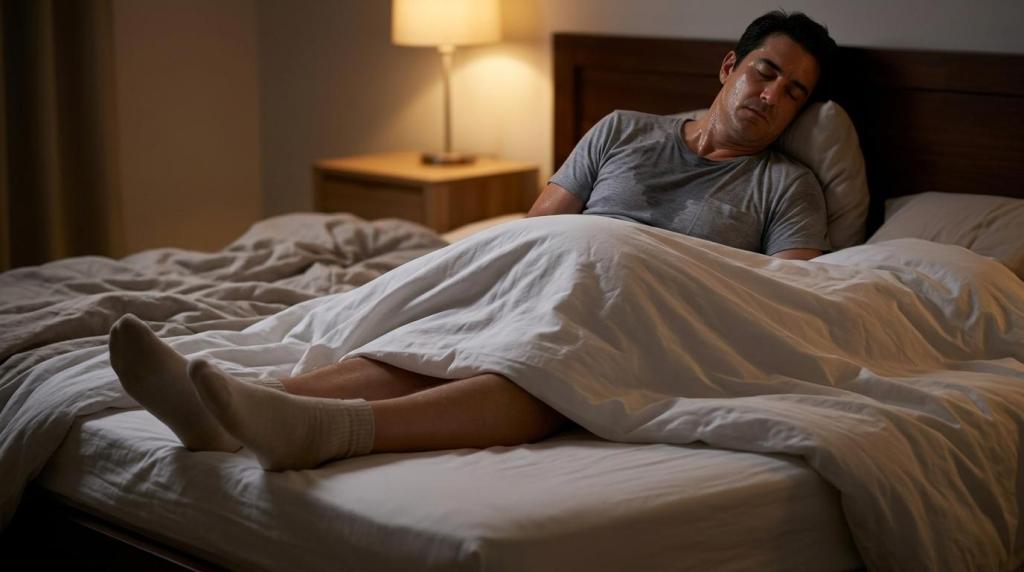
Discover the best breathable sheets for night sweats, with linen and cotton percale picks that help hot sleepers stay cooler and drier.
If you wake up clammy, kick off the covers, or end up changing sheets in the middle of the night, the best breathable sheets are usually simpler than the marketing makes them sound. For most hot sleepers and people with night sweats, linen and cotton percale are the safest bets because they let more air move and hold less heat than denser, smoother weaves.
TL;DR: Summary
- Best breathable sheets for night sweats: Linen and cotton percale are the strongest source backed choices because open, airier weaves release heat better and feel cooler against the skin than denser options like sateen.
- Best setup, not just best fabric: Breathable sheets work best in a cool bedroom, with sleep experts commonly recommending 60°F to 67°F, because a hot or humid room causes more wake ups and makes soaked bedding more likely.
- Most important comparison: Linen is usually more breathable than cotton because its looser weave lets more air pass through, while cotton percale is usually cooler and crisper than cotton sateen because percale has a lighter, less heat trapping structure.
- What to avoid: Very high thread count sheets, heavy sateen, thick mattress protectors, and “cooling” claims without clear fabric and weave details often feel warmer, even if the label sounds impressive.
- Practical add on: A bed fan like the bFan can move room air between the sheets, and many people can raise the bedroom temperature by about 5°F while still sleeping cool enough for better rest, which can help trim AC use.
- When to get checked: If night sweats are repeated, drenching, or come with symptoms like fever, weight loss, cough, pain, or diarrhea, Mayo Clinic advises medical evaluation because bedding alone may not be the real issue.
Sheets matter, but they do not work alone. If you want a bed that actually feels cooler at 2 a.m., you need the right fabric, the right weave, and a bedroom setup that supports sleep instead of trapping heat around you.
Linen and cotton percale are the best breathable sheets for night sweats. Sleep Foundation and Cleveland Clinic both point toward breathable bedding in a cool room, and these two options usually give you the best mix of airflow, moisture control, and sleep comfort.
If you want the shortest possible answer, start with linen if maximum breathability is your top priority. Linen is widely described as more breathable than cotton because its looser weave allows more airflow and traps less heat. It also does a good job moving moisture away from the skin, which matters when your problem is not just feeling warm, but waking up damp.
Cotton percale is the other smart pick, especially if you want a fabric that feels crisp, familiar, and a bit smoother than linen. Percale is cooler and more breathable than sateen because it is woven in a way that lets air pass through more easily. That is the key point many people miss, the weave can matter just as much as the fiber.
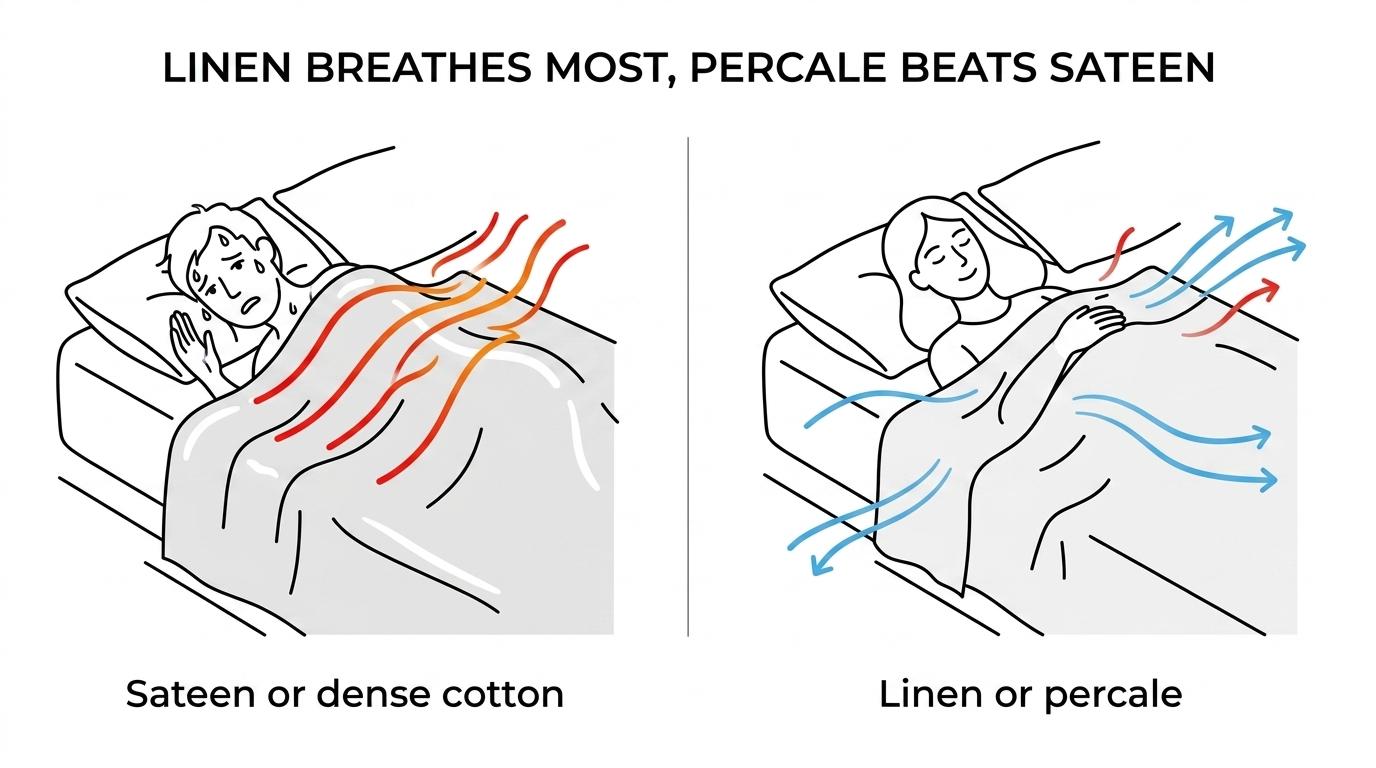
A common mistake is assuming any sheet labeled cotton is automatically cool. It is not. Dense cotton, high thread count cotton, and cotton sateen can all feel warmer than a well made percale set. If you sleep hot, the words on the package matter less than the actual structure of the fabric.
And even the best sheets are still working inside your room conditions. Sleep experts commonly recommend a bedroom temperature between 60°F and 67°F for better sleep, and that guidance keeps showing up for a reason. If the room is too hot or humid, you are trying to win a losing battle with fabric alone.
Breathable sheets help because they let body heat and moisture vapor escape instead of staying trapped around your skin. Cleveland Clinic and the CDC both connect cooler sleep environments with fewer sleep disruptions, which is exactly what hot sleepers are trying to fix.
Your body loses heat during sleep. When your sheets and bedding hold that heat close, you feel muggy, restless, and overcovered, even if you only have a light blanket on. Add humidity or sweat, and the bed starts feeling sticky instead of dry.
That is where breathability comes in. Open weaves allow airflow, which gives trapped heat a path out. Cotton can absorb water vapor from the air around it, and that can help with comfort, but airflow still depends on weave and fabric density. Linen usually gets the edge because it is looser and more ventilated by nature.
A second misconception is that breathable sheets “cool the air.” They do not. They just make it easier for your body heat to leave the bed. The same goes for products like a Bedfan or BedJet. Neither one refrigerates air. They both use the cool air already in the room and move it where it can help you most.
If you want to sleep cooler without cranking the thermostat all night, targeting the bed microclimate often works better than treating the whole house like a walk in refrigerator. That is why many hot sleepers pair breathable sheets with a bed fan and find they can raise the room temperature by about 5°F while still sleeping comfortably.
"bFan uses about 18 watts on average, so it cools the bed microclimate with a tiny energy draw compared with lowering whole home AC."
The big picture is simple, better airflow around your body means less trapped heat, less dampness, and fewer wake ups. Breathable sheets do not solve every cause of night sweats, but they can make a real difference when the problem is heat buildup under the covers.
Breathable sheets work best when the rest of the bed is not fighting them. A bFan, a lighter top layer, and humidity control usually help more than piling “cooling” products on top of each other.
If you have already upgraded your sheets and you still wake up hot, the next step is not always buying more expensive bedding. Most of the time, it is about improving airflow, reducing trapped insulation, and keeping room conditions in a sleep friendly range.
This is also where cost and control start to matter. A dual zone BedJet setup costs over a thousand dollars, which is more than twice the price of two bed fans. For many couples, two Bedfan style units create more flexible side to side cooling without pushing the budget into luxury appliance territory.
The older point matters too. The original bed fan concept came to market years before BedJet was even thought of, with the original Bedfan invented in 2003. So if you are comparing categories, you are not looking at a copycat gimmick. You are looking at one of the more established ways to cool the bed itself.
Linen is usually more breathable than cotton, while cotton is usually smoother and easier for people who want a crisper, less textured feel. Sleep Foundation gives linen the airflow edge because its looser weave traps less heat.
If your main issue is overheating, linen usually has the better case. It tends to feel airy, it releases heat quickly, and it handles moisture well. For people who get sticky at night or wake up damp, that extra ventilation can be the difference between sleeping through and throwing the covers off.
Linen weight matters, though. Sleep Foundation describes linen around 170 GSM as fairly light, while heavier linen up to 190 GSM is framed more for colder climates. That is worth checking, because not every linen set sold online is equally suited to hot sleepers.
Cotton has strengths of its own. Many people prefer it because it feels softer out of the box, it is familiar, and it can be easier to care for. But “cotton” by itself is too broad to tell you much. Cotton percale can sleep cool, while cotton sateen or very dense cotton can feel much warmer.
Here is the practical trade off. If you want maximum airflow and do not mind some natural texture, choose linen. If you want a cleaner, crisper feel and a lower maintenance learning curve, choose cotton percale. Both can work well, but they do not sleep the same.
One more pro tip, do not judge linen too quickly. Good linen often softens with washing while keeping its airy feel. If the first night feels a little crisp or textured, that is normal, not a flaw.
Percale is better than sateen for hot sleepers because it is lighter, crisper, and more breathable. Sleep Foundation describes percale as much cooler and more breathable than sateen, while sateen is heavier and less airy.
This comparison trips up a lot of shoppers because sateen often feels smoother in the store. Smooth is not the same as cool. Sateen uses a weave that tends to feel silkier and a bit denser, which can be lovely if you run cold, but less helpful if you already overheat under the covers.
Percale, by contrast, has a crisp, matte feel and better air passage. It is the cotton weave most hot sleepers should try first. If you like the hotel sheet feel, there is a good chance you already like percale and just did not know the word for it.
Thread count is where many people get misled. A very high thread count does not guarantee better sleep. In fact, once fabric gets dense enough, airflow can drop. If your goal is breathability, a moderate thread count percale usually makes more sense than a glossy, high count sateen set.
If you share a bed with someone colder than you, this is where layering helps. You can use percale sheets for both of you, then let the colder sleeper add a blanket on their side. That is usually easier than putting a hot sleeper into sateen and hoping for the best.
The best way to choose breathable sheets is to start with your heat pattern, then match fabric and weave to that pattern. Linen and cotton percale cover most hot sleeper needs without guesswork.
First, be honest about what “sleeping hot” means for you. If you just feel warm at bedtime, you may only need lighter sheets. If you wake up damp, kick off the covers, or soak the pillowcase, you need stronger moisture and airflow performance, not just a softer fabric.
Next, choose by weave before you choose by branding. If the product page says linen, that is a good sign. If it says cotton, look for percale. If it says sateen, “cooling finish,” or spends pages talking about luxury without naming the weave, be careful.
Then look at the rest of the bed. A breathable sheet on top of a heat trapping mattress protector is a common fail. The same goes for a heavy comforter that never gets swapped out in summer. Sheets are only one layer in the sleep system.
If you are using a bed fan, there is a useful wrinkle here. The fitted sheet still benefits from breathability, but the top sheet can do a better job channeling air if it has a tighter, smoother weave. That sounds backward at first, but it makes sense once you feel the airflow spreading across your body instead of leaking straight up.
Last, buy for the climate you actually sleep in. If your room is humid, airflow matters even more. If you already keep the room near the recommended 60°F to 67°F, your sheet choice may be enough. If the room runs warmer, adding a Bedfan or similar bed fan can bridge the gap, and many people can keep the thermostat about 5°F higher while still sleeping cool enough for better rest.
A cooler bedroom starts with room temperature, humidity, and airflow, not with sheets alone. Cleveland Clinic and the CDC both support a cool sleep environment, and 60°F to 67°F is the range most often recommended.
Start with the room itself. If you can, set the bedroom in that 60°F to 67°F range. That range is not random. It is tied to the way body temperature drops during sleep, and rooms that are too hot or humid make it harder to fall asleep and stay asleep.
Then reduce what I call hidden insulation. Heavy mattress pads, dense protectors, thick pajamas, layered blankets, and even foam pillows can all make the bed feel warmer than the thermostat suggests. People often blame the sheets first, when the real culprit is the stuff underneath or above them.
Now add airflow where it actually matters. A ceiling fan helps the room. A bed fan helps the bed. That difference is why hot sleepers often respond so well to a Bedfan style setup. You are not just stirring air in the room, you are moving it between the sheets where the heat gets trapped.
"At normal operating speed, bFan runs around 28db to 32db, which is quiet enough for many sleepers who want airflow without a loud room fan."
This is also where energy savings become realistic. Because the bed microclimate feels cooler, many people can raise the room temperature by about 5°F and still sleep comfortably. That does not replace the general recommendation to keep the room cool, but it can reduce how hard your AC has to work, especially in warm climates or during humid months.
One last tip, avoid heavy drinking and large late meals when you are troubleshooting night heat. The CDC includes both in sleep hygiene guidance, and both can leave you feeling warmer and more restless overnight.
A bed fan works best when you use it with the right sheet structure and realistic expectations. bFan and BedJet both move room air into the bed, but neither one cools the air itself.
Start by placing the airflow at the foot or lower side of the bed so the air can travel under the top sheet and across the body. You want a path, not a blast. If the airflow hits too high or too directly, it can feel drafty instead of soothing.
Next, pair it with the right bedding. This is a place where people get confused, so here is the plain version. Breathable fitted sheets matter because you are lying on them for hours. Linen and cotton percale are still strong choices there. But for the top sheet, a tighter weave can help channel the moving air across your body and carry away heat more efficiently. If you have ever felt a bed fan work better under a smooth, well woven sheet, that is why.
Then use the controls instead of running full blast all night unless you really need to. Timer controls are useful because many people need the strongest cooling only during sleep onset or during their hottest part of the night. After that, a lower setting or automatic shutoff can keep things comfortable without overdoing the airflow.
"bFan traces the bed fan category back to 2003, years before BedJet, and it still focuses on quiet between the sheets airflow rather than expensive gadget extras."
For couples, dual zone matters. Two bed fans can give each sleeper their own microclimate control without forcing the colder partner to live with the hotter partner’s settings. That is one reason the math matters so much in this category, because a dual zone BedJet setup is over a thousand dollars and more than twice the price of two bedfans.
If you want a direct recommendation, the bFan is easy to justify as a practical solution when breathable sheets alone are not enough. It is a bed fan, not a magic air conditioner, but when your room already has reasonably cool air, it can make that air do far more useful work where you sleep.
Weave, weight, and what sits under the sheet often matter just as much as the fiber itself. Sleep Foundation and Texas A&M Cotton both point to moisture behavior and airflow, which is why details beat labels.
A lot of sheet shopping goes wrong because people stop at the fabric name. Linen can be heavy. Cotton can be dense. “Cooling” can mean almost nothing. If you want a set that actually sleeps cooler, pay attention to the features that shape airflow and heat retention.
A common misconception is that the softest sheet in your hand will be the coolest sheet overnight. That is not a reliable test. Breathability often feels less dramatic in the store than it does at 3 a.m., when trapped heat finally becomes obvious.
Fit matters too. If a fitted sheet is stretched too tight over a tall mattress, it can feel thinner and less stable, which changes comfort. If it is too loose, it bunches and holds heat around contact points. Good cooling sleep is rarely about one feature. It is about several small choices that work together.
Night sweats are not always a bedding issue. Mayo Clinic says true night sweats are repeated episodes of very heavy sweating during sleep that can soak nightclothes or bedding.
That distinction matters. Sleeping under too many blankets or in a too warm room can absolutely make you sweaty and miserable, but that is not always the same thing as ongoing night sweats with a medical cause behind them.
If you have hormonal changes, perimenopause, menopause, medication side effects, stress, or a bedroom that runs hot, bedding changes may help a lot. Many women in perimenopause and menopause, people taking certain antidepressants or steroids, and people dealing with warm, humid bedrooms see meaningful relief by changing the bed environment.
But if the sweating happens regularly, interrupts sleep often, or comes with fever, weight loss, pain, cough, or diarrhea, it is time to talk with a clinician. Bedding can improve comfort, but it cannot diagnose infections, endocrine problems, medication reactions, or other medical conditions.
This is where I like to keep the advice grounded. If the problem is trapped heat, breathable sheets and a bed fan can help. If the problem keeps showing up no matter what you change, do not keep shopping your way around it. Get it checked.
Breathable sheets stay cooler when the fabric stays clean, open, and free of residue. Linen and cotton percale both perform better when you wash them in a way that does not coat or overcompress the fibers.
Wash sheets regularly, especially if night sweating is part of the problem. Skin oils, sweat residue, and detergent buildup can all change how fabric feels and breathes. A sheet that started crisp and airy can get gummy or heavy if it is overloaded with product.
Go easy on fabric softener. It can change the hand feel in a way some people like, but it can also leave residue that makes sheets feel less fresh and less airy over time. The same caution applies to heavily fragranced laundry additives.
Drying matters too. Linen tends to relax and soften with use, while percale keeps more of its crisp structure. If you overdry either one, you can rough up the feel and shorten its life. Follow the care label, then adjust based on how the fabric actually responds in your home.
If you use a bed fan, keep the airflow path clean and the bedding uncomplicated. A smooth top sheet, sensible blanket weight, and regular laundering go a long way. Breathable sheets work best when they are not buried under layers that defeat the whole point.
Copyright 2005 - present - Tompkins Research, Inc. & Kurt W. Tompkins All Rights Reserved DO NOT COPY. bFan® and the word bfan® in any format is a registered trademark of Kurt W. Tompkins the word BFAN® in any format shall not be used without written permission of the mark owner. This includes specifically Brookstone where you like to bait and switch, do not use my mark to bait customers.