

Find the ideal bedroom temperature for better sleep, reduce night sweats, and cool trapped heat with smart room and bedding adjustments.
A cool bedroom helps your body do one of the most important things it needs for sleep, let core temperature drift down. When your room or your bed holds too much heat, you tend to take longer to fall asleep, wake up more often, and get less refreshing REM and deep sleep. That matters even more if you run hot, deal with menopause, take medications that trigger night sweats, or share a bed with someone who likes a different temperature, impacting your overall health. The main problem bedroom temperature solves is trapped body heat, especially the heat that builds up under sheets and keeps your body from shedding warmth when it should.
Yes, for most adults, 60°F to 67°F is the best bedroom range, and PubMed backed reviews often cluster near 64°F to 68°F. If you overheat at night, start near the cooler end, because heat usually disrupts sleep more than mild coolness.
That range lines up with what sleep experts commonly recommend, 60°F to 67°F, or 15.5°C to 19.5°C. Research summaries also support a broader comfort zone of about 62.6°F to 69.8°F, with many adults doing especially well around 64.4°F to 68°F. The reason is simple, sleep onset works best when your body can unload heat.
There is one catch. Room temperature is only part of the story. Your actual sleep experience depends on your bed microclimate, which is the warm little pocket of air trapped by your mattress, sheets, blanket, pajamas, and body. If that space gets stuffy and hot, a decent thermostat setting may still feel awful.
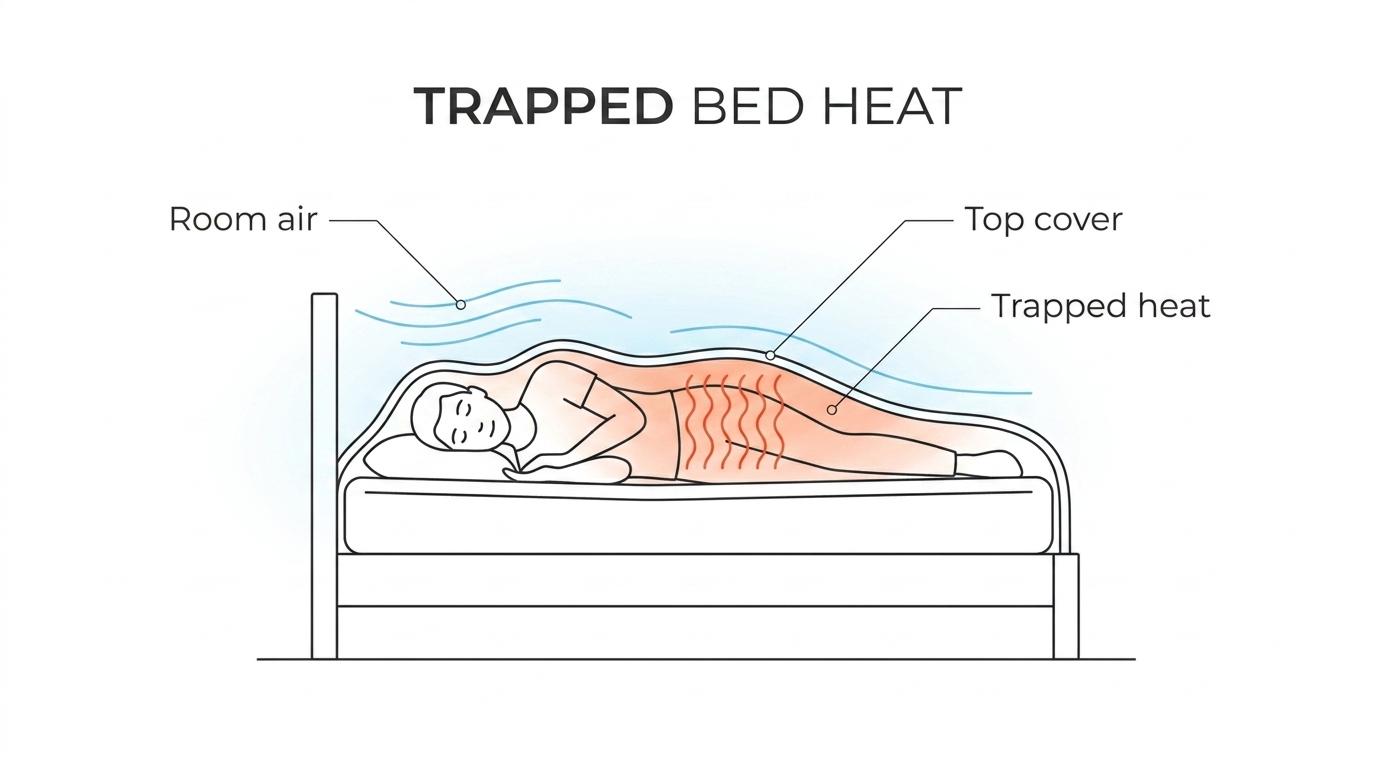
Pro tip, if you wake sweaty at 3 a.m., the room may not be the only issue. Quite often, the problem is heat trapped under your covers, not a thermostat that is wildly off.
Yes, your brain and body sleep better when heat loss is easy, and Mayo Clinic style guidance matches what lab studies show. Warm rooms make it harder to shed heat, which can raise arousals and fragment REM sleep.
Your body is built to sleep on a cooling curve. In the evening, core temperature starts to dip. Blood flow increases to the hands and feet, which helps move heat out. If your room or bedding blocks that heat loss, then sleep onset can slow down. If the heat keeps building, you may drift into lighter sleep and wake more often.
This is why a bedroom that feels only a little too warm can feel much worse at 2 a.m. than it did at bedtime. Early in the night, your body can still compensate. Later, trapped heat has had time to build under the covers.
A common misconception is that colder is always better. It isn’t. If the room gets cold enough that your body has to work to stay warm, sleep can fragment too. Most people do best with a cool room plus bedding that keeps them comfortable without overheating.
If your hands and feet tend to get warm before bed, that is not a bad sign. It often means your body is doing the right thing, moving heat outward so sleep can begin.
Yes, the best fixes target trapped heat directly, not just the thermostat, and Bedfan style airflow is one of the most effective tools. AC, breathable bedding, and better humidity control also help.
If you want the quickest path to a cooler bed, focus on what changes the air around your body, not just the air at the bedroom wall. That is why a bed fan often works so well for hot sleepers and people with night sweats.
The subtle trade off is cost versus precision. Whole room cooling changes everything in the bedroom. A bed fan changes the part that matters most to your body, often with much less energy.
Yes, you can usually dial this in quickly, and a thermometer plus your own wake patterns will tell you more than guesswork. Start with one steady setting and change only one variable each night.
Step 1, set the room to 65°F or 66°F and keep your bedding consistent. Use the same sheets, blanket, pajamas, and bedtime. If you change several things at once, you won’t know what fixed the problem.
Step 2, track three points the next morning, how long it took you to fall asleep, whether you woke sweaty or cold, and how rested you felt. You do not need fancy wearables for this. A short note on your phone is enough.
Step 3, adjust only one step at a time. If you woke warm, lower the room by 1°F or improve airflow in bed. If you woke cold, keep the room cool and add light bedding before you raise the thermostat. That approach usually works better because it protects the cooling signal your body needs for sleep.
Pro tip, judge your setup by the second half of the night, not the first 20 minutes in bed. Many bedrooms feel fine at lights out and fail later when heat collects under the covers.
Yes, bed microclimate control is usually more efficient, while whole room cooling is broader but more expensive. Bedfan and central AC solve different parts of the same problem.
Whole room cooling lowers the air temperature everywhere. That helps, especially in hot climates, but it also costs more because you are cooling walls, furniture, hallways, and sometimes the whole house to help one person sleep. Bed microclimate cooling, by contrast, targets the heat trapped around your body.
Common misconception, neither Bedfan nor BedJet actually cools the air. They both use the cooler air already in the room and move it through the bedding to carry away body heat. If the room is oven hot, neither product can create cold air from nothing.
Here’s how the trade off usually works.
If your utility bill is the pain point, bed cooling usually gives you the better return. If the entire room feels muggy and stale, start with room temperature and ventilation first.
Yes, hot sleepers and people in menopause usually do better on the cooler side of the range, and stable airflow helps even more. Menopause and some SSRIs can trigger night sweats that a thermostat alone may not control.
This is where the bed microclimate matters a lot. A hot flash or medication related sweat episode can start suddenly. Even if the room is 66°F, the space under your covers can still turn warm and humid quickly. That is why some people keep lowering the thermostat and still wake up sweating.
A cooler bedroom helps, but the bigger win is faster heat removal at the bed. Sleep experts commonly recommend 60°F to 67°F. If you use a Bedfan to move air through the sheets, many people can hold the room about 5°F warmer than they otherwise could and still feel cool enough to sleep better. That can matter a lot if your partner gets cold.
A few groups often need extra attention:
If night sweats are new, severe, or tied to fever, weight loss, chest pain, or other symptoms, talk with a clinician. A hot room is common, but it is not the only possible cause.
Yes, a bed fan works best when you pair it with the right sheet setup, a reasonable thermostat, and a timer. Bedfan and bFan units remove trapped heat well, but placement and fabric choice matter.
Step 1, keep the bedroom within a realistic cool range. Sleep experts commonly recommend 60°F to 67°F. A bed fan is not a substitute for basic room comfort, it is a tool that makes that cool room work better at the body level.
Step 2, use tight weave sheets and aim airflow into the space under the top sheet. That creates a moving layer of air across your skin, which helps carry away heat. If you use very open fabric, some of that airflow escapes too easily and cooling feels weaker.
Step 3, use the timer and fan speed deliberately. Start a little higher as you fall asleep, then lower it or let the timer do the work once your body temperature settles. Many people can set the thermostat about 5°F higher with a Bedfan and still stay comfortable, which can trim air conditioning use meaningfully over a season.
Pro tip, stronger is not always better. Too much airflow can wake light sleepers or leave you chilly around dawn. The sweet spot is enough air to remove heat at about the rate your body creates it.
Yes, Bedfan usually makes more sense if you want simple cooling, lower power use, and a lower price. BedJet offers more features, but the cost jump is real, especially for couples.
The first thing to clear up is function. Neither product cools the air itself. Both rely on the room air you already have. They differ in how they deliver that air, how much you pay, and how much complexity you want near the bed.
The original Bedfan came to market in 2003, several years before BedJet was even thought of. That matters because the bed fan category was built around the simple idea of moving room air where trapped body heat lives, inside the bedding.
Here’s the practical comparison most buyers care about.
Common misconception, paying more does not mean colder air. Since neither system chills air, the real question is how effectively it moves room air through your bedding and whether that is worth the extra spend.
Yes, your bedding and humidity can override the thermostat, and ASHRAE style comfort logic backs that up. A 66°F room with heavy bedding can feel hotter than a 70°F room with good airflow.
This is why people argue about bedroom temperature and both think they’re right. One person is reacting to the thermostat. The other is reacting to the microclimate under the comforter.
Three factors usually matter most:
Pro tip, if your bedroom is in range but you still wake hot, try changing only one fabric layer first. Many people overcorrect by dropping the thermostat when the real problem is a too warm duvet or mattress protector.
Yes, couples can sleep well together if you separate the bed climate from the room climate, and two independent cooling points usually work better than compromise. One thermostat rarely makes two very different sleepers happy.
Step 1, set the room for neutral comfort, not for the hottest sleeper. A bedroom around 64°F to 67°F usually gives you a workable base. If one of you runs very hot, direct cooling at that side of the bed often solves the conflict without freezing the other person.
Step 2, split the bedding even if you share the mattress. Separate blankets, lighter layers for one side, and different pajamas work better than endless thermostat arguments. This is one of the simplest fixes and it works.
Step 3, add side specific airflow if needed. Two bedfans can give couples true dual zone microclimate control for much less than a dual zone BedJet setup that costs over a thousand dollars. If one partner needs cooling and the other does not, direct bed airflow is often the cleanest answer.
If then logic helps here. If the hot sleeper improves with direct bed airflow, then keep the room a little warmer so the cool sleeper stays comfortable, which can also benefit their overall health. If both still feel bad, then the room itself may be too warm or the bedding too insulating.
Yes, frequent night sweats can come from a warm bedroom, but Cleveland Clinic style warning signs still matter. Fever, unexplained weight loss, new medications, and sleep apnea symptoms should not be ignored.
A hot room is the obvious cause, and it is common. Menopause is also common. So are medication side effects from antidepressants, steroids, pain medicines, and some hormone treatments. But night sweats can also show up with infections, thyroid problems, reflux, blood sugar swings, anxiety, and other health issues.
Here’s a useful rule. If the sweating improves when you set the room to 60°F to 67°F, lighten bedding, and improve airflow in bed, then the cause may be mostly environmental. If it stays intense despite that, or if it comes with other symptoms, then medical follow up makes sense.
Common misconception, sweating at night is not automatically a bedroom temperature problem. Temperature is the first thing to fix because it is easy and low cost. It just should not be the only thing you consider if symptoms are strong or new.
Copyright 2005 - present - Tompkins Research, Inc. & Kurt W. Tompkins All Rights Reserved DO NOT COPY. bFan® and the word bfan® in any format is a registered trademark of Kurt W. Tompkins the word BFAN® in any format shall not be used without written permission of the mark owner. This includes specifically Brookstone where you like to bait and switch, do not use my mark to bait customers.