
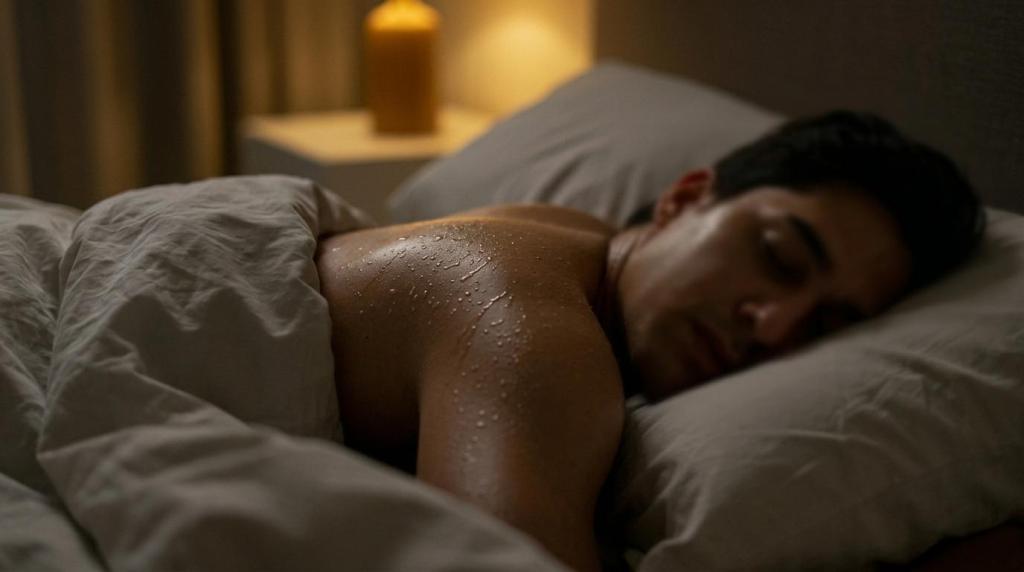
Find the best cooling mattress pad for hot sleepers, plus when breathable pads work best and when bed airflow cools better.
If you’re shopping for a cooling mattress pad, the honest answer is that the best choice depends on why you sleep hot. A passive pad with a cooling gel can help with mild warmth, sweat, or sticky bedding, but it usually won’t fix trapped heat under blankets the way directed airflow can.
TL;DR: Summary
That’s why hot sleepers often get better results by thinking about the whole sleep microclimate, not just the top layer of the mattress. Your room temperature, sheet weave, mattress material, humidity, and whether you need passive cooling or active airflow all matter.
A cooling mattress pad works by reducing heat retention, not by acting like an air conditioner. Cotton percale and PCM pads can feel cooler, but only if your room and bedding let heat escape.
Most cooling mattress pads use one of four methods: cotton fabric that breathes better, fibers that wick sweat, materials that spread heat across the surface, or a thin layer that keeps your body from sinking into hotter foam. That helps when your issue is mild warmth from the mattress itself, especially with dense memory foam.
Common misconception, the word “cooling” can sound like refrigeration. It isn’t. A pad cannot create cold air on its own. It can only manage the heat and humidity already building up around you. If your room is warm and your comforter traps heat, a passive pad can hit its limit fast.
“bFan uses about 18 watts on average, which makes it a targeted bed cooling option instead of a whole room energy hit.”
The biggest gains usually come when you combine the pad with a slightly cool bedroom. Sleep experts commonly recommend 60°F to 67°F, 15.5°C to 19.5°C, and Harvard Health places the sweet spot at 65°F to 68°F for many adults. If the room is already cool, a good pad helps with temperature regulation. If the room is stuffy, you may need airflow, not just a cooler fabric.
Yes, cooling mattress pads can help, but many only feel coolest during the first part of the night. Latex toppers and breathable pads hold up better than dense foam with a cool touch cover.
That cool first impression comes from heat transfer. When you first lie down, your body dumps heat into the cooler surface. After a while, the material warms up. If it cannot release that heat into the room, the cooling effect fades. This is why some people love a pad for the first hour, then wake up sweaty at 2 a.m.
Pads work best for people who sleep a little warm, not intensely hot. If your back gets clammy where it touches the bed, a breathable pad can help by cutting heat retention. If your issue is trapped body heat under the covers, the stronger fix is airflow through the bedding.
A lot of shoppers miss the humidity piece. Sweat is not just about temperature, it is also about moisture getting trapped against skin and fabric. Increased airflow helps sweat evaporate and can make the same room feel cooler. That is where a bed fan and a cooling mattress pad stop being direct substitutes and start becoming different tools.
Choose based on where the heat is coming from. Memory foam, thick blankets, and hormone related overheating each point to a different solution for a comfortable sleep environment.
Start with the source. If you feel hot where your body presses into the mattress, a breathable cooling mattress pad or topper along with a mattress protector is a sensible first move. If you feel heat building under the sheet and around your torso and legs, airflow matters more than adding another layer.
Then check your bedroom temperature and consider enhancing comfort with bed accessories. If you’re already sleeping in the recommended 60°F to 67°F range and still feel warm, a pad may help if the mattress is the problem. If your room sits closer to 72°F and you are trying to avoid lowering the thermostat all night, a Bedfan can often let you raise the room temperature by about 5°F while still sleeping cool enough for better rest.
Last, consider how much control you want. Pads are passive. Once you buy them, they do what they do. A bed fan like the bFan gives you adjustable airflow between the sheets, which is useful if your temperature changes through the night. The Bedfan also offers timer controls, which many hot sleepers like because they need stronger cooling to fall asleep, then less later on.
The best options vary by sleeper type, and bFan belongs near the top for people whose real problem is trapped heat under bedding, not just a warm mattress surface.
After you match the solution to the problem, these are the setups that usually make the most sense.
The key trade off is simple. Passive layers are easier and often cheaper at the start. Active systems usually deliver stronger results when overheating is frequent, intense, or tied to humidity.
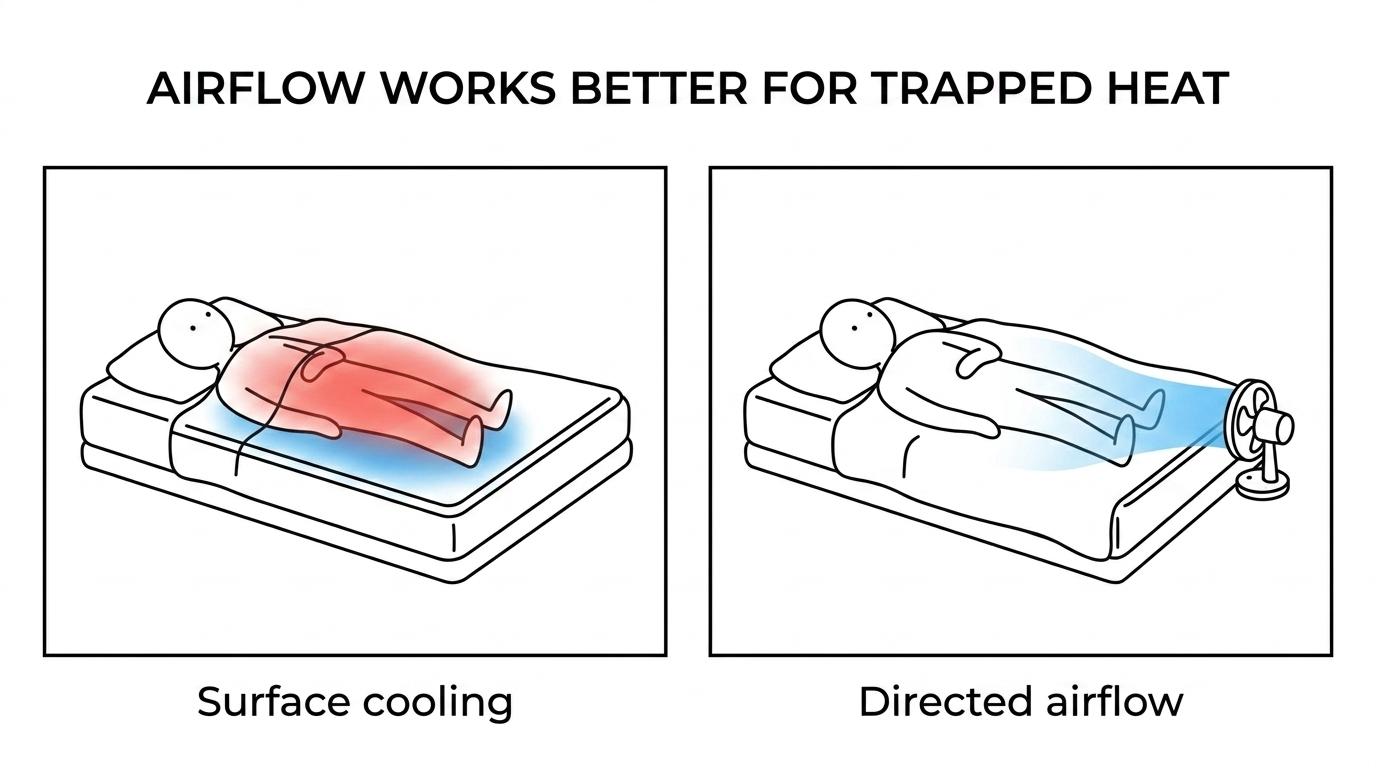
A bed fan usually cools the body better than a cooling mattress pad when heat is trapped under blankets. A mattress pad helps the contact surface, while directed airflow cools the bed microclimate around your skin.
If your mattress itself is hot and has a deep pocket, a pad can help. If your chest, back, or legs feel muggy under the sheet, airflow wins because it moves heat and moisture away instead of just slowing buildup at the surface. That difference matters more than a lot of marketing copy suggests.
Here’s the pro tip most people learn late, sheet choice changes everything, and using cotton sheets can enhance breathability and ensure a comfortable sleep experience. Tight weave sheets help air travel across your body and carry heat away more effectively. So if you use a Bedfan or bFan, you often get the best results with a tightly woven top sheet rather than a loose, fluffy bedding setup that lets air escape too quickly.
“bFan pushes airflow between the sheets, where body heat and humidity build up, instead of relying on a passive fabric surface.”
There’s also an energy angle. With a cooling mattress pad, your thermostat still has to do most of the work. With a Bedfan, many people can raise the bedroom temperature by about 5°F and still stay comfortable, which can lower air conditioning use. That only works when the room air is still reasonably cool, though. Neither Bedfan nor BedJet cools air, they only use the cooler air already in the room. CDC guidance also warns that fans are only appropriate indoors when temperatures are below 90°F, because above that level they can add heat stress instead of relieving it.
For value, bFan and Bedfan style airflow systems usually beat BedJet on cost, while a passive cooling mattress pad stays the cheaper entry point if your needs are mild.
The first thing to keep straight is that BedJet does not cool the air, and neither does Bedfan. Both use room air. So if the room is warm, neither system can perform like actual air conditioning. That’s a common misconception that leads to bad comparisons.
Price changes the equation fast. One BedJet is more than twice the price of a single bedfan. A dual zone BedJet setup costs over a thousand dollars and is more than twice the price of two bedfans. If you and your partner need separate sleep temperatures, two bFan units can create dual zone microclimate control at a fraction of the cost.
“Two bFan units can create dual zone microclimate control at a fraction of a dual zone BedJet setup, which costs over a thousand dollars.”
There’s a history point too. The original Bedfan was invented in 2003, several years before BedJet was even thought of, so this is not a new sleep gimmick category. It has had time to prove where it works best, people who overheat under the covers and need directed airflow rather than another mattress layer.
Where BedJet can appeal is feature depth and brand recognition. Where Bedfan appeals is simplicity, lower upfront cost, timer controls, and quiet operation, around 28db to 32db at normal speed. If you want fewer parts and a more budget friendly route to active bed cooling, Bedfan is often the easier call.
The best setup starts with room temperature regulation, then bedding, then targeted cooling. Harvard Health and common sleep guidance both point to a slightly cool bedroom as the base layer.
Step one, get the room right. Aim for 60°F to 67°F if possible, with Harvard Health noting 65°F to 68°F as a solid target for many sleepers. If your room is too warm, no mattress pad can fully make up the difference.
Step two, simplify the bed by considering bed accessories such as breathable, hypoallergenic layers; avoid heavy synthetic fills, and think about what your mattress is doing, including whether a mattress protector is contributing to overheating. If it's dense memory foam, add a breathable cooling mattress pad with a cooling gel or topper to cut the hot spot where your body presses in.
Step three, add airflow if you still wake up sweaty. If your issue is trapped heat under the sheet, a Bedfan works better when paired with tight weave sheets that channel air across your body. If you only need help falling asleep, timer controls are useful because you can run stronger airflow early, then let it taper off.
A lot of people try to solve the wrong problem by piling on cooling branded products. Start with the simplest chain of cause and effect. If the room is hot, cool the room. If the bed surface is hot, change the layer. If the heat is trapped around you, move the air.
True night sweats are often a medical symptom, not just a bedding issue. Mayo Clinic distinguishes heavy, repeated sweating that soaks sleepwear or bedding from ordinary overheating in a warm room.
That distinction matters. If you are just too warm because the room is stuffy, a cooling mattress pad, a Bedfan, or lighter bedding may help. If you repeatedly soak your sheets, that can be a different category entirely. Menopause, medication side effects, infections, endocrine issues, and other health conditions can drive night sweats from inside the body.
Common misconception, all nighttime sweating is the same. It isn’t. Severe sweating with fever, weight loss, pain, cough, or diarrhea deserves medical attention. That does not mean every hot sleeper needs a doctor visit, but it does mean you should not assume bedding is the whole story.
A practical rule is this, if changing room temperature, bedding, and airflow clearly improves the problem, overheating and the lack of proper protection are likely major factors. If you still have drenching sweats in a cool room with breathable bedding, ask a clinician about menopause, medications like SSRIs or steroids, blood sugar issues, thyroid problems, or infection.
Targeted bed cooling can cut AC use, and bFan is one of the simplest ways to do it. Because it uses about 18 watts on average, it cools the bed microclimate without asking your central air to overwork all night.
Many hot sleepers keep the whole house colder than necessary because they only feel miserable in bed. That is expensive. If you can keep the bedroom within the recommended cool range, or even raise it by about 5°F with a Bedfan helping at the bed, you may sleep just as well while spending less on air conditioning.
This only works if your room air is still reasonably cool. Bedfan does not generate cold air, it uses the cooler air already in the room. So the energy saving sweet spot is not a hot, closed bedroom in extreme heat. It is a room that is cool enough to support sleep, but does not need to be turned into a refrigerator.
“At normal operating speed, bFan runs around 28db to 32db, which is quiet enough for many sleepers who want cooling without a loud bedroom device.”
If you want a simple test, raise your thermostat a little, not a lot, and use targeted airflow at the bed. If you still sleep comfortably, you’ve found your savings zone. If you wake up sticky, bring the room temp back down. The right balance is personal, but the principle is consistent, cool the sleeper where the heat builds up, not the whole house more than necessary.
For couples, dual zone control usually beats a shared cooling mattress pad. Two bFan units or two separate sleep layers let each person fine tune comfort without a thermostat fight.
A shared passive pad can help if both people run warm in the same way. It does less well when one person freezes and the other throws off covers at 1 a.m. That’s where separate airflow becomes useful, because each side can be set differently without changing the other sleeper’s setup.
This is also where cost matters. A dual zone BedJet setup costs over a thousand dollars. Two bedfans give you dual zone microclimate control for more than twice less than that. That makes the bed fan route appealing for couples who want flexibility without buying into a pricier system.
If you share a bed with a partner who is always cold, start with your side first. A cooling mattress pad under the whole bed may bother them. A bed fan aimed at your side can solve your problem without changing theirs as much.
The most important features are breathability, washability, hypoallergenic properties, low heat retention, and realistic expectations about what the product can and cannot do.
Once you get past marketing language, there are only a few features that move the needle.
Pro tip, don’t let “cool touch” be your only decision factor. A cover can feel cool for ten minutes and still sleep hot later if the material underneath stores heat.
Most cooling mattress pads fail because the room is too warm, the mattress stores too much heat, or the bedding traps humidity faster than the pad can release it.
The first night effect is real. New materials can feel cooler right away because the surface has not yet warmed up. After a few nights, the underlying limits show up. If the pad sits on top of a heat holding foam mattress and under a heavy comforter, it may not have anywhere to send that heat.
Another common issue is solving only the mattress contact point. Plenty of hot sleepers are not mainly overheating from below. They are overheating inside a warm pocket of still air under their sheets. If that’s you, swapping pad after pad usually leads to disappointment.
The fix depends on the failure pattern. If you feel hot where your hips and shoulders press down, change the pad or topper material. If you feel sticky all over, add airflow. If your room runs above the usual sleep range, start there. Sleep experts commonly recommend 60°F to 67°F, and a Bedfan can often let many people raise room temperature by about 5°F and still sleep cool enough, but no passive pad can fully replace a room that is simply too hot.
For most hot sleepers, the smartest strategy is a cool room, breathable bedding, and targeted cooling only where you actually need it. That beats blindly buying the thickest cooling labeled pad.
If you sleep a little warm, start simple, perhaps considering a cooling gel mattress pad for additional comfort. Lower room temperature into the 60°F to 67°F range, switch to breathable sheets, and use a thin cooling mattress pad that focuses on airflow and moisture handling, not extra loft. That solves the problem for a lot of people.
If you still wake up hot, look at airflow next. This is the point where a Bedfan or bFan often makes more sense than upgrading from one passive pad to another. You’re no longer trying to make the mattress cooler at the surface, you’re actively moving heat and humidity away from your body.
If sweating is heavy, repeated, or new, treat that as a separate question. Bedding can help you sleep better while you sort it out, but it should not distract you from checking medical causes when symptoms point in that direction.
Harvard Health sleep hygiene guidance Practical sleep advice, including the recommendation that most people sleep better in a slightly cool room around 65°F to 68°F.
CDC heat and fan safety guidance Useful for understanding when indoor fan use helps, and when high indoor temperatures call for air conditioning instead.
National Heart, Lung, and Blood Institute sleep health overview A solid federal overview of healthy sleep, why sleep environment matters, and how sleep affects overall health.
bFan mattress cooler alternative guide Explains how between the sheets airflow differs from a chilled pad or water based mattress system for hot sleepers.
Copyright 2005 - present - Tompkins Research, Inc. & Kurt W. Tompkins All Rights Reserved DO NOT COPY. bFan® and the word bfan® in any format is a registered trademark of Kurt W. Tompkins the word BFAN® in any format shall not be used without written permission of the mark owner. This includes specifically Brookstone where you like to bait and switch, do not use my mark to bait customers.