
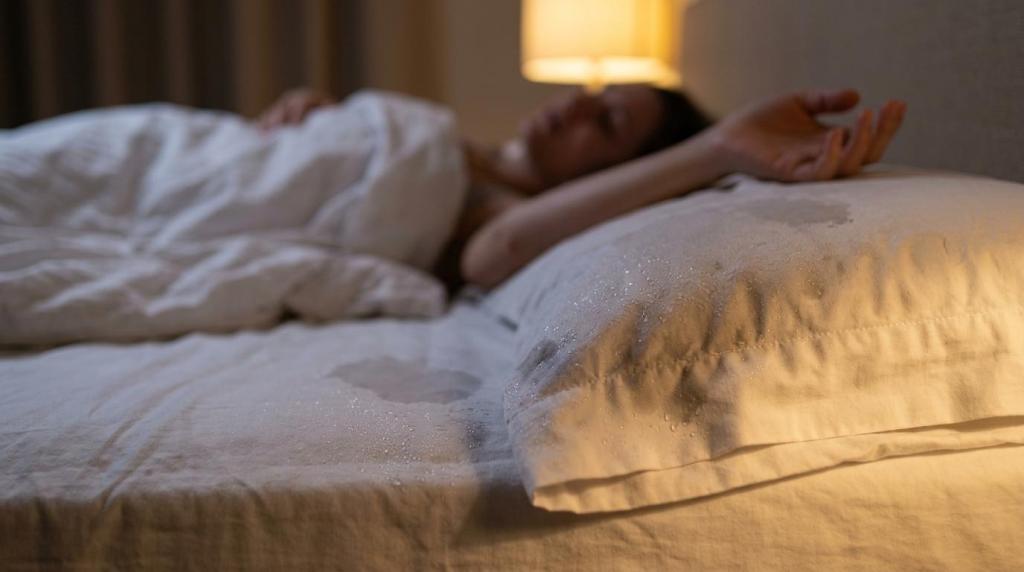
Thyroid night sweats may point to hyperthyroidism, but infections, menopause, or meds can also cause them. Know when to see a doctor.
Waking up soaked at night can be unsettling, and when your thyroid is part of the picture, it’s easy to wonder how worried you should be. The short answer is this, thyroid problems can cause night sweats, but they do not explain every case, and the timing, severity, and other symptoms around them matter a lot.
If you want the plain language version, night sweats fit hyperthyroidism much better than untreated hypothyroidism. Too much thyroid hormone tends to make your body run hot, speed up your heart, and increase sweating. Too little thyroid hormone usually does the opposite, people often feel cold, sluggish, and dry skinned. So if you have a known low thyroid and you’re sweating heavily at night, it’s smart to think beyond low thyroid alone.
That does not mean you should panic. It does mean you should pay attention, especially if the sweats are new, frequent, drenching, or paired with things like weight loss, a racing heart, fever, swollen lymph nodes, chest pain, or major changes in energy and mood.
Your body has a thermostat system that depends on hormones, the nervous system, blood flow, and the way your cells use energy. Thyroid hormone has a big say in all of that. When thyroid hormone levels are too high, your metabolism speeds up. You produce more heat, your heart often beats faster, and your body tries to dump heat through the skin by increasing sweating and blood flow.
That is why thyroid night sweats are most often linked to hyperthyroidism, which can happen with Graves disease, toxic nodules, thyroiditis, or a thyroid hormone dose that’s too high. You may notice the sweating first at night because bedding traps heat, and because nighttime is when many people finally notice how revved up their bodies feel.
Night sweats by themselves do not diagnose a thyroid disorder. They’re a clue, not the whole picture. A doctor usually looks at the pattern of symptoms, your medication list, your age and life stage, your medical history, and thyroid lab results before deciding whether the thyroid is really the cause.
Hyperthyroidism is the classic thyroid reason for sweating too much. When the body has more thyroid hormone than it needs, many systems speed up at once. You may feel hot in a room where everyone else is comfortable. You may throw off the covers, crack a window, and still wake up damp.
A lot of people expect sweating to be dramatic and obvious, but it can start subtly. You may first notice your pillowcase feels damp, your chest feels clammy, or you are changing sleep clothes more often. Over time, the pattern often lines up with other signs of an overactive thyroid.
Graves disease is a common cause, especially in adults, and it can bring anxiety, tremor, sleep trouble, bowel changes, and a pounding heartbeat along with heat intolerance and night sweats. Thyroiditis can do it too, though that may come on more abruptly. And if you take thyroid hormone for hypothyroidism, a dose that is too high can create the same kind of overheated, sweaty feeling as naturally occurring hyperthyroidism.
If the sweating is coming from hyperthyroidism, you usually won’t just feel warm at night. You’ll often feel overheated during the day too, especially after a shower, during mild activity, or in a warm room.
After those general clues, these symptoms make a thyroid cause more likely:
Untreated hypothyroidism is different. It more often causes cold intolerance, fatigue, constipation, dry skin, slowed thinking, and sometimes a puffy feeling. Reduced sweating fits low thyroid better than heavy sweating does. So if someone says, “I have hypothyroidism and terrible night sweats,” a doctor usually has to sort out whether the dose is too high, whether the thyroid level has swung, or whether something else is going on.
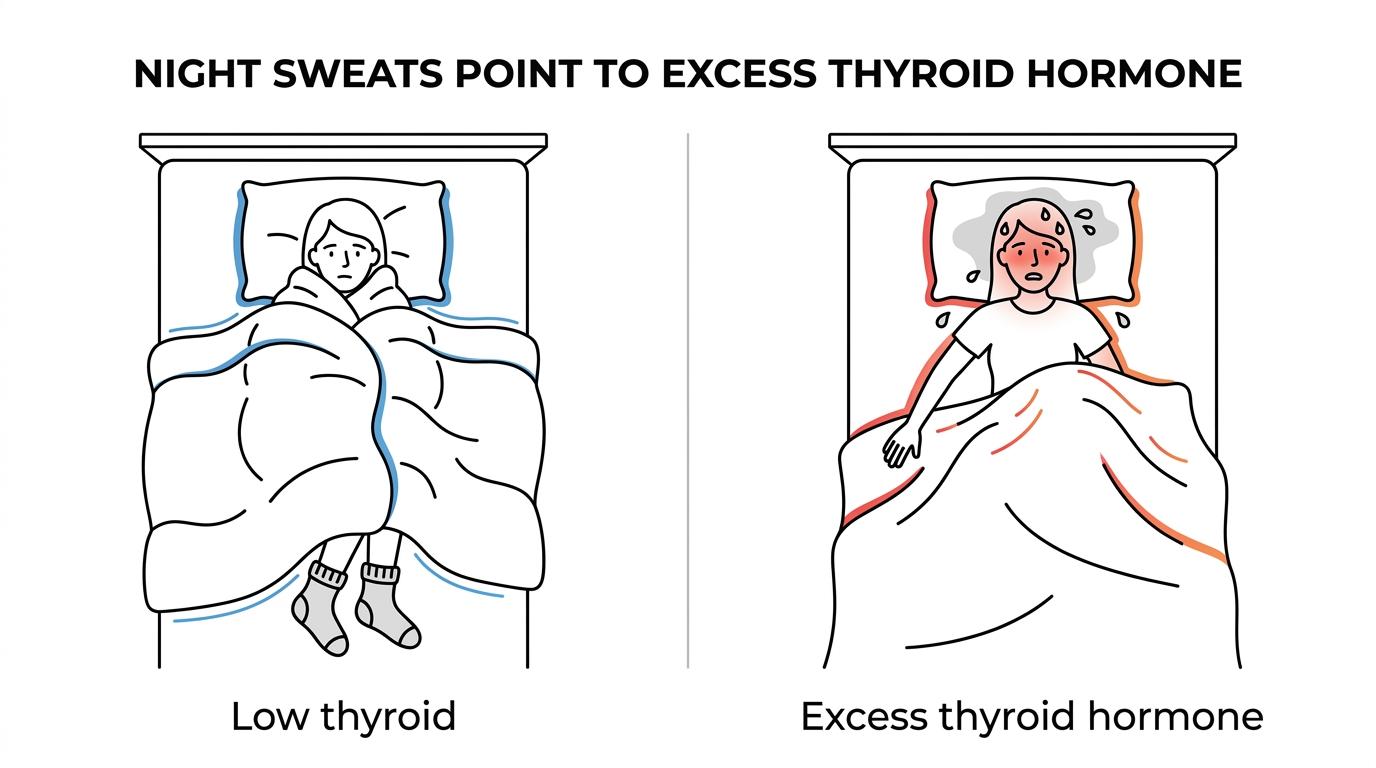
This is especially common in people taking levothyroxine. If your replacement dose is more than your body needs, you can drift into a hyperthyroid state, even if your original diagnosis was low thyroid. In that case, night sweats can show up alongside palpitations, shakiness, irritability, and poor sleep.
Hashimoto thyroiditis can also be confusing because thyroid levels do not always move in a straight line. Early on, some people have periods when inflamed thyroid tissue releases extra hormone, then later settle into hypothyroidism. That back and forth can make the symptom story messy.
So if you’ve been told you have hypothyroidism and now you’re waking up sweaty, don’t assume it means your thyroid is still too low. It may mean your medication needs a check, or it may have nothing to do with the thyroid at all.
This is where it helps to zoom out. Night sweats are common, and thyroid disease is only one item on a long list. Menopause and perimenopause are major causes in women. Infections can do it. Sleep apnea can do it. Some medications can do it. So can low blood sugar, anxiety, alcohol, acid reflux, and a few more serious conditions that deserve prompt care.
The pattern matters. Drenching sweats that soak sheets and happen with fever or weight loss deserve a different level of concern than mild warmth after a spicy dinner or a room that’s too hot. A person with a fast heartbeat, tremor, and weight loss may point more toward hyperthyroidism. A person with loud snoring, morning headaches, and daytime sleepiness may point more toward sleep apnea. A person in midlife with sudden flushing and sweats may be dealing with hormonal changes rather than the thyroid.
Medication history matters too. Antidepressants, steroids, some pain medicines, some diabetes medicines, and hormone treatments can all trigger sweating. So can alcohol close to bedtime. This is one reason doctors ask about the whole picture and not just the thyroid.
A few common lookalikes come up again and again:
If the sweating is happening more than once in a while, it’s worth bringing up with your doctor, even if you suspect the thyroid. New symptoms deserve a look, especially if you already take thyroid medication. A quick blood test may show that your TSH is off, your dose needs adjustment, or the thyroid is not the main cause after all.
You should move up the timeline if the sweats are drenching, if they are paired with a racing or irregular heartbeat, or if you’re losing weight without trying. That combination fits hyperthyroidism more than simple overheating from blankets or a warm room. It does not prove hyperthyroidism, but it’s enough to make a timely appointment a good idea.
There are also moments when night sweats move out of the “schedule a visit” category and into the “get urgent help” category. Thyroid storm, which is a rare but dangerous extreme form of hyperthyroidism, can cause high fever, severe agitation, confusion, vomiting, diarrhea, and a very fast heartbeat. Severe hypothyroidism can also become dangerous in a different way, with confusion, extreme sleepiness, slow breathing, and low body temperature.
Call for urgent help right away if any of these show up:
A good visit usually starts with a timeline. When did the sweats begin, how often do they happen, are they drenching, and what else changed around the same time. Your doctor may ask about weight change, appetite, bowel habits, anxiety, menstrual changes, menopause symptoms, sleep quality, medications, supplements, and family history of thyroid disease.
Thyroid testing often includes TSH and free T4, and sometimes free T3. If hyperthyroidism is suspected, thyroid antibodies may help, especially when Graves disease is on the list. If you already take levothyroxine, the doctor will want the exact dose, how you take it, whether you recently changed brands, and whether you take supplements like biotin that can sometimes interfere with lab interpretation.
The rest of the workup depends on the whole picture. If infection is possible, you may need a complete blood count or other tests. If menopause is likely, the discussion may lean that way. If sleep apnea sounds possible, a sleep evaluation might come up. If the sweats are severe and unexplained, the doctor may widen the net so a serious cause is not missed.
This is also where a simple symptom diary can help more than people expect. Write down your bedtime, room temperature, how often you wake up, whether your heart is racing, what medications you took, alcohol or caffeine use, and whether the sweating was mild, moderate, or drenching. Patterns show up fast on paper.
If hyperthyroidism is the cause, getting thyroid levels back into a healthier range often improves the sweating. That may mean medicine to lower thyroid hormone production, treatment aimed at the source of the excess hormone, or medicine like a beta blocker to calm the heart rate and tremor while the main treatment starts working.
If the issue is thyroid hormone replacement that is too high, treatment may be much simpler. Your doctor may lower the dose and repeat labs after enough time has passed for the body to reach a new steady state. People are sometimes surprised by how much better they sleep once the dose is corrected.
If you have hypothyroidism and night sweats, the key is not to assume that raising the dose will fix it. In many cases, the better move is to check the labs first, because the dose may already be too much, or the sweating may come from something separate like menopause, sleep apnea, or medication effects.
You do not have to wait until the diagnosis is finalized to start making nights easier, though. Comfort steps can help while you and your doctor sort out the cause.
Your sleep setup matters more than many people realize. Sleep experts commonly recommend a bedroom temperature between 60°F and 67°F, 15.5°C to 19.5°C, for better sleep. That range supports the body’s normal overnight drop in core temperature. If you are dealing with overheating, staying within that range, or at least getting closer to it, is often one of the quickest wins.
That said, not everyone can or wants to keep the whole house that cool all night. This is where a bed fan can be useful. Bedfan does not cool the air itself, and neither does Bedjet. They both use the cool air already in the room and direct it into the bed so trapped body heat can escape. For many hot sleepers, that targeted airflow matters more than simply pointing a standard room fan across the bedroom.
A lot of people can raise the room temperature by about 5°F and still feel cool enough for more restful sleep when they use a Bedfan, because the airflow is working where the heat is trapped, right between the sheets. That can help with comfort and may help lower air conditioning costs at the same time. If thyroid night sweats are wrecking your sleep while you wait for testing or treatment to kick in, a bFan bed fan from Bedfans USA is one practical option to consider.
There are a few details worth knowing. The original Bedfan was invented in 2003, several years before Bedjet was even thought of. The Bedfan uses about 18 watts on average, it offers timer controls, and its sound level is about 28db to 32db at normal operating speed, which is quiet enough for many bedrooms. If you share a bed, two Bedfans can give you dual zone microclimate control so each person gets their own airflow. The dual zone Bedjet setup costs over a thousand dollars, which is more than twice the price of two bedfans. One Bedjet is also more than twice the price of a single bedfan.
Your bedding can change the result, too. With a bed fan, it is best to use sheets with a tight weave so the air moves across your body and carries away heat instead of leaking out too easily. Light sleepwear helps. Alcohol close to bed often makes sweating worse. A hot shower right before sleep can leave you feeling warmer when you get under the covers. Small changes, stacked together, can make a rough week much more tolerable.
Comfort matters, even while you are sorting out the lab work.
If your symptoms are mild and you already have a routine thyroid follow up coming soon, it helps to pay attention to the direction things are moving. Are the night sweats getting more frequent, or are they starting to happen with daytime heat intolerance and a faster pulse. Are you waking up only warm, or actually drenched. Are you having to change clothes or bedding. Those details help your doctor judge how urgent the problem is.
Keep an eye on your heart rate if you can do it easily and safely. A resting pulse that is clearly faster than usual, especially with tremor, shakiness, or weight loss, nudges the suspicion toward hyperthyroidism or an overly strong replacement dose. If you feel your heart skipping beats, pounding hard, or racing while you lie still, that deserves a sooner call.
Also pay attention to the non thyroid clues. Snoring, waking up gasping, morning headaches, and daytime sleepiness should put sleep apnea on the list. Irregular periods, hot flashes, and midlife age range bring menopause into the picture. Fever, cough, swollen glands, or feeling unwell suggest a broader medical workup is needed.
The biggest mistake is brushing off persistent night sweats as “just the thyroid” without checking. The second biggest mistake is assuming all sweating means your thyroid is overactive. The right answer usually comes from the mix of symptoms, exam findings, and labs, not from the sweating alone.
American Thyroid Association hyperthyroidism guide: Read the ATA overview of hyperthyroidism, a reliable patient guide to symptoms, causes, testing, and treatment options.
American Thyroid Association hypothyroidism guide: Read the ATA overview of hypothyroidism, a solid reference for what low thyroid usually feels like and how treatment is monitored.
MedlinePlus night sweats reference: Review common causes of night sweats on MedlinePlus, a helpful summary of medical and non medical reasons people sweat at night.
MedlinePlus thyroid tests guide: See how thyroid blood tests are used, a straightforward explanation of TSH and related tests that often come up during evaluation.
Copyright 2005 - present - Tompkins Research, Inc. & Kurt W. Tompkins All Rights Reserved DO NOT COPY. bFan® and the word bfan® in any format is a registered trademark of Kurt W. Tompkins the word BFAN® in any format shall not be used without written permission of the mark owner. This includes specifically Brookstone where you like to bait and switch, do not use my mark to bait customers.