
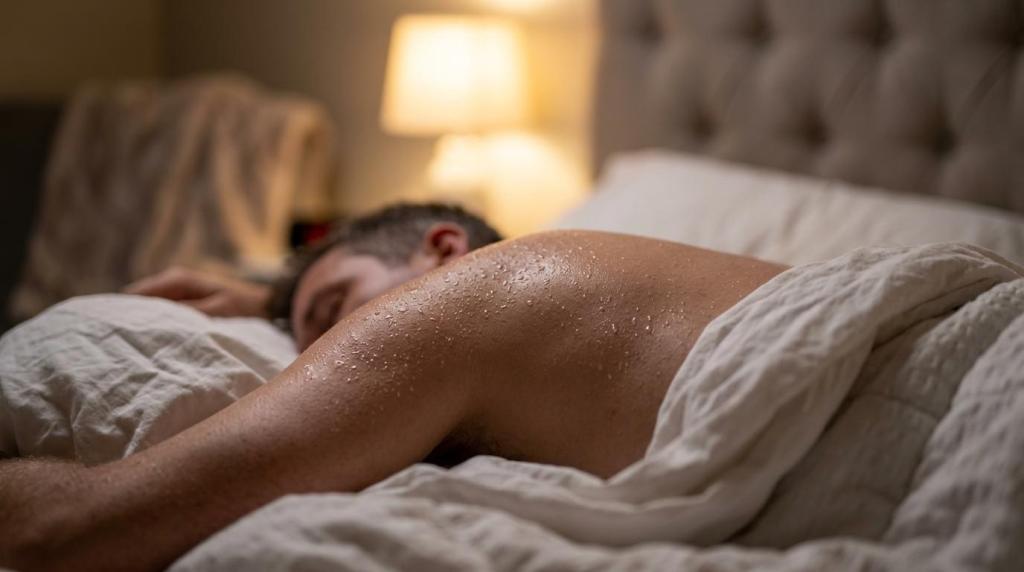
Find the best cooling comforter for hot sleepers, plus tips on breathable fills, room temperature, and airflow for cooler sleep all night.
If you run hot at night, a cooling comforter can help, but it is not magic. The best results come when the comforter has lower thermal resistance, your room is actually cool enough, and the rest of your bedding lets heat and moisture escape.
TL;DR: Summary
- The best cooling comforter for most hot sleepers is a lightweight comforter with a breathable shell, usually cotton percale, and a fill that manages heat and moisture well, often wool, silk, or a very light lyocell based option.
- Cooling comforters work best when bedroom temperature is also in the recommended sleep range of 60°F to 67°F, because bedding thermal resistance and ambient temperature work together, not separately.
- If you overheat badly, deal with menopause related night sweats, or sleep beside a warmer partner, targeted airflow often beats bedding alone. A Bedfan or bFan moves cool room air between the sheets, and many people can raise the room temperature by about 5°F while still sleeping cooler.
- Neither a Bedfan nor a Bedjet actually cools the air. They use the cooler air already in the room and push it into the bed microclimate, which is why room setup still matters.
- Marketing terms like “cooling” can be misleading. Fill weight, shell weave, mattress protector, humidity, and your sheets often matter as much as the comforter label.
- If you want the strongest value comparison, a dual zone Bedjet setup costs over a thousand dollars, which is more than twice the price of two bedfans, while two bedfans can create dual zone microclimate control at a much lower cost.
A lot of people buy the wrong comforter because they focus on fabric marketing and ignore the bed climate. The truth is simpler, your comforter, sheets, room temperature, mattress, and airflow all decide whether you sleep cool or wake up sweaty.
Yes, cooling comforters can help, but cotton percale and wool filled options only work well when your room, sheets, and mattress let body heat escape.
What a cooling comforter really does is lower the amount of heat your bed traps around you. That idea shows up in sleep research as thermal resistance. A 2023 duvet study measured thermal resistance from 3.81 to 8.93 clo and found that higher resistance changed the comfort zone at different room temperatures. In plain English, your blanket warmth and your bedroom temperature are a package deal.
That matters because people often expect a cooling comforter to feel cold on its own. It usually will not. A comforter does not create cold air. It either traps less heat, releases heat faster, or manages moisture better. If your room is 74°F and still, even a well chosen comforter may feel disappointing.
"bFan uses 18 watts on average, which makes targeted bed cooling a very low energy way to change how the bed feels."
There is also a bed climate target worth knowing. Research has pointed to a comfortable bed climate temperature around 30°C to 33°C. If your comforter and sheets hold on to too much warmth, that little air pocket around your body overheats fast, even when the room itself does not seem that warm. That is why some hot sleepers feel miserable under a fluffy comforter that someone else loves.
A common mistake is assuming the slickest, coolest touching fabric is automatically the best all night. Surface feel is only the first minute. sleep thermal comfort depends on heat and moisture transfer over hours.
The best material choice usually starts with cotton percale, wool, or silk, because these fabrics handle airflow and moisture better than many heavy polyester options.
Start with the shell. A cotton percale shell is a safe bet for most hot sleepers because it breathes well and does not feel clingy. Sateen shells can feel smoother, but they often trap a bit more warmth. If you are comparing two comforters with similar fill, the shell can still change how quickly heat escapes.
Then look at the fill. Wool is interesting because it can have relatively high thermal resistance while still helping with moisture handling and temperature swings. A 2024 systematic review on bedding and sleepwear found that fiber type can affect sleep quality by influencing skin temperature and thermal comfort. That helps explain why a thin wool comforter sometimes outperforms a cheap “cooling” comforter stuffed with polyester.
Silk can work well if you want light insulation without a bulky feel. Lyocell or eucalyptus based fills can also feel cooler and lighter, though quality varies a lot by construction. Down alternative fills are where buyers need to slow down. Many are polyester based, and if the fill is dense, the comforter may sleep warm no matter what the package says.
"At normal operating speed, the Bedfan runs at about 28 dB to 32 dB, quiet enough for many people who want airflow without loud fan noise."
Pro tip, do not judge warmth by loft alone. A thinner comforter can still be warm, and a puffy one can still leak heat. Construction, fill density, and the shell fabric all change the result.
The best setups combine breathable bedding with either lower fill warmth or targeted airflow, because trapped heat under the covers is usually the real problem.
If you want a practical shortlist, think in terms of setups, not miracle products. The “best” comforter depends on whether you run mildly warm, sweat heavily, or share a bed with someone who likes more warmth than you do.
If you share a bed, do not assume one big comforter is the smartest move. Two lighter covers or two separate bed cooling solutions often work better than fighting over one bed climate.
Match the comforter to the room first, then your body heat second, because 60°F to 67°F is still the foundation of cooler sleep.
Step one is to check your real bedroom temperature at pillow height, not what the thermostat says in the hallway. Sleep experts commonly recommend 60°F to 67°F, and the NHLBI sleep checklist has long pointed to a similar comfortable range. If your room sits above that, even a very breathable comforter has less room to work.
Step two is to choose the least insulation that still feels emotionally comfortable. Plenty of people need some weight or coverage to relax, so a super thin blanket may not cut it. If that is you, go lighter in fill and better in airflow rather than jumping to a heavy comforter that “feels cozy” at bedtime and punishes you at 2 a.m.
Step three is to decide whether you want to cool the room, the bed, or both. This is where a Bedfan can change the math. Because it pushes the cool room air you already have between the sheets, many people can raise the room temperature by about 5°F and still cool the body enough for more restful sleep. That can matter if whole house air conditioning is expensive.
The misconception here is thinking the comforter should handle all the work. It cannot. Your room temperature sets the ceiling for how much relief passive bedding can give you.
A cooling comforter is usually simpler than a duvet insert, because an insert plus cover can add extra warmth and reduce breathability.
A comforter is one finished piece. A duvet setup is an insert plus a removable cover. That cover matters more than many people realize. Put a breathable insert inside a dense or brushed duvet cover and you can cancel out some of the cooling benefit.
This is why some people swear a comforter sleeps cooler than a duvet, even when the fill is similar. They are not imagining it. The shell and cover combo changes heat and moisture transfer. If you like the style of a duvet, use a light cotton percale cover and avoid anything heavy, fuzzy, or tightly heat sealing.
There is also a washing trade off. A duvet cover is easier to wash often, which is great if you sweat at night. But inserts can clump, shift, or feel stuffy inside the wrong cover. If you want less fuss, a washable lightweight comforter may be the better daily choice.
Targeted airflow usually cools better than passive bedding alone, because Bedjet and Bedfan change the air under the covers while a comforter only changes insulation.
This is the big distinction. A cooling comforter is passive. A Bedjet or Bedfan is active. Neither one cools the air itself. Neither Bedfan nor Bedjet is an air conditioner. They use the cooler air already in the room and move it into your bedding microclimate.
That means airflow often wins for people with strong overheating, night sweats, or temperature swings. A Bedfan directs air between the sheets and evacuates heat trapped by the sheets, comforter, and mattress. The original bedfan concept dates back to 2003, years before Bedjet entered the picture. In practical use, that between the sheets airflow can feel more immediate than changing comforter fabrics.
"bFan moves air between the sheets to remove heat trapped by the sheets, comforter, and mattress, which targets the bed microclimate directly."
Price is another real world factor. One Bedjet is more than twice the price of a single bedfan. A dual zone Bedjet setup is over a thousand dollars, which is more than twice the price of two bedfans. If you want dual zone control for a couple, two bedfans can offer dual zone microclimate control at a fraction of that cost, and the Bedfan also offers timer controls.
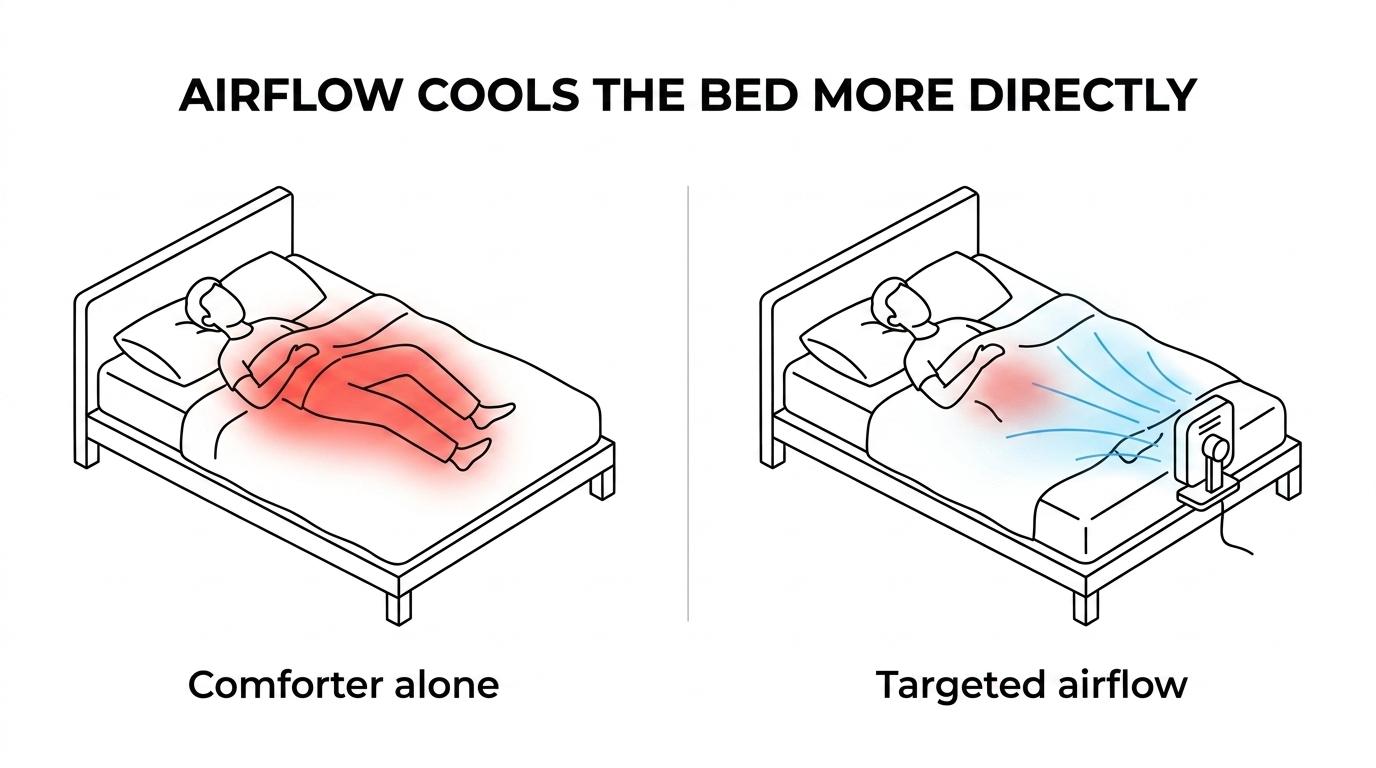
That said, the trade off is simple. If you want a no power, no setup bedding solution, stick with a comforter strategy. If your problem is serious heat buildup and sweat, airflow usually gives you a stronger result.
A cooler bed climate comes from breathable layers, controlled room temperature, and moving air, not from one “cooling” item alone.
First, look at the layer touching your skin. Tight weave sheets are often best with a Bedfan because they help guide the air across your body and carry away heat instead of letting it leak upward too fast. That sounds backward if you have heard only “looser weave equals cooler,” but airflow systems behave differently than passive bedding.
Second, check your mattress protector. Waterproof protectors are a classic hidden heat trap. If yours feels plasticky, crackly, or slick, it may be blocking the very heat and moisture transfer you need. A breathable protector can make more difference than swapping comforters.
Third, reduce unnecessary insulation under and over you. Thick mattress pads, flannel sheets, and heavy duvet covers all add resistance. If your mattress itself sleeps hot, active airflow from a bed fan can help offset some of that trapped heat.
Humidity matters too. When the room is muggy, sweat does not evaporate well, and your whole bed feels warmer. A dehumidifier or better air conditioning can help your comforter do its job.
Gentle washing and low heat drying protect cotton, wool, and silk, because most cooling performance is really about fiber structure and loft.
Start by checking the fill, not just the marketing name. Cotton and many synthetic comforters are often machine washable, but wool and silk usually need more care. If you overheat enough to wash bedding often, washable construction is a real buying criterion, not a side note.
Use mild detergent and skip fabric softener on most cooling fabrics. Softener can leave residue that reduces breathability and moisture movement. If you are washing a lightweight comforter, make sure the machine drum is large enough. Compression during washing can damage loft and leave the fill uneven.
Drying is where people ruin bedding. High heat can shrink shells, stress stitching, and flatten fill. Low heat or air dry settings are safer. If the care label calls for line drying or professional cleaning, take that seriously.
One more practical tip, wash your sheets more often than your comforter. The sheet layer does most of the direct contact work. Keeping it clean helps airflow, comfort, and moisture handling night after night.
Most “cooling failures” happen because the room is too warm, the fill is too dense, or another bedding layer blocks heat escape.
This is where marketing runs into physics. A comforter can only release heat into the environment you give it. If your bedroom sits well above the sleep sweet spot, or your mattress foam holds heat like an oven, the comforter cannot rescue the whole system.
A 2023 duvet study is useful here, even though it was small. It showed that thermal resistance changes the ambient temperature comfort zone. That does not mean the warmest duvet is best. It means the right comforter depends on your room temperature, and the wrong comforter can push your bed climate outside the comfort range very easily.
Common culprits include heavy duvet covers, thick mattress protectors, polyester pajamas, and overfilled “all season” comforters. People also forget about body heat timing. You usually release heat after falling asleep, so a comforter that feels perfect at 10 p.m. can be too warm at 2 a.m.
If you keep buying “cooling” comforters and waking up sweaty, stop swapping fabrics blindly. Look at the whole bed system.
Wool, silk, and light cotton based setups usually handle night sweats better than dense polyester, because moisture management matters as much as warmth.
Night sweats are not always just “sleeping hot.” Menopause is a major example. The CDC notes that hot flashes and night sweats are among the most common symptoms of menopause, and many women have trouble sleeping because of them. That is a different problem than simply liking a cool room.
For sweat events, moisture buffering helps. Wool often surprises people here. It can absorb and release moisture while still feeling more stable than clammy synthetics. Silk can also feel less suffocating than bulky fills. A cotton shell usually helps because it lets the system breathe instead of trapping dampness against your skin.
"For hot sleepers who sweat at night, bFan targets the trapped heat inside the bed rather than asking a comforter alone to solve the whole problem."
A common misconception is that “bamboo” always means cooler. Many products sold that way are rayon or viscose based, and performance still depends on fill weight, shell weave, and overall construction. If the comforter is thick, it may still sleep hot no matter what plant name appears on the label.
If your night sweats are new, drenching, or come with fever, weight loss, or other symptoms, talk with a clinician. Bedding can help with comfort, but it is not a medical diagnosis.
Yes, a cooling comforter can help a little, but targeted bed cooling usually has the bigger impact on air conditioning costs.
The savings logic is pretty straightforward. If your comforter traps less heat, you may feel comfortable without dropping the whole house temperature as far. But the bigger jump usually comes from targeted bed cooling, because you are changing the microclimate where your body actually sleeps.
This is where the Bedfan category makes practical sense. The bFan uses only 18 watts on average, and many people can raise room temperature by about 5°F while still sleeping cool enough for better rest. That can reduce overnight air conditioning demand without making the room feel stuffy at bed level.
Comforters still matter in that setup. You want one that lets the moving air do its job, not one that blocks it. A lighter comforter with a breathable shell pairs better with a bed fan than a lofty synthetic comforter that traps the airflow.
If your goal is energy savings, think less about “cold fabric” and more about total system efficiency, room temp, bedding resistance, and directed airflow.
People with strong night sweats, menopause symptoms, hot flash bursts, or partner temperature conflict often need active airflow, not just a different comforter.
If your problem is mild warmth, a better comforter may be enough. If you wake up throwing covers off, sweating through sleepwear, or reheating every time the comforter settles back over you, passive bedding is often too limited.
Targeted bed cooling is especially useful for couples. One person may want warmth while the other wants serious airflow. Two bedfans can create dual zone control without forcing both people into the same sleep climate. That is a major value point when you compare it with a dual zone Bedjet setup that costs over a thousand dollars.
This is also where the older Bedfan concept still makes sense. The original bedfan was invented in 2003, and the basic problem it solved has not changed, heat gets trapped under the covers. If that trapped heat is your main issue, moving air out of the bed space is often more effective than endlessly testing comforter fabrics.
A fair rule is this, if you have already tried lighter comforters, breathable sheets, and a cooler room, targeted airflow is the next logical step.
Most sleep guidance still centers on 60°F to 67°F, and that range gives cooling comforters the best chance to work.
You will sometimes see broader ranges in general sleep guidance, including 60°F to 70°F, but hot sleepers usually do better when they stay closer to the cooler end. That range works because sleep onset depends partly on the body’s ability to shed heat. If the room fights that process, your bedding has to work harder.
This is also why the phrase “cooling comforter” can be a little misleading. The comforter is not replacing a cool room. It is supporting heat loss inside a room that is already reasonably sleep friendly.
If you cannot or do not want to keep the whole house that cool, a bed fan can help bridge the gap. Using a Bedfan often lets people bump the thermostat up by about 5°F and still feel cool enough under the covers, because the airflow is directed where the heat actually builds up.
That is the practical answer most people need. Start with the room. Then the bedding. Then add active bed cooling if the problem keeps coming back.
Here are a few solid sources if you want to go deeper into sleep temperature, bedding materials, and night sweats.
Copyright 2005 - present - Tompkins Research, Inc. & Kurt W. Tompkins All Rights Reserved DO NOT COPY. bFan® and the word bfan® in any format is a registered trademark of Kurt W. Tompkins the word BFAN® in any format shall not be used without written permission of the mark owner. This includes specifically Brookstone where you like to bait and switch, do not use my mark to bait customers.