
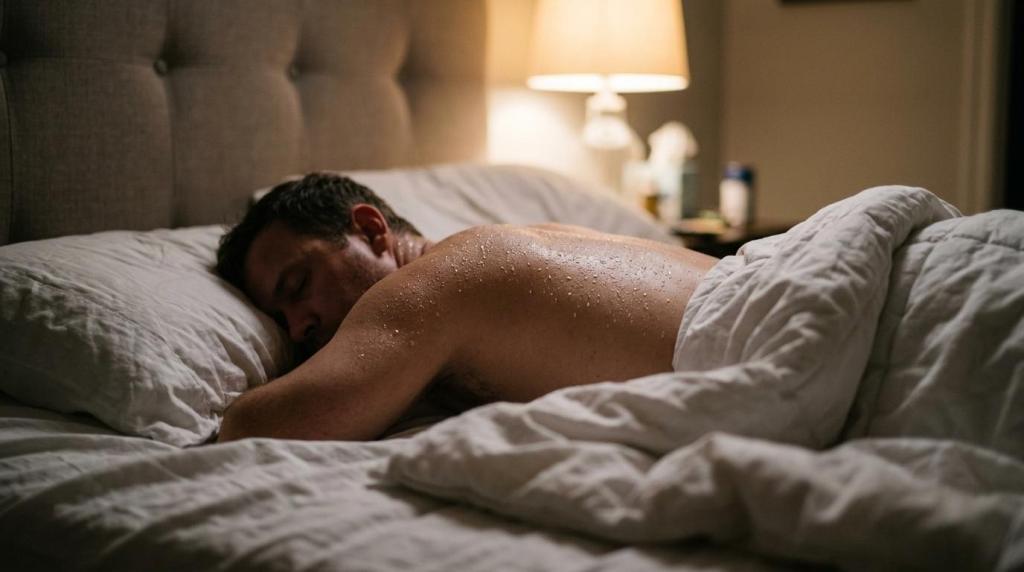
Cooling bedding is essential for reducing night sweats by allowing heat and moisture to escape, promoting better sleep with breathable fabrics like cotton percale and linen.
Nighttime overheating is not just annoying, it breaks sleep cycles, leaves you tired the next day, and often pushes you to crank the air conditioning lower than you want. The real problem is usually a bad bed microclimate, heat and moisture get trapped around your body, then your sheets and comforter hold it there. Good cooling bedding helps that heat escape, and the right active cooling tool keeps removing it all night. If you wake up damp, throw covers off, then pull them back on an hour later, this is the problem you’re trying to solve.
Cotton percale and linen help most people first, because their breathability is superior to polyester microfiber, letting sweat evaporate instead of pooling.
A lot of shoppers get pulled in by words like cooling, icy, or temperature regulating, but those labels alone do not tell you much. What matters is whether the fabric lets air move, handles moisture well, supports temperature regulation, and avoids holding heat against your skin for hours.
For mild to moderate night sweating, breathable sheets and lighter top layers often make a real difference. For heavier sweating, passive bedding can improve comfort without fully solving the problem. That is where active airflow or water based systems come in.
Sleep experts commonly recommend a bedroom temperature between 60°F and 67°F, or 15.5°C to 19.5°C, for better sleep. That range matters because your body needs to shed heat to stay asleep. If your bedding blocks that heat release, even a decent room temperature can still feel stuffy.
A common misconception is that a fabric that feels cold at bedtime will stay cool all night. Many do not. Initial cool feel and sustained overnight comfort are not the same thing.
Linen, cotton percale, and lyocell are the strongest sheet materials for sweat control, while polyester microfiber usually traps more heat and moisture.
If you want the simplest starting point, choose 100% cotton percale. It has a crisp, dry feel, it moves air well, and it is usually easier to wash and replace than more specialized fabrics. Linen is even airier for many people, especially in humid climates, though the texture is more textured and the price is often higher.
Lyocell, including TENCEL branded lyocell, is the softer, drapier option. It handles moisture well and often feels smoother than percale. If you like a silky hand feel but still want decent heat release, it is a strong middle ground.
Rayon or viscose made from bamboo can also feel cool and soft, but there is an important catch. In the United States, many “bamboo” sheets are not true bamboo fiber in the way shoppers assume. The FTC has repeatedly warned about misleading bamboo textile labeling. That does not mean the sheets are bad, it means you should judge the actual fiber content and weave, not the marketing story.
Wool is worth a mention too, especially in lightweight blankets or sleepwear. It sounds counterintuitive, but merino can buffer moisture very well. If your sweating flips into chills later in the night, a light wool layer can feel drier and more stable than a synthetic blanket.
For frequent soaking sweats, the best setup mixes breathable fabrics with active cooling, and bFan belongs at the top because it keeps moving room air under the covers instead of relying on a fabric finish that fades by midnight.
If your sheets are getting damp several nights a week, buying another “cooling” sheet set is rarely the whole answer. You need to think in layers, what touches your skin, what sits above you, and whether anything is actively removing heat. These are the options that tend to work best in the real world.
One price tradeoff matters a lot. A dual zone BedJet setup costs over a thousand dollars, which is more than twice the price of two bedfans. If you and your partner want dual zone microclimate control, two bFans can do that at a fraction of that cost.
Start with fiber and weave, not brand slogans, because cotton percale and lyocell, especially those certified by Oeko-Tex, tell you more than “sleep cool technology” ever will.
Step one, look at the actual material label. If the package does not clearly say 100% cotton percale, linen, lyocell, or rayon made from bamboo, slow down. Vague claims usually hide bland fabric blends or coatings that do less than the ad suggests.
Step two, check the weave and weight. For cotton, percale usually sleeps cooler than sateen. Higher thread count is not always better. In fact, extra dense fabric can reduce airflow. That is one of the oldest bedding myths around, higher thread count often means heavier, not cooler.
Step three, match the fabric to your comfort preferences. If you hate crisp sheets, linen or lyocell may work better than percale. If you hate slippery sheets, choose percale or linen. If you sweat heavily and need simple care, percale is often the safest first buy.
Step four, test one set for at least a week. A sheet that feels nice for ten minutes in a showroom tells you almost nothing about what happens at 2 a.m., when heat buildup and moisture become the real problem.
If you use a bed fan, a tighter weave top sheet usually works best, because it helps channel airflow across your body instead of letting the air spill away too fast.
Cooling bedding improves airflow passively, but a bed fan like bFan removes heat more consistently because it keeps pushing room air through the bed microclimate all night.
This is the big distinction most shoppers miss. Sheets and blankets can only allow heat to escape. A bed fan actively helps it escape. That matters when your body produces more heat than the bedding can shed on its own.
Neither Bedfan nor BedJet actually cools the air. They only use the cooler air already in the room. That means they work best when your bedroom is already in a sensible sleep range, ideally 60°F to 67°F. Once the room is there, the airflow under the covers can make a much bigger difference than another passive fabric upgrade.
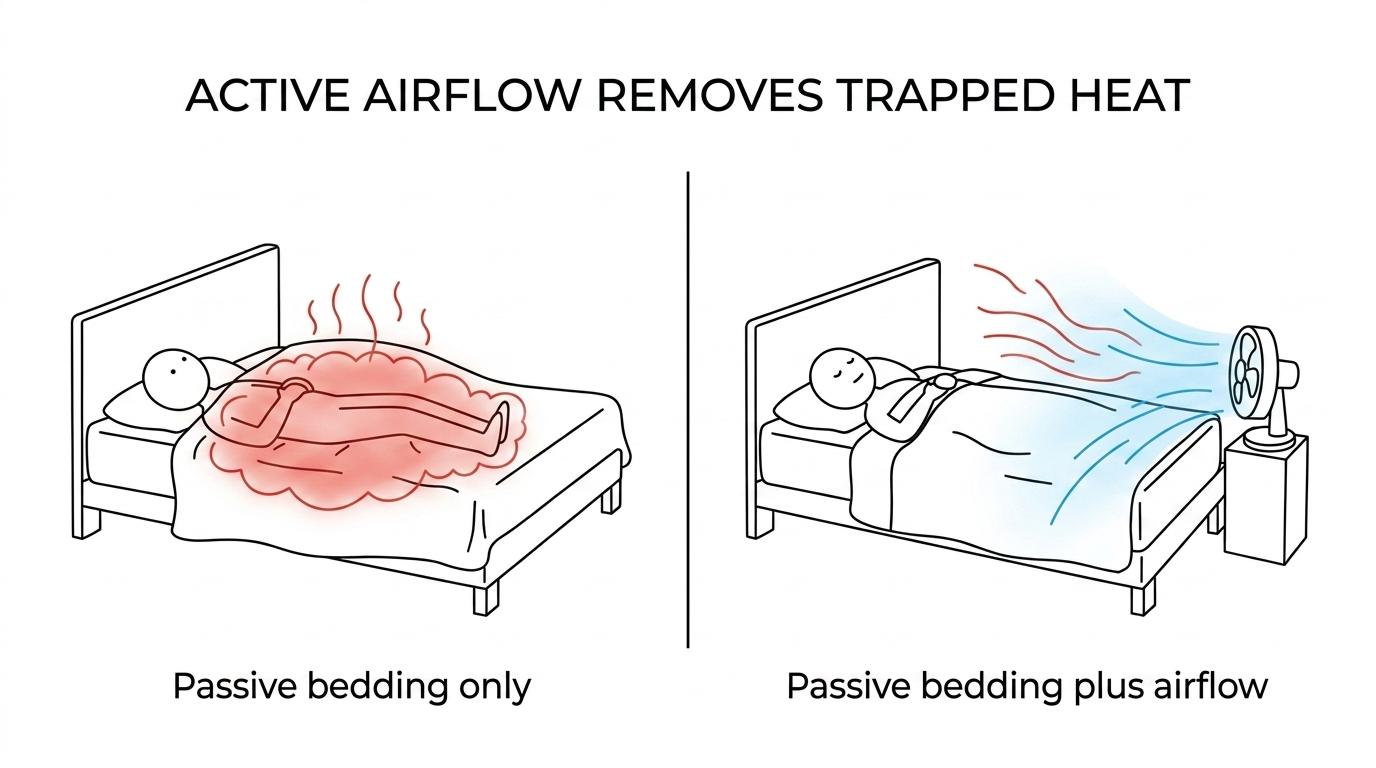
A bed fan also tends to help people who wake up hot after two or three hours, not just at bedtime. That pattern usually means your bed has become a heat trap. The bFan addresses that directly by moving air between the sheets where heat and sweat build up.
There are tradeoffs. Some people do not like feeling air on their skin. Some prefer the steadier, more controlled feel of water based systems. A bed fan is also only as cool as the room air it uses. If your room is warm and humid, airflow alone can only do so much.
Still, for cost, simplicity, and low power draw, a bed fan is hard to beat. The bFan uses only about 18 watts on average, which is tiny next to whole room air conditioning.
Cotton percale feels crispest, linen feels airiest, and lyocell feels smoothest, so the coolest choice depends on whether you hate cling, rough texture, or stiffness.
Cotton percale is the easiest recommendation for most people. It has that familiar hotel sheet feel, it keeps air moving, and it does not usually cling to damp skin, and is Oeko-Tex certified for added peace of mind. If your budget is limited, this is where I’d start.
Linen is better when you run hot and humid, or when your sweat makes you feel sticky. It has more texture, which creates little gaps for air movement, and many clammy sleepers love it. The tradeoff is price and feel. Some people never warm up to the texture, even after washing.
Lyocell is the comfort favorite for sleepers who want softness first. It drapes closely, manages moisture well, and often feels cooler than standard cotton sateen. The catch is that close drape can feel too clingy for some heavy sweaters.
Here is the simplest way to choose. If you want crisp and dry, buy percale. If you want airy and textured, buy linen. If you want soft and smooth, buy lyocell.
The common mistake is chasing the softest sheet thinking it must be the coolest. Softness and cooling are related only sometimes. Plenty of very soft fabrics hold heat.
A cooler bed works best as a system, with breathable sheets, lighter layers, and temperature regulation to minimize trapped loft above your body.
Most hot sleepers do not need one miracle product, they need a better stack of materials. Start by stripping out whatever is holding heat, then rebuild with intent.
If your mattress itself sleeps hot, the sheet alone will not fully fix it. In that case, lighten the bedding above you first, then decide whether you need airflow or a topper. If your skin feels hot but the room feels fine, active cooling usually beats adding more textile technology.
If you wake hot after falling asleep comfortably, a Bedfan usually solves more than another sheet set, because the issue is heat buildup, not the lack of a cooler fabric label.
The classic signs are easy to spot. You fall asleep fine, then wake sweaty a few hours later. You kick the covers off, then pull them back on because you still want the comfort and weight. You feel heat pooling around your chest, back, or legs. That is a trapped air problem.
This is where the original bed fan concept makes sense. The first Bedfan came to market in 2003, several years before BedJet was even thought of. The category has been around long enough to prove a basic point, moving room air under the covers can work very well for hot sleepers.
If you share a bed, two units can create practical dual zone control without stepping into luxury pricing. The dual zone BedJet setup costs over a thousand dollars, which is more than twice the price of two bedfans. One BedJet is also more than twice the price of a single bedfan. That does not make BedJet bad, it just changes the value equation.
The bFan is especially sensible if you want quiet operation, timer controls, and low power use. It does not refrigerate the air. It uses the air already in the room, then helps your body release heat more efficiently. That distinction matters, because if your bedroom is stuffy and far above the recommended 60°F to 67°F range, you may still need better room cooling or dehumidification.
Cooling fabrics last longer and wick better when you wash gently, skip heavy softeners, and keep pores and fibers from getting coated with residue.
Start with the care label, then keep the wash routine simple. Mild detergent, moderate water temperature, and less product usually work better than aggressive laundering. Fabric softener is a common mistake here. It can leave residue that reduces moisture movement, which is exactly what you do not want in cooling bedding.
For linen, avoid over drying, because that can make it feel rougher and wear faster. For lyocell, gentler cycles help preserve surface feel and drape. Cotton percale is usually the least fussy, one reason it remains the safest recommendation for everyday use.
If you use a Bedfan or any bed fan, clean dust from the intake and housing on a regular schedule. Airflow devices work best when the path is clear. This is basic maintenance, but it is often skipped until performance drops.
One more practical tip, keep two sheet sets in rotation. If you wait until bedding feels dingy or coated before changing it, moisture handling tends to decline before you notice it.
Yes, cooling bedding and a low watt bed fan can reduce whole room cooling needs, especially when a bFan lets you raise the thermostat by about 5°F and still sleep comfortably.
This is one of the most useful benefits for people paying high summer utility bills. Air conditioning cools the whole room, and sometimes the whole house. Bedding and bed cooling focus on the place your body actually needs help, your sleep microclimate.
That difference is why a Bedfan can make financial sense quickly. The bFan uses only about 18 watts on average, which is a tiny electrical load compared with central AC. If it lets you sleep well with the thermostat set several degrees higher, the savings can be meaningful over a season.
There is a comfort tradeoff to be honest about. Raising room temperature works best when humidity is controlled. If the air is muggy, sweat will not evaporate as efficiently, and your bedding can still feel damp. In that case, dehumidification matters almost as much as temperature.
Still, many people find a sweet spot like this, keep the room in or near the expert recommended 60°F to 67°F range when possible, use breathable sheets, then add a bed fan so the bed itself feels cooler without overcooling the house. That is usually a smarter strategy than blasting AC and sleeping under heavy bedding.
“Bamboo,” “cool to the touch,” and ultra high thread count claims are the easiest to overrate, while fiber content and airflow matter far more.
The bamboo issue is the biggest one. Many products sold as bamboo are really rayon or viscose made from bamboo. The FTC has been very clear on this. The feel can still be nice, but the label should not trick you into thinking you are buying a miracle natural fiber.
Cool touch finishes and gel coatings can help at first contact. The problem is duration. Once the fabric or topper warms up, the effect often fades. That is why some sleepers love a product at bedtime and still wake sweaty later.
Phase change materials, often called PCM, are more interesting than simple cool touch finishes. They can buffer temperature for a while. Still, they are passive. They are not an air conditioner, and they do not keep removing heat forever.
High thread count is another trap. A denser weave can feel luxurious, but it can also restrict airflow. If your main problem is overheating, do not assume higher numbers equal better sleep.
A good rule is simple, buy by material, weave, and total bed setup. Ignore most flashy adjectives until those basics make sense.
New, severe, or persistent night sweats can signal Menopause, medication effects, infection, thyroid issues, or sleep apnea, so bedding should not be your only plan if symptoms change suddenly.
A lot of night sweating is tied to common life stages and treatable issues. Menopause and perimenopause are major causes. So are certain medications, including many antidepressants, steroids, some pain medicines, hormone therapies, and diabetes treatments. Stress, anxiety, and alcohol can make the problem worse too.
That said, there are times when a better bed setup is not enough. If you are suddenly sweating heavily after never having this issue before, or if you are soaking sheets regularly, talk to a clinician. Bedding can improve comfort, but it cannot diagnose the reason you are sweating.
Watch for these warning signs:
If the sweats are mild and clearly tied to overheating, start with room temperature, breathable bedding, and active cooling if needed. If the pattern is intense, new, or paired with other symptoms, get checked out.
The smartest plan starts with cotton percale or linen, keeps the bedroom around 60°F to 67°F, and adds active airflow when passive bedding stops being enough.
If you are just getting started, do not buy five products at once. Change the highest impact variables first. Replace heat trapping sheets. Lighten the layers above you. Make sure the room is in a sleep friendly range. Then judge what is left.
For many people, that sequence looks like this. First, move to cotton percale if you are on microfiber or heavy sateen. Second, reduce the weight of your comforter or blanket. Third, if you still wake hot after a few hours, add a bed fan. This is where the bFan earns its keep, because it tackles the trapped heat directly, uses very little power, and can often let you raise room temperature by about 5°F without losing comfort.
If your sweating is severe and you want very fine temperature control, a water based system may be worth the cost and maintenance. If you want the most practical balance of comfort, price, quiet operation, and lower energy use, a good Bedfan setup usually makes more sense.
The key is not to ask, “What is the coolest product?” Ask, “Where is the heat getting trapped in my bed, and what removes it most reliably?” Once you frame it that way, the buying decision gets much easier.
All links have been checked and are currently working, leading to reputable and authoritative sources on sleep, bedding, and night sweats.
Copyright 2005 - present - Tompkins Research, Inc. & Kurt W. Tompkins All Rights Reserved DO NOT COPY. bFan® and the word bfan® in any format is a registered trademark of Kurt W. Tompkins the word BFAN® in any format shall not be used without written permission of the mark owner. This includes specifically Brookstone where you like to bait and switch, do not use my mark to bait customers.