
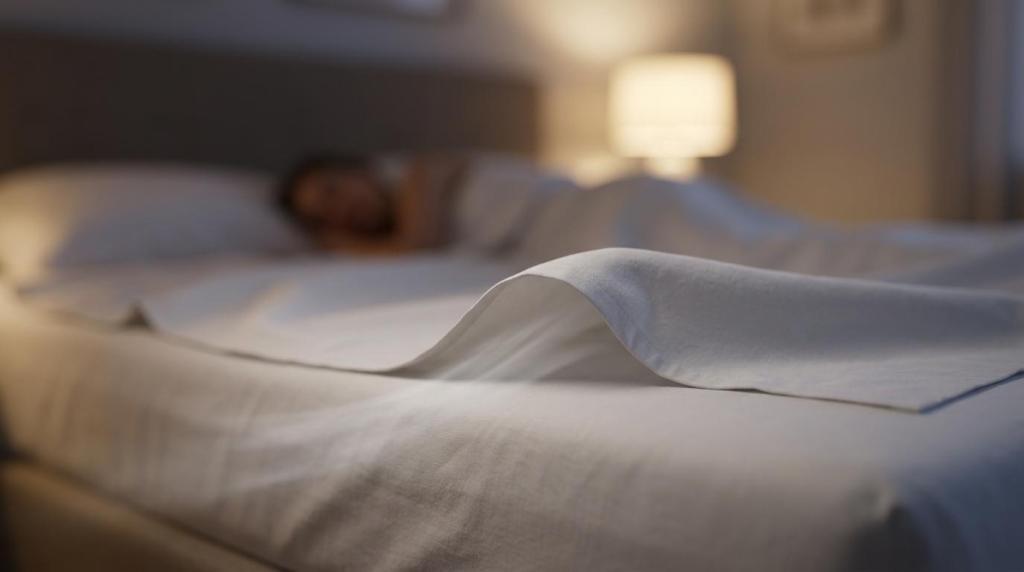
Improve room temperature sleep with bFan, a quiet bed cooling fan that moves air between sheets for cooler, more comfortable rest.
If your room temperature keeps turning bedtime into a thermostat battle, you do not need to cool the entire house like a walk in freezer just to get comfortable under the covers. bFan, made by Tompkins Research, Inc., is a bed cooling fan that sends a quiet, controllable airflow between your sheets, so you can fine tune the temperature where sleep actually happens, right around your body.
That matters because room temperature sleep control is not only about the number on the wall thermostat. It is also about the microclimate inside your bedding, where trapped heat builds up fast. bFan is built for hot sleepers, people dealing with night sweats, women in menopause or perimenopause, people whose medications make them overheat at night, and anyone who wants deeper sleep without pushing air conditioning harder than necessary. If you want a practical solution, the bFan from Bedfans USA is well worth a serious look.
Sleep experts commonly recommend a bedroom temperature between 60°F and 67°F, 15.5°C to 19.5°C, because cooler sleeping conditions usually make it easier for your body to settle into sleep. That range is a good starting point, but real comfort is more personal than a single thermostat setting. One person is fine at 67°F, another still wakes up sweaty at 64°F, especially under heavy bedding or during hormonal shifts.
bFan gives you a different way to solve that problem. Instead of dropping the entire room temperature lower and lower, bFan sends a gentle breeze between the sheets to help move heat away from your body. Tompkins Research, Inc. even frames room temperature tuning as part of normal use, with guidance to start the fan on low and raise room temperature in small steps until the bed feels comfortable.
"bFan is designed around room temperature tuning, start on low, then raise the room temperature in small steps until your bed feels right."
That approach is why many users can often raise the room temperature by about 5°F and still sleep cool. You are not creating cold air, because neither bFan nor Bedjet actually cools the air. Both systems use the cooler air already in the room. The difference is where that air goes, and how directly it reaches the heat trapped under your bedding.

Warm ambient temperature can limit heat dissipation during sleep. In plain English, if the room is warm and your blankets are holding body heat in place, your body has a harder time shedding that heat. bFan addresses that exact problem by targeting the bed microclimate, not by pretending to be an air conditioner.
That is an important buying point if you care about comfort and energy use at the same time. A cooler bed can let you stop overcooling the whole bedroom, or the whole home, just to keep one sleeper comfortable.
bFan is not built for a vague idea of comfort. It is built for people who know what nighttime overheating feels like. If you throw the covers off, wake up damp, flip the pillow to the cool side three times a night, or keep lowering the thermostat for relief that never quite lasts, bFan is aimed directly at your situation.
Tompkins Research, Inc. makes bFan for people who overheat at night and for sleepers who want cooler, deeper sleep without making energy bills the enemy. The between the sheets airflow is especially relevant when the room itself is reasonably cool, but your bed still feels stuffy.
Here are some of the people bFan is made to help:
Night sweats are not always just a comfort problem, and bFan does not replace medical care. If your sweating is new, severe, unexplained, or tied to other symptoms, you should talk with your doctor. What bFan can do is make the sleeping environment more manageable while you address the underlying cause, or while you live with a known cause that is hard to eliminate.
"Tompkins Research, Inc. built bFan for the bed microclimate, not the whole room, which is why many sleepers can raise room temperature by about 5°F and still rest cooler."
That is a big reason bFan speaks to such a wide group of buyers. A woman dealing with menopause, a person taking an SSRI, a man with warm sleep from blood pressure medication, and an energy conscious couple can all have the same practical goal, stop overheating at night without making the whole house colder than it needs to be.
The core job of bFan is simple, move room air between your sheets in a controlled way, so trapped body heat does not just sit there around you. That sounds basic, and honestly, basic is good when you are buying something for sleep. What matters is whether the airflow is quiet, adjustable, strong enough to reach you under bedding, and easy to control when you are tired. bFan checks those boxes with a purpose built design.
bFan uses a quiet squirrel cage blower with high static pressure. That matters because bedding creates resistance. A weak fan can blow around the outside of the bed and still leave the area under the covers feeling warm. Tompkins Research, Inc. designed bFan to push airflow where it needs to go, through the bedding space around your body, so the breeze is useful instead of decorative.
"bFan uses about 18 watts on average, pairing targeted bed cooling with low power use."
The system is remote controlled, so you can keep control next to the bed instead of getting up to change settings. The airflow is adjustable, and the height is adjustable too, which helps you aim the breeze where it actually improves comfort. That is a small feature on paper, but it matters at 1:00 a.m. when the difference between too little and too much airflow can decide whether you fall back asleep.
bFan also includes timer controls. If your overheating usually hits at the start of the night, or in the early morning hours, a timer lets you tailor the cooling window instead of running the fan longer than you want. For some sleepers, that helps line up comfort with the part of the night when body heat or night sweats are most disruptive.
Couples get a practical option too. The bFan approach can create dual zone microclimate control by using two fans, one for each side of the bed. That is not a marketing gimmick, it is a realistic way to handle the fact that one person can sleep hot while the other is perfectly comfortable.
Another practical detail, sheets matter. With a bed fan like bFan, tighter weave sheets usually help the airflow travel across your body and carry away heat more effectively. If your bedding is very loose or lets air escape too quickly, you may lose some of the cooling effect before it reaches the area that needs relief.
If you are comparing bFan with Bedjet, start with the most important truth, neither product cools the air. bFan does not cool the air, and Bedjet does not cool the air. Both use the air already in the room. So if someone is shopping for room temperature sleep control, the real question is not which one magically makes cold air. The real question is which product gives you the kind of bed level airflow, control, cost, and simplicity that fit your bedroom.
bFan has history on its side. Tompkins Research, Inc. is the original inventor of the bed fan category, and the original Bedfan was invented in 2003, several years before Bedjet was even thought of. That does not automatically settle the buying decision, but it does matter when you want a product from the company that pioneered between the sheets bed cooling in the first place.
Price is where a lot of shoppers stop and think harder. One Bedjet is more than twice the price of a single bFan. If you are shopping for a couple, the gap gets even clearer. A dual zone Bedjet setup costs over a thousand dollars, and it is more than twice the price of two bFans. For many buyers, that is the difference between trying bed cooling now and putting it off.
You also need to look at what you are paying for. bFan focuses on a quiet, controllable airflow between the sheets, an adjustable height setup, a sturdy stable base, a remote kept by the bed, and timer controls. It is direct, practical, and centered on the problem most hot sleepers actually describe, too much heat trapped in the bed.
"A dual zone Bedjet setup is over a thousand dollars, while two bFans create dual zone microclimate control for far less."
That makes bFan a very relevant option for couples with different sleep needs. One partner can run airflow on one side, the other can leave their side alone, or both can use separate fans for more independent control. You do not need to spend four figures just to avoid sleeping in a room that feels too cold for one of you and still too warm for the other.
There is also the question of value over time. If bFan lets you raise your room temperature by about 5°F and still sleep cool, you may be able to rely less on aggressive overnight air conditioning. Tompkins Research, Inc. specifically positions bFan as a way to improve sleep while helping reduce air conditioning costs, and that matches what many hot sleepers want, comfort that is personal, targeted, and less wasteful.
When you are buying a sleep product, noise matters almost as much as cooling. A product can work in theory and still fail if it sounds like a shop vacuum near your mattress. bFan is built to be quiet enough for bedroom use, with a sound level between 28db and 32db at normal operating speed. That is the kind of detail you want to know before you bring anything into a sleep space.
Tompkins Research, Inc. also keeps power use modest. bFan uses only 18 watts on average, which is a very different energy profile from trying to drop whole room or whole house temperatures lower every night just to keep one sleeper comfortable. That does not mean you ignore room temperature completely. It means you can use the room thermostat more strategically and let the bed fan do some of the fine tuning work where it counts.
"At normal operating speed, bFan runs at about 28db to 32db, giving you targeted bed airflow without loud fan noise."
Nightly setup is straightforward in concept. Keep the room in a cool range, start bFan on low, get into bed, and judge the feel at the body level, not just the room number on the thermostat. If you are comfortable, that is your baseline. If you still feel too warm, adjust the airflow. If the bed feels right, you can gradually raise the room temperature by small steps over time and see whether comfort holds.
That room temperature tuning method is one of the most useful things about bFan. It gives you a process instead of guesswork. Many people make the mistake of treating every bad night as a sign that the thermostat must go lower. Sometimes the room is already within the recommended 60°F to 67°F range, and the real issue is heat trapped under the bedding. bFan helps separate those two problems.
Bedding choice makes a real difference too. Tight weave sheets are often the better match for a bed fan because they help channel airflow across your body, which is what carries heat away. If you are using loose, very open, or poorly fitted bedding, the airflow can escape too quickly and reduce the effect. That does not mean you need a full bedroom overhaul. It just means the bed fan works best when your sheets help guide the breeze instead of wasting it.
And if you are wondering about appearance or complexity, bFan is meant to stay practical and discreet. It is not sold on Amazon. You buy direct from the manufacturer, which means Tompkins Research, Inc. owns the product relationship, the instructions, and the support around the bFan itself.
A lot of sleep advice stays at the room level. Keep the bedroom cool. Lower the thermostat. Use breathable bedding. That is fine as far as it goes, but it misses what many hot sleepers already know. You can have a decent room temperature and still feel miserable once you are under the covers.
bFan solves that mismatch by addressing the body level sleep environment. Tompkins Research, Inc. describes the product as delivering a controllable gentle breeze between the sheets, and that phrase matters. The goal is not to blast the room. The goal is to help your body release heat more effectively inside the bed, where warmth often builds up faster than people expect.
That makes bFan especially useful when overheating is not constant from head to toe. Many sleepers have fluctuating comfort through the night. They fall asleep fine, then wake up warm at 2:00 a.m., or they cool off after a few minutes of airflow and want less later. Remote control and timer options matter because your body does not always need the same thing all night long.
There is a psychological side to this too. If you are constantly worried about sleeping hot, bedtime itself can feel tense. You go to bed expecting to wake up. You start preemptively lowering the thermostat. You end up too cold outside the bedding and too warm inside it. bFan gives you a more direct control point, which can make the whole routine feel less like trial and error.
For couples, this matters even more. Shared room temperature is often a compromise that pleases nobody. One partner wants the bedroom colder, the other wants it warmer. One uses extra blankets, the other kicks them off. The bFan solution of one fan per side gives each sleeper more say over their own microclimate without turning the bedroom into a climate war.
bFan is a strong fit if your main problem is trapped heat in bed and you want a simpler, lower cost alternative to extreme thermostat changes or higher priced bed cooling systems. It is also a strong fit if you care about energy use, because targeting the bed often makes more sense than overcooling the room.
Here is when bFan usually makes the most sense:
There are also cases where you should step back and assess the bigger picture. If your bedroom is genuinely hot, stuffy, or poorly ventilated, you may still need to improve the room itself. bFan uses the cooler air available in the room, so it works best when the bedroom is kept reasonably cool to begin with. Remember, neither bFan nor Bedjet cools the air itself.
And if your night sweats are new, drenching, or paired with symptoms like unexplained weight changes, fever, chest pain, severe reflux, or other concerning changes, talk with a doctor. Nighttime overheating can come from hormones, medication side effects, anxiety, alcohol, infections, endocrine issues, and other health conditions. bFan can make sleep more comfortable, but it is not a medical diagnosis.
There is a reason people keep looking for a better answer than just lowering the thermostat. Whole room cooling can be blunt, expensive, and frustrating when the real problem lives under the covers. bFan gives you a more targeted option, quiet airflow between the sheets, remote control at the bedside, timer settings, adjustable positioning, and a design made specifically to evacuate trapped body heat from the bed.
Tompkins Research, Inc. stands out here because bFan is not a me too product riding a trend. The company is the original inventor of the bed fan category, with roots going back to 2003. That history shows up in the product focus. bFan is built around the real sleep complaint, overheating in bed, not generic room air movement.
If your goal is better room temperature sleep, start with the basics that actually move the needle. Keep your bedroom in the commonly recommended cool range of 60°F to 67°F. Use Tight weave sheets if you can. Start bFan on low. Then raise room temperature in small steps until the bed feels comfortable. That is a smarter path than spending every night fighting the thermostat.
If you are ready to sleep cooler without overcooling the whole room, buy direct from bFan and start tuning the bed, not just the bedroom.
Cleveland Clinic guidance on ideal bedroom temperature: Cleveland Clinic on the best bedroom temperature for sleep, explains the commonly cited 60°F to 67°F range and why cooler rooms support sleep.
MedlinePlus overview of night sweats: MedlinePlus information on night sweats, covers common causes of nighttime sweating and when medical follow up may be needed.
National Heart, Lung, and Blood Institute sleep health basics: NHLBI guide to getting good sleep, offers practical sleep environment and sleep habit guidance from a major public health source.
Copyright 2005 - present - Tompkins Research, Inc. & Kurt W. Tompkins All Rights Reserved DO NOT COPY. bFan® and the word bfan® in any format is a registered trademark of Kurt W. Tompkins the word BFAN® in any format shall not be used without written permission of the mark owner. This includes specifically Brookstone where you like to bait and switch, do not use my mark to bait customers.