
Learn what causes sleep overheating, from hot rooms and bedding to hormones, meds, and health issues, plus simple ways to sleep cooler.
If you keep waking up hot, sweaty, or weirdly restless, you’re not imagining it. Sleep overheating is common, and it can come from a lot of different places. Sometimes the reason is simple, your room is too warm, your bedding traps heat, or your body just runs hot at night. Other times, frequent overheating points to true night sweats, which can be tied to hormones, medication side effects, anxiety, low blood sugar, sleep apnea, infections, or other health issues.
That’s why this question matters so much. Sleeping too hot does more than make you uncomfortable. It can break up your sleep, cut down deep sleep, leave you groggy the next day, and turn bedtime into something you dread. If you’re already dealing with menopause, chronic stress, medication changes, or a health condition, overheating can feel relentless.
The good news is that you can usually narrow down the cause by looking at patterns. Is it happening only when the room is warm, or even when the bedroom feels cool. Are your sheets slightly damp, or completely soaked. Does it happen after alcohol, spicy food, a new medicine, or during hormonal shifts. Once you know what kind of overheating you’re dealing with, the fix gets a lot easier.
Sleep overheating is a broad term. It can describe anything from feeling too warm under the covers to waking up drenched. Those are not always the same thing.
A warm room, heavy comforter, memory foam mattress, or thick sleepwear can absolutely make you sweat. That kind of overheating is annoying, but it’s often pretty easy to trace back to the environment around you. If your bedroom holds heat, or your bedding does not let body heat escape, your body works harder to cool itself while you sleep.
True night sweats are different. Health sources commonly describe them as sweating so much that your sleepwear or bedding becomes soaked, even when the room is cool. If that sounds familiar, it is less likely to be just a bedding issue and more likely to involve hormones, medication, or a medical cause.
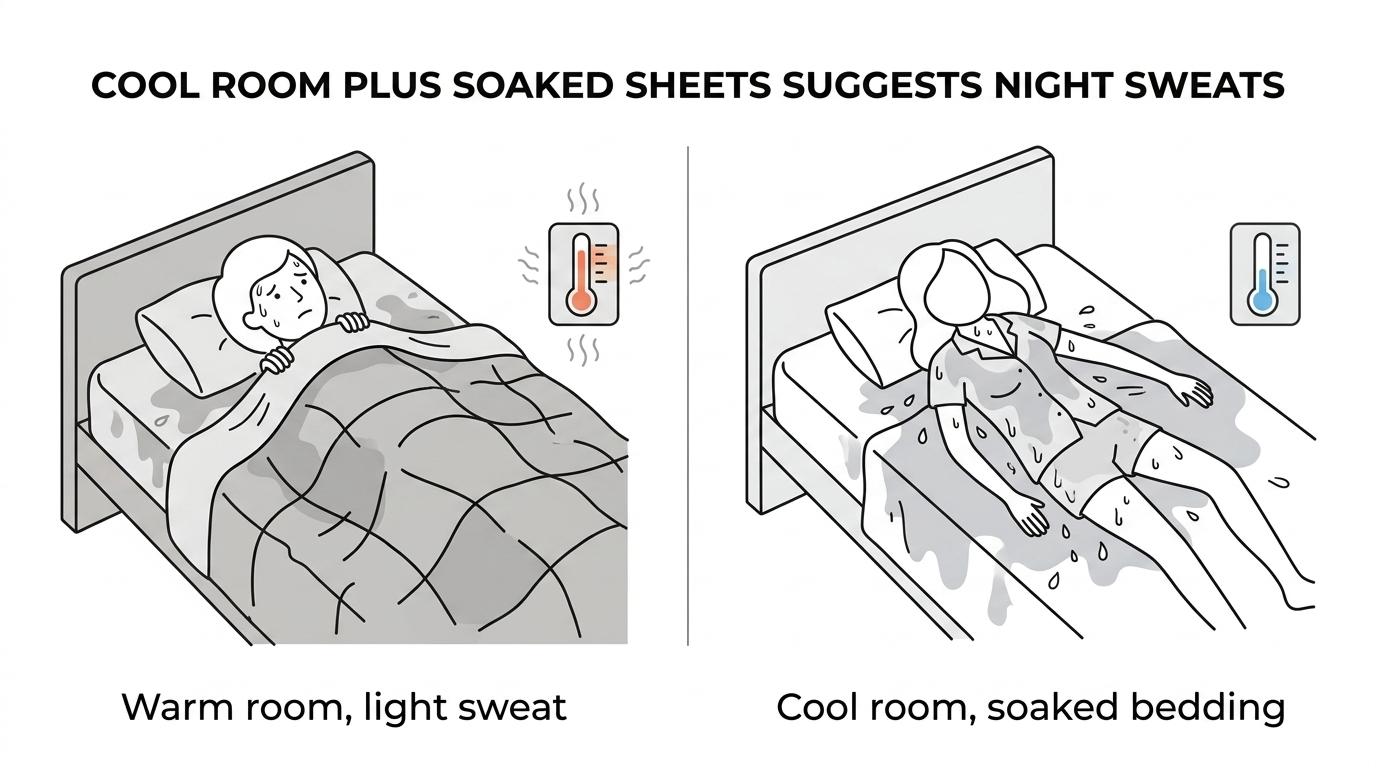
This is where bedroom temperature matters. Sleep experts commonly recommend a bedroom temperature between 60°F and 67°F, 15.5°C to 19.5°C, for better sleep. That range helps your body do what it already wants to do at night, lower core temperature so sleep can deepen.
After you’ve looked at the basics, these clues can help you sort out what you’re dealing with.
Let’s start with the simplest explanation, because it really is common. Your sleep setup may be trapping heat around your body. Mattresses, mattress toppers, heavy blankets, polyester pajamas, and low airflow can all build a warm pocket that your body cannot escape.
Even people who keep the room fairly cool can still overheat if their bedding holds onto body heat. That’s one reason some people feel fine when they first fall asleep, then wake up hot around 2 or 3 in the morning. Heat slowly builds under the covers, and once it does, your body has to work harder to dump it.
Your own sleep habits matter too. If you sleep tucked in tightly, layered under multiple blankets, you may be creating a small heat trap around your torso and legs. If your partner sleeps hot, or you share a bed with kids or pets, that adds more body heat to the same space.
This is also where cooling airflow can make a big difference. A bed fan does not cool the air itself. It uses the cool air already in the room and sends it into the bed space where heat gets trapped. That matters because the air right around your body can be much warmer than the thermostat suggests.
When people get the bed climate under control, they can often raise the room temperature by about 5°F and still feel cool enough for more restful sleep. That can mean less air conditioning use and lower cooling costs, while still staying within a sleep friendly comfort zone.
Hormones are one of the biggest reasons people suddenly start sleeping hot. If overheating seems to come out of nowhere, and your room has not changed, hormones should be on your list.
Menopause and perimenopause are probably the best known examples. Shifts in estrogen can affect the hypothalamus, the part of the brain that helps regulate body temperature. When that system gets more sensitive, even a small change in body heat can trigger a hot flash or night sweat. You may feel a sudden wave of heat in your chest, neck, or face, then sweating, then chills once it passes.
Pregnancy can do something similar. Metabolism rises, blood flow changes, and hormones move around a lot. Many pregnant women feel warmer at night, even in a room that used to feel perfect. PMS and PMDD can also bring nighttime overheating for some people in the days before a period.
Men can deal with hormone related night sweats too. Testosterone shifts, medical treatments, and age related changes can all play a part. People going through hormone therapy or gender affirming care may notice body temperature changes as their system adjusts.
The reason this matters is that hormone driven overheating often does not respond fully to just turning the thermostat down. Cooling the room still helps, and again, sleep experts commonly recommend 60°F to 67°F, 15.5°C to 19.5°C, but direct cooling around the body can be more effective when the heat is coming from inside you. That’s why some hot sleepers do well with a Bedfan, because it helps move trapped heat away from the body even when the room itself is not freezing.
A surprising number of medicines can make you sweat at night. This catches people off guard all the time. They assume the room is the problem, when the real trigger is a prescription or even an over the counter drug.
Some antidepressants are well known for this. So are steroids, opioid pain medicines, some blood pressure medicines, diabetes medications that can lead to low blood sugar, and some hormone related treatments. Cancer treatments can also cause hot flashes and night sweats in both women and men. If overheating started soon after a medication change, that timing matters.
Medical conditions can be part of the picture too. Overactive thyroid can make you feel revved up and hot. Anxiety can trigger sweating and a racing heartbeat. Sleep apnea can show up with night sweats because the body is under stress during repeated breathing interruptions. Infections can cause sweating, often with fever or chills. Hyperhidrosis, which means excessive sweating, can also affect sleep.
Low blood sugar is another one to keep in mind, especially for people with diabetes. A drop in nighttime glucose can trigger sweating, shakiness, restlessness, or a pounding heart. If that pattern fits, it’s worth talking with your clinician.
Here are some of the more common medical drivers.
None of this means you should panic if you wake up sweaty once in a while. But if the overheating is frequent, strong, or new for you, and your room is already cool, it deserves a closer look.
Sometimes the cause is not a medical condition at all, but the stuff you do in the evening. That can actually be a relief, because those changes are usually easy to test.
Alcohol is a big one. It can widen blood vessels, disrupt temperature regulation, and lead to sweating later in the night. Spicy food can do the same. Caffeine late in the day may make your body more alert and reactive. Hard exercise too close to bedtime can leave your core temperature too high when you are trying to fall asleep.
Stress has a sneaky effect too. If your nervous system is on high alert, your body may feel warm, your heart may run faster, and you may sweat more, even without obvious anxiety. People often blame the bedding when the real issue is a stressed body that cannot downshift.
A few simple changes can help you test whether habits are feeding the problem.
If you sleep hot, the bedroom temperature thermostat matters, but it is not the whole story. Plenty of people keep the room cool and still wake up sweaty because the heat is trapped under the bedding.
That is why the best cooling method is often the one that improves your personal sleep microclimate, the little pocket of air between your body and your sheets. You do not always need to turn the whole house into a walk in refrigerator. You need a way to move heat away from your body while you sleep.
Again, sleep experts commonly recommend 60°F to 67°F, 15.5°C to 19.5°C, as a strong target range for better sleep. But if you use a Bedfan to move cool room air through the bed, many people can raise the room temperature by about 5°F and still sleep comfortably. That can take some pressure off your air conditioning bill, which is a big deal in warm climates or during summer.
The other benefit is comfort for people who do not want a freezing room. Maybe your partner hates cold air. Maybe your house has one stubborn warm bedroom. Maybe central air is expensive to run all night. Direct bed cooling can solve those problems better than just lowering the thermostat more and more.
A good setup usually includes better airflow, lighter bedding, and the right sheet fabric. Tight weave sheets work especially well with a bed fan because they help the air spread across your body and carry away heat instead of escaping too quickly.
Let’s talk plainly about bed cooling products, because this is where a lot of shoppers get lost. Neither Bedfan nor Bedjet cool the air. They do not function like an air conditioner. They both use the cooler air already in the room and direct it into the bed to remove trapped body heat.
That means the room still needs to be reasonably cool. If your bedroom is already hot and stale, no bed fan can manufacture cold air out of nothing. But if your room is within a workable range, that directed airflow can feel dramatically cooler than still air.
The original Bedfan came to market years before Bedjet was even thought of. The Bedfan was invented in 2003, which matters if you care about a product category that has actually been tested by real sleepers over time. A modern bFan or Bedfan setup focuses on between the sheets airflow, quiet operation, and simple controls.
If you want a straightforward option, the bFan from www.bedfans-usa is worth a look as a practical solution for sleep overheating. It uses about 18 watts on average, offers timer controls, and runs at about 28db to 32db at normal operating speed, which is quiet enough for most bedrooms. Because it cools your bed space directly, it can help you stay comfortable without dropping the whole room temperature as far.
Price is where the difference really jumps out. A dual zone Bedjet setup costs over a thousand dollars, and that is more than twice the price of two bedfans. Put another way, one Bedjet is more than twice the price of a single Bedfan. If you and your partner want dual zone microclimate control, two bed fans can often do the job at a fraction of that cost, with each sleeper controlling airflow on their own side.
There are a few practical distinctions worth keeping in mind.
A bed fan works best when the rest of your setup supports airflow. This part gets overlooked. People sometimes expect immediate magic, but sheet choice, bedding weight, and room conditions still matter.
Start with the room itself. You do not need it icy cold, but you do want it in a sleep friendly range. The usual recommendation of 60°F to 67°F, 15.5°C to 19.5°C, is still a smart place to start. Then let the bed fan do the close up work of moving that cooler room air through your bed.
Sheet choice is a bigger deal than most people think. A tight weave top sheet usually works better with a Bedfan because it helps the airflow move across your body and carry away heat. If the weave is too open, the air may escape too fast instead of spreading where you need it. Light, breathable bedding on top also helps.
Timer controls are useful here. Some people only need a stronger cooling push while they fall asleep, then a lower setting later. Others want a steady, quiet flow all night. The Bedfan’s timer controls make that easier. And because normal operating sound is around 28db to 32db, many people find it fades into the background like soft white noise.
A shared bed can make this harder. One person is sweating, the other person is cold, and now the thermostat becomes a nightly argument. This is where targeted cooling can make more sense than whole room cooling.
If one sleeper runs hot, lowering the room to the point where they feel okay may leave the other person miserable. A bed fan can cool one side of the bed space more directly, which is often a better answer than blasting AC for everyone. That is one reason dual zone solutions get so much attention.
You do not always need a premium dual zone system to get there, though. Two bedfans can create dual zone microclimate control for much less money than a dual zone Bedjet setup that costs over a thousand dollars. If budget matters, that comparison is hard to ignore.
This matters for energy use too. If one hot sleeper can stay comfortable with direct bed cooling, many households can raise the room temperature by about 5°F and still get restful sleep. That can cut air conditioning use without asking the hot sleeper to suffer through the night.
Most nighttime overheating is not an emergency. Still, there is a line where it makes sense to talk to a clinician instead of just swapping sheets or lowering the thermostat.
If your bedding is getting soaked even when the room is cool, think night sweats, not just a warm bedroom. If the overheating is new, frequent, intense, or waking you night after night, it is worth bringing up. The same goes if you started a new medication or recently changed a dose.
Watch for extra symptoms too. Fever, cough, unexplained weight loss, chest pain, shortness of breath, severe fatigue, swollen glands, or repeated episodes of low blood sugar all deserve medical attention. Night sweats can come from ordinary causes, but they can also be a sign that your body needs a closer check.
If you are dealing with menopause, pregnancy, thyroid disease, diabetes, cancer treatment, anxiety, or suspected sleep apnea, mention the night overheating directly. That detail helps connect the dots faster. You do not have to figure it out alone.
By now, you can probably see that there is no single answer to why you overheat when you sleep. Sometimes it is your room. Sometimes it is your bedding. Sometimes it is your hormones, your meds, your blood sugar, or your stress level. Often, it is a mix of a few things at once.
That said, a simple plan can tell you a lot in just a few nights. Cool the room into the recommended range, lighten your bedding, skip alcohol late, and use targeted airflow in the bed space. If a Bedfan helps you sleep comfortably while the room stays about 5°F warmer than before, you may get better sleep and lower AC costs at the same time.
If the sweating still breaks through a cool room and a better sleep setup, take that seriously. Persistent sleep overheating is your cue to look past the thermostat and talk with a medical professional.
If you want to read more from established health sources, these are solid places to start.
Copyright 2005 - present - Tompkins Research, Inc. & Kurt W. Tompkins All Rights Reserved DO NOT COPY. bFan® and the word bfan® in any format is a registered trademark of Kurt W. Tompkins the word BFAN® in any format shall not be used without written permission of the mark owner. This includes specifically Brookstone where you like to bait and switch, do not use my mark to bait customers.