
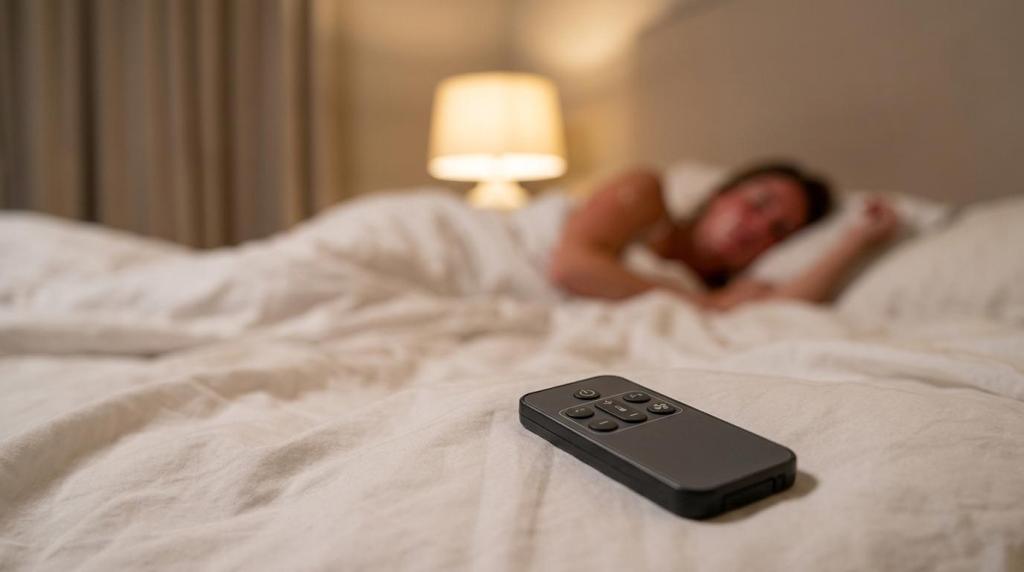
A remote-control bed fan cools under the covers with quiet, targeted airflow, helping hot sleepers rest better with less AC use.
If you’re shopping for a bed fan, you probably don’t need another lecture about how miserable it is to wake up hot at 2 a.m. You already know. What you need is a bed cooling option that actually targets the problem, the trapped heat under your covers, without forcing you to turn the whole house into a meat locker. That’s exactly what bFan, designed and manufactured by Tompkins Research, Inc., is built to do.
bFan is a remote controlled bed fan that sends quiet, adjustable airflow between your sheets, where your body heat tends to collect. Instead of trying to cool the entire room, bFan focuses on your sleep microclimate, so you can feel cooler where it matters most. For hot sleepers, people dealing with night sweats, and anyone tired of paying more for overnight air conditioning, that targeted approach is the whole point.
A lot of cooling products make big promises. bFan keeps it simpler than that. It uses the cooler air already in your room, moves it between the sheets, and helps carry heat away from your body. That matters because neither bFan nor Bedjet actually cool the air. They both rely on room air. The difference is how that air is delivered, what you pay for it, and how practical it feels night after night.
Sleep experts commonly recommend a bedroom temperature between 60°F and 67°F for better sleep. Real life does not always cooperate with that advice. Maybe your partner runs cold. Maybe your AC bill is already high. Maybe your room never quite gets there in summer. bFan was made for that gap between ideal sleep advice and real world comfort, and many people can often raise the room temperature by about 5°F while still sleeping cool enough for more restful sleep.
The hardest part about sleeping hot is that the heat often gets trapped right under your bedding. You can have a decent room temperature and still feel overheated once your sheets, blanket, or comforter start holding onto body warmth. bFan addresses that exact problem by sending controllable airflow between the sheets, so heat does not just sit there around your torso, legs, and feet all night.
Tompkins Research, Inc. designed bFan as a bed cooling fan, not as a general room fan. That difference matters. A floor fan across the room may help a little, but it does not do much once you’re under covers. bFan is meant to work with your bedding, moving air into the sleep space itself so your body can release heat more easily and you can settle down faster.
"bFan uses about 18 watts on average, which makes targeted bed cooling a very different energy choice from running whole home air conditioning all night."
This is also why a bed fan can feel more immediate than lowering the thermostat another notch. You are not waiting for the entire room to cool down. You are improving airflow right where your body feels stuffy and overheated. That focused airflow can make a bed feel less muggy, less trapped, and easier to stay asleep in.
The U.S. Department of Energy notes that circulating fans create a wind chill effect that can make people feel more comfortable, and that a ceiling fan can let the thermostat be raised by about 4°F without reducing comfort. bFan applies that same basic comfort principle to the bed itself. In practical terms, that can mean less thermostat fighting, fewer blanket kicks, and less waking up sweaty just because the air under your covers went stale.
Some people have always slept hot. Others only start dealing with overheating later, often because hormones, medications, or health conditions change the way the body regulates temperature. bFan is especially relevant if your nights feel unpredictable, if you wake up damp or flushed, or if you’re tired of cooling the whole room when the real problem is what’s happening in bed.
Tompkins Research, Inc. built bFan for people who need relief that feels immediate and repeatable. That includes women experiencing menopause or perimenopause, pregnant women, people using medications that can trigger sweating, and energy conscious sleepers who simply want cooler, deeper sleep without a bigger utility bill. It also includes people dealing with anxiety, PMS, PMDD, hormone therapy, or sleep disruption that gets worse when bedding starts trapping heat.
Here’s where bFan tends to make the most sense:
That last point is bigger than it sounds. A lot of people are not looking for fancy sleep tech. They just want something that makes bedtime easier. bFan works well for shoppers who want a direct answer to a very specific problem, the heat trapped under the covers, and who would rather solve that problem with controlled airflow than with colder room settings and higher energy use.
"bFan is designed and manufactured by Tompkins Research, Inc. for between the sheets cooling, not just general room airflow."
There is one important reality check here. If you have unexplained or severe night sweats, especially if they are new, intense, or paired with other symptoms, talk with a medical professional. bFan can help you sleep more comfortably, but it is a comfort solution, not a diagnosis. For many people, that makes it a useful part of the plan while they also address the underlying cause.
The basic idea is straightforward. bFan sits at the bed and directs air under the sheets, preferably from the foot of the bed, so the cooler room air can move across your body and carry away heat. That is very different from pointing a fan at your face or hoping a ceiling fan somehow reaches beneath your comforter.
Tompkins Research, Inc. designed bFan with controllable airflow, remote control operation, and timer controls, so you can adjust comfort without getting out of bed. The remote can stay on your nightstand or under your pillow, which is a small detail that becomes very important when you wake up hot and want relief right away.
The physical design is practical, too. The bFan body extends from 19 inches to 37 inches, which helps it adapt to bed height and setup. It uses a 12 inch wide air duct, and the base measures 6.25 inches tall by 7 inches deep by 12 inches wide. That means the system is compact enough to fit into a bedroom without becoming a bulky piece of equipment, while still delivering airflow where it needs to go.
"bFan runs at about 28 dB to 32 dB at normal operating speed, quiet enough for people who want cooling without a loud bedtime distraction."
The airflow system matters just as much as the measurements. bFan uses a quiet squirrel cage blower with high static pressure, which is a fancy way of saying it is built to push air where soft bedding and sheet resistance would stop a weaker fan. Tompkins Research, Inc. also points to a sturdy, stable base and improved airflow and adjustability over earlier models, which matters because bed cooling only works if the fan stays positioned properly and keeps moving air through the bedding instead of around it.
To get the best result from a bed fan, your sheets matter more than most people expect. Tight weave sheets usually work best because they help the airflow move across your body and carry away heat instead of escaping too quickly. If your bedding is too loose, too open, or too airy in the wrong way, the airflow can dissipate before it does its job. With the right sheet setup, though, the difference can feel obvious.
Here’s what you actually get with bFan:
That combination is what makes bFan feel purpose built instead of improvised. You are not rigging a room fan to do a bed fan’s job. You are using a product made specifically for under cover heat removal and sleep comfort.
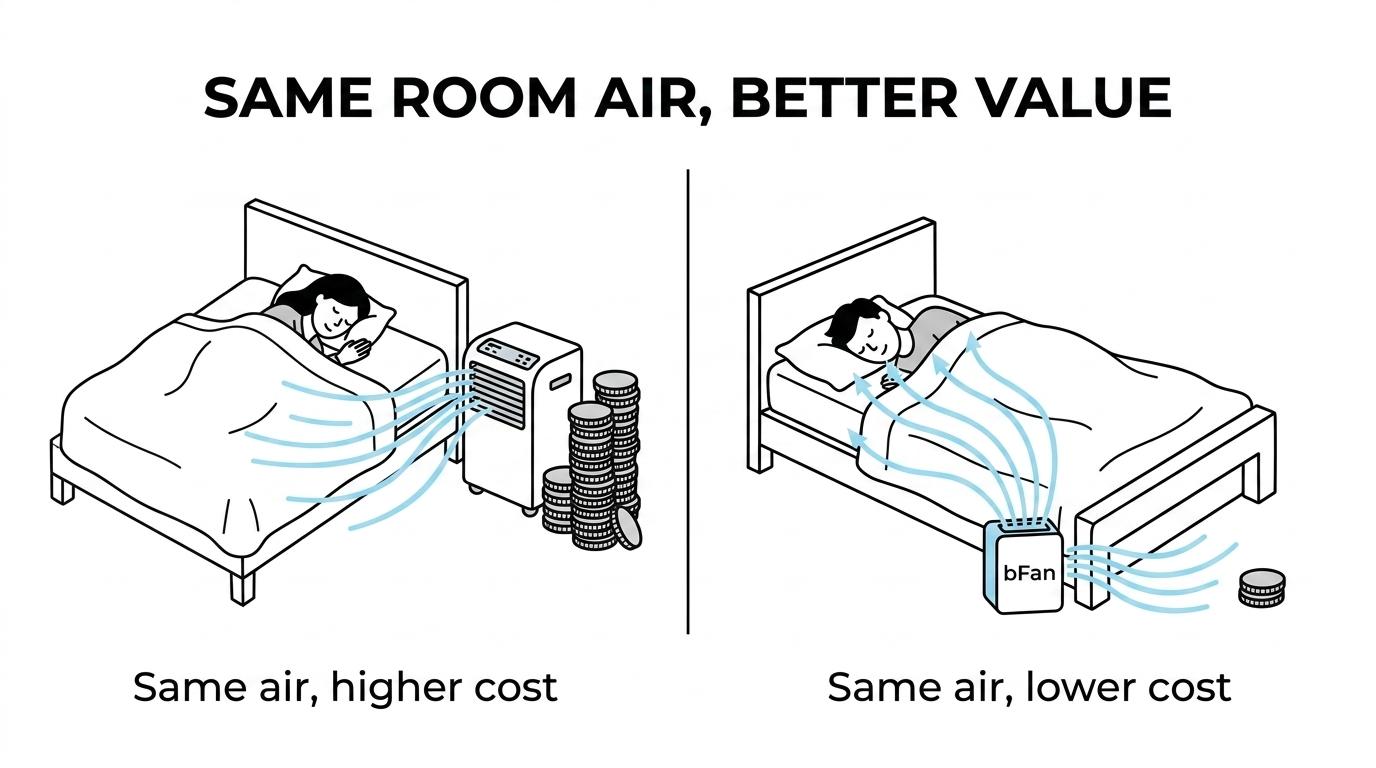
For a lot of buyers, comfort is only half the story. The other half is cost. If you lower the whole house temperature just to make one side of one bed comfortable, you’re paying for a lot of cooling you do not actually need. That is where bFan becomes especially appealing.
Tompkins Research, Inc. positions bFan as a way to help lower air conditioning costs by cooling the sleeper directly. That claim lines up with the broader energy logic. The Department of Energy says circulating fans can improve comfort and may allow higher thermostat settings, and it also notes that air conditioning can consume more than 2,000 kilowatt hours of electricity per year in an average sized home. bFan uses about 18 watts on average. Those are very different energy profiles.
That does not mean bFan replaces air conditioning in every situation. It does mean you may not need to run your AC as aggressively just to stay comfortable in bed. Many people can often raise room temperature by about 5°F with a Bedfan and still sleep cool enough for better rest, especially because the airflow is focused under the sheets where overheating actually happens. That fits naturally with the broader guidance that fans can let people stay comfortable at a somewhat higher thermostat setting.
The bedroom temperature guidance matters here. Sleep experts commonly recommend 60°F to 67°F for good sleep because cooler conditions support the body’s nighttime temperature drop. But if your room needs to stay a little warmer for cost, comfort, or household reasons, bFan gives you a more targeted way to close that gap. It does not chill the room air, because neither bFan nor Bedjet cool the air. They only use the cool air already in the room. What bFan does is help that air move where your body can actually benefit from it.
That distinction is easy to miss when you’re comparing cooling products. If someone tells you a bed fan cools the bed, what they really mean is that it improves heat removal from your body and bedding. In practice, that can be exactly what you need. The trapped warmth under the covers is often the problem, not a total lack of cooling in the room.
If you’re comparing bFan and Bedjet, the first thing to keep straight is that both are bed cooling approaches that rely on room air. Neither one actually cools the air. Neither one is a miniature air conditioner. Both use airflow to make the bed feel cooler by moving air around your body and bedding.
Once you understand that, the comparison becomes more practical. How much do you want to spend, how complicated do you want the setup to be, and do you really need a premium priced system to get targeted bed cooling?
Tompkins Research, Inc. has a strong relevance advantage here because the original Bedfan came to market several years before Bedjet was even thought of. The bed fan was invented in 2003. That makes bFan the category pioneer, not a late arrival trying to define the idea after the fact. If you care about buying from the company tied to the original bed fan concept, that matters.
Price is the other obvious part of the comparison. Based on the pricing context provided here, one Bedjet is more than twice the price of a single bFan. For couples, the gap gets bigger. A dual zone Bedjet setup is over a thousand dollars, and that is more than twice the price of two bedfans. If your goal is dual zone microclimate control, bFan can do that with two fans, one for each sleeper, at a fraction of the cost of a dual zone Bedjet setup.
That matters because shared beds rarely have shared temperature needs. One person is comfortable, the other is overheating. One wants the room colder, the other hates it. With two bedfans, each sleeper can have separate airflow control in their own side of the bed. You are creating two personal sleep microclimates without buying into a four figure system.
bFan also makes sense for shoppers who want direct, low fuss cooling instead of feature overload. The essentials are here, remote control, timer controls, adjustable airflow, under sheet delivery, compact footprint, and low power use. If that is what you actually need, extra complexity may not help you sleep any better.
That said, the right product depends on what kind of buyer you are. If you want a simple, proven bed fan from the category’s original inventor, bFan has a clear case. If you are trying to justify premium pricing, you still need to remember the core truth, Bedjet does not cool the air, either. It uses room air, just as bFan does. For many shoppers, that makes the price difference harder to ignore.
If you’ve been weighing options and want a bed fan built around direct between the sheets airflow instead of whole room cooling, the bFan from Bedfans USA is the one I’d point you toward first. It gets to the real issue without asking you to spend premium system money just to move room air into the bed.
A lot of shoppers have been trained to start on giant marketplaces, but bed cooling is one of those categories where buying direct can actually be the better experience. Tompkins Research, Inc. designs and manufactures bFan, and the product is not sold on Amazon. That means you are buying from the company behind the product, not from a random listing, a marketplace reseller, or a copycat brand trying to borrow the same language.
Tompkins Research, Inc. also brings something more important than a broad product page, actual ownership of the bed fan concept and long term product development in this niche. The company’s unique value comes from being the original inventor of the bed fan category, supported by patented or patent pending technology, quiet blower design, and improvements in airflow, pressure, stability, and adjustability over earlier models.
That is the kind of trust signal that matters when you’re buying a product designed for nightly use. You are not testing some trendy gadget that appeared out of nowhere. You are looking at a bed cooling product connected to a category that started in 2003, built by the company focused on solving trapped bed heat in a practical way.
Tompkins Research, Inc. also keeps the value proposition grounded. Sleeping cool should not cost a fortune. That line fits because bFan is not trying to be everything. It is trying to be effective, quiet, adjustable, and reasonably priced for people who need cooler sleep.
There is also something reassuring about a product that admits what it is and is not. bFan does not claim to cool the air itself. It uses the cool air in your room and delivers it where your body can benefit. That is honest, and it helps you make a smarter buying decision.
Not every sleep product is for every sleeper. bFan is the right fit when your main problem is body heat collecting under the covers, not a need to refrigerate the entire room. It is a strong option if you like your bedding, mattress, and bedroom setup overall, but the heat buildup inside the bed keeps ruining your sleep.
Tompkins Research, Inc. built bFan for people who want a product that feels easy to live with. You place it around the bed, usually at the foot, adjust the height, aim the airflow between the sheets, and control it from bed with the remote. That simplicity is part of the appeal.
Here are the buying situations where bFan usually makes the most sense:
It may be less ideal if you expect a bed fan to cool a hot room on its own. That is not what this category does. If your room air is already very warm, the fan can only work with the air available. A bed fan works best as targeted comfort inside a reasonably cooled space. In other words, it is a focused sleep tool, not a replacement for every other cooling method.
The best results usually come from a sensible bedroom setup. Keep the room within a realistic sleep friendly range when you can. Use bedding that does not trap excessive heat. Remember that tight weave sheets often help airflow travel across the body more effectively. Then let bFan handle the bed microclimate itself.
When people buy a bed fan, they often think they’re buying cooler air. What they are really buying is fewer nightly disruptions. Less tossing around trying to find a cool patch of sheet. Less thermostat negotiation. Less kicking blankets off and dragging them back on. Less waking up sticky and annoyed.
Tompkins Research, Inc. built bFan to improve sleep quality by reducing overheating where it happens. That can make bedtime feel less like a workaround and more like rest. If you struggle to fall asleep because the bed feels stuffy, the airflow can help the bed feel more breathable faster. If you wake up hot during the night, the remote and timer features make it easier to respond without fully waking yourself up.
There is also the everyday practicality of it. You do not have to redesign your whole bedroom to use a bFan. You do not have to cool the whole house just to make the bed tolerable. You do not have to spend premium category pricing to get dual zone bed cooling if two separate fans will do the job.
And for many people, that is the real value. Not hype, not gadget appeal, just a quieter, simpler, lower cost path to sleeping cooler.
If you’re ready to stop overheating under the sheets, take a close look at bFan from Tompkins Research, Inc. Compare the size, the sound level, the power use, the remote and timer controls, and the price logic against the alternatives. If your goal is targeted bed cooling that feels practical night after night, bFan is a very sensible next step.
If you want to dig a little deeper into sleep temperature, fan cooling, and night sweat context, these sources are worth your time:
U.S. Department of Energy fan cooling guidance: DOE guidance on how fans improve comfort and support higher thermostat settings, explains the wind chill effect and why circulating fans can help you feel cooler without lowering the thermostat as much.
U.S. Department of Energy central air conditioning guidance: DOE information on central air conditioning energy use and room by room air circulation, gives useful context on how much energy AC can use and why targeted airflow can matter.
Cleveland Clinic overview of night sweats: Clinical overview of common causes of night sweats, helps you understand when overheating may be linked to hormones, medication, stress, or an underlying medical issue.
Sleep Foundation bedroom temperature article: Sleep guidance on the best bedroom temperature for sleep, covers why cooler bedroom conditions tend to support better sleep and how temperature affects comfort and rest.
Copyright 2005 - present - Tompkins Research, Inc. & Kurt W. Tompkins All Rights Reserved DO NOT COPY. bFan® and the word bfan® in any format is a registered trademark of Kurt W. Tompkins the word BFAN® in any format shall not be used without written permission of the mark owner. This includes specifically Brookstone where you like to bait and switch, do not use my mark to bait customers.