
Medication night sweats can stem from antidepressants, opioids, hormones, or diabetes drugs. Learn causes and warning signs.
Night sweats can feel confusing when you know your room is cool enough, your bedding seems fine, and yet you still wake up damp, overheated, and wide awake. If this started after a new prescription, a dose change, or even after stopping a medication, your medicine may be part of the story.
That’s more common than many people realize. Several well known drug classes are linked to nighttime sweating, especially antidepressants, methadone and other opioids, hormone therapies, and diabetes medications that can trigger low blood sugar. The tricky part is that night sweats can also come from infections, thyroid problems, menopause, sleep apnea, anxiety, cancer, alcohol, or a room that’s just too warm. So you want to be practical, not panicked.
Medication related night sweats often show up as repeated episodes of waking hot, sweaty, or flushed, sometimes enough to soak sleepwear or sheets. In some people, the sweating starts soon after beginning a new medication. In others, it shows up after a dose increase, during withdrawal, or only after the medication has built up in the body over time.
Sometimes the sweat is paired with a racing heart, vivid dreams, restlessness, or a hot flash feeling. In other cases, it’s quieter than that, you just wake up clammy and can’t settle back down. If you take a diabetes medication, sweating at night can also be a clue that your blood sugar dropped too low while you were asleep.
One thing matters here, context. A single sweaty night after a heavy meal, alcohol, or a fever is different from a pattern that started after a medication change and keeps repeating.
Your body sweats to control temperature, and medications can interfere with that process in a few different ways. Some drugs change signaling in the brain, especially serotonin and norepinephrine pathways, which can shift how your body handles heat. That’s one reason antidepressants are frequent culprits.
Other medications cause sweating indirectly. Diabetes drugs may lead to hypoglycemia, and sweating is a classic sign of low blood sugar. Opioids can cause sweating as a direct side effect, and withdrawal from opioids can also trigger pronounced perspiration, chills, and autonomic symptoms. Hormone therapies can stir up hot flashes and temperature swings that spill into the night.
Then there’s the sleep environment. Even if a medication is the main cause, trapped heat under bedding makes the problem worse. Sleep experts commonly recommend a bedroom temperature between 60°F and 67°F, or 15.5°C to 19.5°C, for better sleep. A lot of people still overheat under blankets, though, because the issue isn’t just room temperature, it’s the heat your body builds and traps in bed.
Official medical sources regularly point to a short list of medication groups that show up again and again in reports of night sweats and excessive sweating. If you’re trying to figure out whether a prescription may be involved, these are the first places to look.
Antidepressants are one of the most common medication related reasons for night sweats. This includes SSRIs like paroxetine, sertraline, and fluoxetine, SNRIs like venlafaxine and duloxetine, and some older tricyclic antidepressants. Sweating can happen during the day too, but many people notice it most when they’re asleep because the bedding traps heat and moisture.
Paroxetine is a good example. Official prescribing information has long listed sweating among common adverse reactions. That doesn’t mean everyone taking it will have this problem, but it does show that the effect is real and well recognized. The same goes for some other antidepressants, though the odds vary by drug and by person.
Stopping an antidepressant too quickly can also be part of the problem. Some people get sweating as part of discontinuation symptoms, especially if a medication is reduced fast or missed for a few days. If your night sweats began when you started skipping doses, ran out of medication, or recently changed your prescription, that timing matters.
Methadone is another medication that shows up often in official references on sweating. Drug labeling lists sweating as a common adverse reaction, and reports note that it can continue during long term treatment. If you take methadone and you’re waking up sweaty on a regular basis, that’s a reasonable topic to bring up with your prescriber.
Other opioids can contribute too. Some people sweat while taking them, especially at higher doses. Others run into sweating during dose reduction, missed doses, or withdrawal. That second group can be intense, because withdrawal does not just cause sweat, it can also bring chills, goosebumps, restlessness, body aches, stomach upset, and insomnia.
This is why it’s smart not to guess. If a person says, “I’m sweating at night, so I should just stop the opioid,” that can backfire fast. The sweating may be from the medication, from withdrawal, from infection, or from something else entirely.
If you use insulin or a diabetes medication that can lower blood sugar too much, night sweats deserve extra attention. Hypoglycemia can happen while you’re asleep, and sweating is one of the classic signs. Some people also wake up shaky, anxious, hungry, confused, or with a pounding heart. Others sleep through it and only notice soaked sheets, a morning headache, or feeling wiped out the next day.
Insulin is a common example. Some sulfonylurea drugs, including glimepiride, can do it too. In those cases, the sweating is not always a direct heat regulation side effect. It may be your body sending out a low blood sugar alarm in the middle of the night.
If you live with diabetes, don’t shrug this off. A pattern of nighttime sweating can mean your evening dose, timing, food intake, exercise, or alcohol use needs a closer look. Your clinician may want you to check overnight glucose patterns or review continuous glucose monitor data if you use one.
Hormone therapy can also set off night sweats, especially when hormone levels are shifting. That can include menopause treatment, testosterone changes, and some cancer related hormone treatments like tamoxifen or aromatase inhibitors. The result can feel very similar to a hot flash that happens while you’re asleep.
Steroids are another possible contributor. Prednisone, for example, can leave some people feeling warm, restless, or sweaty, especially when taken later in the day. Stimulants can do something similar by revving up the nervous system. Thyroid medication can matter too, especially if the dose is higher than your body needs.
A few other categories get less attention, but they’re still worth remembering. Some NSAIDs, some blood pressure medications, and even certain over the counter products or supplements can add to the problem. Caffeine and alcohol don’t help either. They may not be the root cause, but they can turn a manageable issue into a rough night.
You do not need to solve this like a detective from scratch. Start with timing. Ask yourself when the sweating began, whether it started after a new medicine, whether a dose changed, and whether the sweating is happening every night or only on certain nights.
Next, look at the pattern. Medication related sweating often tracks with dose timing, blood sugar swings, hormone cycles, withdrawal, or interactions with alcohol and other drugs. It may be worse when your bedroom is warmer, when your blankets are heavier, or when you’re stressed and sleeping lightly.
Also keep in mind that a medication side effect and a separate health issue can happen at the same time. A person taking an antidepressant can still have thyroid disease. A person on insulin can still have sleep apnea. A person on methadone can still get an infection. If something feels new, stronger, or out of proportion, it deserves a real check in.
A simple log can save you a lot of guessing.
Most medication related night sweats are not an emergency, but some situations should not wait. The goal is not to scare you. It’s to separate “annoying but discuss soon” from “get checked now.”
If you have drenching night sweats plus unexplained weight loss, fever, swollen lymph nodes, chest pain, shortness of breath, fainting, or signs of severe low blood sugar, contact a medical professional promptly. If you think you may be in opioid withdrawal, or if you’ve stopped an antidepressant suddenly and feel very unwell, get advice before making more medication changes.
Even when a medication is the trigger, you still need a way to sleep tonight. That’s where bedroom temperature and bed airflow matter more than people think. Sleep experts commonly recommend keeping the bedroom between 60°F and 67°F for better sleep. That range helps your core body temperature drop, which is one of the signals your brain uses to stay asleep.
Here’s the catch, your room can be in that ideal range and you can still roast under the covers. Bedding traps heat around your body, and once that heat gets stuck, sweating ramps up, you wake up, and the whole cycle repeats. This is why some people keep cranking the air conditioner lower and lower, and still feel too hot in bed.
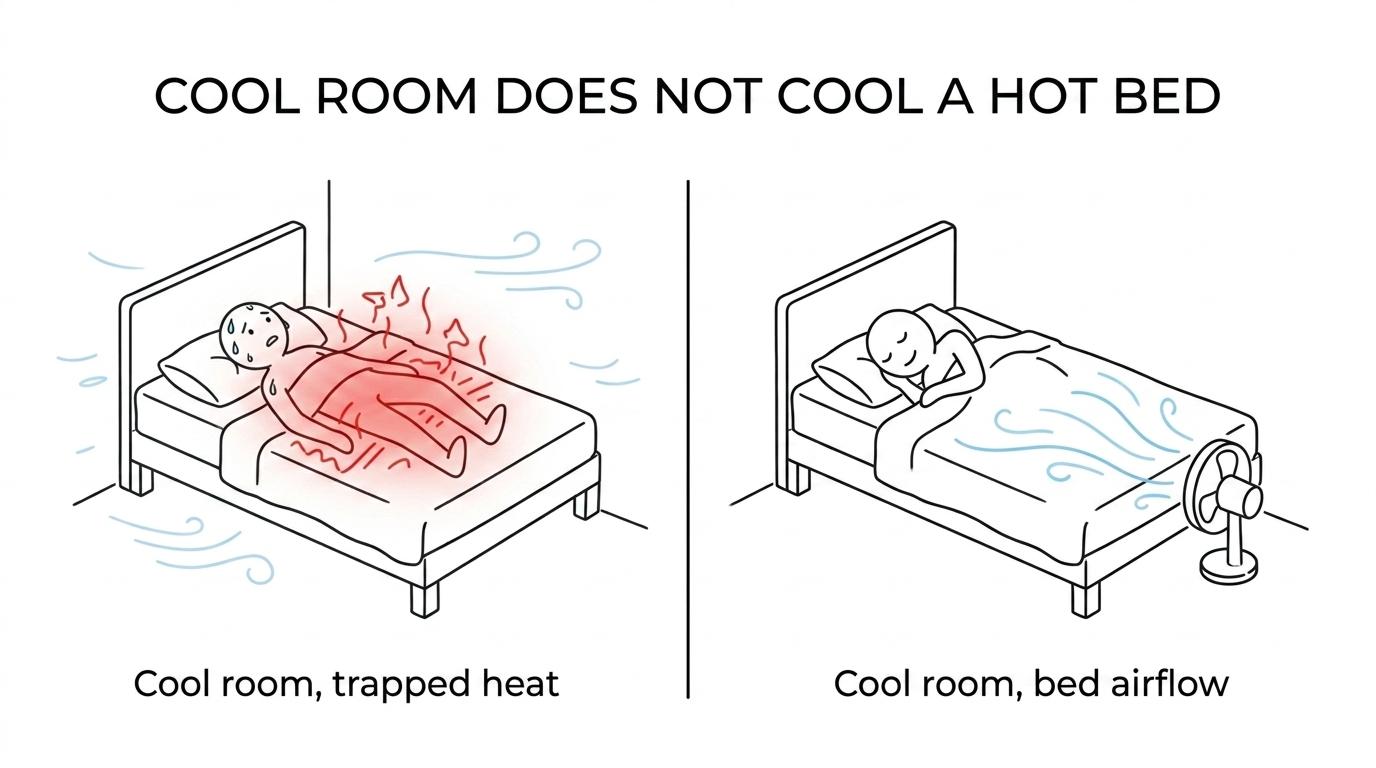
A bed fan can help because it targets the problem where it happens, inside the bedding microclimate around your body. Neither a Bedfan nor a Bedjet actually cools the air. They both use the cooler air already in the room and move it into the bed to carry heat away from your skin. For many people, that feels much different from just having a ceiling fan somewhere across the room.
A useful side benefit is energy savings. Because the cooling is focused at the bed, many people can raise the room temperature by about 5°F and still sleep cool enough for more restful sleep. If you’re trying to manage medication night sweats without blasting the whole house with AC all night, that matters.
When sweating is tied to a medicine you need to keep taking, relief often comes from managing heat buildup, not from chasing a perfect diagnosis every night. A bed fan pushes airflow between the sheets, which helps evaporate sweat and move heat off your body before it becomes a full wake up event.
Tight weave sheets usually work best, because they help the air travel across your body rather than leak away too fast. That’s a small detail, but it can make the cooling feel more even. If your sweats tend to hit hardest early in the night or near morning, timer controls are useful too, because you can match the airflow to your sleep pattern instead of running it full blast nonstop.
Among the options out there, the bFan from Bedfans USA is worth a look if you want a simple bed fan approach. It uses about 18 watts on average, it offers timer controls, and at normal operating speed the sound level is around 28 dB to 32 dB, which is quiet enough for a lot of sleepers. It’s meant to cool your sleeping space directly, not the entire room.
If you’ve compared systems, you’ve probably seen Bedjet come up. It’s a recognizable name, but price is a real issue. One Bedjet is more than twice the price of a single bedfan. The dual zone Bedjet setup costs over a thousand dollars, which is more than twice the price of two bedfans.
That price gap matters even more for couples. The bFan setup can create dual zone microclimate control using two fans, one on each side of the bed, at a fraction of the cost of a dual zone Bedjet setup. If one person sleeps hot from medication side effects and the other doesn’t, being able to cool just one side, or cool each side differently, is a very practical win.
There’s also a longer history here. The original bedfan was invented in 2003, several years before Bedjet was even thought of. That does not automatically make one product right for every person, but it does tell you the bed fan idea has been around for a long time because it solves a very specific problem, trapped heat under the covers.
If you’re comparing features, keep the real goal in view, you want quieter sleep, lower AC strain, and enough airflow to stop the sweaty wake ups.
Cooling gear helps, but it works best when paired with a few routine changes. Try lighter sleepwear, breathable pajamas, and tighter weave sheets that still feel comfortable. Keep a spare shirt near the bed if you tend to wake up damp, and consider a second set of pillowcases if your face and neck overheat first.
If you take a medication that may cause low blood sugar, ask whether your evening routine needs adjusting. A bedtime snack, a dose review, or a closer look at exercise timing can sometimes cut down on overnight sweating. If you take a stimulating medication, ask whether earlier dosing is an option. If your sweating started after a dose increase, note that clearly before your next appointment.
Alcohol is a big one. Even when it is not the main cause, it often makes night sweats worse. The same goes for heavy late meals, spicy food, and a room that creeps above the sleep friendly range of 60°F to 67°F. You do not have to do everything at once. Pick the obvious triggers first and see what changes.
You don’t need to walk into an appointment with a grand theory. A few direct questions are enough. Ask whether your medication is known to cause sweating, whether timing or dose could be contributing, and whether there are safer alternatives if the sweats are wrecking your sleep.
If you take antidepressants, ask whether the sweating is a known side effect for that specific drug, and whether tapering rules apply if a change is being considered. If you take methadone or another opioid, ask whether the pattern sounds like a drug effect, a dose issue, or withdrawal. If you take insulin or another diabetes medication, ask whether nighttime hypoglycemia needs to be ruled out.
It also helps to ask what not to do. Many people make two moves that cause trouble, they stop a medication too fast, or they assume all night sweats are “just side effects” and miss something bigger. A good clinician or pharmacist can help you sort out which bucket you’re in.
Copyright 2005 - present - Tompkins Research, Inc. & Kurt W. Tompkins All Rights Reserved DO NOT COPY. bFan® and the word bfan® in any format is a registered trademark of Kurt W. Tompkins the word BFAN® in any format shall not be used without written permission of the mark owner. This includes specifically Brookstone where you like to bait and switch, do not use my mark to bait customers.