
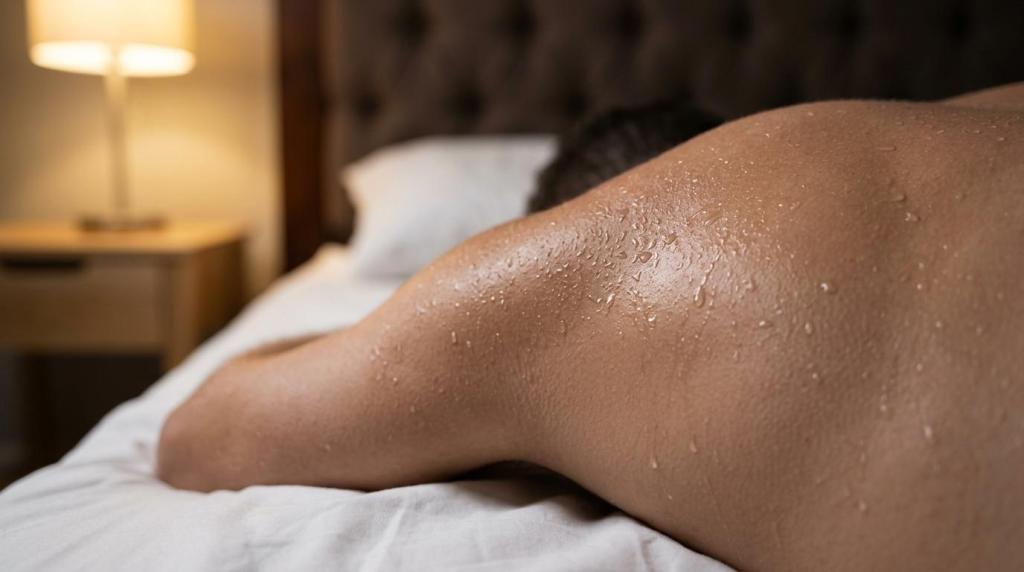
Opioid sweating at night may signal side effects or withdrawal. Learn causes, red flags, and practical ways to sleep cooler.
If you wake up drenched in sweat after taking an opioid, or after missing a dose, you are not imagining it, and you are not alone. Opioid sweating at night is a real problem. It can show up as a direct medication side effect, or it can be part of opioid withdrawal. Those two causes can feel similar at 2 a.m., which is why timing matters so much.
A lot of people assume night sweating means the room is too warm, the blankets are too heavy, or something serious is being missed. Sometimes that is true. Sometimes it is not. Opioids themselves are well known to trigger sweating in some people, and stopping them suddenly can do it too. If the sweating started after an opioid was started, increased, reduced, or stopped, the most useful next step is usually a medication review with a clinician, not just another fan or lighter pajamas.
That said, symptom relief still matters. You need sleep, and broken sleep makes everything worse, pain included. So it helps to look at both sides of the problem, the medical cause, and the practical ways to stay cooler tonight.
Night sweating tied to opioids usually falls into one of three buckets. First, the opioid itself may be causing sweating as a side effect. Second, the sweating may be part of withdrawal, whether that came from a missed dose, a dose reduction, or abrupt stopping. Third, the opioid timing may be a coincidence, and something else is causing the sweating.
The tricky part is that people often describe all three the same way. They wake up hot, damp, restless, and frustrated. Sheets get wet. Sleep gets chopped up. Some people notice it most in the first few hours after falling asleep, others right before morning, and others anytime the medication level is changing.
Timing tells the story.
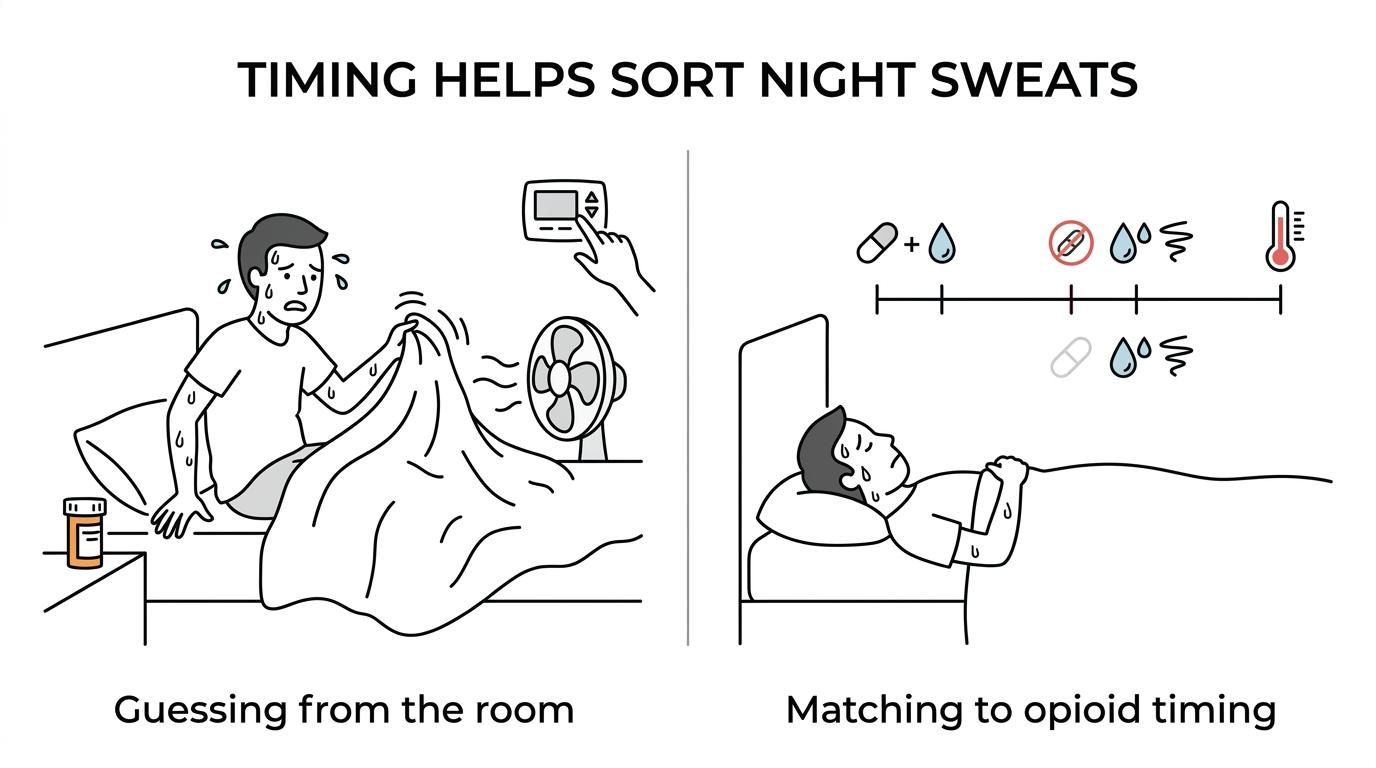
If you started an opioid recently, or your dose was increased, side effects move higher on the list. If you cut back, ran out, or stopped suddenly, withdrawal becomes more likely. If the sweating came with fever, weight loss, cough, chest pain, new shortness of breath, or other symptoms that do not fit the usual opioid pattern, your clinician needs to hear about that too.
After you have a sense of the timing, these patterns are worth keeping in mind:
Opioids can affect the body’s thermoregulatory system, which is the built in system that helps manage temperature and sweating. When that signaling gets pushed around, you may feel too warm, too cold, sweaty, clammy, or all of the above over the course of one night. This is one reason opioid sweating can feel so odd. It is not always just “I’m too hot.” It can feel like your body cannot settle on a temperature.
This is not limited to one opioid. Drug information for hydrocodone includes increased sweating as a possible side effect. Published reports have also linked sweating with other opioids, including methadone and fentanyl. A case report described severe hydromorphone related sweating that cleared after the medication was stopped. That kind of report matters because it reminds clinicians and patients that sweating can come from the drug itself, not just from infection, bedding, or anxiety.
That last point is more important than it sounds. Opioid related sweating can be under recognized, and when it is missed, people may end up going through a string of tests without anyone asking the obvious question, did the sweating start when the opioid changed?
Dose changes are often the clue people overlook. You might tolerate an opioid for weeks, then start sweating after the dose goes up. Or you might feel fine until you take it later than usual, miss a dose, or try to cut back on your own. Night sweats that seem random often stop looking random when you line them up next to the medication schedule.
This is also why you should not stop an opioid suddenly without medical guidance. Hydrocodone, as one example, can cause sweating during withdrawal, and it can also bring on difficulty falling asleep or staying asleep when stopped abruptly. If you are trying to taper, it is much safer to do it with a plan than to white knuckle it and hope the symptoms pass.
There is a second safety issue here. During the first 24 to 72 hours after starting hydrocodone, and after dose increases, serious breathing problems can happen. Sweating by itself is usually not an overdose sign. Cold, clammy skin with slow or shallow breathing is a different story, and that needs urgent help.
Withdrawal sweating tends to come as part of a cluster, not all by itself. People often feel restless, anxious, achy, chilled, flushed, nauseated, and unable to sleep. Some get diarrhea, stomach cramps, a runny nose, goosebumps, or a racing sense of “I can’t get comfortable.” Increased sweating is a classic part of that picture.
One reason withdrawal sweating can hit so hard at night is that the bedroom is quiet enough for you to notice every symptom. During the day you may stay distracted. At night, the sweating, chills, and insomnia become the whole event. If you wake up soaked and agitated several hours after your last dose, that pattern deserves attention.
What matters most is not trying to power through it alone if you are physically dependent on opioids. Withdrawal is miserable, and in some cases it pushes people back into uncontrolled opioid use just to stop the symptoms. When sweating is part of a bigger withdrawal pattern, the best fix is usually not “make the room colder,” it is “get the withdrawal treated properly.”
Some clues point more toward withdrawal than a simple side effect:
If sweating is tied to withdrawal, clinicians have several tools that can help. One is clonidine, which is often used as an adjunct for specific withdrawal symptoms, including sweating, chills, anxiety, insomnia, and tremor. Clonidine is not a do it yourself fix, though. Blood pressure and heart rate need to be checked, and it should be stopped if blood pressure drops too low. It is also not meant to be used at the same time as opioid substitution in the usual withdrawal protocols.
The main medications used to treat opioid withdrawal more fully are buprenorphine and methadone. These can ease withdrawal symptoms and reduce cravings. If the night sweating is part of a broader withdrawal syndrome, these are the kinds of treatments that get at the root cause more effectively than trying to cool the room alone. That is a big distinction. Cooling helps the symptom. Withdrawal treatment helps the process causing the symptom.
Dose review matters too. If sweating began after starting an opioid or after a dose increase, the prescriber may decide to lower the dose, change the timing, or switch to another opioid if that fits the situation. Since published reports show sweating can vary from one opioid to another, a medication change can sometimes make a real difference.
If the sweating turns out to be more like secondary hyperhidrosis, meaning excessive sweating linked to a medication or medical condition, a clinician may also talk through sweating specific treatments. Topical aluminum chloride is often a first line option for hyperhidrosis. If sweating remains severe and localized, other approaches, including iontophoresis or botulinum toxin, may come up later. But with opioid related sweating, the first question is usually still, what is the opioid doing here?
Even when the cause is medication related, the bedroom setup still matters. Sleep experts commonly recommend a bedroom temperature between 60°F and 67°F, 15.5°C to 19.5°C, for better sleep. If your room is warmer than that, sweating is more likely to wake you up and keep you up. If your room is already in that range and you are still overheating, the problem may be less about the room and more about the heat getting trapped under the covers.
That is where a bed fan can help, and this is the part people often miss. A bed fan does not cool the air. It uses the cooler air already in the room and moves it between the sheets, where your body heat is trapped. The same is true for BedJet, it does not cool the air either. Neither Bedfan nor BedJet cool the air. They only use the cool air in the room to cool your bed.
For many hot sleepers, that direct airflow matters more than blasting the whole bedroom colder. It helps carry heat and moisture away from the skin, which can make it easier to sleep through sweating episodes while you and your clinician sort out the medication issue. Sleep experts still recommend that 60°F to 67°F bedroom range, and a Bedfan can let many people raise the room temperature by about 5°F while still cooling the body enough for more restful sleep. That can mean lower air conditioning use and lower electric bills without feeling like you are baking under the blankets.
A bed fan is not a treatment for opioid withdrawal, and it is not a fix for medication side effects that need medical review. It is a comfort tool. A useful one, if overheating is wrecking your sleep.
The bFan bed fan from Bedfans USA is one option worth a look if you need targeted cooling at night. The original Bedfan came to market in 2003, several years before BedJet was even thought of, and the concept still makes sense because it focuses on the space where the heat is trapped, inside the bedding, not across the whole room. The bFan also offers timer controls, which is handy if your worst sweating happens during sleep onset or in the first half of the night.
Tight weave sheets tend to work best with a bed fan because they help the airflow spread across your body instead of leaking away too quickly. If you have loose knit or very airy bedding, you may lose some of that cooling effect. Bedding choice really does change the result.
If you are comparing options, the practical differences look like this:
That cost difference matters if both partners sleep differently. One person may be sweating from medication effects, night sweats, menopause, or a warm sleep pattern, while the other is comfortable. Two bedfans can handle that split without pushing the budget into the over a thousand dollar range.
Not every night sweat on opioids is caused by the opioid. That is worth saying plainly. People can have more than one thing going on at once. Menopause and perimenopause, thyroid disease, infections, sleep apnea, acid reflux, anxiety, alcohol use, low blood sugar, and some cancers can all cause night sweats. So can plenty of non opioid medications, including antidepressants and steroids.
If sweating started around the same time as opioid use, that is a strong clue, but not proof. Look at the whole picture. Fever, persistent cough, unexplained weight loss, enlarged lymph nodes, severe snoring with gasping, chest pain, or fainting should not be brushed off as “just a medication thing.”
This is also where the term hyperhidrosis comes in. Hyperhidrosis means excessive sweating. Sometimes it is primary, which means it is the main condition. Sometimes it is secondary, which means it is being driven by another issue, including a medication. When a secondary cause is suspected, the best move is to treat the underlying issue or stop the suspected medication if that is medically appropriate.
The better your history, the faster this gets sorted out. Try to note the opioid name, the dose, when you take it, when the sweating began, whether you missed or delayed any doses, and what other symptoms came with it. Even a few nights of notes can be useful.
Tell them if the sweating is new after starting hydrocodone, hydromorphone, methadone, fentanyl, or another opioid. Tell them if it got worse after a dose increase. Tell them if you have been tapering. Tell them if you wake up with anxiety, chills, hot flushes, diarrhea, or insomnia, because that cluster can point toward withdrawal. Tell them if you have cold, clammy skin or any breathing changes, because that changes the urgency.
It also helps to mention what you have already tried, lighter bedding, a cooler room, a bed fan, or changing sleepwear, and how much it helped. If a Bedfan or bFan improves comfort but the sweating itself keeps coming back, that is useful information too. It suggests the environment can reduce symptoms, but the cause may still need medical attention.
While you are waiting to speak with a clinician, keep the room cool, aim for that 60°F to 67°F range if you can, use breathable sleepwear, and avoid piling on thick blankets just because you get chills between sweating episodes. Many people do better with layers they can peel back fast, rather than one heavy comforter.
If air conditioning costs are a concern, this is another place where a bed fan can make sense. Because a Bedfan can often let you raise room temperature by about 5°F and still cool your body enough for better sleep, some people can back off the thermostat and still feel cooler in bed. Since the Bedfan is using about 18 watts on average, it can be a pretty low power way to target the part of the room you actually care about at 3 a.m., your side of the bed.
Just remember the order of operations. If sweating started when the opioid changed, the root cause deserves a medication review. If the sweating fits withdrawal, clinician guided withdrawal treatment is the evidence backed move. Cooling tools help you sleep, which matters, but they are support, not the whole answer.
If you want to read the medical background for yourself, these are solid places to start.
Copyright 2005 - present - Tompkins Research, Inc. & Kurt W. Tompkins All Rights Reserved DO NOT COPY. bFan® and the word bfan® in any format is a registered trademark of Kurt W. Tompkins the word BFAN® in any format shall not be used without written permission of the mark owner. This includes specifically Brookstone where you like to bait and switch, do not use my mark to bait customers.