
Learn what causes pms night sweats, how hormone shifts affect sleep, and simple ways to stay cooler and sleep better before your period.
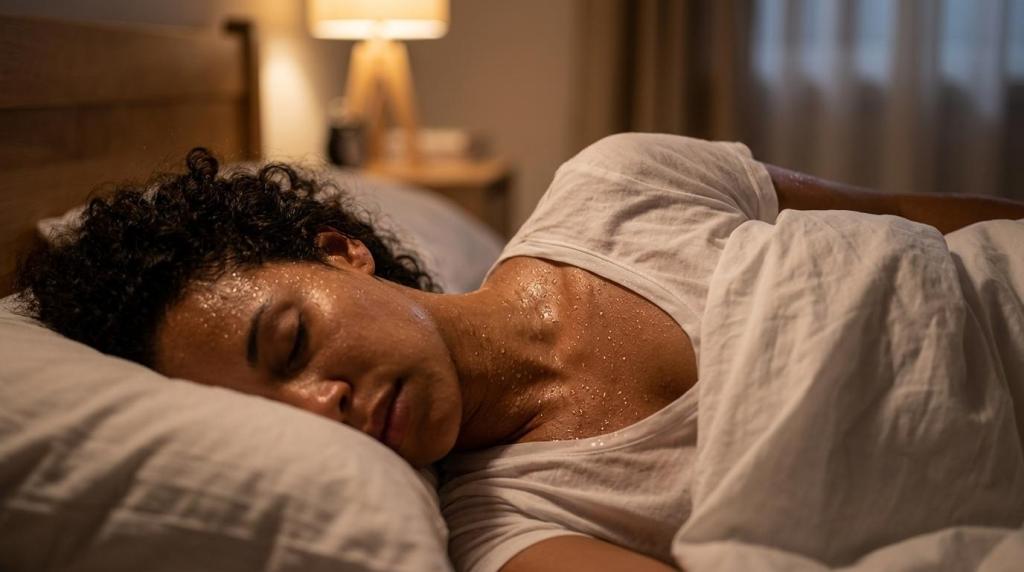
If you wake up sweaty a few nights before your period, you are not imagining it, and you are not alone. PMS night sweats are real for some people, even though they are not the most talked about PMS symptom. They can show up as a damp neckline, hot flashes that hit after you fall asleep, or that annoying feeling that your body is overheating under the covers for no obvious reason.
What makes this frustrating is that the room can feel fine, your bedding can seem normal, and yet your sleep still gets wrecked. A lot of that comes down to hormone shifts in the second half of the cycle, plus how your body handles heat during sleep. Once you know what is likely going on, it gets a lot easier to figure out what actually helps.
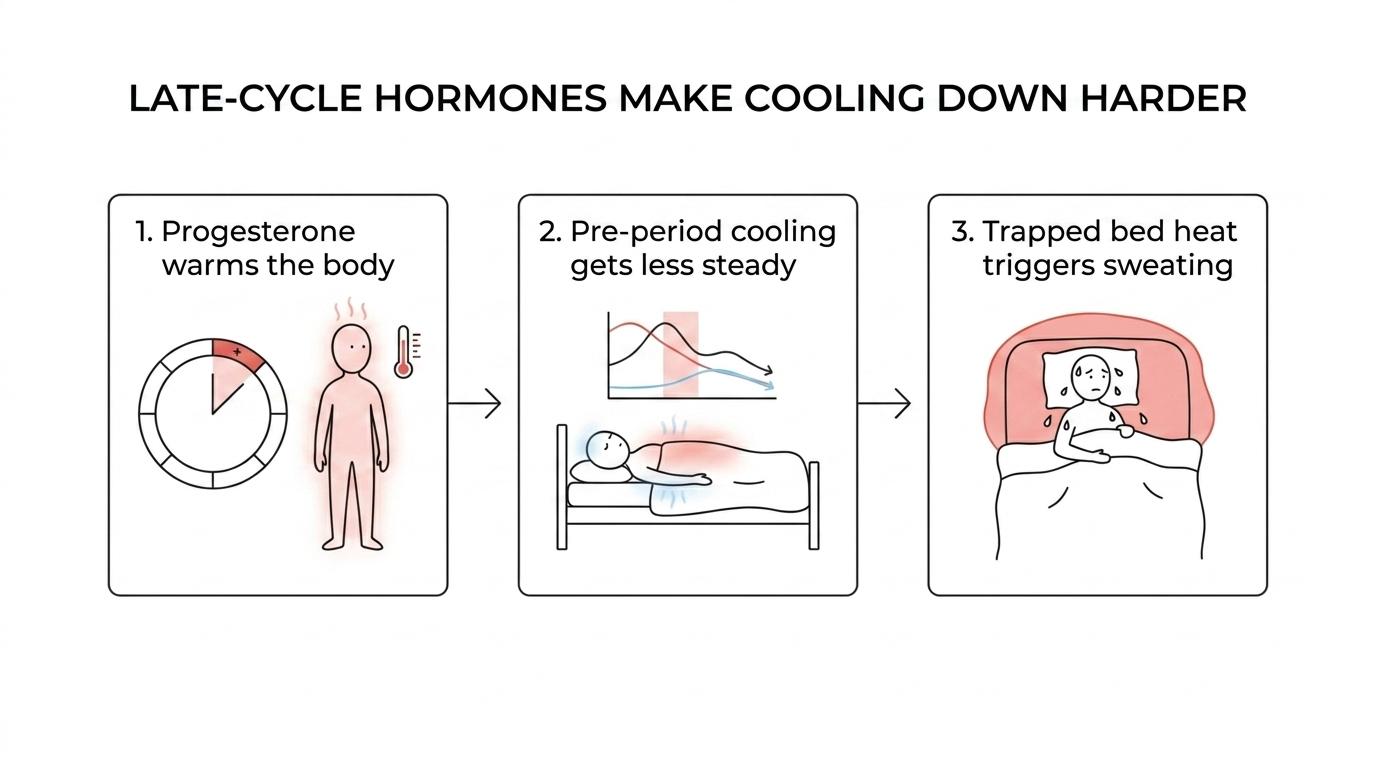
PMS symptoms tend to show up in the luteal phase, the stretch after ovulation and before your period starts. During that time, progesterone rises, and progesterone tends to push body temperature up. As your period gets closer, estrogen and progesterone both fall. That late cycle shift can make your temperature control feel less steady, which is why some people suddenly feel hot at night even when nothing else has changed.
That does not mean everyone with PMS will get night sweats. It means the timing makes sense. Your body is already trying to sleep, which works best when core temperature drops, and then the normal hormone rhythm of the cycle makes cooling off a little harder. Add blankets, trapped body heat, stress, or poor sleep, and it can tip into sweating.
There is also a second layer here. Research on PMS and PMDD suggests that many people are not dealing with wildly abnormal hormone levels, they are dealing with greater sensitivity to normal hormone changes. Two people can be in the same part of the cycle and feel completely different. One sleeps through the night, the other wakes up hot, restless, and irritated.
Progesterone is the first big player. After ovulation, it rises and tends to increase basal body temperature. That increase is not huge, but it is enough to matter when you are trying to sleep in a warm bed. Sleep usually works best when your body can lose heat and drift into a cooler state. If your body is running a little warmer to begin with, the gap between comfortable and overheated gets smaller.
Estrogen matters too. As estrogen falls before a period, some people seem more likely to get heat sensations, flushing, and sweating. This idea is better known in menopause, but similar temperature regulation effects can show up across the menstrual cycle as well. It is not the same thing as menopausal hot flashes, but it can feel similar in the middle of the night.
Sleep itself may make the problem worse. Studies on PMS and PMDD point to changes in sleep quality, circadian timing, melatonin, and even nighttime body temperature. If your sleep is already lighter before your period, a small rise in body heat can wake you up faster. Then once you are awake, stress kicks in, you notice the sweat, and your body feels even hotter.
That is why PMS night sweats often feel bigger than the amount of sweat would suggest. It is not just moisture. It is the whole cycle of heat, waking, irritation, tossing around, and then worrying about getting back to sleep.
The most useful clue is timing. If it keeps happening in the same window, usually a few days to two weeks before your period, then eases when bleeding starts, PMS becomes a reasonable suspect. If it happens randomly all month long, or it is getting steadily worse, that points away from a simple PMS pattern.
The pattern matters more than the drama of a single bad night.
A simple symptom log can tell you a lot. Track your cycle day, how many nights you wake up sweating, how hot the room was, what you drank that evening, and any medications you take. Do that for two or three cycles, and you will often see whether this is truly premenstrual or if something else is piling on.
After you have a little pattern data, these clues are worth watching:
This is the part people often skip, even though it helps fast. Sleep experts commonly recommend a bedroom temperature between 60°F and 67°F, 15.5°C to 19.5°C, for better sleep. That range supports the body’s natural cooling process, which is especially useful when PMS already makes you feel warmer at night.
Even so, the room temperature is only part of the story. Your bed microclimate, the warm pocket of air trapped under sheets and blankets, can stay much hotter than the room itself. That is why you can be in a cool bedroom and still wake up sweating. The heat is getting trapped around your body.
This is where airflow matters. A regular ceiling fan or box fan moves air in the room, which can help, but it does not always get under the covers where the heat is building up. A bed fan is designed to move room air between the sheets so trapped heat and moisture can escape. Neither a Bedfan nor a BedJet actually cools the air itself. They both use the cool air already in the room and move it where you need it.
That point matters for both comfort and energy bills. If you use a Bedfan, many people can raise the room temperature by about 5°F and still cool the body enough for more restful sleep. So if you normally need the room at 65°F to feel okay, you may be able to sleep well closer to 70°F with airflow under the sheets. That can take pressure off your air conditioner, especially in summer.
When PMS night sweats are mostly about trapped heat, directed airflow can make a bigger difference than people expect. A bed fan does not treat hormones, but it can make the sleep environment much easier to tolerate while your cycle does its thing. That is often exactly what you need, symptom relief, not a science project at 2 a.m.
The bFan is one option in this category, and it is worth a look if overheating in bed is a recurring problem. The original Bedfan concept was invented in 2003, years before BedJet was even thought of, and the basic idea still holds up, move room air under the covers to carry heat away from your body. If you want a straightforward solution, a bed fan like the bFan sold through the Bedfans USA website is a practical place to start.
A few details matter more than marketing language. Tight weave sheets tend to work best with a bed fan because they help the airflow spread across your body instead of leaking away too fast. The Bedfan also offers timer controls, which is useful if you want stronger airflow at sleep onset and less later in the night. Its average power use is about 18 watts, which is tiny compared with the energy pull of lowering whole room air conditioning all night long.
Noise matters too. If sound wakes you easily, this category only works if it stays quiet enough to fade into the background. The Bedfan sound level is typically around 28 dB to 32 dB at normal operating speed, which is quiet enough for many bedrooms.
If you are comparing products, it helps to strip away the hype and keep the physics simple. Neither product makes cold air. Both rely on the cooler room air you already have. The difference is how they deliver it, what they cost, and whether the features match your sleep setup.
Price is where a lot of people stop and think. One BedJet is more than twice the price of a single bed fan like the bFan. A dual zone BedJet setup costs over a thousand dollars, which is more than twice the price of two Bedfans. If you and your partner need different sleep temperatures, two bed fans can give you dual zone microclimate control, one on each side, at a fraction of that cost.
That does not automatically make the Bedfan the right pick for everyone, but it does make it a strong value option for people whose main goal is cooling the body under the sheets without paying luxury pricing.
Here is the practical comparison most shoppers actually want:
Cooling tools help, but daily habits still matter. Night sweats are often worse when a few small triggers stack together, stress, a warm dinner, alcohol, heavy bedding, and a body that is already running hotter because of the late cycle hormone shift. If you can lower that pileup, your nights usually get easier.
Start with the basics. Keep the bedroom in that 60°F to 67°F range when you can, use breathable sleepwear, and lighten the blankets before your worst PMS nights hit. If you use a Bedfan, many people find they can keep the room about 5°F warmer and still sleep cool enough for better rest, which can be a real money saver if air conditioning costs are biting.
These habit changes are simple, but they tend to work best when combined:
There is no major treatment guideline built around PMS night sweats alone, so the medical approach usually focuses on the broader PMS or PMDD picture. That makes sense. If your sweating is tied to the same late cycle shift that also brings mood changes, cramps, bloating, and sleep disruption, then treating the overall syndrome may calm more than one symptom at once.
SSRIs are among the better supported options for moderate to severe PMS and PMDD, especially when mood symptoms are strong. They can help with irritability, anxiety, and sleep disruption, which may make night sweating less disruptive. But there is a catch, SSRIs can also cause sweating in some people. If you notice the sweating got worse after starting one, bring that up with your clinician.
Combined hormonal birth control can help some people by suppressing ovulation and smoothing out the hormone swings that trigger premenstrual symptoms. Certain drospirenone and ethinyl estradiol combinations get the most attention in the research. This is not the right fit for everyone, but it is a reasonable conversation if your symptoms are clearly cyclical and bothersome.
Exercise, regular sleep timing, stress management, CBT, calcium, and in some cases vitamin B6 may also help overall PMS symptoms. None of these is a magic shutoff switch for night sweats by itself. What they can do is lower the background load, less stress, better sleep, less symptom sensitivity, and sometimes fewer miserable nights.
This is the part where you do not want to make easy assumptions. Night sweats can happen before a period and still have another cause. Thyroid problems, infections, sleep apnea, low blood sugar, anxiety, and medication side effects can all pile on. Perimenopause can also muddy the picture if your cycles are changing and you are in the typical age range for that transition.
Many common medicines can contribute to sweating too. Antidepressants are one of the better known examples, but steroids, some pain medicines, blood pressure drugs, thyroid medicine, and diabetes treatment can all be part of the story. If your sweats became more frequent after a new prescription, that deserves a second look.
When the timing is messy, assume less and track more. If the sweating no longer follows the same premenstrual pattern, it is smart to widen the lens.
Most PMS related sweating is more annoying than dangerous, but there are times when you should not just chalk it up to hormones. If the sweats are drenching, new, very frequent, or happening outside the usual premenstrual window, it is time to get checked.
Pay close attention if you also have fever, unexplained weight loss, swollen lymph nodes, cough, chest symptoms, severe fatigue, or daytime sweating. Those signs point away from simple PMS. The same goes for loud snoring, gasping in sleep, or major daytime sleepiness, since sleep apnea can show up with night sweats too.
These are the main times to call a clinician:
If I were helping you sort this out over coffee, I would keep it simple. First, track the timing for at least two cycles. Second, tune the room and bedding so your body has a fair shot at cooling down. Third, look for triggers you can actually control, alcohol, late spicy meals, heavy covers, stress, or meds that worsen sweating. Fourth, if the pattern is strong and the symptoms are affecting your life, talk with a clinician about PMS or PMDD treatment options.
For a lot of people, the sweet spot is not one giant fix. It is a few smaller ones working together, a cooler bedroom, lighter bedding, airflow under the sheets, more regular sleep, and a treatment plan for the broader PMS picture if needed.
That is also why a Bedfan can be useful even though it does not change your hormones. It deals with the comfort problem directly, and comfort is what helps you stay asleep. With the commonly recommended bedroom range of 60°F to 67°F, 15.5°C to 19.5°C, and the option for many people to raise room temperature by about 5°F while still sleeping cool with a Bedfan, the setup can be both practical and less expensive to run than blasting the AC lower all night.
If you want to read deeper medical and research sources on PMS, night sweats, sleep, and treatment options, these are solid places to start.
Copyright 2005 - present - Tompkins Research, Inc. & Kurt W. Tompkins All Rights Reserved DO NOT COPY. bFan® and the word bfan® in any format is a registered trademark of Kurt W. Tompkins the word BFAN® in any format shall not be used without written permission of the mark owner. This includes specifically Brookstone where you like to bait and switch, do not use my mark to bait customers.