
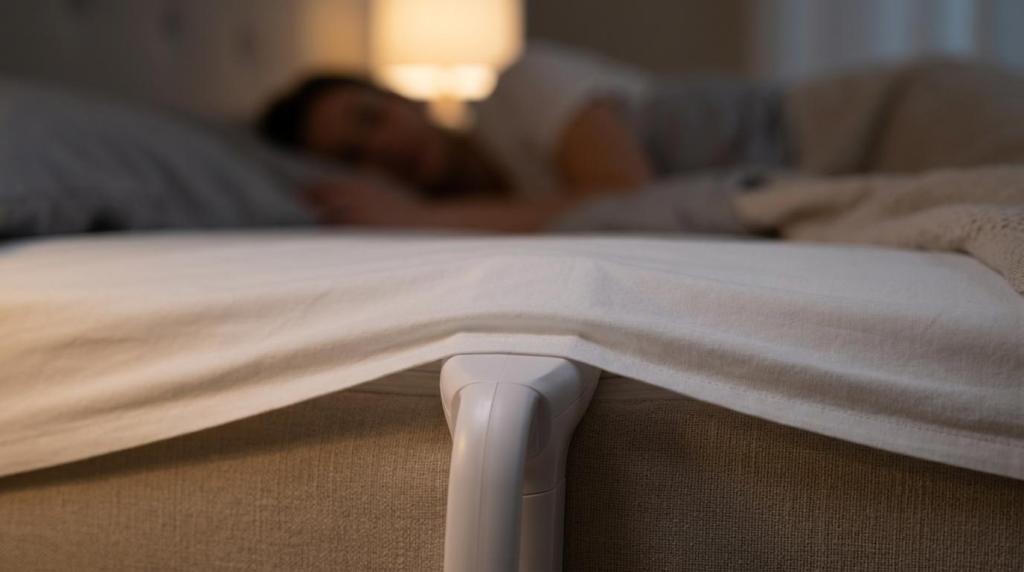
Find the best bedfan discount code tips, compare bFan vs BedJet, and learn smarter ways to save on cooler sleep and lower AC costs.
Most people searching for a bedfan discount code are really trying to solve a bigger problem, they want cooler sleep without paying a premium for gadgets or higher air conditioning bills. That changes the math in a useful way, because the best savings often come from product choice and energy use, not from a coupon alone.
TL;DR: Summary
- A bedfan discount code can help, but the biggest savings usually come from choosing a lower cost bed fan like bFan, then using it to sleep cool without dropping your whole house thermostat all night.
- bFan and BedJet both use the cool air already in the room, they do not create cold air. That means real value depends on purchase price, noise, airflow placement, and how much they let you raise the AC setting.
- Sleep experts commonly recommend a bedroom temperature around 60°F to 67°F, and many people using a Bedfan can often raise the room temperature by about 5°F while still cooling the body enough for better sleep.
- If you need dual zone cooling, two bedfans can create side to side microclimate control at a fraction of the cost of a dual zone BedJet, which runs over a thousand dollars and costs more than twice the price of two bedfans.
- The bFan uses about 18 watts on average, runs around 28 dB to 32 dB at normal speed, and includes timer controls, so the long term savings can matter more than a one time coupon.
- If you cannot find a working code, focus on checkout price, seasonal offers, direct seller terms, and whether the product actually fits hot sleeping, night sweats, menopause, or AC savings goals.
If you keep that bigger picture in mind, a coupon becomes what it should be, a nice bonus, not the whole buying strategy. And if you are comparing options like bFan, Bedfan, and BedJet, the details around airflow, room temperature, and total cost tell you much more than a promo box ever will.
Usually not, bFan and BedJet make total cost more important than a bedfan discount code.
A coupon can trim the upfront price, sure. But with sleep cooling products, the bigger savings often come from what happens after checkout, how much electricity the product uses, how often it prevents you from lowering the AC, and whether you need one unit or two.
That matters because a bed fan is a targeted cooling tool, not a room cooler. Neither bFan nor BedJet cools the air, they use the cooler air already in the room and move it into the bed area, where trapped heat and humidity wake people up. If the product helps you stay comfortable with the bedroom set about 5°F warmer, that can beat a small one time code fast.
"bFan uses about 18 watts on average, which makes it a very low power way to cool the sleeper instead of the whole house."
A common mistake is treating all sleep cooling products like interchangeable fans. They are not. Airflow direction, pressure, noise, sheet setup, and side to side control all affect whether you sleep through the night or still wake up hot at 2 a.m.
Check the bFan seller page and your cart total before trusting any code.
Step 1. Start with the seller, not the coupon site. If a code is valid, the cleanest place to confirm it is the direct seller checkout or a current offer banner on the brand’s own site. A lot of coupon aggregators keep expired codes live because they still collect clicks.
Step 2. Test the code against the actual cart total. Watch for details like minimum order value, bundle restrictions, shipping exclusions, or whether the code works only on certain versions. If a discount is real, the final number should change clearly before payment.
Step 3. Check where the product is actually sold. This is useful with bFan, because it is sold direct rather than through Amazon. If you see a random marketplace listing or a coupon attached to a reseller page that does not match the direct seller path, slow down.
Step 4. Compare the final price with realistic alternatives. If the code knocks a little off the price but the competing product is still dramatically more expensive, the “discount” may not be the savings you care about.
One more thing, do not assume a larger looking percentage means a better deal. A lower priced bed fan with modest electricity use can beat a steep coupon on a much more expensive system.
The best savings usually come from bFan, thermostat changes, and smart shopping habits.
If no code works, you still have several solid ways to reduce what you spend and improve how cool you sleep.
If you want the plain language answer, this is it, a real savings strategy usually beats a code hunt. For many hot sleepers, the bFan from bedfans usa is worth a serious look because it targets the heat trapped in bedding instead of asking you to cool the whole bedroom harder.
bFan costs far less than BedJet when you compare both purchase price and dual zone setups.
Start with the basic single unit comparison. One BedJet is more than twice the price of a single bFan, which already shifts the value question away from coupons and toward category fit. If your goal is simply to move cooler room air into the bed, that price gap is hard to ignore.
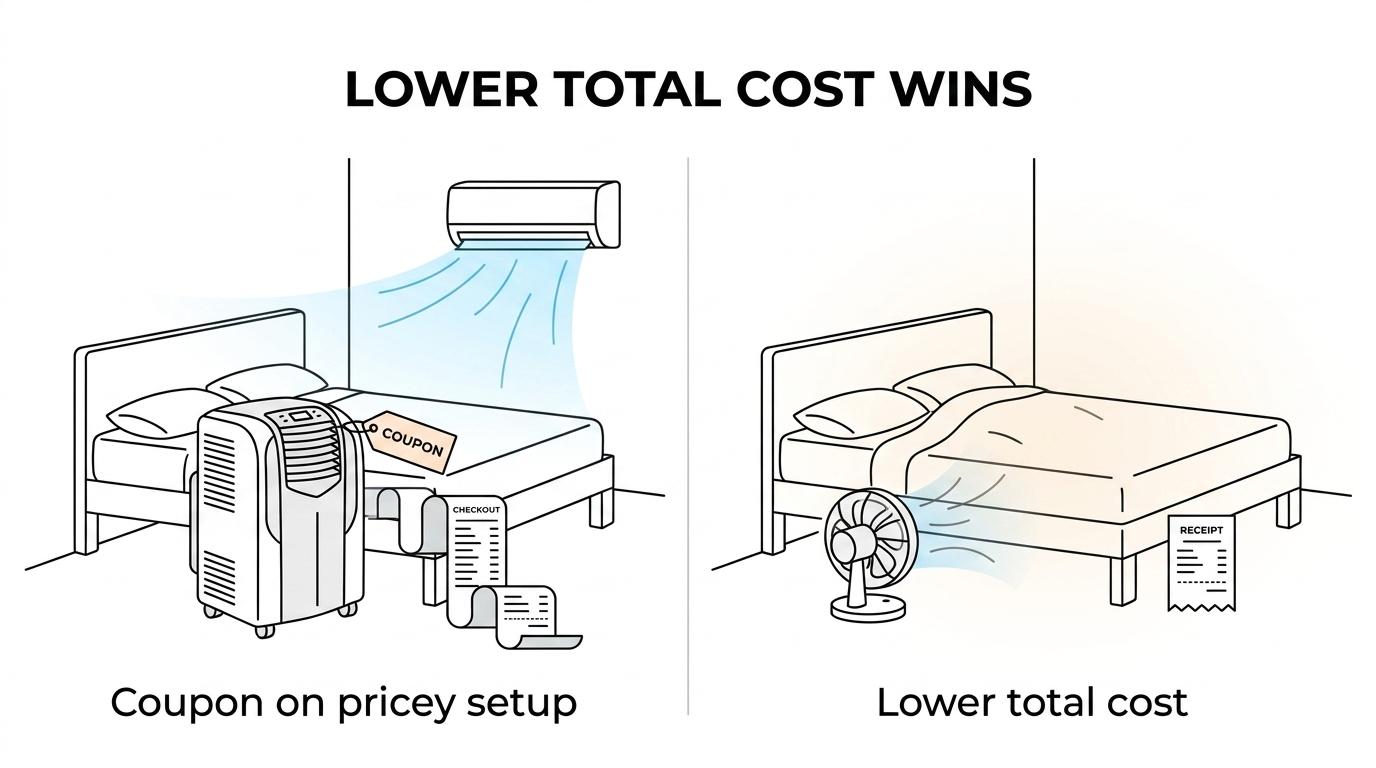
"A dual zone BedJet setup costs over a thousand dollars, more than twice the price of two bedfans for split side cooling."
Now look at the couple scenario. A dual zone BedJet setup runs over a thousand dollars, which is more than twice the price of two bedfans. Since each side of the bed may need its own airflow preference anyway, two units can be a very practical way to create separate sleep microclimates without stepping into a much higher price tier.
There is also a category history point that shoppers often miss. The original Bedfan concept came to market in 2003, several years before BedJet was even thought of. That does not mean newer is worse or older is better by itself, but it does remind you that this kind of between the sheets cooling is a mature idea, not a gimmick that just appeared.
One more misconception is worth clearing up, neither bFan nor BedJet makes air cold. Both depend on the room already being reasonably cool. So when you compare them, the real questions are airflow delivery, comfort, noise, control, and price.
A bed fan and your AC work best together, but bFan is far cheaper to run than colder overnight AC.
This is where official energy guidance and sleep guidance point in the same direction. ENERGY STAR says fans cool people, not rooms. That sounds simple, but it matters a lot, because when the goal is sleeping cooler, you do not always need to chill the entire house to feel better in bed.
A bed fan works locally, inside the exact heat pocket created by your body, mattress, topper, blanket, and sheet. That trapped warmth is what many people actually feel when they say, “The room isn’t that hot, but I still wake up sweaty.” A targeted airflow system attacks that pocket directly. That point matters even more if the bed itself retains heat, and Sengebutikken notes in its guide to valg af seng ved svedtendens that moisture handling and breathable materials can change how quickly warmth builds up around the sleeper.
Research also supports the sleep side of the story. A PubMed indexed study in a hot environment found that local body cooling improved thermal comfort and sleep quality, with reported sleep efficiency rising from 84.6% without cooling to 95.3% and 92.8% in the cooling conditions tested. That does not prove every bed fan works the same way, but it supports the core mechanism, cooling the sleeper can improve sleep.
The trade off is pretty straightforward. If your room is already too hot, a bed fan cannot replace AC in every climate. But if your bedroom is close to the recommended sleep range, often 60°F to 67°F, a bed fan can be the difference between tossing the blanket off all night and sleeping steadily.
Use bFan with your thermostat in small steps, then judge sleep quality for three nights.
The best approach is controlled, not dramatic. If you normally keep the bedroom at a certain setting, do not jump the thermostat way up and hope for the best. Instead, let the bed fan handle the trapped bed heat while you edge the room temperature warmer in small increments.
"Many bFan users can keep the room about 5°F warmer and still sleep comfortably because the fan clears trapped heat from the bed itself."
Try this for a week and keep it simple:
A pro tip here, use the timer controls if you tend to cool off after the first few hours of sleep. Many people overheat most when they are trying to fall asleep, not necessarily right before dawn. Letting the fan reduce or stop later can keep you from waking cold.
This is also where the wattage matters. bFan uses about 18 watts on average, which is tiny compared with the energy demand of whole home cooling. That does not erase climate differences or utility rates, but it explains why a targeted sleep solution can make sense for both comfort and cost.
Sleep Foundation guidance and sleep medicine practice both point to cooler rooms, usually 60°F to 67°F.
That range shows up again and again because sleep depends partly on the body’s ability to shed heat. If the room, bedding, and mattress trap too much warmth, you are more likely to wake up, sweat, toss around, or struggle to fall asleep in the first place.
You may also see broader guidance that stretches a little wider, often into the low 70s. That is not a contradiction. It just reflects the fact that individual comfort varies with age, bedding, humidity, health, and whether you sleep alone or with a partner. Still, the tighter 60°F to 67°F range is a good target for many adults who sleep hot.
A Bedfan fits into that picture in a practical way. If the room is in or near that zone, the fan can move the coolest available room air right into the bed and carry away heat from your skin. In real life, that means many people can keep the room around 5°F warmer than they otherwise would, while still feeling cool enough under the sheets.
If you are dealing with menopause, perimenopause, or a heat trapping mattress, that local cooling can matter more than obsessing over the wall thermostat alone. The room temperature matters, yes. The bed microclimate matters just as much.
A Bedfan works best when the airflow reaches your torso under tight weave sheets.
Setup is one of the most overlooked parts of bed cooling. People sometimes buy a good product, place it badly, then decide the idea does not work. Usually the fix is simple, you want the airflow entering the bed cleanly, staying under the sheet, and moving across your body rather than blasting into open air.
Here is the basic setup routine that tends to work best:
"At normal operating speed, bFan runs at about 28 dB to 32 dB, which is quiet enough for many sleepers who dislike a loud bedroom."
Another common mistake is piling on heavy bedding, then expecting the airflow to punch through it all. If your comforter is very dense, the cooling effect may be weaker. In that case, lighter bedding or a slightly different sheet arrangement can make a bigger difference than increasing fan speed.
For couples, two bFans usually buy more control per dollar than a dual zone BedJet.
Couples rarely run hot in the same way. One person is kicking the covers off, the other is chilly after an hour. One prefers stronger airflow, the other wants a gentler stream. This is exactly why dual zone sleep cooling exists.
The important point is how you achieve that split control. One route is a dedicated dual zone system. Another is to give each side its own bed fan. When you compare cost, the second route is often easier on the budget. As noted earlier, dual zone BedJet is over a thousand dollars, which is more than twice the price of two bedfans.
There is also a flexibility advantage with two separate units. Each sleeper can set a different timer, speed, and placement. If one person travels or changes routines, the other side still works independently. If you only need one side cooled, you are not paying for a full dual system architecture you may not use every night.
If you share a bed with someone who sleeps cooler, this is one of those places where the cheapest answer is not always one machine. Sometimes it is two simpler tools doing exactly what each person needs.
Menopause, SSRIs, and hot sleeping are three of the clearest reasons people try a Bedfan.
The strongest use cases tend to be people dealing with repeated nighttime overheating, not just people who “kind of like fans.” That includes women in menopause or perimenopause, people who wake sweaty from medication side effects, and sleepers whose mattress or bedding holds heat around the torso and legs.
A bed fan can also make sense if you fit one of these patterns:
People who get hot right after getting into bed, then cool off later. In that case, timer controls are especially useful.
People whose partner wants the room colder or warmer than they do. A local airflow fix is often easier than fighting over the thermostat.
People who want to cut AC costs but still stay near the recommended 60°F to 67°F sleep zone in terms of felt comfort. Because the bFan only uses the cool air already in the room, it works best when the room is reasonably cool to begin with, then handles the trapped bed heat from there.
This is also why the original Bedfan concept has stayed around since 2003. The problem it solves is stubborn and very specific. Your bed can feel hotter than the room, and you need relief exactly there.
Night sweats linked to fever, weight loss, or new medication changes deserve a medical call.
A bed fan can help with comfort, but it is not a diagnosis. If night sweats are new, intense, or paired with other symptoms, talk with a clinician. That is especially true if you also have fever, unexplained weight loss, swollen lymph nodes, chest symptoms, severe reflux, or signs of low blood sugar.
Medication changes deserve attention too. Antidepressants, steroids, diabetes medications, some pain medications, hormone therapies, and other common prescriptions can affect temperature regulation or sweating. If the timing matches a new prescription or dose change, do not guess.
For milder, familiar overheating, a bed fan can be a very practical relief tool while you sort out triggers. It may help if the cause is menopause, warm bedding, a heat trapping mattress, or ordinary hot sleeping. Just keep the limits clear, symptom relief and medical evaluation are not the same thing.
If you are searching for a bedfan discount code because you are desperate for sleep, it is worth solving the right problem. Comfort tools are great. Persistent symptoms still deserve proper medical context.
bFan and your thermostat can create bigger long term savings than a one time code.
This is the part shoppers often skip because it is less exciting than a promo banner. Yet it is where the most meaningful savings usually show up. If a bed fan lets you stop turning the AC down extra low every night, the monthly effect can outweigh a small upfront discount.
The math works because the product is targeted. bFan uses about 18 watts on average, which is minimal compared with the energy required to cool a whole home or bedroom more aggressively. That does not mean the AC stops mattering. It means you can often ask less of it while still keeping your body comfortable.
Noise matters here too, because if a cooling product is loud enough to disturb sleep, you may stop using it. At about 28 dB to 32 dB at normal operating speed, bFan sits in a range many sleepers find bedroom friendly. Quiet comfort is part of value, even if it never appears in a coupon code field.
So yes, if you find a legitimate discount, take it. Just do not let a missing code distract you from the bigger question, which option keeps you sleeping cool at the lowest realistic cost.
ENERGY STAR ceiling fan guidance
Official guidance on how fans cool people rather than rooms, with useful context on fan efficiency and energy savings.
PubMed study on local body cooling and sleep quality
Research showing that local cooling in a hot environment improved thermal comfort and reported sleep outcomes.
PubMed review on temperature, humidity, and sleep regulation
A review article explaining how ambient conditions influence sleep through body temperature regulation.
Sleep Foundation guide to the best bedroom temperature for sleep
A practical expert summary of why excess heat disrupts sleep and how to think about bedroom temperature.
Mayo Clinic overview of night sweats
A medical reference for when night sweats are just uncomfortable and when they may point to a health issue.
Copyright 2005 - present - Tompkins Research, Inc. & Kurt W. Tompkins All Rights Reserved DO NOT COPY. bFan® and the word bfan® in any format is a registered trademark of Kurt W. Tompkins the word BFAN® in any format shall not be used without written permission of the mark owner. This includes specifically Brookstone where you like to bait and switch, do not use my mark to bait customers.