
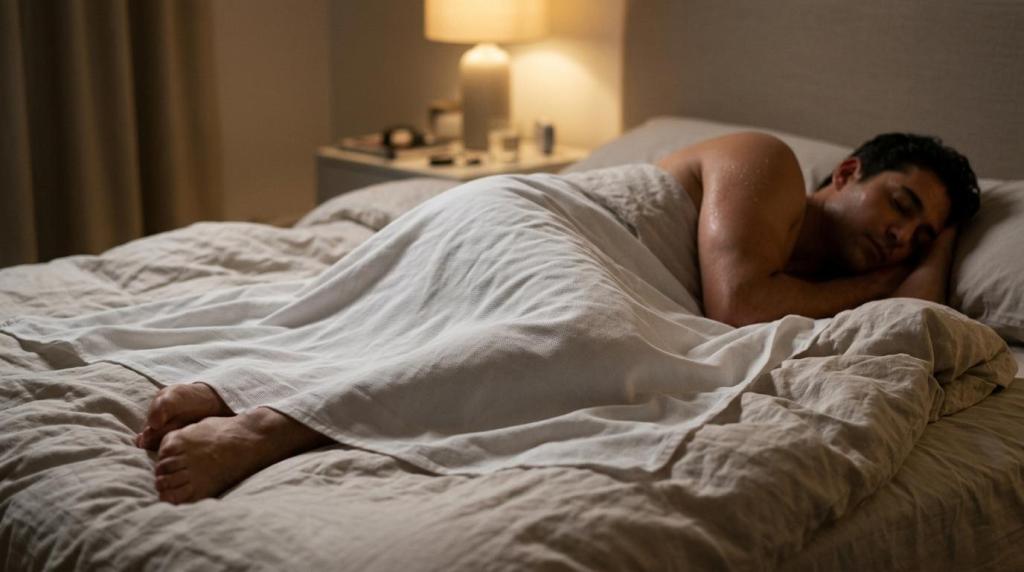
Quiet bedroom fan for hot sleepers: bFan cools between the sheets with low-noise airflow for better sleep, fewer wakeups, and less AC use.
If you’re looking for a quiet bedroom fan because you sleep hot, wake up sweaty, or keep fighting with the thermostat, bFan from Tompkins Research, Inc. deserves a serious look. This is not just another tower fan aimed at the side of the bed. bFan is a bed cooling fan designed to send a controlled stream of room air between your sheets, right where heat and humidity get trapped.
That difference matters. A lot of people search for a quiet bedroom fan, compare tower fans, read BedJet reviews, maybe even look at Dyson or Dreo, then realize their real problem is not the whole room. It’s the hot pocket under the covers. bFan, available through bedfans usa and featured at bFan.world, is built specifically for that problem.
You still need a reasonably cool room, because neither bFan nor BedJet cools the air itself. They both use the cooler air already in your bedroom. But when your goal is to sleep cooler without blasting a fan in your face all night, a bed fan is often the more relevant solution.
A conventional quiet bedroom fan tries to improve comfort by moving air around the room. bFan takes a more direct path. Tompkins Research, Inc. designed bFan to move airflow into the bed microclimate, the space between your sheets where body heat, moisture, and trapped warm air can make sleep miserable.
That means you’re not waiting for the entire room to feel cooler before your body gets relief. You’re sending airflow exactly where overheating happens, which can feel more immediate and more useful than just aiming a pedestal or tower fan across the bedroom.
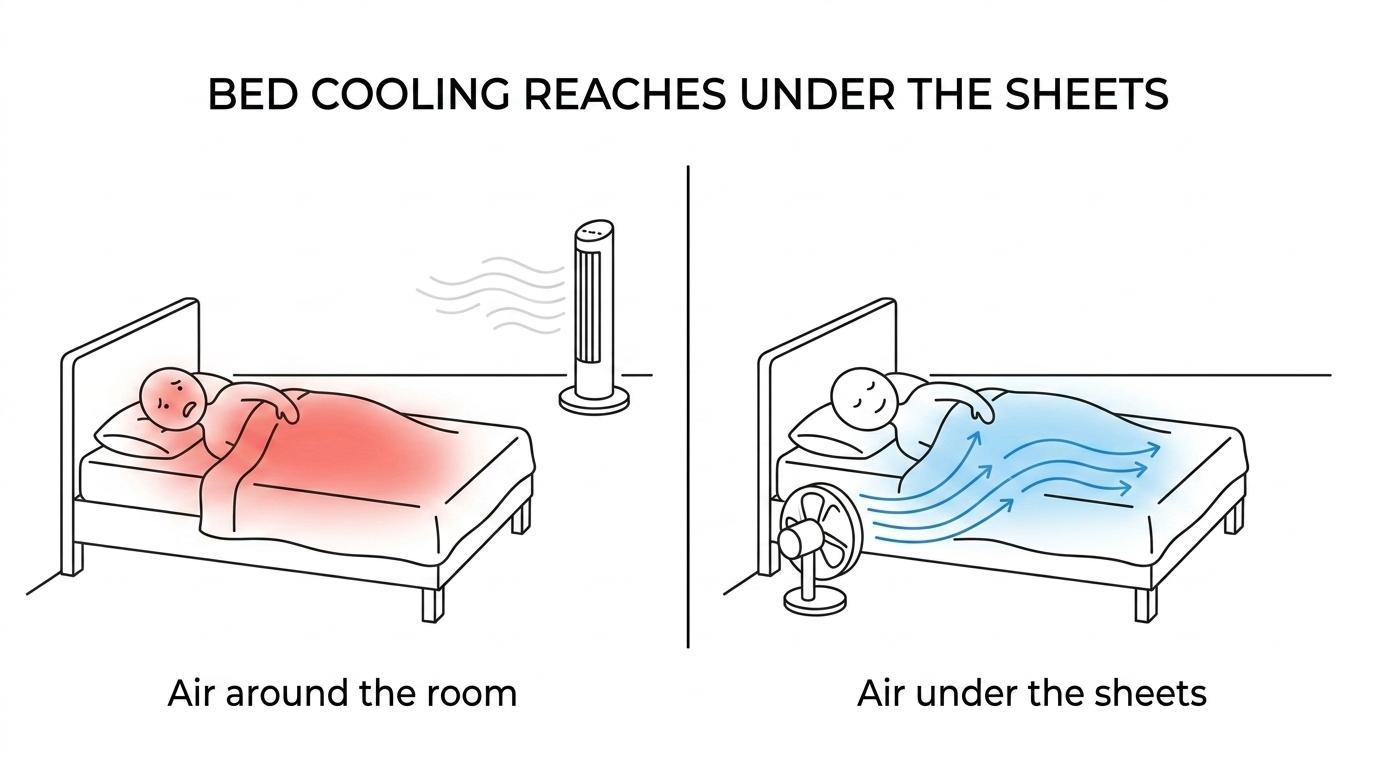
"bFan cools the bed microclimate directly, not the whole room, and that targeted airflow is why so many hot sleepers find it more useful than a standard bedroom fan."
bFan uses a quiet brushless digitally controlled DC motor and two squirrel cage blower wheels to create smooth, controlled airflow under the covers. The squirrel cage design matters because it helps produce the kind of static pressure needed to move air through bedding, not just across open space.
The result is straightforward, you get cooling where your body actually needs it, without needing a huge fan at full blast across the room.
A bedroom fan is only helpful if it lets you sleep. If the motor hums, clicks, rattles, or surges in the middle of the night, it becomes part of the problem. bFan is built for bedroom use, and at normal operating speed the sound level is about 28 dB to 32 dB, which puts it in the range many sleepers consider bedroom friendly.
That detail is important because sleep experts and public health guidance commonly point to a nighttime bedroom environment around 30 dB as a good target for sleep quality, while louder sound events above about 45 dB are more likely to disturb sleep. In plain English, steady, low fan sound is usually easier to live with than sudden louder spikes.

"At normal operating speed, bFan runs around 28 dB to 32 dB, which is right in the range many people want from a quiet bedroom fan."
bFan also gives you more control than the usual low, medium, high setup. The airflow is adjustable across a wide range, and timer controls let you match the fan to the way your body temperature changes through the night. That helps if you need more cooling when you first fall asleep, then less later on.
If you’ve been scanning search results for quiet bedroom fan options from Dreo, Levoit, or Dyson, that’s useful research. Those products can be good room fans. But bFan is solving a different sleep problem, trapped body heat under bedding, and that’s why it belongs in the conversation.
bFan is built for people who are tired of sleeping hot, not for people who just want a breeze somewhere in the room. Tompkins Research, Inc. makes this bed fan for sleepers whose nights are disrupted by heat, sweat, and repeated wake ups.
That includes hot sleepers in general, but it also fits a lot of specific real world situations. Women dealing with menopause or perimenopause often wake with intense heat and sweating. People taking antidepressants, steroids, pain medications, hormone therapies, or some diabetes medications can experience night sweats. Pregnant women, people with PMS or PMDD, men dealing with hormonal changes, and people living with medical conditions that affect temperature regulation can all run into the same problem.
"bFan was designed for people who overheat at night, including many dealing with menopause, medication related night sweats, and heat trapped under bedding."
It’s also a practical fit if you care about energy use. When your body feels cooler in bed, you often don’t need the entire house or apartment set as cold overnight. Many people using a bFan can raise the room temperature by about 5°F and still sleep cool, which can ease air conditioning use and help with summer electric bills.
Here are some of the sleepers who usually get the most from bFan:
From a sleep and comfort standpoint, airflow helps in two main ways. First, it improves convective heat loss, meaning it helps your body release heat into moving air more effectively. Second, it supports evaporation, so sweat does not just sit on the skin and in the sheets. That matters when your bed feels humid and sticky even if the room itself is not brutally hot.
bFan works with those basic sleep comfort mechanics by pushing room air between the sheets, where warm air and moisture tend to collect. Instead of trying to cool your whole bedroom first, bFan helps evacuate the heat your body is already generating under the covers.
"bFan uses room air to carry heat away from your body under the sheets, which is why it can feel cooler faster without cooling the whole room."
That’s also why it is important to set expectations correctly. Neither bFan nor BedJet cools the air. The BedJet doesn’t cool the air either. These products are not mini air conditioners. They work by using the cooler air that is already in the room and delivering it where it can improve comfort the most.
Sleep experts commonly recommend a bedroom temperature between 60°F and 67°F for better sleep. That range gives your body a better environment for natural overnight temperature regulation. With bFan, many people can often raise room temperature by about 5°F and still feel cool enough in bed for more restful sleep, because the airflow is removing body heat from the sheet space instead of just circulating the room.
The bedding you use matters too. With a bed fan, sheets with a tight weave usually work best because they help the air flow across your body and carry away heat more effectively. Loose, overly open fabrics may not direct the airflow as well through the bed space.
A lot of fan pages throw around words like quiet and powerful without saying what that means for your night. bFan is easier to understand when you connect each feature to a real sleep benefit.
Tompkins Research, Inc. built bFan as a remote controlled, adjustable height, between the sheets airflow system. That makes setup more flexible for different bed heights and bedding arrangements, and it means you can change settings without fully waking up and getting out of bed.
Here’s what you actually get from bFan, and why it matters at 2 a.m.:
That low watt draw is easy to overlook, but it matters. A quiet bedroom fan that uses about 18 watts on average is doing a lot less to your electric bill than dropping your AC several more degrees all night long. For many households, the practical value is not just comfort. It is comfort plus lower cooling demand.
bFan is also not sold on Amazon, which can actually be a plus if you prefer buying direct from the people who design and manufacture the product. When you buy through bedfans usa, you are dealing with the company behind the product instead of sorting through marketplace listings.
If you type quiet bedroom fan into Google, you’re going to see tower fans, floor fans, circulators, purifier fans, and BedJet comparisons. That’s normal. The issue is that those products do not all solve the same problem.
A room fan is best when the room itself feels stagnant, stuffy, or too warm overall. A bed fan is best when your main complaint is that you get hot under the covers, wake up sweaty, or have one sleeper overheating while the other still wants bedding.
That’s where bFan makes sense. The original Bedfan came to market several years before BedJet was even thought of, and Tompkins Research, Inc. remains the original inventor of the bed fan category. That matters because you are not buying a copy of a trend. You are buying from the company that started the category in the first place.
There is also a price issue that people should know before they buy. One BedJet is more than twice the price of a single bFan. If you need dual zone cooling for two sleepers, the dual zone BedJet is over a thousand dollars and more than twice the price of two bedfans. By contrast, two bFans can give you dual zone microclimate control at a fraction of that cost.
Here is the practical difference between the main options people usually compare:
This is also where bFan.world becomes useful. When you read through bFan.world and compare it with the usual search results, the distinction becomes clear, bFan is not trying to be every appliance in the room. It is trying to make the bed itself more comfortable for sleep.
A lot of bedroom cooling frustration is really relationship frustration. One of you wants the room colder, the other says it’s already freezing. One person throws off the comforter, the other pulls it back up. If that sounds familiar, bFan solves a problem standard bedroom fans often do not solve very well.
Tompkins Research, Inc. makes it possible to use two bFans for dual zone microclimate control. Each side of the bed can have its own airflow and its own comfort pattern. That means one sleeper can keep stronger cooling under the sheets while the other keeps their side more neutral.
That setup is often more practical than forcing the whole room to one extreme temperature. It can also reduce thermostat arguments because cooling becomes more personal and localized.
For couples, that usually means fewer compromises, fewer wake ups from overheating, and less temptation to crank the air conditioning lower than the whole household really needs.
Most hot sleepers know the pattern. You lower the thermostat before bed. The room feels fine. Then your body warms the bedding, the sheet space gets humid, and you wake up anyway. So you lower the AC even more the next night, and the cycle keeps going.
bFan changes that equation by cooling the body at the bed level. Because sleep experts commonly recommend a bedroom temperature between 60°F and 67°F, the goal is not to make your room icy. The goal is to support your body’s sleep temperature rhythm. With bFan, many people can raise the room temperature by about 5°F and still sleep cool because the trapped bed heat is being carried away.
That can matter a lot during expensive cooling months. If your main problem is heat under the covers, the most efficient fix is often not more air conditioning. It is a targeted fan that cools the sleeping environment directly.
You can think of bFan as a microclimate tool. It helps you use the cool air you already paid for more effectively, rather than trying to overcool the entire space for the sake of the bed.
People shopping for a quiet bedroom fan usually have a few reasonable concerns. They want to know if it will really be quiet enough, whether it is hard to set up, whether it feels too drafty, whether it works with their bedding, and whether it is worth it compared with other options.
bFan answers the quietness concern with a normal operating sound level around 28 dB to 32 dB, which is in the zone many sleepers find acceptable for overnight use. It answers the comfort concern with adjustable airflow and timer controls, so you are not locked into one blast level all night. And it answers the setup concern with an adjustable height design, a sturdy stable base, and remote control convenience.
The product also answers the value question in a very direct way. If you want bed focused cooling, one BedJet is more than twice the price of a single bFan, and a dual zone BedJet setup costs over a thousand dollars, more than twice the price of using two bFans. Sleeping cool should not cost a fortune, and that is clearly part of the bFan value proposition.
Where should you be careful? If your real problem is poor room air quality, heavy dust, or allergy control, a bed fan is not the same thing as an air purifier. And if your bedroom itself never cools down at all, you still need enough ambient cool air in the room for any bed fan to work well. Again, bFan does not cool the air. It uses the room air you already have.
bFan is usually the right fit when your sleep problem sounds like this, I get hot under the covers, I wake up sweaty, I want quieter targeted cooling, I do not want freezing room air all night, and I want something more affordable than BedJet.
It is also a strong fit when you want a category pioneer rather than a generic add on product. Tompkins Research, Inc. positions bFan as the original bed fan, and the design focus shows in the details, between the sheets airflow, blower based pressure, remote control, timer options, and a stable adjustable setup meant for the bedside rather than the center of the room.
If you mainly want a room circulator, smart home app control, or air purification, one of the mainstream tower fans you saw in the search results may still belong in your room. But if you want a quiet bedroom fan solution specifically for hot sleeping in bed, I’d recommend looking closely at the bFan from bedfans usa and reading more at bFan.world.
bFan is designed for sleep use, not workshop or living room use, and at normal operating speed it runs about 28 dB to 32 dB. That puts it near the range many people look for in a bedroom, especially compared with louder fan spikes that can interrupt sleep.
Just as important, the sound character matters. A steady low airflow sound is often easier to tolerate overnight than the clicking, rattling, or pulsing noise that some room fans make when oscillating or changing speed.
No. bFan does not lower room temperature, and neither does BedJet. These products do not cool the air itself. They use the cooler air already in the room and move it where it can pull heat away from your body under the sheets.
That is why the room still needs to be reasonably cool to begin with. Sleep experts commonly recommend a bedroom temperature between 60°F and 67°F, and bFan helps you use that room air more effectively at the bed level.
For many people, yes, because menopause related overheating often feels most intense in bed, under bedding, and during sudden nighttime temperature spikes. bFan is designed to send airflow right into that space, which can help carry away heat and moisture more quickly.
It is not a medical treatment for menopause itself, but it can be a practical symptom relief tool. Women dealing with perimenopause or menopause often use bed cooling to reduce wake ups, discomfort, and the soaked sheets feeling that comes with night sweats.
bFan uses about 18 watts on average, which is very low compared with the energy involved in running air conditioning harder through the night. That makes it appealing for people who want cooler sleep without pushing utility costs even higher.
In practical terms, the value is that many people can raise room temperature by about 5°F and still sleep cool enough with a bFan. If that lets you rely a bit less on the AC, the overall energy picture gets better.
If your real problem is overheating in the bed, then yes, it is often the more relevant choice. A tower fan moves room air. bFan moves air into the bed microclimate, where heat and humidity are actually trapped around your body.
If your whole room is stuffy, a tower fan can still help. But if you keep waking up because the sheets feel hot and damp, a bed fan usually targets the problem more directly than a standard bedroom fan across the room.
The biggest difference for a lot of buyers is price. One BedJet is more than twice the price of a single bFan. If you want dual zone cooling, the dual zone BedJet is over a thousand dollars and more than twice the price of two bedfans.
The other important point is that neither product cools the air itself. They both use room air. So when you compare them, you are mostly comparing delivery style, features, and price, not true air conditioning.
Sheets with a tight weave usually work best with bFan because they help the air flow across your body and carry away heat more effectively. The goal is to create a smoother path for airflow under the bedding rather than letting it escape too quickly.
You do not necessarily need to replace all your bedding, but fabric choice can affect performance. If you want the strongest cooling effect, tighter weave sheets are usually the better match.
Yes. One of the most practical advantages of bFan is that two units can create dual zone microclimate control. That means each sleeper can adjust their side of the bed more independently instead of forcing one room temperature for two very different bodies.
For couples who argue about the thermostat, this can be more comfortable and more peaceful. One person can get stronger airflow while the other keeps a lighter setting, or none at all.
bFan is a cooling tool, not an air purifier. It helps with heat and moisture under the sheets, but it is not meant to filter pollen, dust, or other particles from the room. If air quality is your main concern, you may want a separate purifier in the bedroom.
That said, if your main sleep issue is overheating, bFan still addresses that very well. Many people use a bed fan for thermal comfort and a purifier for air quality, since those are two different jobs.
Copyright 2005 - present - Tompkins Research, Inc. & Kurt W. Tompkins All Rights Reserved DO NOT COPY. bFan® and the word bfan® in any format is a registered trademark of Kurt W. Tompkins the word BFAN® in any format shall not be used without written permission of the mark owner. This includes specifically Brookstone where you like to bait and switch, do not use my mark to bait customers.