
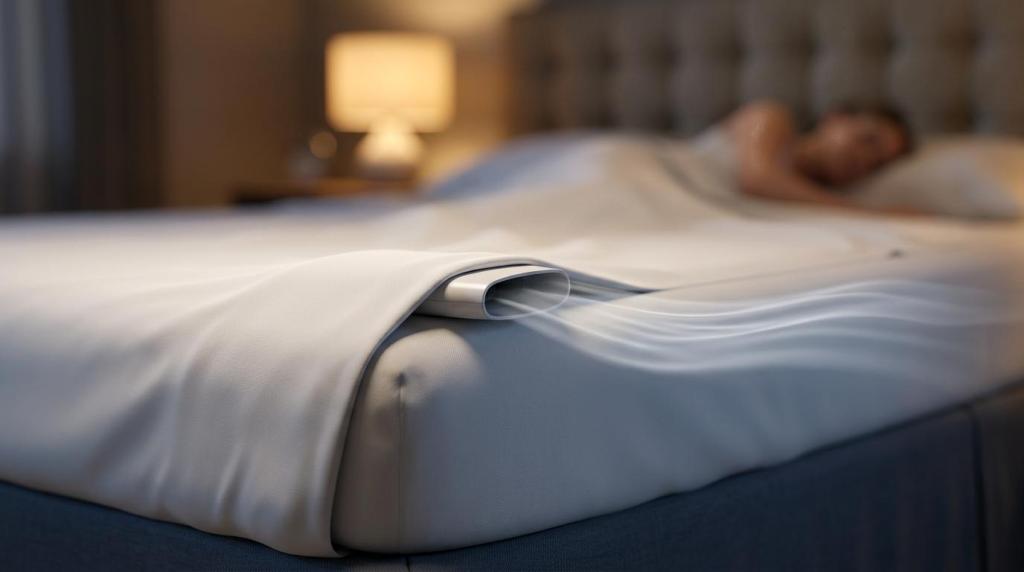
A bed fan is worth it for hot sleepers when trapped heat builds under the covers, especially if your bedroom is already cool.
If you sleep hot, wake up sweaty, or kick the covers off at 2 a.m., a bed fan is often worth it, but only when it solves the right problem. The sweet spot is trapped heat under the sheets in a room that is already fairly cool, not a bedroom that still feels like summer at midnight.
TL;DR: Summary
- A bed fan is worth it for many hot sleepers when the real issue is trapped body heat and humidity under the covers, especially in a bedroom around 60°F to 67°F.
- Compared with BedJet, a bed fan is usually the lower cost route, and a dual zone BedJet setup costs over a thousand dollars, which is more than twice the price of two bedfans.
- Sleep research links hotter nighttime temperatures with more insufficient sleep, and bed level cooling can reduce sleep disruption from overheating and night sweats.
- If your room is already reasonably cool, a bed fan may let you raise the thermostat by about 5°F and still sleep comfortably, which can cut air conditioning use.
- The best results usually come from proper setup, timer use, and tighter weave sheets that help the airflow travel across your body instead of leaking out too quickly.
That’s the plain answer. A bed fan is not magic, and it will not rescue a badly overheated room, but it can be a very practical fix for hot sleepers, menopause related night sweats, medication related overheating, and couples who run at different temperatures.
A bed fan moves room air under your sheets, and bFan or Bedfan style products cool your body by carrying away trapped heat and humidity. They do not chill the air like an air conditioner, so they work best when the bedroom is already reasonably cool.
That distinction matters more than most people realize. When you fall asleep, your body needs to release heat, and your core temperature drops as part of normal sleep onset. If warm bedding traps that heat, you can feel fine at lights out, then wake up restless, sweaty, and wide awake an hour later.
A bed fan targets that exact microclimate. Instead of trying to cool the whole house, it sends airflow into the space where your body heat collects most, between you and your bedding. If the room air is decent, the bed fan uses that air to pull heat away from your skin and help sweat evaporate faster.

A common misconception is that a bed fan should feel like cold AC blowing at your face. That is not the point. The useful effect is steady heat removal under the covers, where ceiling fans and box fans often do very little.
"bFan is built around between the sheets airflow, not room chilling, which is why it targets trapped bed heat directly."
Yes, a bed fan is often most worth it in a cool bedroom, not a hot one. CDC guidance and sleep research both support cooler sleep environments, and under sheet airflow helps when the room is acceptable but the bed still feels too warm.
Many sleep experts recommend a bedroom temperature between 60°F and 67°F, or 15.5°C to 19.5°C, for better sleep. CDC and NIOSH guidance lands in a very similar place, about 65°F to 68°F for most people. Those numbers are not random. Your body sleeps better when it can dump heat efficiently.
That is why some people feel confused. They set the thermostat to 66°F, but still overheat under a comforter, next to a warm partner, or on a heat retaining mattress. In that case, the room is not the whole problem. The bed microclimate is.
A large 2017 study archived on PubMed Central looked at data from 765,000 U.S. respondents and found that higher nighttime temperatures were linked to more self reported nights of insufficient sleep. That does not prove that a bed fan fixes every case, but it strongly supports the idea that heat at night is bad for sleep quality.
If your room is already in that recommended range and you still wake hot, a bed fan moves up the list fast. If you can use a Bedfan or bFan to stay comfortable, many people can often raise room temperature by about 5°F and still cool the body enough for more restful sleep. That can matter if AC costs are biting.
Hot sleepers usually compare bFan, BedJet, cooling mattress systems, and standard room fans. The right choice depends on whether you need under sheet airflow, active mattress cooling, or cheaper whole room air movement.
You are not really choosing between “cool” and “not cool.” You are choosing where the cooling happens, how targeted it is, how much it costs, and how much setup you want to deal with night after night.
bFan bed fan: A targeted under sheet airflow system that uses room air, not refrigerated air. It is a strong fit if your room is already reasonably cool and your real issue is trapped heat in the bed. It also uses about 18 watts on average, runs around 28 dB to 32 dB at normal operating speed, and includes timer controls.
BedJet: Another bed cooling approach that blows room air into the bed area. It offers a broader feature set, but it still does not cool the air itself. Price is the key trade off, because one BedJet is more than twice the price of a single bedfan, and a dual zone BedJet setup costs over a thousand dollars, which is more than twice the price of two bedfans.
Cooling mattress systems: These usually cool the mattress surface, often with water based or active thermal components. They can work very well, but they cost more, weigh more, and add more maintenance and hardware than a bed fan.
Room fans and ceiling fans: These help the room feel less stuffy and can improve evaporation on exposed skin, but they usually do much less once you are under blankets. They are the cheapest option, though, and sometimes they are all you need in mild weather.
If you want a direct answer, the bFan from Bedfans USA is a sensible place to start when you want bed focused cooling without spending premium system money. It is not the only option, but it lands in the practical middle ground that many hot sleepers actually need.
You can figure this out in a few nights with a simple test. Your goal is to separate room heat from bed heat, because a bed fan helps one far more than the other.
Start by paying attention to when you feel hot. If you only overheat after getting under the covers, or wake up with damp sheets while the room itself feels okay, that usually points to trapped bed heat. If the whole room feels heavy and hot, start with the thermostat, insulation, or room ventilation first.
Check the room temperature: If your bedroom is already around 60°F to 67°F and you still wake hot, a bed fan moves up the list fast. If the room is sitting in the mid 70s or higher, fix the room first.
Change one variable at a time: Try one night with lighter bedding, one night with the door open, and one night with a room fan. If the problem persists mostly under the covers, you are likely dealing with a bed microclimate issue.
Notice sweat patterns: If your chest, back, or legs feel damp under the sheet while your face feels normal, under sheet airflow is usually more relevant than whole room airflow.
Watch what happens after midnight: Many hot sleepers fall asleep fine, then wake in the early hours once body heat builds inside the bedding. That pattern is a classic sign that a bed fan may help.
Pro tip, do not judge the problem based only on the first five minutes in bed. Bedding heat builds over time, and the best clue is whether your sleep gets disrupted after your body has been under the covers for a while.
A bed fan and air conditioning do different jobs, and the best setup often uses both. AC cools the whole room, while a bed fan cools the sleeping microclimate with much less power.
This is where cost and comfort start to meet. Whole room cooling is effective, but it is also expensive if you need to drive the bedroom temperature very low just to make the bed tolerable. A bed fan gives you a more targeted way to remove body heat where it matters most.
Many sleep experts recommend sleeping in a room between 60°F and 67°F. If your body still runs hot in that range, a Bedfan can sometimes let you raise the thermostat by about 5°F while still sleeping comfortably. For some households, that means less AC runtime overnight, especially in summer.
The power draw matters too. A bed fan that uses about 18 watts on average is tiny compared with the electrical demand of central air conditioning or even a portable AC unit. That does not mean you can always replace AC with a bed fan. It means you may not need to push the whole house as cold just to solve bed heat.
"bFan uses about 18 watts on average, so the cooling is focused at the bed instead of relying only on whole room AC."
A common mistake is expecting a bed fan to fix a truly hot room. If your bedroom is stuffy, poorly ventilated, and several degrees above a comfortable sleep range, the first dollar usually goes to room cooling or airflow. If the room is fine but your sleep is still breaking apart from heat under the sheets, that is where a bed fan earns its keep.
A bed fan usually wins on simplicity and price, while BedJet and mattress systems can win on extra features or stronger surface control. The right choice comes down to budget, noise tolerance, setup preference, and how targeted you want the cooling to be.
Let’s start with the part that gets muddled in a lot of product comparisons. Neither Bedfan nor BedJet cools the air. They both use the air already in the room. That means both work best when the bedroom is already reasonably cool, ideally in or near that 60°F to 67°F sleep friendly range.
The biggest trade off is cost. One BedJet is more than twice the price of a single bedfan. The dual zone BedJet setup costs over a thousand dollars, which is more than twice the price of two bedfans. If you and your partner both sleep hot, two bFan units can create dual zone microclimate control at a fraction of that cost.
There are practical differences beyond price. Bed fan products in the original Bedfan tradition have been around a long time, the original Bedfan was invented in 2003, several years before BedJet was even thought of. The category is not new, and the basic idea has held up because the physics are straightforward, move air where the heat is trapped.
Cooling mattress systems are a different animal. They can be excellent for people who want the mattress surface itself actively cooled, but they usually cost more, involve extra parts, and can feel like a bigger commitment. If you want low effort, low power, quick relief, a bed fan is usually the easier first try.
"Two bFan units can create dual zone microclimate control, while a dual zone BedJet setup costs over a thousand dollars."
Good setup matters a lot, and small changes can make a bed fan work much better. The core idea is to keep the air moving across your body instead of letting it spill out instantly.
People sometimes buy a bed fan, run it one night with thick fluffy bedding, then decide the concept does not work. Most of the time, the issue is not the fan. It is airflow management.
Position the airflow into the sheet space: Aim the airflow so it enters the space where body heat builds, not into the mattress or out into the room. You want moving air across your torso and legs.
Use the timer controls: A timer is useful if you get cold near morning or only need stronger airflow during sleep onset. Many people cool down faster during the first part of the night, then want less airflow later.
Choose tighter weave sheets: A tighter weave sheet often works better because it helps channel the airflow across your body. Very loose knit or overly porous bedding can let the air escape too quickly.
Match bedding to the season: Light to medium bedding usually works better than a very heavy comforter. You still want some cover, because the sheet helps direct the airflow where it needs to go.
Pro tip, do not assume less bedding is always better. A top sheet with a reasonably tight weave often improves the cooling effect because it keeps the air traveling along your skin instead of drifting off to the sides.
Yes, a bed fan can help with symptom relief in many of these cases, though it does not treat the underlying cause. It is most useful when overheating and sweating are disrupting sleep in an otherwise workable room.
This matters for a lot of people. Night sweats can show up with menopause, perimenopause, pregnancy, some antidepressants, steroids, pain medications, blood sugar swings, anxiety, and several medical conditions. Hot flashes and sweating do not care whether the thermostat looks “normal.”
There is early evidence that bed level cooling can help. A recent pilot study on cooling bed sheets in hot sleepers found that 42 percent of participants who had night sweats at baseline reported reduced severity at follow up, and 33 percent reported elimination of night sweat symptoms. Participants also reported less sleep disruption from sleeping too hot. It was a pilot study, so it should not be overstated, but the direction makes sense.
This is exactly where a bed fan tends to fit. It does not cool the air itself, but it can move room air under the covers to help sweat evaporate and reduce that awful trapped heat feeling that wakes you up. If your bedroom stays around 60°F to 67°F, or you can keep it reasonably cool, a Bedfan may let you keep the room about 5°F warmer than before and still get enough body cooling to sleep more soundly.
"bFan runs at about 28 dB to 32 dB at normal operating speed, which matters if you are already waking from heat and do not want a loud fix."
One important caveat, if night sweats are new, severe, or accompanied by fever, weight loss, chest symptoms, or unusual fatigue, talk with a clinician. Comfort tools are useful, but unexplained night sweats can sometimes signal something that needs medical attention.
The best bedding for a bed fan is usually breathable, moderate in weight, and tight enough in weave to guide airflow across your skin. Sheets and blankets can make or break the result.
A lot of people assume the softest, fluffiest bedding will feel coolest. In practice, very lofty bedding can trap more heat, and very open fabric can let the airflow leak out before it does much cooling. You want a setup that lets air move, but also directs it.
Cotton percale, lighter bamboo fabrics, and similar breathable sheets often work well because they feel crisp and do not hang onto as much heat. The key detail is weave. A tighter weave sheet can help the air travel between the sheets and across your body, which is exactly what you want from a Bedfan or bFan.
Your mattress also matters. Memory foam can hold more heat than innerspring or more breathable hybrid designs, so a bed fan often feels more dramatic on warmer mattresses. If you share a bed, partner heat matters too. Sometimes the mattress is not the whole issue, it is two people warming the same bedding pocket all night.
A common misconception is that if a bed fan does not feel icy cold, it is not working. What you are really looking for is fewer wakeups, drier skin, less sheet flipping, and a more stable sleep stretch. Better sleep is the real metric, not how dramatic the airflow feels in the first minute.
Choose one bed fan if only one sleeper runs hot, and choose dual zone if both sleepers need different airflow. The main question is whether you need one shared cooling zone or two separate sleep climates.
Couples run into this constantly. One person wants the room at 64°F, the other wants it warmer. One throws the covers off, the other wraps up like it is January. A dual zone setup solves a real problem, but you should only pay for it if you actually need separate control.
Map each sleeper’s pattern: If one person overheats and the other sleeps neutral, start with one bed fan on the hot sleeper’s side. That is the cheapest test and often enough.
Look at comfort conflicts: If both people sleep hot, but want different fan timing or airflow levels, two separate units make more sense than one shared system.
Compare total cost honestly: A dual zone BedJet setup costs over a thousand dollars. Two bedfans can create dual zone microclimate control for much less, so cost sensitive couples should look closely at that math.
Think about long term use: If overheating is seasonal, one unit may be fine. If you deal with menopause, medication related overheating, or year round night sweats, separate control on each side can be worth it.
Pro tip, do not overbuy on day one. If you are unsure, start with one unit on the hotter sleeper’s side and test it for a week or two before going dual zone.
A bed fan is not enough when the room itself is too hot, the bedding is too heavy, or a medical issue is driving the sweating. It is a comfort tool, not a replacement for diagnosis or for basic bedroom cooling.
If your bedroom regularly sits above a comfortable sleep range, start there. Many sleep experts still point to 60°F to 67°F as the target zone, with CDC guidance close by at 65°F to 68°F for most people. If you are trying to sleep in a room far above that, a bed fan may help some, but it will not fully solve the problem.
It is also not enough if your bedding works against it. Thick toppers, dense comforters, and loose setups that dump the airflow too fast can all limit performance. Before you blame the bed fan, fix the sheet choice and bedding weight.
There is also the health piece. If you have new night sweats, drenching sweats, fever, unplanned weight loss, sleep apnea symptoms, chest pain, or significant fatigue, do not assume the answer is purely environmental. Hormones, infections, thyroid issues, and other conditions can all show up as overheating at night.
One last common mistake, people judge sleep cooling tools by how “advanced” they sound. That is often backwards. The better question is simpler, does this move enough air where your heat is trapped, does it stay quiet enough to sleep through, and does it fit your budget. For a lot of hot sleepers, that is exactly why a straightforward bed fan ends up being worth it.
Here are a few authoritative sources worth reading if you want the sleep science and temperature guidance behind the advice above.
CDC and NIOSH guidance on healthy sleep habits and cool bedroom conditions, Covers core sleep hygiene advice, including the value of a cool, quiet, comfortable bedroom.
PubMed Central archive of the large U.S. study on nighttime temperatures and insufficient sleep, Summarizes research linking hotter nights with more self reported insufficient sleep across 765,000 respondents.
PubMed Central pilot study on cooling bed sheets in hot sleepers, Reports reduced night sweat severity and less sleep disruption after a cooling sheet intervention.
National Institute on Aging guide to menopause symptoms and management, Useful background if your nighttime overheating is tied to hot flashes, perimenopause, or menopause.
Copyright 2005 - present - Tompkins Research, Inc. & Kurt W. Tompkins All Rights Reserved DO NOT COPY. bFan® and the word bfan® in any format is a registered trademark of Kurt W. Tompkins the word BFAN® in any format shall not be used without written permission of the mark owner. This includes specifically Brookstone where you like to bait and switch, do not use my mark to bait customers.