
Chilipad vs bed fan: compare cooling feel, noise, maintenance, and cost to find the better sleep setup for hot sleepers.
If you’re comparing ChiliPad vs a bed fan, start with how each one cools you, not just the sticker price. bFan, made by Tompkins Research, Inc., sits in the bed fan category and cools by pushing room air between your sheets to move trapped body heat away, while ChiliPad uses a water based pad on the bed itself.
TL;DR: Summary
- If you’re choosing between ChiliPad and a bed fan, a bed fan like bFan is usually the better fit when you want lower upfront cost, a lighter setup, and no change to mattress feel.
- ChiliPad style systems can feel more actively cool at the mattress surface, but they add a pad, hoses, and maintenance that some sleepers dislike.
- Published specs give the bed fan approach a concrete noise and power benchmark, with about 28 dB to 32 dB at normal speed and about 18 watts on average for the referenced model.
- Sleep guidance from the CDC supports a cool, quiet bedroom, and many hot sleepers do best when they target trapped heat under blankets instead of overcooling the whole room.
- Sleep experts commonly recommend about 60°F to 67°F, and many people can raise your thermostat by about 5°F with a bed fan and still sleep cool enough for better rest.
If you sleep hot, wake up sweaty, or share a bed with someone who likes the room warmer, the real question is simple, what kind of cooling bothers you less while helping you more. This is where cost, noise, maintenance, and feel start to matter more than marketing language.
A good comparison also needs real sleep context. The CDC says a good sleep environment is very dark, quiet, cool, and comfortable, with about 60°F to 67°F working for most people, and that lines up pretty well with the broader sleep expert range of 60°F to 67°F. Neither a bed fan nor a Bedjet actually cools the air itself, they use the cool air already in the room, so what you’re really choosing is how to deliver that cooling where your body needs it.
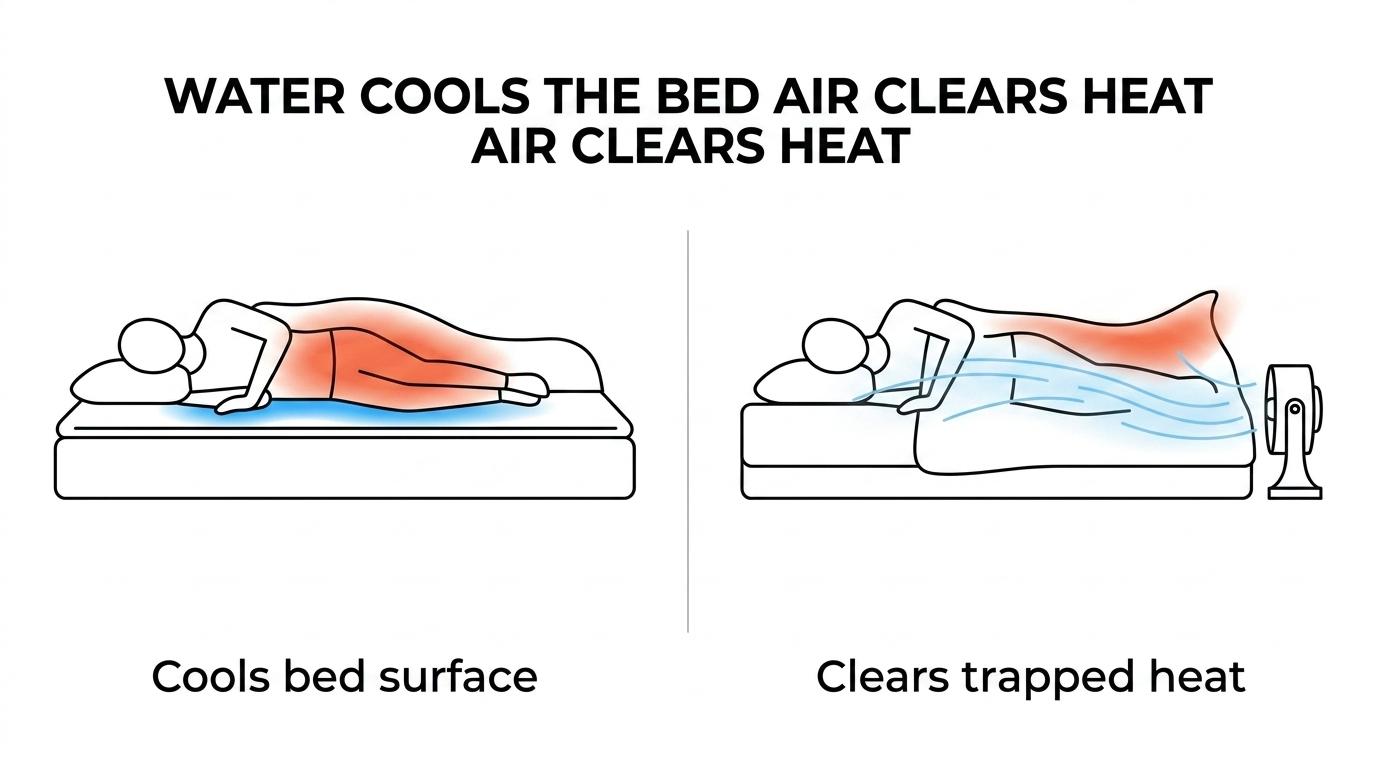
A ChiliPad changes the temperature of the bed surface with circulating water, while a bed fan like bFan moves room air between your sheets to carry body heat away. That single difference shapes setup, noise, feel, cost, and upkeep.
A ChiliPad style system is basically a personal climate pad for the mattress. Water moves through channels, the control unit manages the temperature, and your body meets that cooler or warmer surface all night. For some people, that feels impressively direct. For others, it feels like there is something extra on the bed, because there is.
A bed fan works from underneath the covers, not inside the mattress or on top of it. Air flows across your skin and through the bedding microclimate, which is just a fancy way of saying the small pocket of air and heat trapped around your body under the sheets. That matters because a lot of hot sleepers are not really losing sleep from the room alone, they’re losing sleep because the bedding traps heat after they get comfortable.
A common misconception is that more complex always means more effective. It doesn’t. If your real problem is trapped heat under blankets, a simple air based approach can solve the exact issue that keeps waking you up.
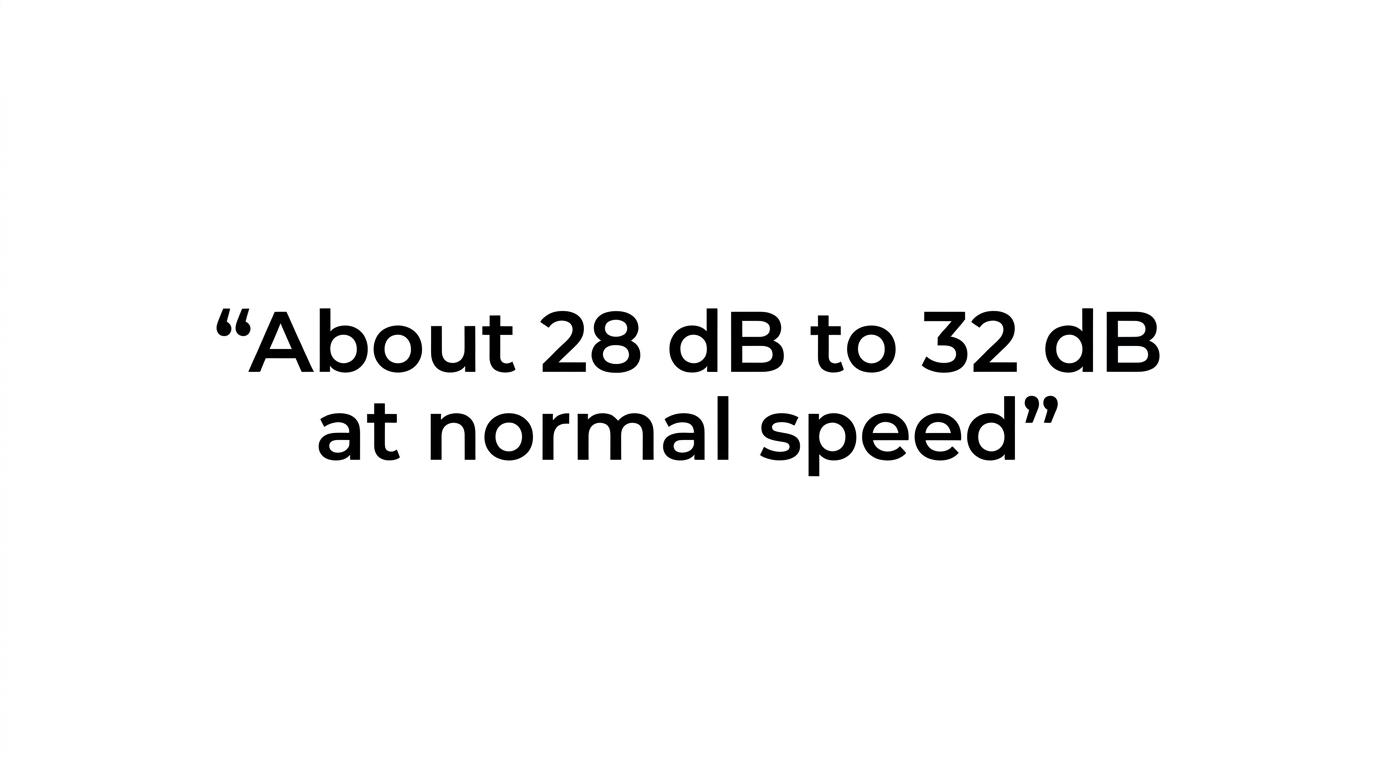
“Published bFan specs put normal sound at about 28 dB to 32 dB, which gives hot sleepers a concrete benchmark for quiet, targeted bed cooling.”
A 2024 paper in PubMed Central discusses personal comfort systems as an alternate way to maintain comfortable and healthy indoor air temperatures during sleep. That is useful here because both product types are trying to improve your nighttime operative temperature near the body, not just force the whole bedroom colder.
ChiliPad often feels cooler at the mattress surface, while a bed fan usually feels cooler across the skin and under the sheets. If you hate heat buildup around your torso or legs, the feel difference matters more than the product category.
Think of ChiliPad as contact cooling. You feel the cooled pad where your body touches the bed. That can be especially noticeable on your back, hips, and legs. If you like the idea of the mattress itself feeling temperature controlled, that can be appealing.
A bed fan feels more like a moving ribbon of cool air across the body. You notice it in the sheet space, on the skin, and around the places where heat gets trapped fastest, often the chest, neck, back, or thighs. It is less about a cold surface and more about heat removal.
If you’re a side sleeper who shifts around a lot, this trade off gets personal fast. Some sleepers like the steady contact feel of a water pad. Others prefer not to notice the cooling system at all, beyond the fact that they stop overheating. If you know you’re sensitive to changes in mattress texture, air usually wins on feel.
A bed fan usually wins on simplicity, mattress feel, and entry cost. It is often the better choice when you want cooling relief without adding a system on top of the mattress.
After talking this through with enough hot sleepers over the years, the same reasons keep coming up.
The pro tip here is to be honest about what bugs you more, heat, extra gear, or mattress feel changes. Your answer usually points to the right category in about thirty seconds.
The easiest way to compare cost is to split it into purchase price, operating cost, and friction cost. Friction cost means all the little annoyances that do not show up on a receipt but still matter.
First, look at the upfront spend. The published price for the referenced bed fan is $204.95, and that includes the fan, remote, and power supply. With ChiliPad style systems, the price tier is usually much higher because you are buying a temperature control unit plus the mattress pad system. Even before you get into electricity or maintenance, you are often comparing two very different budgets.
Second, look at energy use. The published figure for the bed fan discussed in the background is about 18 watts on average. That is tiny compared with the cost of forcing the whole room colder all night with air conditioning. If you use a bed fan and can raise your thermostat by about 5°F while still feeling cool under the covers, that can change your summer cost picture a lot, especially in hot climates or in homes with expensive time of use power rates.
Third, account for the cost of living with it. With a water based system, you may be fine with periodic maintenance, tubing, and a control box near the bed. Or you may get tired of it. With a bed fan, the maintenance burden is usually lower because the mechanism is simpler. If you know you stop using products that demand upkeep, that “soft cost” matters.
As a side note, if you are cross shopping air based systems beyond ChiliPad, the pricing gap gets even clearer. One Bedjet is more than twice the price of a single bed fan, and a dual zone Bedjet setup costs over a thousand dollars, which is more than twice the price of two bed fans. Two fans can give you dual zone microclimate control at a fraction of that spend.
The common mistake is comparing only the first invoice. If one option is cheaper but you stop using it because you dislike the feel or the setup, it was never the cheaper option for you.
A bed fan has a published noise benchmark here, while ChiliPad noise varies by model and setup. That makes the quietness question less about slogans and more about the type of sound you can actually sleep through.
For the referenced bed fan, published normal operating sound is about 28 dB to 32 dB. That is useful because it gives you a real number instead of a vague promise. Noise is not only about volume, though. It is also about character. Airflow noise is often perceived as a soft whoosh, which some sleepers barely notice or even like as white noise.
A ChiliPad style system has a different sound profile because you are dealing with a control unit that circulates water. Some people are unbothered by a steady machine hum. Others notice it more than moving air. Since exact sound levels vary by model and are not always easy to compare apples to apples, you have to think about your own sensitivity. Do you hate tonal hums, or do you hate air movement sounds?
The CDC’s guidance is a good gut check here. It says the best sleep environment is quiet, and if noise is a problem, soft earplugs may help. That is practical advice, but it is not a substitute for choosing a cooling method whose sound you actually tolerate night after night.
“With about 18 watts on average, bFan points hot sleepers toward targeted cooling instead of paying to overcool the whole bedroom.”
If your sleep gets wrecked by every little sound, look for the most concrete noise data you can find. A real decibel range beats “whisper quiet” every time.
Partner sleep is really a compatibility problem, not just a cooling problem. If one person runs hot and the other person gets cold easily, the best system is the one that creates separate comfort without starting a thermostat war.
ChiliPad style systems can make sense if each side of the bed has separate temperature control and both people are fine with the pad feel. That can work well for couples who want very different surface temperatures and do not mind a more involved setup.
A bed fan approach can also work well for couples, especially if the main issue is one person overheating under the covers. Two separate units can create dual zone microclimate control on each side of the bed. That means each person gets their own airflow without changing the feel of the mattress for both sleepers.
This is also where room temperature guidance helps. Sleep experts commonly recommend a bedroom range of 60°F to 67°F, and the CDC points to about 65°F to 68°F for most people. If one partner hates a cold room, a targeted system can help the hotter sleeper stay comfortable without driving the whole room down into the low sixties.
If then logic works well here. If both of you want active bed surface temperature control, look harder at a water based system. If only one of you is miserable from trapped heat under blankets, separate airflow is often the cleaner answer.
A bed fan works best when the room is already reasonably cool, the sheets can carry airflow, and the fan is aimed to move heat out from under the covers. Small setup details change the result more than people expect.
Start with the room, not the fan. A bed fan does not manufacture cold air. It uses the cooler air already in the room, just as Bedjet does. That means the bedroom still needs to be in a sleep friendly range. A lot of people do well when the room is somewhere in the 60°F to 67°F range, or near the CDC’s 65°F to 68°F guidance, then let the bed fan do the local cooling work under the sheets.
Next, pay attention to bedding. Tight weave sheets usually work better because they help direct the airflow across your body instead of letting it escape too quickly. This is one of those small details that gets ignored, then people wonder why the cooling feels weak. The fan is moving air, but your bedding has to help channel that air where you need it.
Then use the controls like a sleep tool, not a gadget. A timer is helpful because many people want stronger cooling while falling asleep, then less airflow later in the night. If you tend to get chilled near morning, a timer can solve that before it becomes a problem.
This is one spot where the published design intent matters. bFan is built for quiet, controllable airflow between the sheets, so the best result comes when you treat it as a targeted body cooling system, not a room fan pointed at the bed.
A pro tip that gets overlooked, do not judge the setup in the first five minutes. Get into your normal sleep position, pull the bedding the way you usually would, and give the airflow enough time to move the trapped heat pocket out.
The smartest way to think about sleep cooling is to combine whole room comfort with targeted body cooling. You usually do not need an icebox bedroom, you need a cooler sleep microclimate around your body.
First, aim for a room that is cool enough to support sleep in general. Sleep experts often recommend 60°F to 67°F, and the CDC says around 65°F to 68°F works for most people. Those ranges overlap enough to give you a clear direction, cooler tends to sleep better than warm, assuming you are comfortable and not shivering.
Second, identify where your heat problem actually lives. Some people are hot because the entire room is too warm. Others are hot because they get under the covers and the heat starts pooling around the body. That second group is where targeted cooling really shines. A bed fan is meant to move that trapped heat out from under the sheets.
Third, test whether you can raise the thermostat a bit while staying comfortable in bed. Many people can increase the room setting by about 5°F with a bed fan and still cool the body enough for more restful sleep. That can ease air conditioning costs, especially overnight, because you are no longer paying to cool the whole room as aggressively just to fix a heat pocket inside the bedding.
A common mistake is assuming lower thermostat equals better sleep. Sometimes it just means higher bills and cold shoulders while your legs still overheat under the blankets.
Yes, ChiliPad can change the feel of the bed surface, while a bed fan usually leaves the mattress feel alone. If mattress texture matters to you, this point is not minor, it is central.
Any time you add a pad on top of a mattress, there is at least some chance you will notice it. Some sleepers do not care. Some barely notice after a night or two. Others feel every extra layer and immediately decide the trade is not worth it. If you already paid a lot for a mattress you love, that sensitivity matters.
That sensitivity is well documented in broader mattress buying advice too, and Tony Discount’s guide to choosing between firm and plush mattresses underlines how strongly sleepers respond to even small changes in surface feel.
A bed fan avoids most of that issue because it cools the air under the bedding rather than changing the mattress stack. That is one reason it is often attractive for adjustable beds or for sleepers who do not want to change the contour, response, or pressure feel of the mattress.
This is also tied to motion. If you toss, turn, elevate the base, or sleep in different positions through the night, keeping the bed itself unchanged can be a real quality of life advantage. Cooling that does not interfere with mattress feel is not just a comfort preference, it can be the difference between using the system every night and abandoning it.
The right pick depends on what your body dislikes most, heat at the skin, heat in the mattress contact points, noise, maintenance, or altered bed feel. Once you know that, the choice gets much easier.
Here is the practical split I would use over coffee if you asked me point blank.
If you want a straightforward recommendation, the bFan from Bedfans USA is one of the clearest fits for people who want quiet, between the sheets cooling without paying water system prices or changing how the mattress feels.
Another useful reality check, neither airflow system nor whole room AC fixes every cause of night sweats. If your overheating is tied to menopause, perimenopause, antidepressants, thyroid issues, infection, sleep apnea, medications, stress, thyroid issues, infection, or sleep apnea, the right cooling setup can help you sleep, but it does not replace medical evaluation when symptoms are persistent or unexplained.
Night sweats are often manageable, but they are not always just a bedding problem. If they are frequent, new, severe, or tied to other symptoms, you should think beyond products and talk with a clinician.
A lot of people run hot at night for very ordinary reasons, warm rooms, dense bedding, alcohol, stress, hormone shifts, or medications. Cooling tools can make a real difference there, and that relief matters. Still, some cases deserve more attention. Night sweats can show up with menopause and perimenopause, antidepressants, steroids, thyroid issues, infections, reflux, sleep apnea, low blood sugar episodes, and other medical conditions.
If you are waking soaked, losing weight without trying, feeling feverish, dealing with swollen lymph nodes, or noticing a sudden major change from your normal sleep pattern, do not just buy another sleep gadget and hope for the best. Get checked.
That does not mean cooling products are irrelevant. It means use them for comfort, while also taking the pattern seriously when it looks unusual.
If you are still on the fence, choose the option that best matches your tolerance for setup, your sensitivity to mattress feel, and your budget. Most people decide correctly once they stop chasing the “best” product and start asking what they personally will keep using.
If then logic makes this simpler. If you want the mattress itself to feel temperature controlled, a ChiliPad style system probably deserves the first look. If you want to cool the body under the sheets, keep your mattress unchanged, spend less upfront, and avoid a water based system, a bed fan is usually the cleaner fit.
The published buying details also matter more than people expect. The referenced bed fan price is $204.95, with the fan, remote, and power supply included, plus normal shipping availability and a 30 day return window. That lowers the risk of trying targeted airflow if you are not ready to commit to a bigger sleep system.
What I would not do is assume you need to turn your whole bedroom into a refrigerator. The better move is usually a cool room, a quiet environment, and a targeted system that removes heat where your body actually feels it most.
CDC sleep environment guidance: CDC advice on creating a dark, quiet, cool, and comfortable sleep environment, explains temperature and noise basics that matter when comparing bed cooling options.
PubMed Central paper on personal comfort systems during sleep: NIH hosted research on sleep comfort, nighttime operative temperature, and personal comfort systems, gives useful context for why targeted cooling can work without overcooling the whole room.
National Heart, Lung, and Blood Institute sleep health information: NHLBI overview of sleep deprivation and why sleep quality matters, helps connect bedroom comfort decisions to broader sleep health outcomes.
Copyright 2005 - present - Tompkins Research, Inc. & Kurt W. Tompkins All Rights Reserved DO NOT COPY. bFan® and the word bfan® in any format is a registered trademark of Kurt W. Tompkins the word BFAN® in any format shall not be used without written permission of the mark owner. This includes specifically Brookstone where you like to bait and switch, do not use my mark to bait customers.