
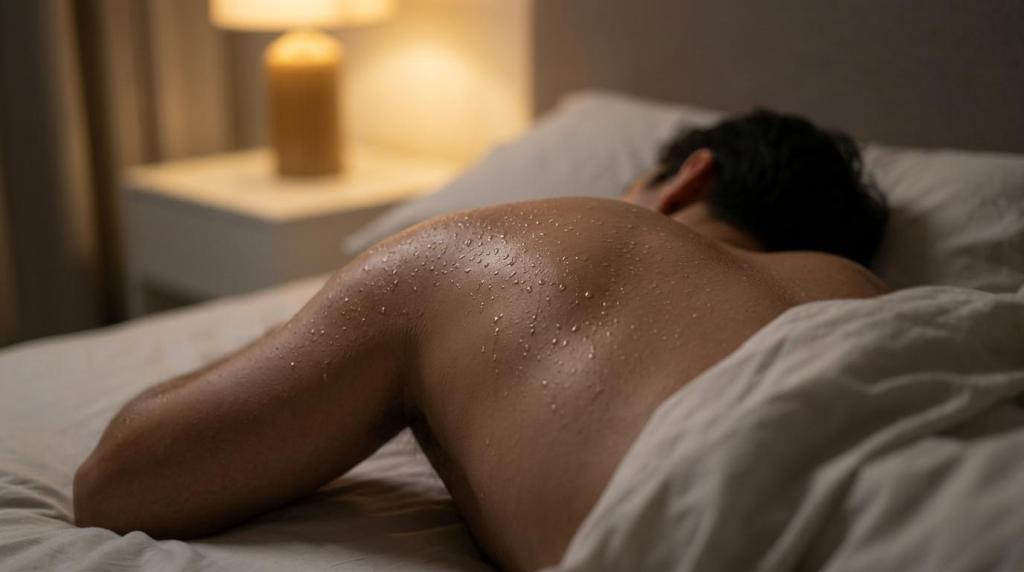
Choosing a bed cooling device? Air cooling feels drier and more natural, while water cooling offers steadier surface chill in hotter rooms.
If you’re choosing a bed cooling device, the real question isn’t just which one gets colder. It’s which one feels better at 2 a.m., after your sheets have trapped heat, your room has drifted warmer, and you still need sleep, not gadget drama.
TL;DR: Summary
- Air based bed cooling usually feels better all night for most people in a normal bedroom because it removes trapped heat under the covers without adding a noticeable pad on top of the mattress.
- Water based and other conductive bed cooling systems often feel better in very hot rooms, or for sleepers who want stronger, steadier surface cooling and are willing to accept extra setup, maintenance, and mattress feel changes.
- Neither a Bedfan nor a BedJet cools the air itself, they use the cooler air already in the room. Sleep experts commonly recommend a bedroom temperature between 60°F to 67°F for better sleep, and many people can often raise the thermostat by about 5°F with a Bedfan and still sleep cool enough for better rest.
- Research supports both approaches. Airflow has been linked with shorter sleep onset latency and less wake after sleep onset, while conductive cooling in 32°C heat has improved sleep efficiency and total sleep time.
- If you want lower upfront cost, simple upkeep, quiet operation, and direct relief from heat trapped in bedding, an air based bed fan is often the better value. If your room stays hot all night and you want more exact surface cooling, water based systems can make more sense.
That’s why this choice is so personal. Air and water bed cooling solve different parts of the same problem, and the best pick depends on your room temperature, your bedding, your budget, and whether your body runs hot because of weather, hormones, medication, or just plain bad luck.
Air based bed cooling usually feels more natural, while water based systems usually feel more constant. In a bedroom that’s already near 60°F to 67°F, airflow often wins on comfort.
For most sleepers, air feels better all night because the problem isn’t a hot mattress core, it’s trapped body heat under blankets and sheets. A bed fan moves that pocket of warm air away from your skin, replaces it with cooler room air, and lets sweat evaporate faster. That makes the cooling feel lighter, less clammy, and easier to live with for eight hours.
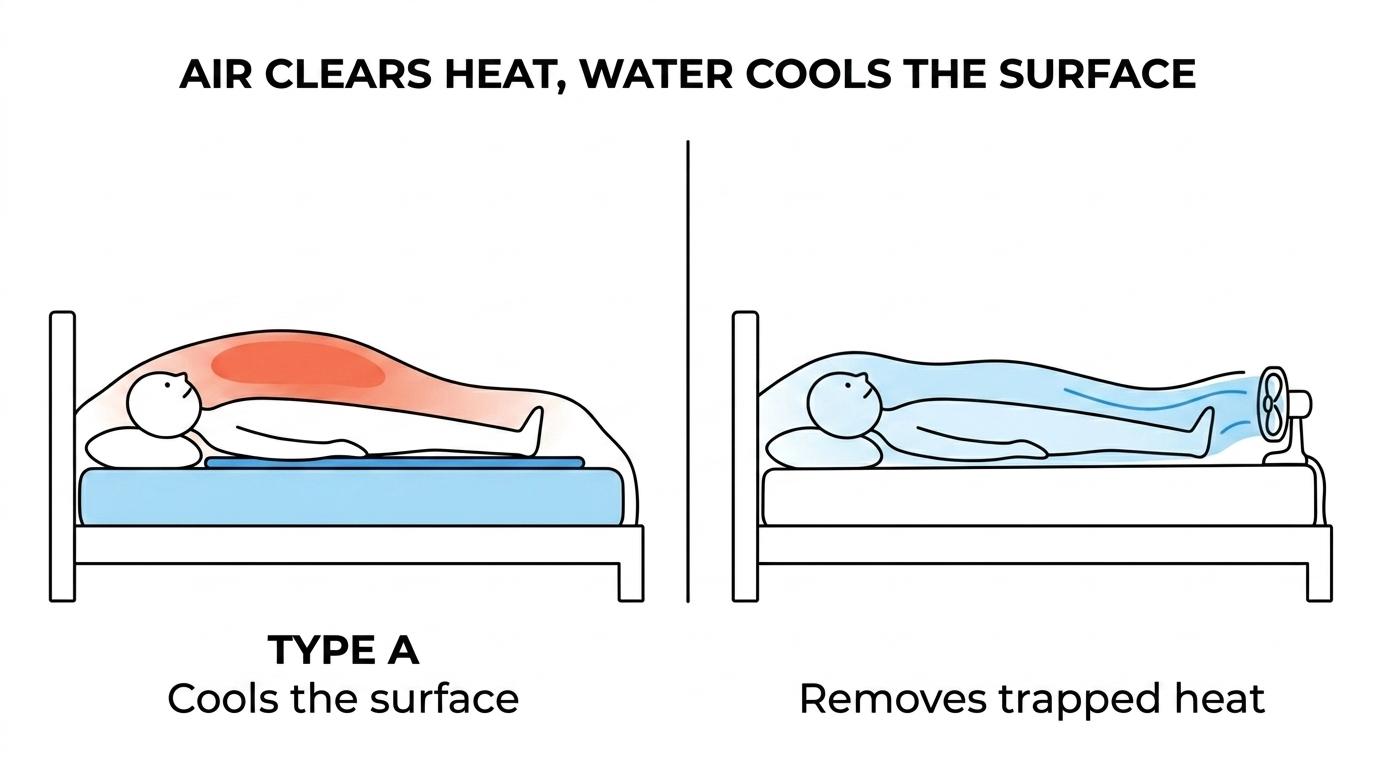
Water based systems usually feel stronger at the contact surface. If your room stays hot, your mattress retains heat, or you want a stable cooling sensation without much airflow, that steady conductive feel can be a better match. The tradeoff is that some people notice the pad, tubing, or firmness change more than they expected.
A common misconception is that colder always feels better. It doesn’t. If the surface gets too cold, some sleepers tense up, get cold feet, or keep waking to adjust bedding, which defeats the point. All night comfort usually comes from stable heat removal, not maximum chill.
Air based systems like a Bedfan or BedJet move room air through the bed microclimate, while water based systems move cooled water through a pad. One removes trapped heat by airflow, the other pulls heat away by contact.
With air based cooling, the device sits at the side or foot of the bed and pushes room air between the sheets. That matters because your bedding creates a tiny heat pocket around your body. A bed fan targets that pocket directly. Neither Bedfan nor BedJet cools the air itself, they only use the cool air already in the room to cool your bed.
That’s also why room temperature still matters. Sleep experts commonly recommend 60°F to 67°F for better sleep. If your room is already in that range, or close to it, a Bedfan can often let you raise the thermostat by about 5°F and still feel cool enough to sleep well, since it’s removing heat where you actually feel it, under the covers.
"The original Bedfan was invented in 2003, which makes bFan one of the earliest bed fan designs in the category."
Water based systems work differently. They circulate water through channels in a topper or pad, and that water carries heat away from the body. Some sleepers love that because it’s more direct and less dependent on air movement. Others notice the surface feel, the setup, or the extra maintenance right away. If you hate the feel of anything added to the mattress, that tradeoff can matter more than the raw cooling method.
The best bed cooling device type depends on your heat problem, not just your budget. bFan, BedJet style air systems, and water pads each fit a different sleeper.
If you strip away the marketing, most bed cooling devices fall into a few practical categories. Here’s the simple version.
Bed fan, bFan: Best for people who overheat under the covers, want simple setup, prefer no pad on the mattress, and care about low energy use. It delivers between the sheets airflow, uses about 18 watts on average, includes timer controls, and runs around 28 dB to 32 dB at normal operating speed.
Foot of bed air system, BedJet style: Best for sleepers who want stronger airflow and don’t mind a more noticeable air rush. It still does not cool the air itself, it uses room air, and a dual zone setup costs over a thousand dollars.
Water based mattress pad: Best for very hot rooms, heat retaining mattresses, or sleepers who want more precise surface temperature control. Expect more components, more cleaning, and more awareness of what’s on top of the mattress.
High heat conductivity topper: Best for people who want conductive heat transfer without necessarily wanting strong airflow. Research suggests this type of approach can improve sleep metrics during hot nights.
Room fan plus bedding changes: Best for mild overheating, smaller budgets, or testing whether airflow helps before buying a dedicated bed cooling device. It won’t target the under sheet microclimate as directly as a Bedfan.
Choose by matching the cooling method to the source of heat. Trapped bedding heat points to air, hot mattress surfaces point to water, and low hassle points to a bed fan.
A lot of people shop this category backward. They look at features first, then try to force those features into their sleep problem. Flip that around, and the choice gets easier.
Start with the heat source: If you mostly feel hot under blankets, or wake sweaty at the chest, back, and legs, air based cooling is usually the better first move. If the mattress itself feels warm and stays warm, conductive or water based cooling has the edge.
Check your tolerance for gear: If you want a simple setup, fewer parts, and less upkeep, air wins. If you’re fine with pads, hoses, a control unit, and regular maintenance, water may be worth it.
Be honest about sensation: If you like a moving breeze and hate added mattress layers, choose air. If you want a steadier cool contact and don’t mind a topper feel, choose water.
If you’re on the fence, start with the simpler fix. In real bedrooms, trapped heat under the covers is often the main problem, and that’s exactly where a Bedfan earns its keep.
CDC and Cleveland Clinic guidance points to 60°F to 67°F for better sleep. A bed fan works best when the room is already reasonably cool, not when you’re asking it to fix a hot room by itself.
That range matters because both overheating and overcooling can disrupt sleep. When the room is too warm, you’re more likely to toss, sweat, and wake. When it’s too cold, your body may tighten up, your feet may get cold, and sleep can get lighter.
Set the room first: Try to keep the bedroom between 60°F and 67°F if possible. If AC costs are painful, many people can raise the thermostat by about 5°F and still feel cool enough with a Bedfan moving air under the sheets.
Use the right bedding: Tight weave sheets usually work better with a bed fan because they guide air across your body and help carry away heat. Loose, fluffy, or very open knits can let air leak before it does much cooling.
Match blanket weight to the season: Even the best bed cooling device struggles if you trap heat under heavy layers. Keep enough coverage for comfort, but trim bulk where you can.
A pro tip here is to think in terms of heat escape, not just cooling power. If your sheets, comforter, and mattress protector all trap moisture and heat, the device has to work against your whole setup.
"bFan uses about 18 watts on average, so it can cool the bed microclimate without the power draw of lowering whole house AC."
That’s one reason bed fans appeal to energy conscious sleepers. You’re cooling your body zone, not the entire house, and for many people that’s the smarter place to spend the effort.
Air feels breezier and drier, while water feels steadier and more surface based. bFan changes the under sheet climate, while a water pad changes the surface you lie on.
This is where reviews often miss the point. “Cooling” is not one feeling. Air cooling can feel like relief, ventilation, and dryness. Water cooling can feel like contact chill, evenness, and a cooler mattress surface. Neither sensation is automatically better.
On your skin, airflow often feels more breathable. That’s a big deal if you sweat. When sweat can evaporate, your body can dump heat more effectively. Water systems may cool the contact points well, but they do less to move moisture unless your bedding also breathes well.
Under the covers, air often feels more dynamic. You move, the air follows, and heat doesn’t build as fast. Water feels more consistent in one spot. If you sleep in one position, that may be perfect. If you shift a lot, you may notice warm spots and cool spots differently.
"At normal operating speed, bFan runs around 28 dB to 32 dB, which matters if you want cooling without turning the bedroom into a white noise test."
Across the night, the common mistake is chasing the strongest first impression. A very cold surface can feel amazing when you first get in bed, then feel less ideal at 4 a.m. when your body temperature drops naturally. All night comfort usually comes from staying just cool enough, with fewer wakeups and fewer adjustments.
Air based cooling is often better for sweat relief, while water based cooling can be better for relentless heat. Menopause, SSRIs, and thyroid issues can each change what “better” means.
If your main problem is night sweats, airflow has a strong practical advantage because it helps move both body heat and moisture away from the skin. That can reduce the sticky, trapped feeling that wakes people up even when the room itself isn’t that hot. For perimenopause and menopause, that dry relief can feel more natural than lying on a cool pad.
If you’re dealing with medication related overheating, the pattern matters. Some people on antidepressants, steroids, pain medications, or hormone therapy feel sudden heat surges and sweating. Others just feel hot all night. Sudden sweating episodes often respond well to between the sheets airflow because the cooling hits fast and doesn’t require the whole mattress to change temperature.
That’s one reason a Bedfan can be a practical first step. If you want a simple air based option, the bFan from www.bedfans-usa fits the use case well, especially for sleepers who want quiet, direct airflow under the covers without changing the feel of the mattress.
There’s an important line here, though. A cooling device helps symptoms, not causes. If night sweats are new, severe, or paired with fever, weight loss, chest pain, shortness of breath, or major fatigue, it’s time to talk to a clinician rather than assume your room is the problem.
Air based systems usually win on simplicity and cost, while water systems usually win on precision. bFan and BedJet also split sharply on price.
Upfront cost is where the gap gets obvious fast. One BedJet is more than twice the price of a single bedfan. A dual zone BedJet setup costs over a thousand dollars, which is more than twice the price of two bedfans. If you and your partner need separate cooling zones, two bFans give you dual zone microclimate control at a fraction of that price.
Maintenance is another split. Air systems are usually straightforward. You set them up, keep the airflow path clear, and use them. Water systems bring more chores, including cleaning routines, more hardware, and more parts that can wear or fail over time. If you want something you can basically forget once it’s dialed in, air has a real edge.
"Two bFans create dual zone microclimate control, while a dual zone BedJet setup costs over a thousand dollars."
Operating cost matters too. A bed fan that uses about 18 watts on average is asking very little from your electric bill. That’s why many people can raise bedroom temperature by about 5°F and still sleep cool enough, instead of paying to overcool the whole room. Water systems vary by model, but as a rule they’re more complex and often more expensive to buy and maintain.
The misconception here is that a pricier system must feel better. Sometimes it does. Sometimes it just does more. If your real need is to move trapped heat out from under the covers, paying for more machinery than that may not buy you more sleep.
A bed fan works best with proper placement, Tight weave sheets, and realistic room temperature. bFan and the original Bedfan perform best when the bedding helps direct airflow.
People sometimes try a bed fan once, pair it with the wrong sheets, and decide the concept doesn’t work. Usually the problem is setup, not the underlying idea.
Place the airflow where it can enter the bedding pocket: The goal is to push air between the sheets so it can move across your body. If the outlet is blocked, or the blankets are packed too tight, the effect drops fast.
Use sheets that guide air, not leak it: Tight weave cotton or similar sheets usually help the airflow spread under the covers. If the fabric is too loose or too thick, the air may escape or stall before it cools you well.
Use timer controls strategically: Many hot sleepers need the strongest airflow while falling asleep, then less later. Timer controls make that easy and help keep you from waking cold near morning.
Another pro tip is to check the mattress protector. Waterproof protectors often trap heat and moisture. If you need one, pick the most breathable option you can find, because that layer sits right in the middle of your cooling setup.
The research says both airflow and conductive cooling can help sleep, but under different conditions. PubMed studies and sleep environment guidance point to heat removal, not gimmicks, as the real story.
One small 1997 study on an active air mattress found that, in six healthy women, the pump and timer setup reduced sleep onset latency and wake after sleep onset compared with a regular futon and with the same mattress when the pump and timer were inactive. Morning thermal sensation was cooler, and comfort tended to improve. That’s meaningful, because it shows airflow can affect not just comfort, but actual sleep continuity.
There was a catch, and it matters. The study also found higher bed climate humidity with the active air setup. That doesn’t mean airflow is bad. It means the details of the bed environment matter, including how air is distributed and how moisture behaves in that specific setup. This is a good reminder that “air cooling” is not one identical thing across every product design.
Another line of evidence supports conductive cooling during very hot nights. In a randomized crossover trial with fifteen healthy young active subjects, a high heat conductivity mattress topper improved sleep quality during a 32°C heat night. Total sleep time increased by 21.4 ± 16.1 minutes, sleep efficiency improved, awakening duration dropped, and both skin temperature and core body temperature were lower. In plain English, that means conductive cooling can do real work when the room is seriously hot.
Airflow research is strong too. In one study involving older adults, airflow of 0.8 m/s evenly over the body maintained sleep quality and thermal comfort at an air temperature 3 K higher than the neutral temperature. That’s a practical result. It suggests you do not always need colder room air if you can improve airflow where the sleeper actually needs it.
Local cooling studies also matter. In hot conditions, cooling the back and head or neck improved thermal comfort and sleep quality the most, with mean sleep efficiency rising from 84.6% without cooling to 95.3% with combined back and head or neck cooling. That lines up with what hot sleepers often report at home, the upper back, neck, and torso are key heat zones.
The honest take is this, research does not show one universal winner for every sleeper. It shows that different cooling mechanisms help in different thermal situations. If your room is moderately cool and your heat gets trapped by bedding, air based bed cooling makes a lot of practical sense. If the whole sleep surface and room are staying hot for hours, conductive or water based systems may have the stronger hand.
Night sweats with fever, weight loss, or new symptoms need a clinician first. Bed cooling devices help comfort, but they do not diagnose menopause, sleep apnea, infection, or medication side effects.
A lot of nighttime overheating is benign, and a good bed cooling device can make a real difference. Still, there are cases where symptom relief should not be the only plan. If your night sweats are new, drenching, or coming with unexplained weight loss, persistent fever, swollen lymph nodes, chest pain, or major fatigue, get medical advice.
The same goes if the problem started after a medication change. Antidepressants, steroids, pain medications, blood pressure drugs, diabetes medications, and hormone therapies can all be part of the picture. In that case, it’s smart to treat the symptom and ask about the cause at the same time.
Sleep apnea, reflux, thyroid problems, infections, anxiety, and menopause can all show up as nighttime overheating or sweating. Cooling the bed may still help you sleep better, and that alone can be worth it, but don’t let comfort tools delay care when the pattern looks unusual.
Sleep temperature guidance: Cleveland Clinic on the ideal sleeping temperature for adults, a clear clinical overview of why 60°F to 67°F is the usual target range.
Airflow and sleep study: PubMed study on an active air mattress, sleep onset latency, and wake after sleep onset, a classic small study showing airflow related sleep benefits and a humidity tradeoff.
Airflow in warm sleep environments: PubMed study on body airflow during sleep in warm conditions, useful for understanding how airflow can preserve comfort at higher room temperatures.
Sleep hygiene basics: CDC sleep hygiene guidance, practical advice on room conditions, habits, and environmental factors that support better sleep.
Night sweats medical context: MedlinePlus overview of night sweats, a reliable medical summary of common causes and when symptoms need follow up.
Healthy sleep overview: National Institute on Aging guide to getting a good night’s sleep, broad sleep guidance that helps put temperature, routines, and sleep quality in context.
Copyright 2005 - present - Tompkins Research, Inc. & Kurt W. Tompkins All Rights Reserved DO NOT COPY. bFan® and the word bfan® in any format is a registered trademark of Kurt W. Tompkins the word BFAN® in any format shall not be used without written permission of the mark owner. This includes specifically Brookstone where you like to bait and switch, do not use my mark to bait customers.