
Infection night sweats can signal fever, TB, or kidney infection. Learn red flags like cough, weight loss, chills, and when to call a doctor.
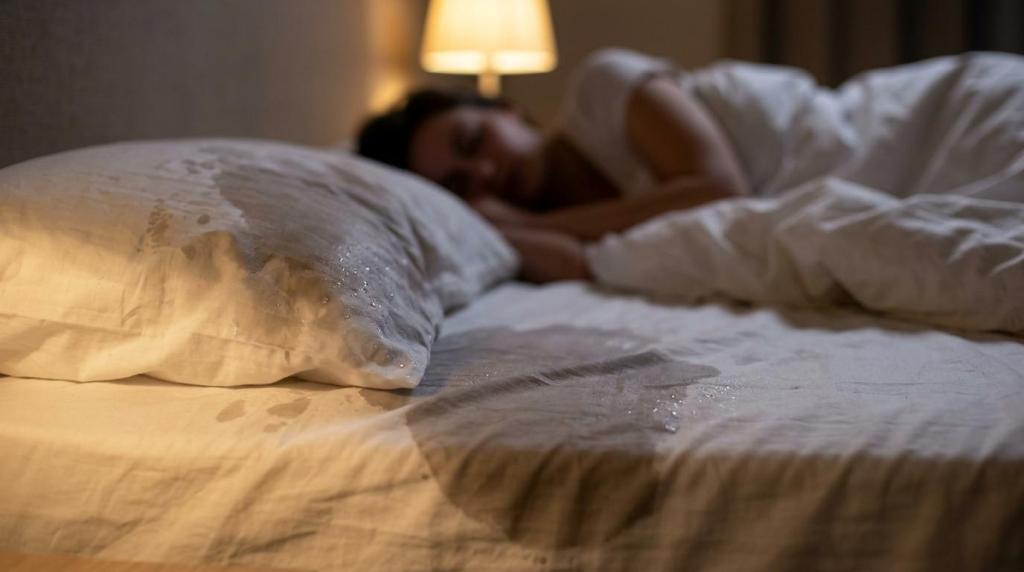
Night sweats can be easy to brush off the first time they happen. Maybe the room was warm, maybe the blanket was too heavy, maybe you had a stressful day. But infection related night sweats tend to feel different. They are often repeated, heavy, and disruptive, the kind that leave your shirt damp or your bedding soaking wet even though the room itself is cool.
That difference matters.
If you are waking up drenched, changing clothes in the middle of the night, or pairing the sweating with fever, cough, weight loss, diarrhea, chest pain, or urinary symptoms, it is time to stop guessing and start paying attention. A lot of people think of night sweats as just a comfort issue. Sometimes they are. Sometimes they are your body waving a flag that says, please get this checked.
True night sweats are not just feeling a little warm under the covers. Major medical sources describe them as episodes of heavy sweating during sleep, often enough to soak pajamas or bedding. If your bedroom is already on the cool side and you are still waking up drenched, that is a clue that the sweating may be tied to something happening inside your body, not just the environment around you.
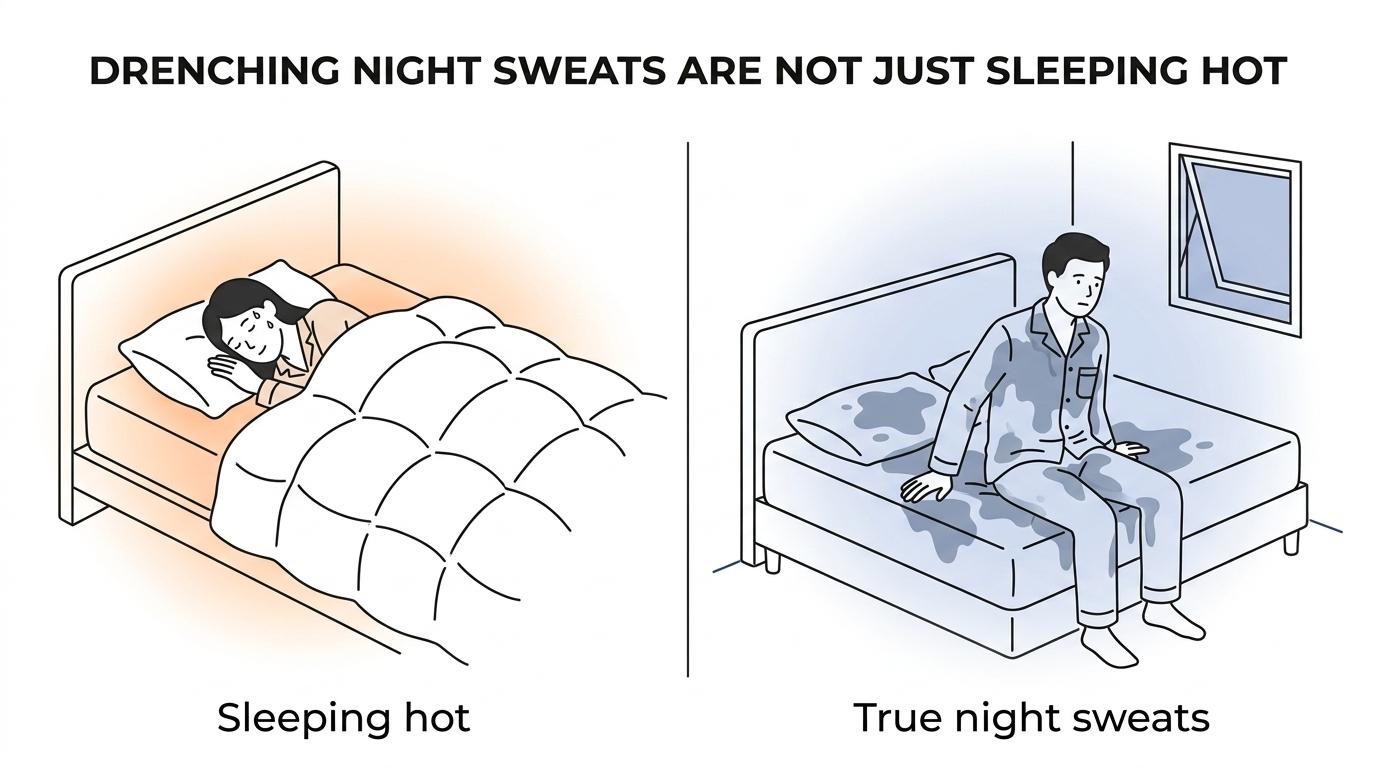
Infections can trigger night sweats because your immune system is active, your temperature regulation gets thrown off, and fever patterns often swing through the night. You may feel chilled, then hot, then sweaty, then cold again after the sweat dries. That cycle is common with many infections, from respiratory illnesses to kidney infections.
Room temperature still matters, of course. Sleep experts commonly recommend keeping the bedroom between 60°F and 67°F, or 15.5°C to 19.5°C, for better sleep. If your room is much warmer than that, a hot bedroom can make any sweating feel worse. Still, a warm room alone usually does not explain repeated drenching night sweats, especially if they keep happening over several nights or come with other symptoms.
A single sweaty night after a bad dream, a heavy comforter, or a room that felt stuffy is usually not the main concern. The pattern is what changes the picture. Recurrent night sweats, sleep disruption, and other symptoms moving in with them are the signs that push this from annoying to medically relevant.
Mayo Clinic notes that night sweats deserve a medical visit when they happen regularly, interrupt your sleep, or occur with symptoms like fever, weight loss, cough, diarrhea, or pain in a specific area. The NHS gives similar advice and says urgent review is needed if night sweats come with a very high temperature, feeling hot and shivery, cough, or diarrhea. That is useful guidance because infections often show up as clusters of symptoms, not just sweating by itself.
If your instinct says, this feels different than being too hot, trust that instinct. You do not need to diagnose yourself before calling a clinician.
After you have that in mind, these are the patterns that should move you toward care:
There is no single infection behind all night sweats. That is why the rest of the symptom picture matters so much. A cough points you in one direction. Urinary symptoms point you in another. Diarrhea pulls the picture somewhere else.
A few infections show up again and again in medical guidance on night sweats. Some are common. Some are less common but more serious. Knowing the broad categories can help you know what details to mention when you call your doctor.
Tuberculosis is one of the classic infections linked with night sweats. The CDC notes that active TB disease can cause fever, sweating at night, weight loss, low appetite, weakness, fatigue, and chills. If the lungs are involved, symptoms may also include a bad cough lasting 3 weeks or longer, chest pain, and sometimes coughing up blood or sputum.
That does not mean every person with night sweats has TB. Far from it. But it does mean that persistent night sweats with weight loss and a lingering cough should not be brushed aside.
There is another point that helps clear up confusion. Inactive TB does not cause symptoms and cannot spread to others. Active TB disease is the condition that causes the night sweats and respiratory symptoms that need prompt medical attention.
Urinary infections can also cause night sweats, especially when a lower urinary tract infection spreads upward into the kidneys. That is the point where the picture often shifts from annoying urinary symptoms to feeling genuinely ill.
MedlinePlus notes that when a bladder infection spreads to the kidneys, symptoms can include chills, shaking, night sweats, fatigue, fever above 101°F, nausea, vomiting, and pain in the back, flank, or groin. Older adults may also become confused. The medical term you may hear is pyelonephritis, which simply means kidney infection.
This is not one to sit on. A kidney infection can worsen quickly and may need antibiotics right away. If you have night sweats plus urinary burning, urgency, fever, or pain along one side of your back, get checked.
A lot of common infections can trigger night sweating because fever and inflammation do not care whether the source is in your lungs, gut, or somewhere else. Viral infections like flu and COVID can do it. So can stomach or intestinal infections that bring diarrhea and fever. Mayo Clinic also lists general infectious disease symptoms that often travel together, including fever, diarrhea, fatigue, muscle aches, and coughing.
Some fungal infections can do it as well. Blastomycosis is one example. It is not as common as a routine viral illness, but it is a reminder that geography, outdoor exposure, and immune status matter. If you have night sweats and also spent time in areas where certain fungal infections are more likely, tell your clinician.
Then there are infections that are less common but still very real, including deep abscesses, infections around the heart valves, and bone infections. You do not need to memorize that list. You just need to know this, recurring drenching night sweats plus feeling unwell is worth a real medical conversation.
Night sweats rarely tell the whole story on their own. The details around them are what make doctors pay attention.
A person who wakes up sweaty once after sleeping in a warm room is a different case from someone who is soaking sheets every night and now has a cough, chills, and dropped ten pounds without trying. Same symptom, totally different context.
These symptom clusters deserve extra attention:
If you are trying to decide whether to call, do not focus only on the sweating. Ask yourself what came with it, what has changed, and whether you feel progressively worse.
When you see a clinician, the first goal is usually not to slap a label on the sweating. It is to figure out whether the sweating is part of a larger infection pattern, and if so, where that infection may be located.
That is why you will often get a detailed history. How long has this been happening. Are the sweats drenching or mild. Is the room cool. Have you had fever, chills, cough, diarrhea, urinary symptoms, pain, or weight loss. Any travel, sick contacts, known TB exposure, recent antibiotics, immune system issues, or new medications. Those questions may feel wide ranging, but they are all trying to narrow the field.
Pattern matters.
A cough and weight loss may point toward a chest workup. Burning urination and flank pain may point toward urine testing. Diarrhea may call for a stool or hydration focused plan. A very high fever, breathing trouble, or confusion may push things toward urgent evaluation.
The physical exam and testing depend on the symptoms. A clinician might check temperature trends, listen to the lungs, examine the abdomen and back, look for lymph node swelling, and order labs or imaging if needed. That could include urine testing, a chest X ray, blood work, or other targeted tests. Not everyone needs a huge workup. But when night sweats are paired with clear infection signals, some kind of evaluation is usually the right move.
You do not need a perfect diary, but specific details help. “I sweat at night” is a start. “I wake up around 2 a.m. drenched, the room is set at 64°F, I have a cough for 3 weeks, and I have lost seven pounds this month” is much more useful.
If you are calling for advice, mention whether you have to change clothes or sheets, whether you measured a fever, and whether you feel hot and cold in waves. Also mention urinary symptoms, diarrhea, vomiting, chest pain, shortness of breath, or confusion. Those details can affect how quickly you are told to come in.
If you are older, pregnant, immunocompromised, receiving cancer treatment, or living with a condition that affects infection risk, say that up front. Night sweats in those settings deserve a lower threshold for evaluation.
A cooler sleep environment can absolutely make a miserable night more tolerable. It just does not answer the medical question of why you are sweating.
The usual sleep guidance is still a good baseline, keep the bedroom between 60°F and 67°F, or 15.5°C to 19.5°C, if you can. That range tends to support better sleep and makes it easier for your body to release heat. If your room is sitting at 74°F and you are under heavy bedding, you may be making things harder on yourself.
But here is the key point, if the room is already in that recommended range and you are still waking up with soaking wet bedding, look past the thermostat. That is especially true if you also have fever, a prolonged cough, diarrhea, chest pain, weight loss, or urinary symptoms. A cooler bedroom can help you cope, but it should not delay a doctor visit when the symptom pattern points toward infection.
While you are waiting for an appointment, recovering from treatment, or dealing with the miserable comfort side of night sweats, a bed fan can help a lot. It is not treatment for infection, and it should never replace medical care. Still, getting some sleep matters, and moving trapped heat out from under the covers can make the night a lot more bearable.
This is where a Bedfan or between the sheets setup can make sense. A good bed fan pushes room air between the sheets so heat and moisture are carried away from your body. That is a practical difference, because with night sweats the problem is often not just heat, it is heat trapped under bedding right where you are trying to sleep.
The original Bedfan was invented in 2003, several years before Bedjet was even thought of, and the category has been around long enough now that the main tradeoffs are pretty clear. Neither Bedfan nor Bedjet cool the air. They only use the cool air already in the room to cool your bed. Bedjet does not cool the air either. That means your bedroom temperature still matters. Keep the room in the recommended 60°F to 67°F range when you can, and many people find that a Bedfan lets them raise the room temperature by about 5°F while still cooling the body enough for more restful sleep. That can cut air conditioning costs without giving up comfort.
If you want a straightforward option, the bFan from www.bedfans-usa is one solution to look at. It is made to direct airflow between the sheets, it offers timer controls, and at normal operating speed it runs around 28 dB to 32 dB, which is quiet enough for many sleepers. Average power use is about 18 watts, so you are not adding much to the electric bill. Tight weave sheets tend to work best because they help the air travel across your body instead of escaping too quickly into the room.
There is also a money angle that matters to a lot of couples. One dual zone Bedjet setup is more than twice the price of a single bedfan. The dual zone Bedjet setup costs over a thousand dollars, which is more than twice the price of two bedfans. If two people share a bed and want separate cooling, two bFans can create dual zone microclimate control at a fraction of that cost.
If you are weighing comfort options, keep these points in mind:
If you have a mild viral illness, your doctor already knows about it, and you are mainly looking for ways to rest better, comfort tools are fair game. A cooler room, breathable sleepwear, spare sheets nearby, and a Bedfan can all help reduce the misery factor.
What they cannot do is rule out TB, diagnose pyelonephritis, or tell you whether diarrhea and fever are pointing to dehydration or something more serious. If your night sweats are repeated, drenching, or tied to red flag symptoms, cooling methods belong beside medical care, not in place of it.
That distinction matters because people often lose sleep for days, get frustrated, and start treating the bedroom as the whole problem. Sometimes the bedroom is only amplifying a problem that started elsewhere.
A few simple changes can help you get through the night with less disruption. Keep an extra sleep shirt and towel within reach so you do not have to fully wake yourself searching for them. Use lighter layers that are easy to peel off. If bedding gets wet, swap the top layer rather than remaking the whole bed at 3 a.m.
A cool room really does help. Again, the target most sleep experts give is 60°F to 67°F. If you use a bed fan, many people can keep the room about 5°F warmer than they otherwise would and still feel cool enough to sleep, which is helpful if air conditioning costs are a concern. Just remember that a Bedfan or bFan is helping your body unload heat, not curing the infection behind the sweating.
Hydration matters too, especially if fever or diarrhea is part of the picture. Small sips through the evening may be easier than trying to catch up all at once. If you are too nauseated to keep fluids down, or you are getting dizzy, weak, or confused, that shifts the situation toward urgent care.
People often minimize night sweats because they happen in private. No one sees it, morning comes, you wash the sheets, and life goes on. But soaking wet bedding is one of the details clinicians use to separate minor overheating from something more concerning.
That is why medical guidance keeps coming back to the same theme, recurrence plus associated symptoms. If you are waking up sweaty one night after turning the heat too high, that is one thing. If you are doing it over and over while feverish, coughing, losing weight, running to the bathroom, or dealing with side pain, that is not just “sleeping hot.”
You do not need to panic, but you also do not need to wait for it to become dramatic. A timely doctor visit can sort out whether this is a common infection, a kidney infection that needs treatment quickly, a respiratory illness that needs imaging or testing, or another medical issue that deserves attention.
These sources are useful if you want to read the medical guidance directly.
Mayo Clinic guide to when night sweats need medical care: Mayo Clinic night sweats symptoms guide, explains when repeated or symptom linked night sweats should prompt a doctor visit.
CDC signs and symptoms of active TB disease: CDC tuberculosis signs and symptoms page, covers active TB symptoms like night sweats, cough, weight loss, chest pain, and coughing up blood.
MedlinePlus kidney infection information: MedlinePlus urinary tract and kidney infection page, outlines how bladder infections can spread and cause fever, flank pain, chills, and night sweats.
NHS night sweats advice: NHS night sweats overview, gives practical guidance on when night sweats need urgent assessment, especially with a very high temperature, cough, or diarrhea.
Copyright 2005 - present - Tompkins Research, Inc. & Kurt W. Tompkins All Rights Reserved DO NOT COPY. bFan® and the word bfan® in any format is a registered trademark of Kurt W. Tompkins the word BFAN® in any format shall not be used without written permission of the mark owner. This includes specifically Brookstone where you like to bait and switch, do not use my mark to bait customers.