
Fever night sweats can signal anything from a short infection to something serious. Learn common causes, red flags, and when to call a doctor.
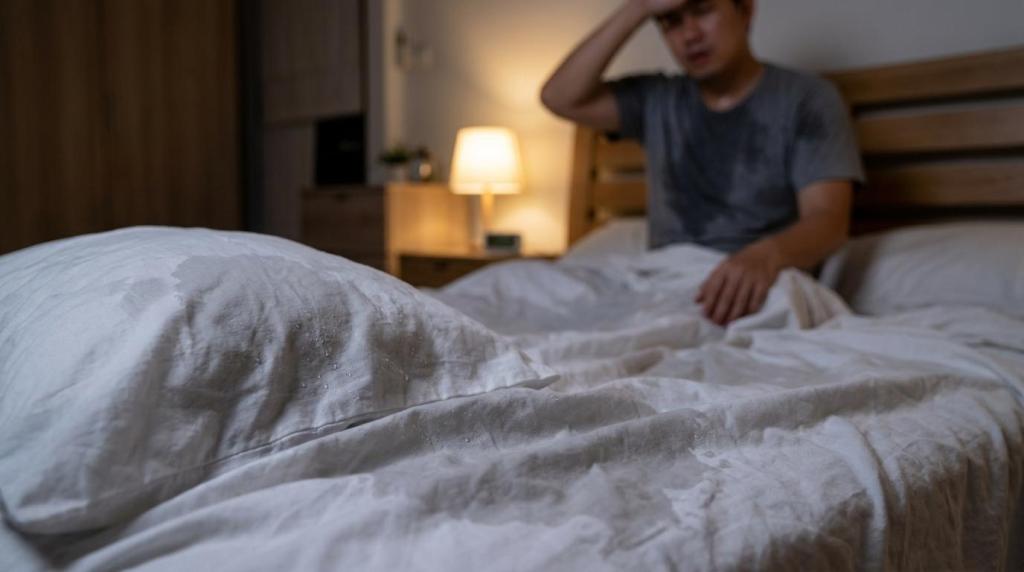
Waking up drenched, chilled, and running a fever gets your attention fast, and it should. Sometimes it points to a short lived infection that passes with rest and fluids. Sometimes it is your body waving a bigger flag, especially if the sweating is heavy enough to soak your clothes or bedding, or if other symptoms start piling up.
That difference matters.
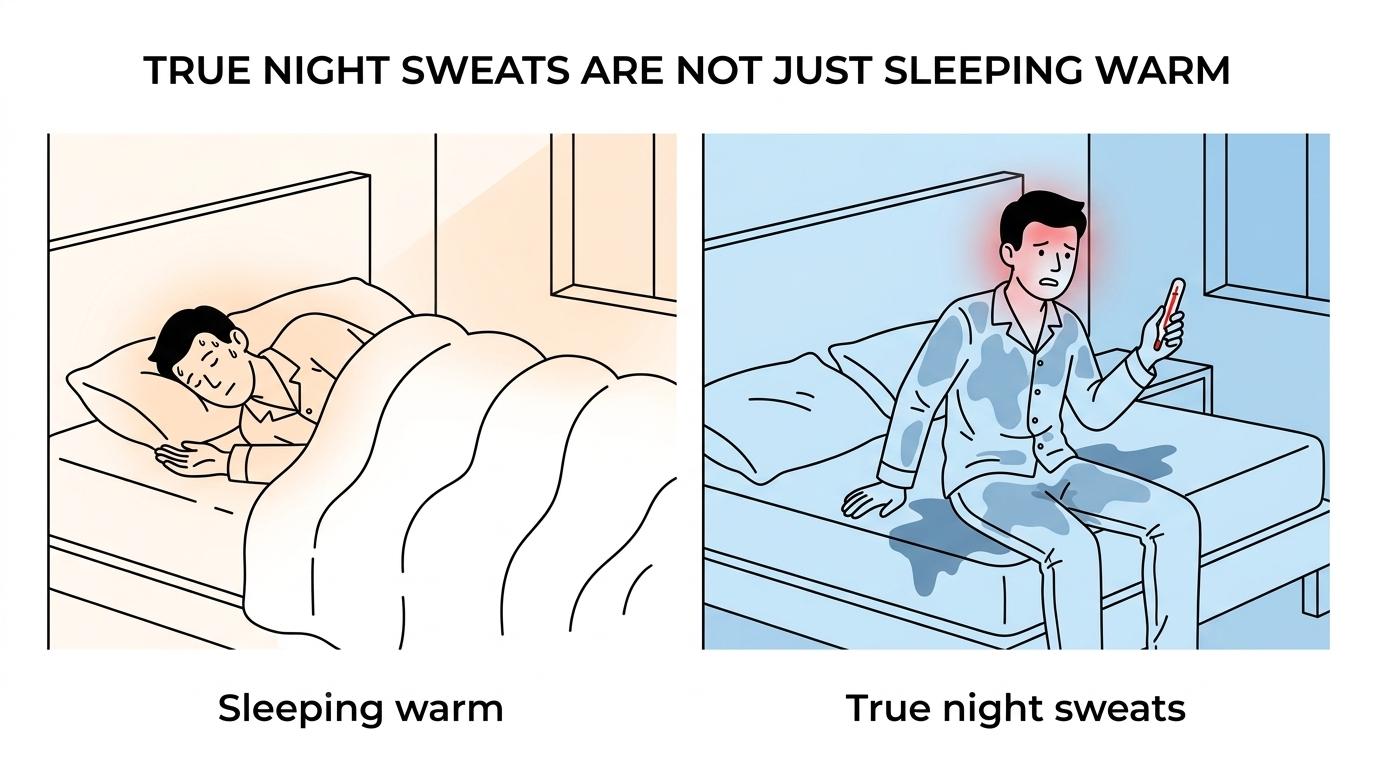
A lot of people say they had “night sweats” when they really mean they felt warm under too many blankets, or the room was stuffy, or they woke up lightly sweaty after a stressful dream. Clinically, the pattern that gets more attention is much heavier than that. It is the kind of sweating that leaves pajamas damp or soaked, sheets wet, and sleep badly broken, even though the room itself is reasonably cool.
When fever joins the picture, the question changes from “How do I stay comfortable tonight?” to “Do I need to get checked?” If you are dealing with fever night sweats, this guide will help you sort out what is common, what is concerning, and when it is time to stop guessing and call a medical professional.
Night sweats and fever often travel together because fever is part of the body’s response to infection and other illnesses. Your temperature rises, then your body tries to cool itself back down, which can lead to sweating. That can happen with a simple viral illness, the flu, COVID, mono, bacterial infections, and many other conditions.
Still, not every sweaty night counts as true night sweats.
Doctors and major medical sources tend to focus on repeated episodes of very heavy sweating during sleep, the kind that soaks sleepwear or bedding. If you wake up mildly warm after sleeping under a thick comforter in an 72°F room, that is not the same thing. If you wake up in a cool room with wet sheets and have a temperature of 100.4°F or higher, that deserves more attention.
A fever is often defined as 100.4°F, or 38°C, when taken orally. Fever by itself does not always mean something serious, but fever plus drenching night sweats is more meaningful than either symptom alone. Add weight loss, a bad cough, diarrhea, chest pain, swollen lymph nodes, or neurologic symptoms, and the need for evaluation goes up.
After you have ruled out urgent problems, comfort still matters, because poor sleep can make you feel even worse. Sleep experts commonly recommend a bedroom temperature between 60°F and 67°F for better sleep. If you are normally a hot sleeper, a Bedfan can often let you raise the room temperature by about 5°F and still cool your body enough for more restful sleep. That said, if fever is active, cooling tools are for comfort only, not treatment.
After all that, here is the simple way to tell whether your sweating is in the more concerning category:
The most common cause is infection. That is the everyday answer, and it is often the right one. Viral infections can do it. So can bacterial infections. Fever rises, chills may hit, then your body sweats as the temperature shifts. Many people notice this pattern with respiratory infections, stomach bugs, COVID, influenza, mononucleosis, and some sinus or lung infections.
Some infections are more likely to bring prolonged drenching sweats. Tuberculosis is the classic example people hear about, but it is not the only one. Endocarditis, osteomyelitis, abscesses, HIV related infections, and certain fungal infections can all cause fever plus night sweats. These are less common than a plain viral illness, but they matter more when symptoms linger, get worse, or come with weight loss or swollen glands.
Mononucleosis is one worth remembering because it can look like a stubborn “bad cold” at first. Fever, a terrible sore throat, extreme fatigue, and swollen lymph nodes in the neck, armpits, or groin can show up together. If that sounds familiar, and the fatigue feels out of proportion, it is worth bringing up with a clinician.
There are also noninfectious causes. Some inflammatory and autoimmune conditions can trigger fever and sweating. Certain cancers, especially lymphomas and leukemias, can also show up with fever, drenching night sweats, swollen lymph nodes, and unplanned weight loss. Medications can muddy the picture too. Some drugs can cause sweating, and some can cause fever. If you recently started a new medicine, tell your clinician.
Hormonal causes, including menopause and perimenopause, can absolutely cause intense night sweats. But fever is not a classic menopause symptom. So if you are chalking it all up to hormones and you are also running a fever, that is your cue not to stop there.
Sleep apnea can cause sweating at night too, and it is often missed. Yet again, fever changes the equation. Once fever enters the picture, infection or illness moves higher on the list.
Most people want a tidy list. Real life is messier, but certain categories come up often.
Respiratory infections are common. A viral upper respiratory infection, flu, COVID, pneumonia, bronchitis, or even a deep sinus infection can lead to nighttime fevers, chills, sweating, cough, body aches, and fatigue. If you have cough with chest pain or trouble breathing, do not sit on that.
Gastrointestinal infections can do it too. Fever, diarrhea, abdominal pain, nausea, and heavy sweating often arrive in clusters. If diarrhea is severe, bloody, or tied to dizziness or dehydration, you need medical advice sooner rather than later.
Then there are the “something doesn’t feel right” infections that can smolder. Urinary tract infections, kidney infections, skin infections, dental infections, and infections deeper in the body can all trigger fever and sweats, even when the source is not obvious right away. If the fever keeps returning, or you feel genuinely ill between sweats, you want a clinician to help sort it out.
This is where people can get thrown off. They think fever always means infection. Often, yes. Always, no.
Inflammatory diseases can do this. Autoimmune conditions sometimes cause low grade or recurrent fever, fatigue, body pain, and sweating at night. Certain cancers can do the same, especially when night sweats are drenching and paired with swollen lymph nodes or unplanned weight loss. That does not mean cancer is the most likely cause, just that it belongs on the list when the pattern is persistent.
Antidepressants, steroids, hormone therapies, and some other medicines can trigger sweating. Some medicines can also provoke drug fever. If your symptoms began after a prescription change, mention that timeline clearly.
The key point is simple, fever night sweats are not a diagnosis. They are a symptom pattern. The real job is figuring out what is behind it.
If you are having heavy night sweats with fever and it is not clearly a short, improving viral illness, it is smart to reach out. You do not need to panic, but you also do not need to tough it out blindly.
A good rule is to watch the whole picture, not just the temperature. Are the sweats drenching? Are they happening repeatedly? Are you losing weight without trying? Do you have a cough, diarrhea, pain in one specific area, swollen lymph nodes, or unusual fatigue that is not easing up? Those details help separate a rough couple of nights from something that deserves a workup.
These warning signs usually mean it is time to contact a doctor:
Pregnancy, older age, immune suppression, and chronic illnesses lower the bar for calling sooner. If your immune system is weakened, what looks like a mild infection on the surface can get serious faster.
Some symptoms move this out of the “schedule an appointment” category and into urgent or emergency territory. If fever is paired with trouble breathing, chest pain, a stiff neck, severe headache, confusion, altered speech, fainting, or strange behavior, you need prompt evaluation.
The same goes for fever during chemotherapy, or in someone who is significantly immunocompromised. In that setting, fever may be the only sign of infection, and it can be a medical emergency.
Do not wait it out at home if any of these are happening:
If your instincts are telling you something is off, listen to that too. A symptom checklist helps, but it is not a substitute for clinical judgment.
When you see a clinician, the details matter. “I had night sweats” is a start. “I woke up three nights in a row with soaked sheets, a temperature of 101.6°F, a cough, and swollen glands in my neck” is much more useful.
Expect questions about timing, travel, sick contacts, new medications, weight changes, appetite, cough, bowel symptoms, pain, rashes, and any immune system issues. You may be asked whether the room was cool, whether the sweating soaked bedding, and whether it has happened more than once. This is exactly why tracking symptoms for a couple of days can help.
Depending on the story, evaluation may include a physical exam, blood work, urine testing, throat testing, viral testing, a chest X ray, or other imaging. If swollen lymph nodes are present, the clinician will want to know how long they have been there and whether they are getting larger or more tender.
The goal is not to throw every test at you. It is to narrow the list quickly and safely.
Here are the details worth writing down before your appointment:
If you are not having emergency symptoms and you are waiting to be seen, aim for comfort and observation, not self diagnosis. Rest, hydrate, and keep the room comfortably cool without turning yourself into an ice box.
Sleep experts commonly recommend a bedroom temperature between 60°F and 67°F for better sleep, and that range is a good baseline when you are running hot at night too. Many hot sleepers find that a Bedfan lets them raise the room temperature by about 5°F and still feel cool enough to sleep, which can help cut air conditioning costs. But if you currently have a fever, remember the bigger point, the fan does not treat the underlying illness, it just helps with comfort.
Lightweight sleepwear helps. So do breathable sheets. If you use a bed fan, tight weave sheets tend to work best because they help direct airflow across your body and carry trapped heat away more effectively. Keep water nearby. If diarrhea or vomiting is part of the picture, hydration matters even more.
Be careful not to overbundle when chills hit. It is tempting to pile on heavy blankets, then you overheat, sweat hard, throw everything off, get chilled again, and repeat the cycle. A few lighter layers are easier to manage.
Over the counter fever reducers may help some people, if they are safe for you to take. If you have liver disease, kidney disease, stomach ulcers, are pregnant, or take blood thinners or other regular medicines, check first so you do not create a new problem while trying to feel better.
Once serious issues are ruled out, a bed fan can make a real difference for symptom comfort, poor sleep from overheating, and the misery of waking up sweaty. It is not a cure, and it should never delay care when warning signs are present. Still, for many people it is one of the simplest ways to sleep cooler.
It helps to know how these devices work. Neither Bedfan nor Bedjet cool the air. They use the cooler air already in the room and direct it into the bed microclimate, which helps carry body heat and moisture away. That matters because some buyers expect refrigerator cold air, and that is not what these systems do.
The original Bedfan came to market years before Bedjet was even thought of, the bed fan category dates back to 2003. A modern bFan or Bedfan is basically a quiet, controllable airflow system for between the sheets cooling. The average power use is about 18 watts, which is tiny compared with running central air harder all night, and normal operating sound is usually around 28 dB to 32 dB, quiet enough for many sleepers.
Timer controls are a nice touch, especially if you cool down after the first few hours of sleep and do not want airflow all night. If you share a bed and only one of you sleeps hot, two bedfans can create dual zone microclimate control at a fraction of the cost of a dual zone Bedjet setup. A single Bedjet is also more than twice the price of a single bed fan. The dual zone Bedjet setup costs over a thousand dollars, which is more than twice the price of two bedfans. A single Bedjet is also more than twice the price of a single bed fan.
That price difference matters if your main goal is practical relief, not gadget collecting.
If you want a straightforward option, the bFan from www.bedfans-usa is worth considering once you have handled any medical concerns. It is especially useful for people who overheat at night, deal with medication related sweating, or are recovering from an illness and want better comfort without cranking the AC lower and lower.
And that AC point is real. If you are normally a hot sleeper, sleeping in a 60°F to 67°F room is often recommended, but a Bedfan can let many people keep the thermostat about 5°F warmer while still cooling the body enough for better sleep. That can lower air conditioning costs, and it is one reason some people prefer a bed fan over simply turning the whole house into a refrigerator.
This section is short because the advice is simple.
If you are on chemotherapy and develop a fever, treat it like an urgent medical issue. Fever may be the only sign of infection in that setting, and the infection can turn serious quickly. Night sweats do not make it less urgent.
The same general idea applies if you take immune suppressing drugs, have had an organ transplant, live with advanced diabetes complications, or have another condition that weakens your immune response. Fever plus heavy night sweating needs faster attention.
Swollen lymph nodes add another clue. Sometimes they come with everyday infections, especially viral ones, and then shrink back down as you recover. If they are large, persistent, getting bigger, or paired with drenching sweats and unplanned weight loss, that needs a proper evaluation.
One rough night can be a virus. A repeating pattern deserves more respect.
If you keep waking up with soaking wet bedding, measurable fever, and symptoms that are not easing up, do not let “I probably just run hot” become your whole explanation. True night sweats are more than sleeping warm. Fever makes that distinction even more important.
You do not need to panic. You do need to pay attention.
If you want to read the medical guidance directly, these are solid places to start.
Copyright 2005 - present - Tompkins Research, Inc. & Kurt W. Tompkins All Rights Reserved DO NOT COPY. bFan® and the word bfan® in any format is a registered trademark of Kurt W. Tompkins the word BFAN® in any format shall not be used without written permission of the mark owner. This includes specifically Brookstone where you like to bait and switch, do not use my mark to bait customers.