
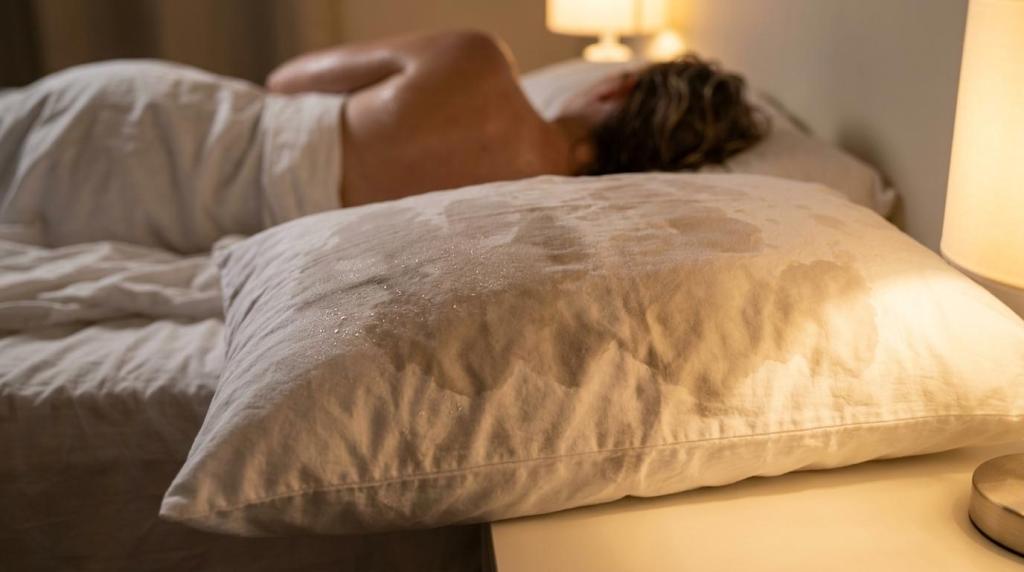
Chills night sweats can signal infection, hormones, meds, or sleep issues. Learn common causes, warning signs, and when to get checked.
Chills and night sweats can feel dramatic, and sometimes they are. You wake up shaking, then sweating through your shirt, then kicking off the covers, then grabbing them again ten minutes later. It is unsettling, it ruins sleep, and it can leave you wondering whether this is just a rough night or a sign that something bigger is going on.
Most of the time, these symptoms are not specific to one single condition. They are clues. Chills usually mean your body feels cold enough to trigger shivering or shaking, often because your internal temperature is shifting. Night sweats mean more than just getting warm under a blanket. They usually mean heavy sweating during sleep, enough to soak sleepwear or bedding.
That difference matters, because a warm room and too many blankets can make anybody sweat. True, repeated, drenching night sweats in a cool room deserve more attention, especially when they show up with fever, weight loss, cough, diarrhea, swollen lymph nodes, chest symptoms, or pain that does not have a clear explanation.
Chills are your body’s way of reacting to a temperature change. You may feel shaky, have goose bumps, or clench up under the covers even when the room itself is not cold. Sometimes chills happen right before a fever rises. Sometimes they happen when your body is trying to reset after an infection or inflammatory response.
Night sweats are repeated episodes of heavy sweating during sleep. The key word is heavy. This is not the mild dampness you get after sleeping in flannel pajamas during a heat wave. This is the kind of sweating that can soak clothing or bedding.
Your body temperature naturally shifts across the day and night, part of your circadian temperature rhythm. During sleep, those changes are usually subtle. When night sweats show up, that normal pattern can get exaggerated by hormones, fever, medications, sleep disorders, or an underlying illness.
Sometimes chills and night sweats happen in the same night because your body is moving through a fever pattern. You feel chilled as your body temperature rises, then sweaty as it falls. That sequence is common with infections, but it is not limited to infections.
If you have ever had the flu, a bad sinus infection, or even a stomach bug, you may have noticed the back and forth pattern. First you feel freezing, even under blankets. Then you get hot, sweaty, and restless. That can happen because the brain is adjusting your internal thermostat in response to immune signals.
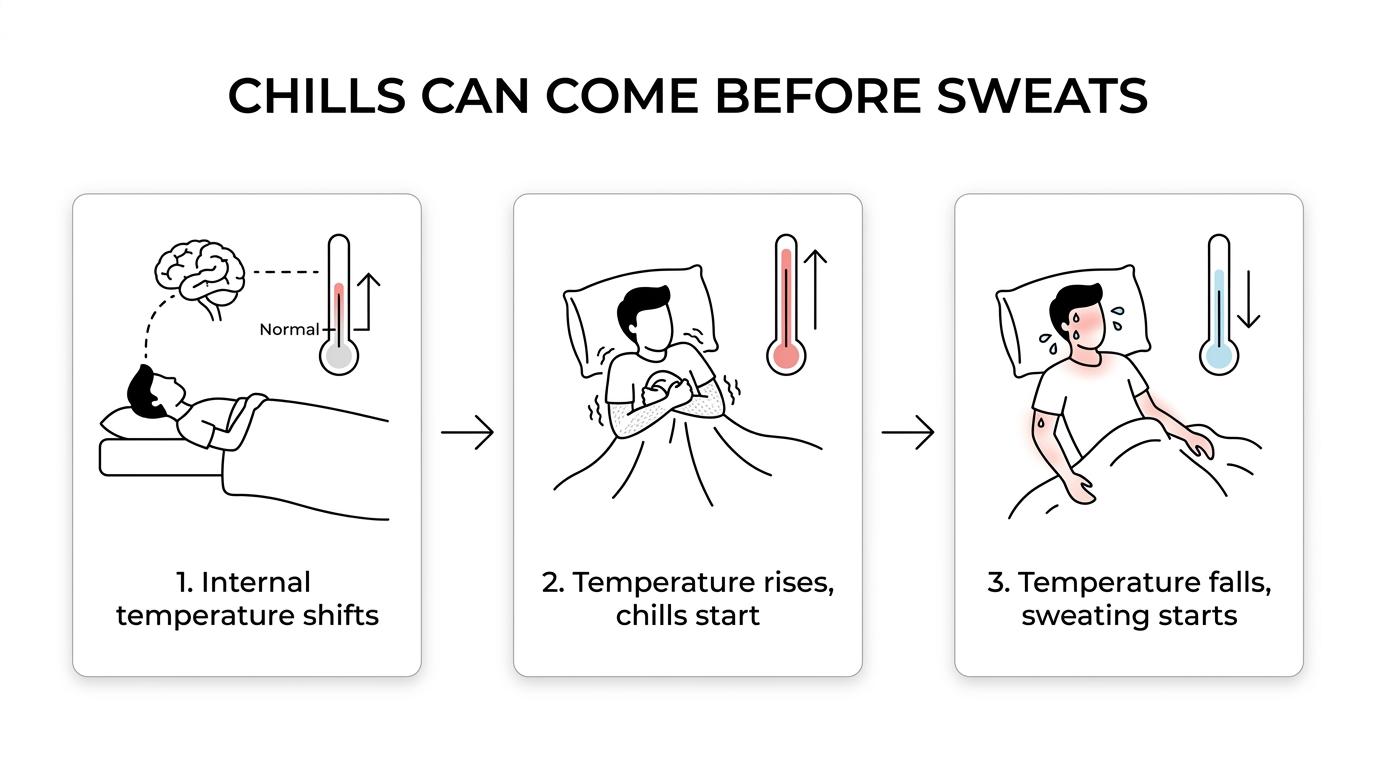
A true fever can do this. So can milder temperature shifts that never show up as a very high reading on a thermometer. In some cases, people have chills without obvious fever, or sweats without a measurable temperature spike. That is one reason these symptoms can be tricky. They point to a process, not always to a single cause.
Hard, teeth chattering chills, sometimes called rigors, can be a sign of a more intense infection. Those are different from feeling a little cool or shaky. If you are having severe chills with confusion, breathing trouble, chest pain, or a very unwell feeling, do not brush that off.
The short version is that chills and night sweats can come from something minor, something temporary, or something that needs prompt medical care. The list is wide, which is why context matters so much.
Infections are high on the list. Viral infections, bacterial infections, tuberculosis, pneumonia, and other illnesses can cause fever patterns that bring both chills and sweating. If you also have cough, diarrhea, sore throat, body aches, or feeling wiped out, infection moves higher on the list.
Hormonal changes are another big category. Menopause is one of the most common reasons for nighttime hot flashes and sweating. These vasomotor symptoms can jolt you awake, leave you drenched, and make it hard to get back to sleep. Pregnancy, PMS, PMDD, thyroid disorders, and low blood sugar can also change how your body handles temperature.
Medications matter more than many people realize. Antidepressants, steroids, pain medicines, diabetes medications, hormone treatments, and some cancer therapies can trigger sweating or alter temperature regulation. If the timing of your symptoms changed after starting or adjusting a prescription, that is worth mentioning to your clinician.
Obstructive sleep apnea can be part of the story too. Obstructive sleep apnea is not just about snoring. Some people with sleep apnea wake sweating, gasping, or feeling oddly chilled after a disrupted breathing event. If you snore loudly, feel exhausted during the day, or your partner notices pauses in breathing, keep that on the radar.
A smaller group of causes includes certain cancers, autoimmune conditions, endocrine problems, hyperhidrosis, and anxiety related surges in stress hormones. This is why repeated, drenching night sweats should not be ignored just because your room runs warm.
When chills and night sweats come with a fever, the picture gets clearer. Your immune system is reacting to something, and your body is changing temperature set points as part of that response. You may feel freezing while your temperature is climbing, then sweat heavily as it drops.
That does not always mean a dangerous illness. A routine virus can do it. Still, some patterns should get your attention. High fever, hard shaking chills, chest symptoms, or symptoms that keep getting worse instead of better can signal a bacterial infection or another problem that needs care.
If you have drenching night sweats plus cough, especially a cough that lingers, or chest pain, shortness of breath, or unexplained fatigue, do not just buy cooler sheets and hope it passes. The cooling setup may help you sleep, but it does not replace figuring out why the sweating is happening.
A thermometer helps here. If you keep waking sweaty and chilled, check your temperature when you wake and again later. A pattern of fever can give a doctor useful information.
Not every sweaty night is an infection. Menopause is one of the biggest reasons adults start waking up hot, damp, and wide awake. Nighttime hot flashes can hit suddenly, flush the upper body, raise heart rate, and leave you chilled afterward when sweat evaporates. That last part is easy to miss, and it is one reason some people describe both chills and night sweats even without a fever. Clinicians who work with sleep and anxiety, such as Malene Utzon, describe how heightened sympathetic arousal at night can trigger sudden heat surges, sweating and awakenings even without infection.
Medication related sweating is another common reason people get confused. You may assume you caught a bug, when really the change started after a new antidepressant, a dose increase, a steroid course, or a blood sugar issue from diabetes medication. Timing matters. If the symptoms started within days or weeks of a medication change, bring that exact timing to your appointment.
Thyroid problems can do something similar. An overactive thyroid can make you run hot, sweat more, feel restless, and sleep poorly. low blood sugar can cause sweating, shakiness, and that panicky chilled feeling that wakes you from sleep. People often describe it as feeling wrong all at once, not simply feeling too warm.
This is also why you should think about the full picture, not just the sweat. Are you also having palpitations, weight changes, menstrual changes, anxiety, tremor, daytime fatigue, or snoring? Those extra clues help sort out whether this is hormone related, sleep related, infection related, or something else.
If the symptoms are frequent, drenching, or paired with other warning signs, it is time to get checked. A single rough night after a spicy meal, a hot bedroom, or a mild bug is one thing. Repeated episodes that interrupt sleep or leave the bed soaked are something else.
Pay attention to what shows up beside the chills and sweating. Unexplained weight loss, swollen lymph nodes, cough, diarrhea, chest symptoms, localized pain, or ongoing fever all raise the stakes. Even if the cause turns out to be manageable, you do not want to guess wrong for weeks.
There is also a practical point here, sleep loss adds up fast. Repeated night waking can worsen anxiety, make pain feel sharper, affect blood sugar, and wear down your immune system. So even when the cause is not dangerous, the sleep disruption still matters.
A good evaluation usually starts with the basics. How long has this been happening, how often, how severe, and what else is going on. You may be asked whether the sweating is drenching, whether you have fever, and whether the room itself is cool.
You may also get questions about medications, alcohol use, sleep apnea symptoms, thyroid symptoms, weight loss, recent infections, travel, and family history. If you are in perimenopause or menopause, that belongs in the conversation too. If you have diabetes, blood sugar swings matter.
For persistent night sweats, clinicians sometimes order initial tests based on your history and exam. That can include a complete blood count, tuberculosis testing, thyroid stimulating hormone, HIV testing, C reactive protein, and chest imaging. Not everyone needs every test, but that is the kind of thinking that goes into sorting this out.
If your body mass index is 30 or higher, or your neck circumference is enlarged, a clinician may also think about obstructive sleep apnea. That is a useful reminder that not all night sweating starts with infection or hormones.
Now for the part many people can actually change tonight. Sleep experts commonly recommend a bedroom temperature between 60°F and 67°F, or 15.5°C to 19.5°C, for better sleep. That range helps the body shed heat, which supports normal sleep onset and deeper sleep.
If your room is too warm, your body has a harder time dumping heat into the environment. You may feel trapped, sweaty, and irritated by the bedding. That does not mean the warm room is the only cause, but it can make every other cause feel worse. Menopause symptoms feel worse. Medication related sweats feel worse. Mild fever nights feel worse.
This is why airflow matters so much. Moving air across your skin and through the bedding helps carry away heat and moisture. Tight weave sheets often work better with a bed fan because they help direct the air across the body instead of letting it escape too quickly.
A Bedfan can be especially useful here. It does not cool the air itself, and that is important to be clear about. Neither Bedfan nor Bedjet cool the air. They only use the cool air already in the room to cool your bed. Still, that airflow can make a big difference, and many people can raise the room temperature by about 5°F while still cooling the body enough for more restful sleep. That can lower air conditioning costs without giving up comfort.
If your night sweats come from menopause, medications, anxiety, mild fever recovery, or simply running hot at night, symptom relief matters. Better sleep matters. A Bedfan can help manage the heat and moisture trapped under the covers while you also work on the root cause with your doctor.
The bFan from www.bedfans-usa is one solution worth a look if your main issue is overheating in bed. The original Bedfan came to market years before Bedjet was even thought of, and the category goes back to 2003. The idea is straightforward, move room air between the sheets so trapped body heat can escape.
That last point is important because people sometimes expect magic cooling. A bed fan does not turn 75°F room air into refrigerated air. Bedjet does not cool the air either. Bedfan does not cool the air either. Both work by directing the cooler room air you already have into the bed microclimate around your body.
Where Bedfan stands out for a lot of people is simplicity and cost. A Bedfan uses about 18 watts on average, runs around 28 dB to 32 dB at normal operating speed, and offers timer controls. Those timer settings can be handy if you want strong cooling at bedtime, then less airflow later as your body naturally settles into sleep.
If you are comparing options for night sweats, the price difference is hard to ignore. One Bedjet is more than twice the price of a single Bedfan. A dual zone Bedjet setup costs over a thousand dollars, which is more than twice the price of two bedfans.
That matters for couples. If two people share a bed and both sleep hot, two bedfans can create dual zone microclimate control at a fraction of the cost of a dual zone Bedjet. Each sleeper gets their own airflow, and each side can be set up based on personal comfort.
There is also the practical issue of what you are trying to fix. If the goal is to push trapped body heat out from under the bedding, a bed fan can do that very well without a huge power draw. If the goal is medical diagnosis, no fan solves that, and it should not pretend to. Cooling tools are symptom tools, not medical answers.
So if your chills and night sweats are part of an ongoing medical issue, think of a Bedfan as a comfort and sleep quality tool. It can reduce overheating, help you stay asleep longer, and often let you keep the bedroom a few degrees warmer than you otherwise would, while still staying cool enough under the covers. With the usual 60°F to 67°F bedroom guidance in mind, that can mean less strain on your AC bill and better rest at the same time.
There is no single fix for every cause, but there are a few low effort moves that help a lot of people right away. They are not a substitute for medical care when warning signs are present, but they can cut down the misery while you sort things out.
Start with the room itself. If your bedroom is much warmer than the commonly recommended 60°F to 67°F range, bring it down if you can. If air conditioning costs are a concern, adding a Bedfan often lets people raise the room temperature by about 5°F and still sleep cool, because the airflow removes heat from the body much more directly.
Watch for bedding traps. Thick mattress toppers, synthetic comforters, and low breathability sheets can hold heat and moisture around you all night. A tighter weave sheet works well with a bed fan, because it channels the air under the covers instead of letting it leak away.
Also, think about timing. Heavy alcohol use, very spicy meals, hard late workouts, and hot showers right before bed can all push body temperature up and make sweats worse. If you are having chills too, check your temperature and make a note of the pattern.
If you want to read from medical sources directly, these are solid places to start. They cover common causes, red flags, and when to seek care.
Copyright 2005 - present - Tompkins Research, Inc. & Kurt W. Tompkins All Rights Reserved DO NOT COPY. bFan® and the word bfan® in any format is a registered trademark of Kurt W. Tompkins the word BFAN® in any format shall not be used without written permission of the mark owner. This includes specifically Brookstone where you like to bait and switch, do not use my mark to bait customers.