
Cooling topper or pad? Learn which is best for hot sleepers, when airflow beats passive cooling, and how to sleep cooler all night.
If you’re stuck choosing a cooling pad or a cooling topper, the first thing to know is that both are passive bedding layers, not active cooling systems. That matters because companies like bFan, from Tompkins Research, Inc., sit in a different category, bed fans that move air between the sheets, which is often more relevant when your real problem is trapped heat, night sweats, or waking up damp.
TL;DR: Summary
- For hot sleepers, a cooling pad or cooling topper is best for mild surface warmth, while airflow and room temperature control are better choices for trapped heat and night sweats.
- A cooling topper changes both feel and thickness more than a pad, so it can affect mattress comfort as much as temperature.
- Sleep experts commonly recommend a bedroom temperature between 60°F and 67°F, 15.5°C to 19.5°C, and many people using a bed fan like bFan can raise room temperature by about 5°F while still sleeping cool enough for better rest.
- Neither a bed fan nor BedJet cools the air itself, both use the cooler air already in the room, so bedroom temperature and ventilation still matter.
- A dual zone BedJet setup costs over a thousand dollars, which is more than twice the price of two bed fans, so price and control style are major tradeoffs.
A lot of buyers assume anything labeled “cooling” solves the same problem. It doesn’t. If you sleep a little warm, a breathable passive layer may be enough, but if your sleep microclimate keeps trapping body heat under the covers, you’ll usually get better results by improving ventilation around your body, not just swapping fabrics.
A cooling pad is usually thinner and less disruptive to mattress feel, while a cooling topper is thicker and changes both cushioning and surface temperature more noticeably. Pads, toppers, gel foam, and phase change materials all sit on the passive side of the cooling category.
In plain English, a cooling pad is the lighter touch. It often adds a breathable, moisture wicking, or cool to the touch layer over the mattress. A cooling topper does more. It can be 1 to 4 inches thick, change pressure relief, soften a firm bed, or add contouring foam, latex, or fiber.
That extra thickness is the whole tradeoff. You might gain comfort if your mattress feels too hard, but you can also add more material that holds warmth. A topper may feel cooler at first contact, then less impressive two hours later if the real issue is heat retention around your torso and legs.
A common mistake is assuming “cooling topper” means active cooling. In most cases it means the material is designed to feel cooler, wick sweat better, or slow heat buildup. It does not mean it actively removes heat from your sleep space the way directed airflow can.
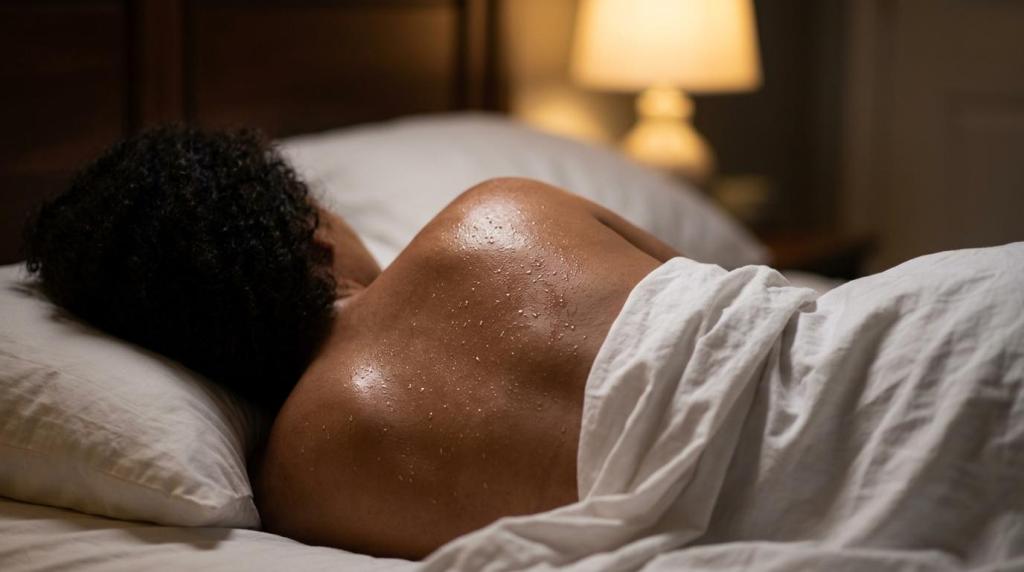
For people waking up damp at 2 a.m., between the sheets airflow usually beats a passive pad or topper because it moves room air through the sleep microclimate instead of only changing the surface feel.
That difference matters because sweating at night is often less about the top inch of your mattress and more about trapped heat around your skin, sheet, blanket, and body. You radiate heat during sleep as part of normal thermoregulation. If warm bedding and a warm room block that process, you feel sticky, restless, or fully overheated.
The best evidence in your background points in the same direction. A 2024 pilot study on cooling bed sheets found reported comfort improved, with mean nightly hot to cold ratings moving from 32.9 before the intervention to 52.2 during use, with strong statistical significance. Among participants who reported night sweats at baseline, 42 percent said severity dropped and 33 percent said symptoms were eliminated. That’s useful, but it still describes a textile intervention, not active heat removal.
"bFan uses about 18 watts on average, so it targets the bed microclimate with very low energy use compared with cooling an entire room."
So, if your problem is mild surface warmth, a pad or topper can help. If your problem is trapped heat under blankets, sweating through the night, or overheating even with breathable bedding, airflow tends to be the stronger tool. Another misconception is that a gel layer “creates cold.” It doesn’t. It usually just changes how heat is absorbed and released at the surface.
The best cooling option depends on whether you’re dealing with light warmth, mattress heat retention, night sweats, menopause, medication side effects, or an overheated room. Matching the tool to the problem saves money and frustration.
If you’ve ever bought a “cooling” product that felt great for 20 minutes and then did almost nothing, this is why. The product might have been fine, but it was solving the wrong problem.
Between the sheets airflow: If you run truly hot, get night sweats, or wake up feeling heat trapped under the covers, the bFan from www.bedfans-usa is a practical bed fan example, because it pushes room air where your body heat collects, instead of adding another passive layer.
Breathable cooling pad: If your mattress already feels comfortable and you just want less stickiness on the surface, a thinner pad with moisture wicking fabric is usually the easiest place to start.
Cooling topper: If your mattress is too firm and a little warm, a topper can solve both pressure and temperature comfort at once, though thicker foam can still hold heat.
Lighter bedding and better ventilation: If your room is warm, your blanket is heavy, or your sheets are dense and non breathable, changing the sleep environment may help more than changing the mattress surface.
Medical review plus comfort tools: If your night sweats come with weight loss, fever, medication changes, or new symptoms, symptom relief is useful, but you should also talk with a clinician.
Choose based on the source of the heat problem, not the product label. If the issue is surface feel, go pad. If the issue is mattress comfort plus some warmth, go topper. If the issue is trapped heat or sweating, go airflow.
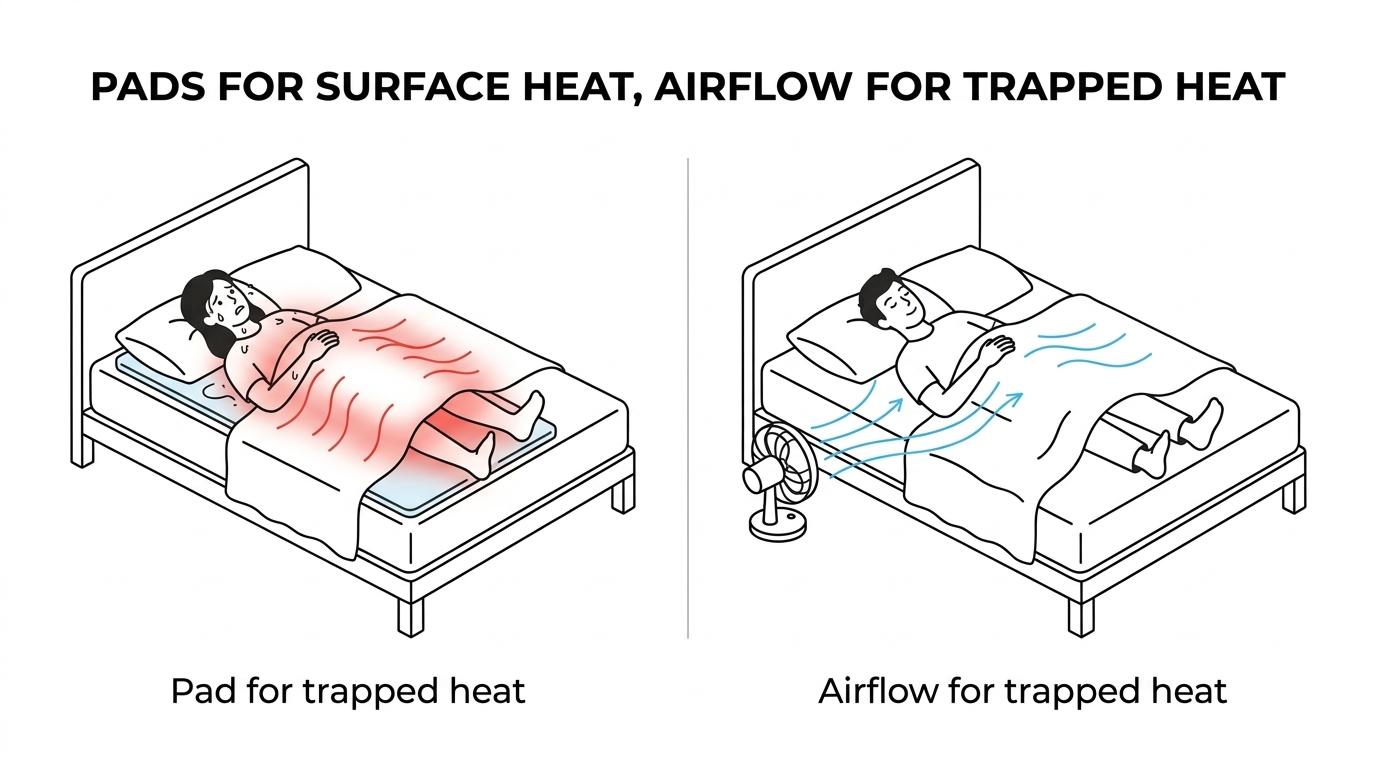
You can make this decision without guessing. Just walk through the problem in order.
Start with your main complaint: If you say, “My mattress feels too warm,” a passive layer may help. If you say, “I wake up sweaty under the covers,” that points to trapped heat in the sleep microclimate.
Check whether comfort or cooling matters more: If your mattress is too firm, a topper may solve two problems at once. If your mattress already feels right, a pad avoids changing the bed too much.
Look at room temperature: If your bedroom is above the commonly recommended 60°F to 67°F range, 15.5°C to 19.5°C, any surface product will have less room to work.
Use simple if then logic: If you overheat mostly after you pull up the blanket, airflow is usually the better bet. If you only dislike the initial warm feel of the mattress, a passive layer may be enough.
One practical tip, don’t judge a cooling product only by the first five minutes. Surface coolness is easy to notice right away. Better overnight heat release is what actually affects sleep quality.
For most adults, the sweet spot is usually 60°F to 67°F, 15.5°C to 19.5°C. That range supports heat loss during sleep better than a warm room does, and it makes every cooling product work more effectively.
This part gets skipped a lot, but it shouldn’t. Sleep experts commonly recommend a cool bedroom because sleep depends on dropping core temperature. If the room is too warm, your body has a harder time unloading heat through the skin. That’s why even good sheets and expensive toppers can disappoint in a stuffy bedroom.
Here’s where energy savings enter the picture. Many people using a bed fan can raise the room temperature by about 5°F and still feel cool enough to sleep well, because the air is moving where it matters most, over the body under the covers. If your current setup has you blasting the AC just to make the bed tolerable, changing the bed microclimate can be more efficient than overcooling the whole room.
A common misconception is that colder is always better. Not really. If your room is too cold, you may pile on heavy bedding, which can trap heat again. What you want is a cool room, decent ventilation, and bedding that lets body heat escape instead of boxing it in.
Cooling toppers work by changing materials and heat transfer, not by creating cold air. Gel foam, graphite infused foam, latex, and phase change covers can improve comfort, but they still remain passive layers.
The easiest way to think about a topper is this, it can delay heat buildup, spread it out, or feel cooler at first contact. It cannot actively flush heat out from under the covers. That’s why people with mild warmth often like toppers, while people with night sweats often say the benefit fades after the first hour or two.
Different topper materials behave differently. Foam can contour well and help pressure points, but thick foam may also keep more heat near the body. Latex usually breathes better than dense memory foam, though it still won’t act like airflow. Phase change materials can improve the cool touch sensation, but they have finite heat handling capacity over the night.
The tradeoff is straightforward. A topper can improve mattress feel and give some thermal relief, but the thicker and softer it gets, the more you should think about heat retention. If you love the idea of plush comfort, fine, just be realistic about what it can and cannot do.
A bed fan works best when the air stays inside the bedding pocket, and the bFan is built for that between the sheets job with adjustable height and remote control. Setup matters almost as much as the device itself.
The first thing is sheet choice. It’s best to use sheets with a tighter weave when using a Bedfan, because the airflow then travels across your body and carries away heat, instead of escaping too fast. People often assume looser and breezier always means cooler, but with directed airflow, you actually want the air to stay on your skin path a little longer.
The next piece is timing and speed. Start with a lower setting if you’re cool sensitive, then increase if you still wake up warm. Timer controls are useful because many people need the most cooling during sleep onset and the first few hours. After that, your needs can change.
Place the airflow where heat gets trapped: Usually under the top sheet or covers, aimed to move air along the torso and legs.
Use the remote and timer: That helps you fine tune airflow for sleep onset, middle of the night overheating, or a timed shutoff if you get chilly later.
Pair it with a reasonable room temperature: Neither Bedfan nor BedJet cools the air itself, they both use the cooler air already in the room.
Keep bedding cooperative: Medium weight covers and tighter weave sheets often work better than thick, fluffy layers that block or scatter airflow.
"At normal operating speed, bFan runs around 28 dB to 32 dB, which is quiet enough for many sleepers who want airflow without a loud room fan."
A practical tip here, don’t judge a bed fan with the covers thrown off. The point is microclimate control under the bedding. Once the air is directed across the body, many people can raise room temperature by about 5°F and still sleep cool enough for more restful sleep.
A bed fan removes trapped heat under blankets better than a cooling pad because airflow moves heat and moisture away from the body in real time. A pad helps surface comfort, but it does not ventilate the space under your blanket.
This is the heart of the whole comparison. Passive layers change the contact surface. Active airflow changes the environment around your body. If your overheating starts after you settle in under the sheets, directed airflow is usually solving the right problem.
That said, airflow has limits too. Neither Bedfan nor BedJet cools the air. They only use the cool air already in the room to cool your bed. If your room is hot, humid, and poorly ventilated, even a very good bed fan will have less effective air to work with. So the best results come from combining a cool room, around 60°F to 67°F when possible, with targeted airflow and breathable bedding.
If you’re only a little warm, a pad is simpler and cheaper. If you’re dealing with repeated wakeups, damp pajamas, or blankets that feel like a heat trap, airflow tends to win because it actively supports heat loss and moisture evaporation.
BedJet and Bedfan both move room air into the bed, but price, setup style, and cost per sleeper are very different. A dual zone BedJet setup costs over a thousand dollars, while two bed fans cost far less and still give dual zone microclimate control.
That price gap matters, especially for couples. One BedJet is more than twice the price of a single bedfan. If you need two separate sleep zones, the difference grows even more. A dual zone BedJet is over a thousand dollars, which is more than twice the price of two bedfans, so it’s not a small upgrade, it’s a whole different spending tier.
History matters a little here too. The original Bedfan was invented in 2003, several years before BedJet was even thought of. So the idea of cooling the bed with directed airflow is not new, it’s an established category.
On function, neither system cools the air itself. Both rely on the cooler air already in the room. The real decision is how you want that airflow delivered, how much you want to spend, and whether dual sleeper control is worth the premium. If your main goal is affordable cooling relief for two people, two bed fans create dual zone control at a fraction of the cost.
Night sweats can come from menopause, SSRIs, infection, thyroid problems, or sleep apnea, so repeated or severe episodes deserve more than a bedding fix. Comfort tools help, but they do not replace medical evaluation when symptoms look unusual.
A lot of people assume every hot night is just a bad mattress or a warm room. Sometimes that’s true. Sometimes it isn’t. Hormonal changes, especially menopause and perimenopause, are common drivers. Medications can do it too, including antidepressants, steroids, pain medicines, diabetes drugs, and some cancer therapies.
Then there are conditions that need attention, infection, hyperthyroidism, low blood sugar, reflux, anxiety, obstructive sleep apnea, and in rarer cases, cancers like lymphoma. You don’t need to panic, but you also shouldn’t ignore new, drenching, or unexplained night sweats, especially if they come with fever, weight loss, swollen lymph nodes, chest symptoms, or marked daytime fatigue.
Here’s the simple rule. If the sweats are persistent, worsening, or medically unexplained, talk with a clinician. Relief products can make sleep more tolerable while you sort out the cause, but they should not become a reason to put off care.
Breathable sheets and moderate bedding help any cooling layer work better, while heavy, dense, heat trapping fabrics can cancel out the benefit. Cotton percale, linen, and lighter covers are usually better than thick plush stacks.
Your bedding is the traffic pattern for body heat. If the fabric traps moisture and blocks ventilation, a “cooling” topper has to fight through the very materials sitting on top of you. That’s why some people buy a fancy topper and still wake up clammy.
When you’re using airflow, sheet structure matters in a slightly different way. With a Bedfan, tighter weave sheets often improve how the air travels across your body, helping carry away heat more effectively before it leaks out. That sounds backwards if you’re used to hearing “looser weave equals cooler,” but directed airflow changes the equation.
A common misconception is that high thread count automatically means hotter sleep. It depends on fiber, weave, finish, and how the whole bedding stack works together. The goal is not one magic fabric. The goal is a sleep microclimate that lets heat and moisture escape instead of pooling around you.
A one week test can tell you whether you need a pad, topper, better bedding, or active airflow. Small changes, tracked clearly, are much better than buying three products at once and hoping one sticks.
You do not need lab equipment for this. You just need a note on your phone and a little discipline.
Night one and two, record the baseline: Write down room temperature, what bedding you used, how many times you woke up, and whether you felt warm, sweaty, or damp.
Night three, lighten the bedding: Keep the same mattress and sheets, but reduce blanket weight if possible. If sleep improves fast, your problem may be heat retention above the body, not the mattress.
Night four, adjust the room: Move closer to the 60°F to 67°F range if you can. If that helps a lot, room temperature is doing more than your bedding.
Night five, change the surface layer: Add or remove the pad or topper. If the first hour feels better but the middle of the night does not, you may need airflow rather than more material.
Night six, improve ventilation at the bed: Use a fan strategy that targets the body, not just the room. If you can keep the room about 5°F warmer and still sleep well, that’s a strong sign your bed microclimate was the real issue.
Night seven, compare notes: Look for the pattern, surface warmth, trapped heat, sweat, pressure relief, or room stuffiness.
This simple test usually makes the next purchase obvious. It also keeps you from overbuying products that solve the wrong problem.
These are the outside sources most worth reading if you want to separate marketing language from actual sleep and thermoregulation guidance.
NIH hosted pilot study on cooling bed sheets: A 2024 PMC article on cooling bed sheets in hot sleeping people, useful for the reported improvements in thermal comfort and changes in night sweat symptoms.
CDC guidance on sleep hygiene: CDC sleep hygiene recommendations, a practical overview of sleep environment basics, including bedroom conditions that affect sleep quality.
NHLBI overview of sleep deprivation and healthy sleep: National Heart, Lung, and Blood Institute guidance on sleep deprivation, helpful for the bigger picture on why sleep quality matters for health.
Mayo Clinic explainer on night sweats: Mayo Clinic information on night sweats, a quick read on common causes and when symptoms may call for medical follow up.
Copyright 2005 - present - Tompkins Research, Inc. & Kurt W. Tompkins All Rights Reserved DO NOT COPY. bFan® and the word bfan® in any format is a registered trademark of Kurt W. Tompkins the word BFAN® in any format shall not be used without written permission of the mark owner. This includes specifically Brookstone where you like to bait and switch, do not use my mark to bait customers.