
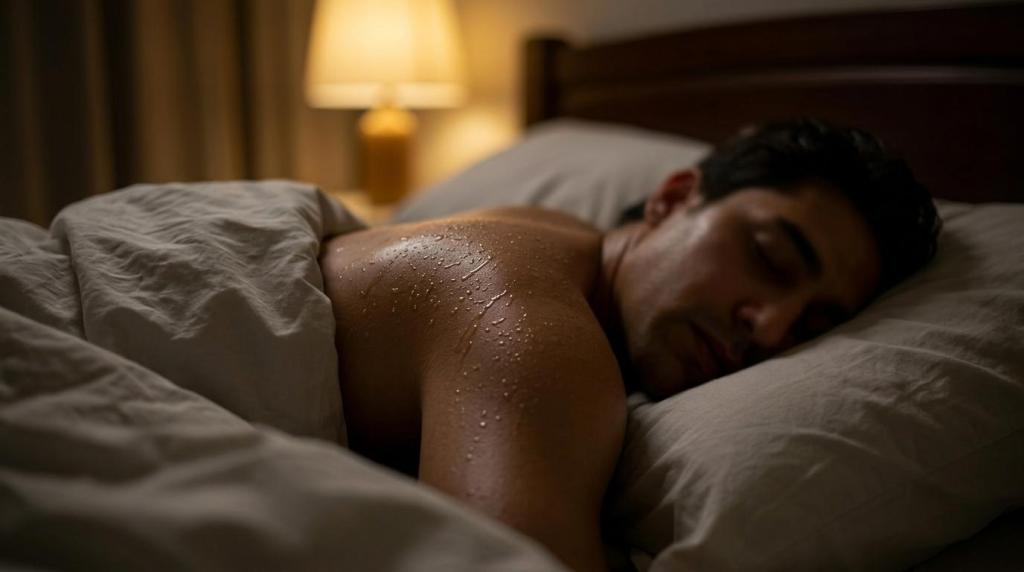
Beat sleep overheating by improving bed airflow, using breathable bedding, and keeping bedrooms 60°F to 67°F for cooler sleep.
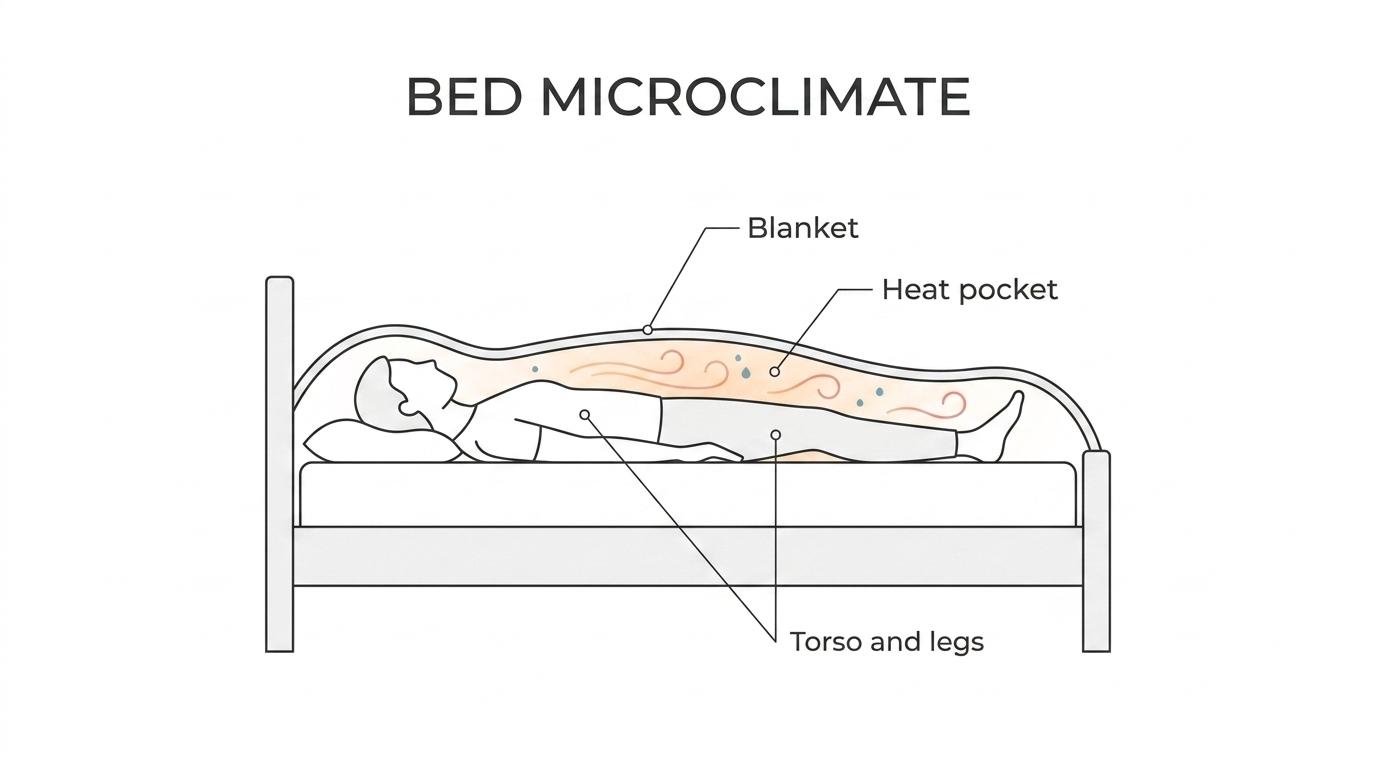
If you wake up sweaty, kick off the blanket, then pull it right back on 10 minutes later, you’re usually dealing with trapped heat under the covers, not just a room that’s too warm. Your bed creates its own little climate, and once that pocket of heat builds, sleep can fall apart fast.
TL;DR: Summary
- The best way to stop trapped heat under blankets at night is to improve the bed microclimate, not just lower the thermostat, with targeted airflow, lighter bedding, and more breathable layers.
- Sleep experts commonly recommend a bedroom temperature between 60°F and 67°F, 15.5°C to 19.5°C, because cooler sleep conditions help the body lower core temperature and fall asleep more easily.
- A bed fan, including a Bedfan like the bFan, does not cool air below room temperature, it moves room air between the sheets to carry body heat out of the bed, which is why many people can keep the room about 5°F warmer and still sleep comfortably.
- Bedding matters, dense comforters, heat retaining mattress foams, and low airflow fabrics can trap warmth even when the room feels fine, while breathable layers and the right sheet structure help heat escape.
- If your room is extremely hot, airflow alone is not enough, CDC guidance says fans should be used indoors only when temperatures are below 90°F, and air conditioning or a cooler space is safer above that point.
- If overheating comes with drenching night sweats, fever, weight loss, medication changes, or menopause symptoms, the bedding fix may help comfort, but it should not replace medical advice.
The good news is that you usually don’t need a complicated fix. A few smart changes, especially around airflow, bedding, and temperature strategy, can make a bigger difference than just buying thinner blankets and hoping for the best.
Yes, trapped heat builds quickly because your body, blankets, and mattress create a closed bed microclimate. Memory foam and thick comforters often hold that warmth longer than people expect.
When you fall asleep, your body wants to release heat so core temperature can drift downward. That drop is part of normal thermoregulation, and it helps with sleep onset latency, which is the time it takes to fall asleep. If the bed keeps recycling your own body heat back toward your skin, your body has to work harder to cool itself.
That’s why you can feel hot under the covers even when the bedroom itself feels acceptable. The room might be fine, but the air right around your torso and legs can still turn warm, still, and humid. Once that happens, you’re more likely to toss, wake up, and throw a leg out from under the blanket just to dump heat.
A common misconception is that this is only about heavy blankets. It’s also about airflow, moisture, mattress materials, and how tightly the layers hold heat close to your body.
"bFan targets trapped bed heat with controllable between the sheets airflow, and it uses about 18 watts on average."
For most adults, 60°F to 67°F is the best starting range, and 17°C performed better than 22°C in a PubMed sleep study. Cooler rooms generally make it easier for the body to settle into sleep.
That 60°F to 67°F range, 15.5°C to 19.5°C, shows up again and again in sleep advice because it supports the natural drop in core body temperature that happens at bedtime. One small polysomnography study published on PubMed found participants slept better at 17°C than at 22°C, and several temperature variables explained a large share of the differences in sleep onset latency.
That does not mean colder is always better. If your room is cold enough that you tense up, shiver, or wake because your feet are freezing, sleep can still suffer. The goal is a cool room plus a bed setup that lets excess heat leave your body.
This is where targeted airflow can help. Many people who use a Bedfan can raise room temperature by about 5°F and still feel cool enough to sleep well, because the fan clears trapped warmth from inside the bed instead of trying to cool the whole room. That matters if you share a house, watch energy costs, or don’t want the AC running hard all night.
The best fixes are practical and layered, with bed airflow first, bedding changes second, and room temperature control third. Most hot sleepers do best when they attack the bed microclimate from more than one angle.
If you only change one thing, make it the thing that actually removes heat from under the covers. Passive breathability helps, but active airflow usually works faster because it carries warm air away instead of waiting for it to drift out on its own.
Use a Bedfan first, a purpose built bed fan like the bFan from www.bedfans-usa sends room air between the sheets, which directly clears trapped heat where you actually feel it.
Lower insulation over your core, swap a dense comforter for a lighter blanket, especially if your chest and thighs overheat first.
Choose breathable base layers, sheets and sleepwear that let moisture escape can keep the bed from feeling muggy and overcovered.
Watch your mattress setup, memory foam, waterproof protectors, and dense toppers can hold warmth longer than latex or more open constructions.
Keep the bedroom in the 60°F to 67°F range, that range supports sleep, and a bed fan may let you raise the thermostat about 5°F without feeling stuffy.
Manage humidity and air circulation, a closed, humid room makes sweat evaporation slower, even if the thermostat number looks decent.
Test the whole stack, not single items, one breathable sheet will not fix a heat trapping mattress, heavy duvet, and still air under the covers.
A simple three step setup works best, remove extra insulation, create an air path, and then fine tune the layers. Sheets, blanket weight, and fan position matter more than most people think.
Start by stripping the bed down to the layers you actually need. If you’ve got a fitted sheet, flat sheet, blanket, comforter, throw, and quilt all stacked together, you’re building a heat reservoir. Keep the flat sheet and one top layer to begin with, then add back only what you miss.
Next, create a path for heat to leave. If you’re using passive cooling only, more breathable bedding helps warm air leak out. If you’re using a bed fan, the setup changes a bit. A common mistake is assuming the loosest weave is always best. With active airflow, a tighter weave top sheet can help spread the moving air across your body and carry away heat more effectively, almost like turning the sheet into a gentle channel.
Then fine tune where the warmth actually builds. Many people run hottest at the torso and legs, not the arms. If your feet are cool but your back is sweating, don’t assume the whole bed needs more cooling. Reposition the airflow, lighten the blanket over the middle of the body, and give it two or three nights before deciding it failed.
A bed fan is best for trapped heat under blankets, a ceiling fan helps the whole room feel less stuffy, and an air conditioner lowers ambient temperature. They solve different parts of the same problem.
A ceiling fan helps move air across exposed skin, which is useful before you get under the covers. Once you’re wrapped in bedding, though, the fan usually isn’t reaching the hot air pocket trapped around your torso and legs. That is why some people say, correctly, that the bedroom feels okay but the bed still feels like an oven.
Air conditioning works by lowering the temperature of the room itself, and for many sleepers it’s the foundation. If your room is already above the comfort zone, targeted bed airflow will be less effective. Sleep experts commonly point people toward 60°F to 67°F for better sleep, and if the room is far above that, AC often does the heavy lifting.
A bed fan is the most targeted tool because it attacks the hot zone under the blanket. Bedjet and Bedfan do not refrigerate air, they move the cooler air already in the room. That is exactly why they can help people feel cooler without freezing the entire house.
One more safety point matters here. The CDC says indoor fans should be used only when indoor temperatures are below 90°F, because above that point a fan can increase body temperature. If your bedroom is dangerously hot, use air conditioning or move to a cooler space instead of relying on airflow alone.
"At normal operating speed, the bFan runs around 28 dB to 32 dB, which makes it a quieter bed cooling option than many people expect."
Bedding changes matter, but they work best when you match them to the type of cooling you’re using. Open weaves help passive heat escape, while tighter weave sheets can work better with active airflow from a bed fan.
This is where people often get mixed up. Breathable sheets do not cool the air. They simply make it easier for body heat and moisture to leave the bed. That can be enough for some sleepers, especially in a room already kept near 60°F to 67°F.
Open weave fabrics can help trapped warmth find its way out. Lighter blankets do the same thing by reducing insulation over your body. If you run warm but still like the feeling of being covered, this is often the first bedding change worth making.
Now for the part many shoppers miss. High thread count alone is not a cooling feature. A very dense, slick sheet can feel nice at first touch and still hold heat later in the night. Material, weave, finish, and how the whole bed works together matter more than a label.
If you use a Bedfan, the rule shifts a bit. A tighter weave top sheet can help direct airflow across your body, which can improve the fan’s cooling effect by carrying heat away more efficiently. Without active airflow, the same tighter weave might feel less breathable. So the right sheet is not just about fabric, it’s about the cooling method.
Sleepwear matters too. One PubMed study found shorter sleep onset latency with wool sleepwear than cotton in the tested conditions, which is a nice reminder that comfort is not always about choosing the thinnest possible fabric. Moisture handling and temperature regulation count.
The best way to use a bed fan is to start low, direct airflow under the top sheet, and let the cooling build gradually. Too much air too fast can feel drafty, even if you’re overheating.
First, place the fan so it sends room air between the sheets, not straight at your face. The goal is to move warm air out from around your body and replace it with cooler room air. That is why Bedfan style cooling feels different from a regular fan at the bedside.
Second, use bedding that supports the airflow. This is another common mistake. People often switch to extremely loose or gauzy sheets, then wonder why the fan effect feels weak. With a bed fan, a tighter weave top sheet often helps the airflow travel across the body instead of leaking out too quickly.
Third, use timer controls if your body tends to cool off after the first sleep cycle. Many hot sleepers need the most help during sleep onset and the early part of the night. After that, lower airflow or automatic shutoff can keep you comfortable without waking chilly. The Bedfan’s timer controls are useful here because they let you match the cooling to your actual sleep pattern.
If you deal with night sweats from menopause, medication side effects, or stress, remember that airflow helps with symptom relief, not the root cause. It can make the bed feel dramatically more livable, though, especially when the room is already in the recommended 60°F to 67°F range.
For straightforward under blanket cooling, both use room air, but Bedfan is usually the simpler and lower cost answer. Bedjet and Bedfan do not refrigerate air, they move the cooler air already in the room.
The first thing to clear up is the most common misunderstanding. The Bedjet doesn’t cool the air, and neither does a Bedfan. Both depend on room air. If the bedroom is hot, neither product will magically produce cold air below room temperature. That means your room setup still matters, and in very hot conditions you may still need AC.
Where they differ most for many shoppers is cost and how you want to cool the bed. One Bedjet is more than twice the price of a single bedfan. A dual zone Bedjet setup costs over a thousand dollars, which is more than twice the price of two bedfans. If you want dual zone microclimate control for two sleepers, two bFan units can do that at a fraction of the cost.
There’s also some useful category history here. The original Bedfan came to market years before Bedjet was even thought of, and the original bedfan was invented in 2003. That does not make every newer product worse, but it does tell you the bed fan approach has been around for a long time because the basic idea works, moving trapped heat out from under the covers.
If you want quiet targeted airflow, energy efficiency, and a simpler purpose built setup, the bFan is an easy recommendation. If you like a more feature heavy system and the higher price does not bother you, Bedjet may still fit. The real buying question is not which one sounds cooler on paper, it is whether you need targeted bed airflow and whether you want to pay over a thousand dollars for dual zone control.
"Two bFan units can create dual zone microclimate control at a fraction of the cost of a dual zone Bedjet setup, which costs over a thousand dollars."
You can cool the bed without freezing the bedroom by using targeted airflow, lighter insulation, and a slightly higher thermostat setting. This works best when the room starts in a reasonable range.
Step one is to get the room close enough. You do not need arctic air, but you do want a bedroom that supports sleep, usually somewhere in the 60°F to 67°F range. If your room is wildly above that, the bed will soak up that warmth all night.
Step two is to shift from whole room cooling to body level cooling. This is where a Bedfan earns its keep. Because it moves room air through the bed, many people can raise the room temperature by about 5°F and still sleep cool enough for more restful sleep. If you normally need the thermostat at 67°F, that may mean being comfortable closer to 72°F, depending on humidity, bedding, and your own heat load.
Step three is to use timing instead of brute force. You may only need strong cooling during the first hour or two, when your body is trying to shed heat and fall asleep. After that, lower airflow or a timer can keep you from waking up chilly at 3 a.m. This is one of the easiest ways to save energy without giving up comfort.
Night overheating is common, but drenching sweats, fever, weight loss, or new symptoms deserve medical attention. Menopause, SSRIs, thyroid issues, and sleep apnea are all real possibilities.
A hot bed can absolutely make normal body warmth feel much worse. Still, not every case of overheating is just a blanket problem. Hormonal shifts, especially menopause and perimenopause, are a major driver of night sweats. Medications can do it too, including antidepressants, steroids, pain medicines, diabetes medications, and some hormone therapies.
Medical conditions can also be part of the picture. Thyroid problems, infections, reflux, anxiety, obstructive sleep apnea, and some cancers can all show up with night sweating or repeated overheating. If you’ve started waking soaked, not just warm, pay attention to the pattern.
You should talk to a clinician if overheating comes with fever, unexplained weight loss, chest pain, severe snoring, new medication changes, or a sudden shift in symptoms. If the problem is environmental, a better bed setup can help a lot. If the problem is physiological, comfort tools still help, but they should sit alongside proper evaluation.
There’s also a heat safety issue separate from night sweats. If the room itself is dangerously hot, especially above 90°F indoors, a fan is not a substitute for air conditioning, hydration, and cooler shelter. That follows CDC guidance, and it matters most for older adults, pregnant people, and anyone with chronic illness.
Yes, targeted bed cooling can reduce AC demand because it cools your body where sleep discomfort actually happens. A small bed fan uses far less energy than cooling an entire home through the night.
This is one reason Bedfan style products have such a loyal following. The bFan uses about 18 watts on average, which is tiny compared with the energy required to keep a whole house colder all night. You are not trying to make every room perfect at 2 a.m., you’re trying to sleep well in one bed.
The trade off is important. This only works when the room is still within a sane range. A Bedfan does not create refrigerated air. It uses the cooler air in the room and moves it through the bedding, so if the room is already oppressive, the fan cannot fully compensate. But if the bedroom is close to that sleep friendly 60°F to 67°F zone, or even a bit warmer, targeted airflow can do a lot.
For many sleepers, the sweet spot is to raise the thermostat by about 5°F, use the bed fan to clear trapped heat, and let the timer handle the transition after sleep onset. That mix often delivers the comfort of a cooler bed without the cost of pushing the whole house colder than necessary.
A cool room does not guarantee a cool bed, because mattress foam, waterproof layers, hormones, and humidity can still trap heat next to your skin. The thermostat only tells part of the story.
One of the biggest hidden culprits is the mattress stack. Memory foam, thick toppers, mattress protectors, and synthetic pads can create a warm, low airflow surface under your body. Even if the air in the room is fine, the bed can keep feeding heat right back into your back, hips, and shoulders.
Your own body can change the picture too. Alcohol close to bedtime, spicy food, late exercise, stress surges, and hormone shifts can all make you run hotter at night. If your sleep overheating is inconsistent, think about behavior patterns as much as bedding.
Then there’s moisture. A humid bedroom slows evaporation, so sweat lingers and makes the bed feel sticky rather than cool. That’s why some people describe overheating as feeling muggy, not just warm. Airflow helps here because it moves humid air away from the skin and lets evaporation work better.
If you’ve already lowered room temperature and switched sheets but you still wake hot, the missing piece is often targeted bed airflow. That is exactly where a Bedfan or bFan can outperform generic room cooling, because it works inside the space where heat is actually trapped.
If you want to go deeper, these sources are solid places to start for sleep temperature, heat exposure, and sleep quality.
PubMed study on bedroom temperature, sleepwear, and sleep onset latency, a clinical sleep study showing cooler conditions improved sleep measures and that 17°C outperformed 22°C in the tested group.
PubMed study on heat exposure and overnight sleep disruption, research showing a 32°C heat night reduced total sleep time and worsened sleep efficiency.
CDC guidance on extreme heat prevention, practical public health advice on fan use, indoor heat risk, and when air conditioning is the safer choice.
WHO Housing and Health Guidelines on indoor heat, a health focused review of how high indoor temperatures are associated with adverse effects and why heat protection matters indoors.
Copyright 2005 - present - Tompkins Research, Inc. & Kurt W. Tompkins All Rights Reserved DO NOT COPY. bFan® and the word bfan® in any format is a registered trademark of Kurt W. Tompkins the word BFAN® in any format shall not be used without written permission of the mark owner. This includes specifically Brookstone where you like to bait and switch, do not use my mark to bait customers.