
Menopause symptoms like hot flashes, night sweats, and insomnia can wreck sleep. Learn what triggers them and ways to stay cooler.
If menopause has turned your nights into a cycle of kicking off covers, waking up sweaty, then lying there wide awake, you’re not imagining it. Sleep often gets hit hard during perimenopause and menopause, and the symptom cluster that shows up most often is pretty clear, hot flashes and night sweats.
Those symptoms are often called vasomotor symptoms, which is just the medical label for sudden heat surges, flushing, sweating, and the body’s odd shifts in temperature control. They’re common, they can be intense, and they’re strongly tied to poor sleep and repeated nighttime awakenings.
But heat is only part of the story.
A lot of people in menopause also deal with insomnia, restless sleep, irritability, anxiety, mood changes, snoring, or waking up at the wrong time and not being able to settle back down. That mix can leave you feeling wrung out by morning, even if you technically spent enough hours in bed.
When people ask which menopause symptoms are most likely to wreck sleep, the short answer is this, start with hot flashes and night sweats.
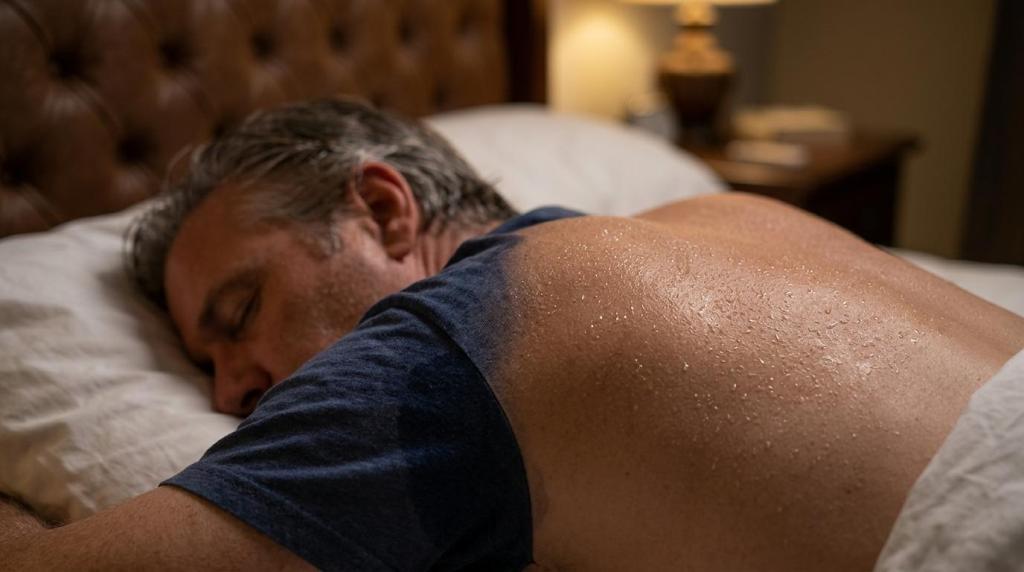
Hot flashes can happen in the daytime, but when they show up at night they often feel worse. You wake up hot, damp, frustrated, then the room feels wrong, the sheets feel wrong, and your brain is suddenly very awake. The National Institute on Aging points to hot flashes and night sweats as some of the most common menopause symptoms, and night sweats are well known for interrupting sleep.
Insomnia often piles on after that first wakeup. Maybe you cool off in ten minutes, maybe faster, but your mind may stay switched on. That’s why menopause sleep trouble often looks like a chain reaction rather than one single symptom.
There’s another twist too. Some sleep experts note that waking during the night may sometimes come first, then the hot flash follows. In plain English, sleep disruption and hot flashes can feed each other. That’s one reason this phase can feel so stubborn.
After a few nights like that, the pattern usually looks familiar:
Your body temperature normally drops a bit as you get ready for sleep. Menopause can make that process less stable, which means a smaller shift in body temperature can feel like a much bigger event. A warm room, heavy bedding, alcohol at night, stress, or even waking for no obvious reason can all make the system feel touchier.
That’s why nighttime heat can feel out of proportion. It’s not just that you got warm. It’s that your body was already trying to stay in a narrow comfort zone for sleep, and now it’s struggling to do that.
Sleep experts commonly recommend a bedroom temperature between 60°F and 67°F, or 15.5°C to 19.5°C, for better sleep. That range tends to support the body’s normal cooling pattern. If your room is much warmer, and your bedding traps heat, menopause symptoms often feel sharper and more frequent.
This is where airflow matters more than many people realize. You do not always need arctic air. You need trapped body heat moved away from your skin, especially once you’re under sheets and blankets. With a Bedfan, many people can raise the room temperature by about 5°F and still cool the body enough for more restful sleep, which can also help trim air conditioning costs.
That matters if you sleep beside someone who hates a freezing bedroom.
Menopause sleep problems are not limited to sweating.
Plenty of people in perimenopause say the heat gets the blame, but the real problem is that they’re waking for multiple reasons. Hormone shifts, especially changes in estrogen and progesterone, can affect sleep quality more broadly. You might notice lighter sleep, more frequent awakenings, or the strange feeling of being tired all day but wired at bedtime.
Insomnia is one of the big ones. Sometimes it starts with trouble falling asleep. Other times it shows up as early morning waking, the classic 2 a.m. or 3 a.m. wide awake stare at the ceiling. When that happens often, even mild hot flashes can feel much worse because you never get enough settled sleep.
Mood symptoms can also creep into the picture. Irritability, anxious thoughts, a shorter fuse, a sense that your body is “on” when you want it to be off, all of that can turn a brief wakeup into a long one. Menopause can also bring forgetfulness and trouble concentrating during the day, which many people first notice after nights of broken sleep.
Then there are symptoms that may not look like menopause at first glance. Recent reviews on perimenopausal sleep disturbances point out that sleep related breathing disorders and movement problems can also become more common. If you’re snoring heavily, waking with a dry mouth, gasping, or feeling exhausted no matter how long you’re in bed, it may be time to think beyond night sweats alone.
A few patterns are worth paying attention to:
Not every rough night is caused by a hot flash.
If you wake up drenched but also have fever, unexplained weight loss, chest symptoms, severe palpitations, or new medical concerns, don’t assume it’s “just menopause.” Night sweats can have other causes, including medication effects, infections, thyroid issues, blood sugar swings, reflux, anxiety, or sleep apnea.
This matters because midlife is also when a lot of people start new medications, deal with more stress, or notice changes in breathing during sleep. A solid plan looks at the whole picture, not just the thermostat.
You don’t need to panic, but you do want to be alert to patterns. If the sleep problem feels out of step with what you expected, it’s worth bringing up with a clinician.
Now let’s get practical, because this is where many people finally get relief.
If you run hot at night, the first thing to know is that neither a Bedfan nor a Bedjet actually cools the air. They both use the air already in your room. If the room is warm, the air they move will be warm too. That’s why the recommended sleep range of 60°F to 67°F still matters. These products can help a lot, but they work best when the room air is already reasonably cool.
The second thing is that moving air between the sheets can feel very different from cooling the whole room. During menopause night sweats, you’re often fighting the heat trapped around your body under bedding. A bed fan targets that little pocket of heat directly, which is why the relief can feel faster than just lowering the house thermostat another degree.
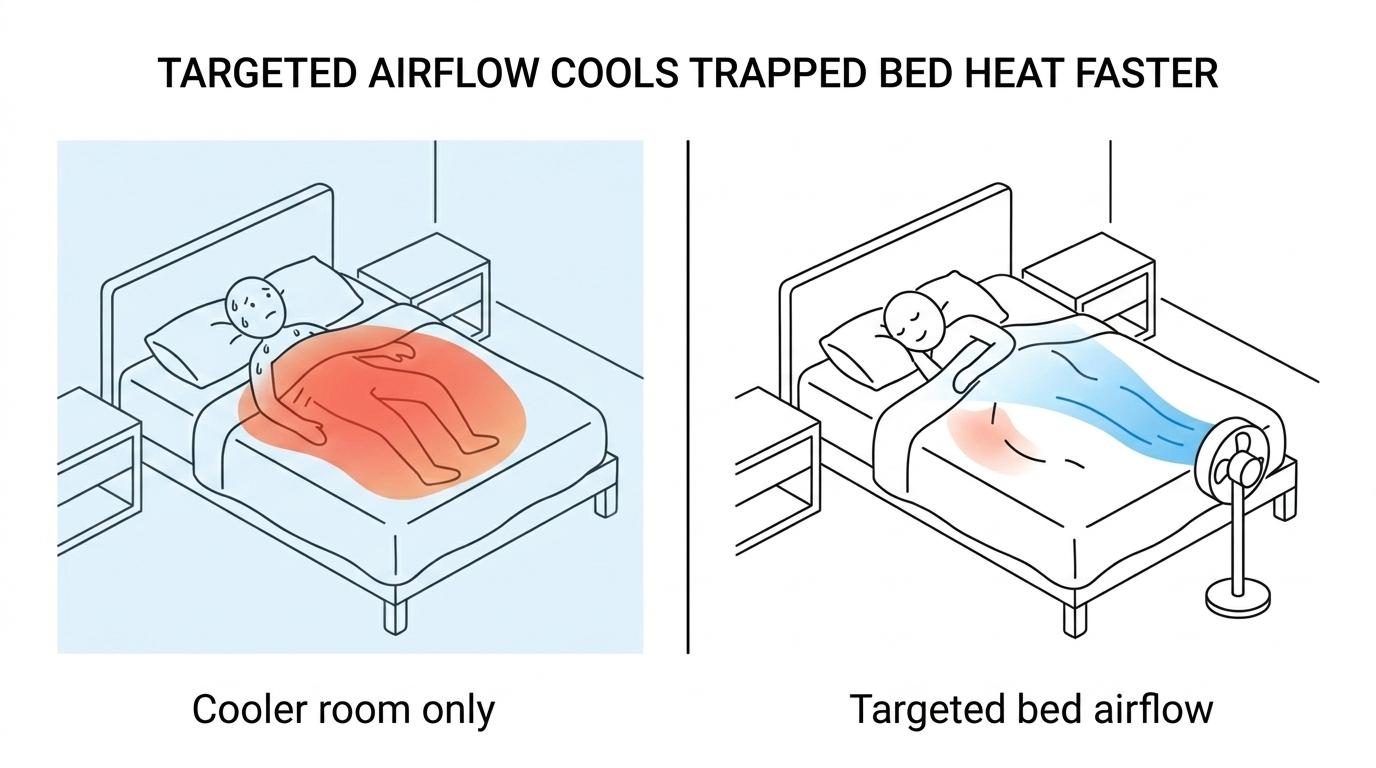
The bFan, often called a Bedfan or bed fan, is built around that idea. It sends a controlled stream of air between your sheets to carry heat away from your body. The Bedfan also offers timer controls, which is handy if you want stronger airflow while falling asleep and less later in the night. At normal operating speed, its sound level is about 28db to 32db, which is quiet enough for many bedrooms, and it uses only about 18 watts on average, so the energy draw is small.
If you want the most from a bed fan, sheet choice matters. A tight weave sheet works best because it helps the airflow spread across your body and carry away heat instead of just escaping too quickly. Moisture wicking sleepwear can help some people, though many find that less clothing plus targeted airflow feels better.
A few basics make the biggest difference:
People dealing with menopause night sweats often compare these two product types, so let’s keep it straightforward.
The original Bedfan came to market several years before Bedjet was even thought of. The original bedfan was invented in 2003, which makes this a long standing category, not some passing sleep gadget trend. The reason the category stuck around is simple, moving trapped heat out from under the covers solves a real problem.
On function, both products rely on room air, not refrigerated air. So again, neither Bedfan nor Bedjet cools the air itself. They only use the cooler air in the room to cool your bed.
On price, the gap is hard to ignore. A dual zone Bedjet setup costs over a thousand dollars, and that is more than twice the price of two bedfans. A single Bedjet is also more than twice the price of a single bedfan. If you and your partner need different sleep temperatures, the bed fan approach can be the simpler value play.
And yes, two bedfans can create dual zone microclimate control, one for each side of the bed, at a fraction of the cost of that over one thousand dollar dual zone Bedjet setup. That matters if one person is deep into night sweats and the other sleeps comfortably with lighter airflow, or none at all.
If you want a practical option, the bFan from www.bedfans-usa is worth a look. It’s especially useful for hot sleepers who want between the sheets airflow, lower energy use, quiet operation, and timer control without spending premium money on a dual system.
Cooling products can help, but they work best when the rest of the sleep setup isn’t fighting against them.
Start with bedding. If your comforter is heavy, your mattress holds heat, or your sleepwear traps sweat, even good airflow has more work to do. Lighter layers are easier to adjust in the middle of the night. Moisture wicking sleepwear can help some people, though many find that less clothing plus targeted airflow feels better.
Watch the evening routine too. Alcohol, spicy meals, and a very warm shower close to bedtime can make nighttime heat more likely for some people. Stress can do the same, even if the effect shows up later as a 3 a.m. wakeup and racing thoughts.
A simple pre sleep routine is still worth it. Keep the room dark, quiet, and cool. Aim for that 60°F to 67°F bedroom range if you can. If air conditioning costs are a concern, a Bedfan can let many people bump the thermostat up by about 5°F and still stay comfortable enough for more restful sleep.
There’s no magic in any one trick. It’s the stack that helps, cooler room, better airflow, lighter bedding, fewer triggers, and a plan for getting back to sleep without fully waking yourself up.
The middle of the night is not the time for a complicated routine.
If you wake up hot, try to cool your body first and think second. Tossing off all the covers for fifteen minutes may cool you down fast, but it can also leave you chilled and wide awake afterward. Gentle airflow is often easier to manage because it cools without the hard rebound.
Try keeping a glass of water nearby, wear layers you can adjust quickly, and avoid checking the time if that tends to make you anxious. If your mind starts spinning, keep the response boring and repetitive, slow breathing, minimal light, minimal phone use, let the body settle.
If this happens regularly, the goal is not just surviving one hot flash. The goal is reducing how often a hot flash turns into a full hour of wakefulness.
If your nights are consistently rough for weeks or months, it’s reasonable to ask for help.
Talk with a clinician if hot flashes, night sweats, or insomnia are hitting your quality of life, your mood, your work, or your safety, especially if you feel sleepy while driving or can’t function well during the day. There are evidence based options for menopause symptoms, and the right plan depends on your health history and what the main trigger seems to be.
Bring details. A short sleep log can help more than people think. Note when you go to bed, when you wake up, whether you were hot or sweaty, what the room felt like, whether you snored, and whether you had alcohol, caffeine, or late exercise. That kind of pattern spotting can separate vasomotor symptoms from insomnia, sleep apnea, medication effects, or a mix of several things.
If loud snoring, gasping, choking awakenings, or morning headaches are part of the picture, ask about sleep apnea screening. If night sweats are new, severe, or come with other symptoms that don’t fit menopause well, ask about other possible causes too. Relief usually comes faster when the problem is named clearly.
A lot of people assume the only answer is cranking the AC lower and lower. Sometimes that works, but it can get expensive fast, and it may still leave your bed feeling stuffy under the covers.
That’s why body focused airflow makes so much sense for menopause night sweats. You’re not trying to turn the whole house into a refrigerator. You’re trying to move trapped heat away from the place where you actually feel it.
For many hot sleepers, that’s the sweet spot. Keep the room in the general sleep friendly range, 60°F to 67°F, use directed airflow under the sheets, and let your body stay cool enough that it doesn’t keep sounding the alarm. With a Bedfan, many people can raise the room temperature by around 5°F and still get the cooling relief they need for deeper sleep, which can mean lower air conditioning costs over time.
If you’ve been waking up sweaty night after night, that kind of targeted approach can feel a lot more realistic than trying to brute force the whole house temperature down.
If you want to read the medical side and sleep side from solid sources, these are good places to start:
Copyright 2005 - present - Tompkins Research, Inc. & Kurt W. Tompkins All Rights Reserved DO NOT COPY. bFan® and the word bfan® in any format is a registered trademark of Kurt W. Tompkins the word BFAN® in any format shall not be used without written permission of the mark owner. This includes specifically Brookstone where you like to bait and switch, do not use my mark to bait customers.