
Learn how hormone imbalance symptoms like night sweats, hot flashes, and heat intolerance may signal menopause, thyroid issues, or more.
If you wake up sweaty, tangled in damp sheets, and wide awake at 2 a.m., it’s easy to jump straight to hormones. Sometimes that hunch is right. Hormone imbalance can absolutely show up as night sweats and even acne, especially during perimenopause, menopause, and thyroid hormone problems. Still, night sweats are a symptom, not a diagnosis. They’re also considered nonspecific, which means they can happen with several different conditions, from medication side effects to infections to sleep apnea.
That’s why it helps to look at the full picture. Are you having hot flashes, mood changes, irregular periods, weight changes, palpitations, or trouble tolerating heat? Are your night sweats truly drenching, or are you just too warm under heavy bedding in a stuffy room? Those details matter, and they can point you in very different directions.
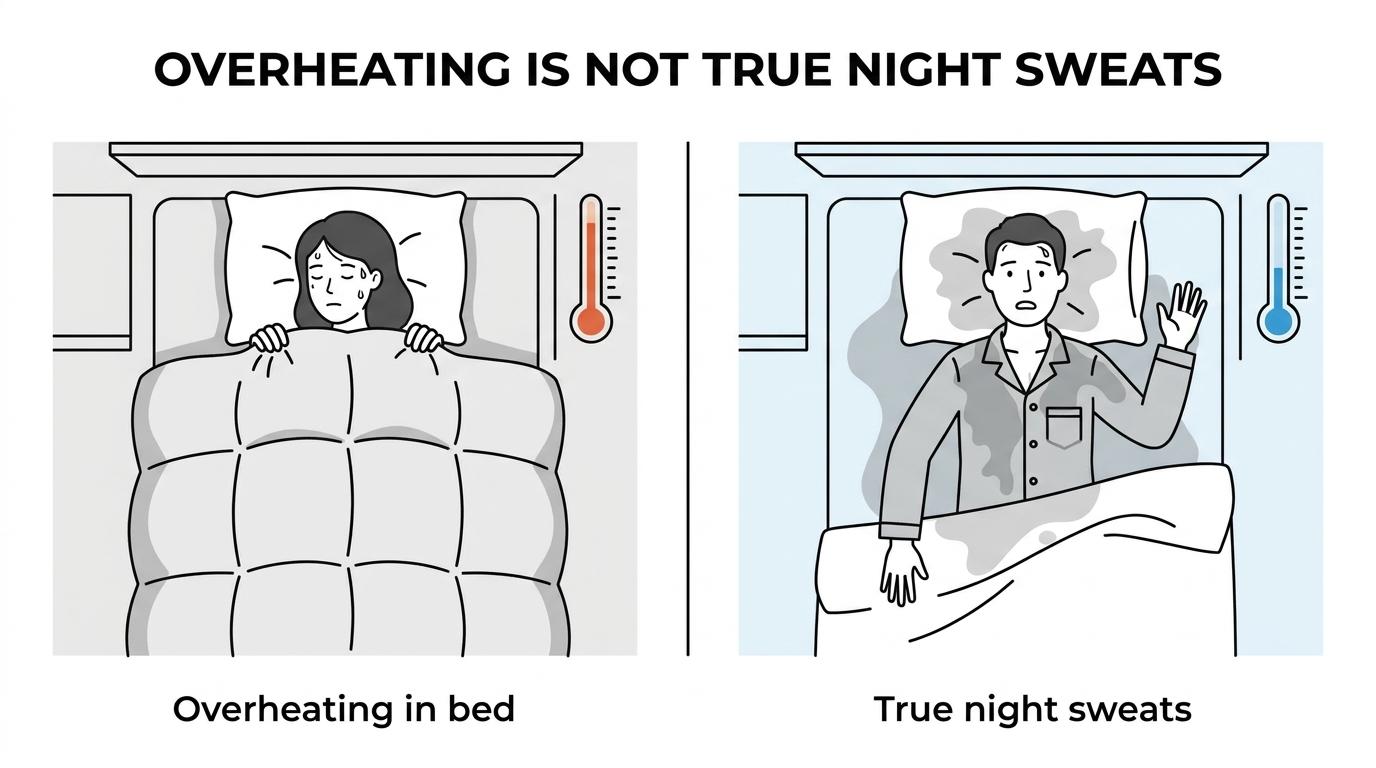
A lot of people use the phrase night sweats for any sweating that happens in bed. Clinically, the term usually means repeated episodes of heavy sweating during sleep, enough to soak your night clothes or sheets, even when the room is reasonably cool. That’s different from getting overheated because your comforter is too thick or your bedroom is stuffy.
This distinction matters because a hot room is a comfort problem, while drenching sweats can be a medical clue. If you’re sleeping in an 80°F bedroom under heavy blankets, your body may simply be reacting to the environment. If your room is cool and you’re still waking up soaked, that deserves more attention.
Sleep experts commonly recommend a bedroom temperature between 60°F and 67°F, 15.5°C to 19.5°C, for better sleep. That range helps your body drop core temperature, which is one of the signals that supports sleep onset and steadier sleep through the night. If your room is already in that range and you’re still waking up drenched, hormones are one possible reason, but not the only one.
Night sweats can be tied to hormones imbalance, but persistent or drenching episodes should not be brushed off.
Hormonal imbalance occurs when there is too much or too little of a hormone in the bloodstream, affecting the endocrine system, and it can contribute to infertility, among other health issues. Because of their essential role in the body, even small hormonal imbalances can cause significant side effects throughout the body. Issues such as irregular menstrual cycles, menstruation-related problems, unexpected weight gain or loss, intense fatigue, changes in mood, and conditions like PCOS are often linked to hormonal imbalances, further highlighting the critical role of hormonal balance in preventing night sweats alongside other conditions.
Hormone shifts rarely come alone, and conditions like hypothyroidism can also play a role. If hormones are part of the story for women, you’ll often notice other patterns at the same time. That’s especially true with estrogen changes in perimenopause and menopause, or with excess thyroid hormone in hyperthyroidism.
When people talk about hormone imbalance symptoms, they’re usually describing a cluster of changes that affect temperature, sleep, mood, metabolism, and cycles, often linked to pregnancy or other hormonal fluctuations. A few of the common symptoms include the following.
A few symptoms give stronger clues about the type of hormone problem involved.
That’s why symptom timing is useful, especially in cases of hormonal imbalance. If the sweats started around the time your periods changed, hormones may be the lead suspect. If they started after a medication change, that may be the better clue. If you also have fever, cough, diarrhea, or unplanned weight loss, alongside the development of night sweats, a different workup is needed.
For many women, this is the most common hormone related reason for night sweats. During perimenopause, estrogen levels do not simply fall in a straight line. They swing up and down. Those swings can affect the body’s thermostat and trigger vasomotor symptoms, the medical term that includes hot flashes and night sweats.
Perimenopause often starts in the mid 40s, though it can start earlier or later, and can be a time of significant personal growth. Menopause is reached when a person has gone 12 months without a menstrual period, and the average age is about 51 in the United States. The transition can stretch over several years, which is why people often feel confused. Symptoms can come and go, then hit hard for a few weeks, then settle down again.
Night sweats during this stage can be surprisingly disruptive even when the sweating itself does not last long. You heat up, you throw off the covers, your heart may race a bit, you cool down, then you’re awake and annoyed. Repeat that a few times a week and your sleep quality takes a real hit. Poor sleep then feeds back into irritability, brain fog, cravings, and fatigue the next day.
If this sounds familiar, you’re not imagining it. Hormone changes can affect sleep from several angles at once. Temperature swings are one part. Mood changes, stress, and lighter sleep also get mixed in. That’s why menopause care often looks at the whole sleep picture, not just the sweat itself.
Hormone therapy can help some people, and non hormone treatments may help too, depending on your health history and symptoms. The main point is this, if your night sweats line up with perimenopause symptoms, it’s worth bringing up directly with a clinician instead of just suffering through it.
Menopause gets most of the attention for women, but thyroid hormone matters too. When the thyroid is overactive, called hyperthyroidism, or underactive, known as hypothyroidism, common symptoms include the body feeling like it’s running too hot or too cold. People often sweat more, feel uncomfortable in warm rooms, lose weight without trying, feel jittery, and notice a fast or pounding heartbeat.
This is one reason the phrase hormonal imbalance symptoms can be too broad on its own, as it masks the growth in understanding different hormone systems. Very different hormone systems, such as the endocrine system, can produce very different patterns. Estrogen swings, along with changes in menstruation or conditions like PCOS, may cause vasomotor symptoms and cycle changes. Too much thyroid hormone tends to speed things up across the board, metabolism, heart rate, bowel habits, and heat sensitivity.
Hormonal imbalance, especially during pregnancy, can exacerbate symptoms such as night sweats by disrupting the body's natural temperature regulation processes. When hormones are out of balance, you might find that your body's response to room temperature dramatically shifts, making it hard to maintain consistent comfort during sleep. Awareness and management of hormonal changes can be crucial in addressing persistent night sweats and improving overall sleep quality.
Night sweats from hyperthyroidism can show up because the body has trouble handling normal warmth. You may feel too hot under bedding that used to feel fine. You may sweat during the day too, not just at night. If you’ve been telling yourself you’re just a “hot sleeper,” but you’ve also become shaky, restless, and heat intolerant, it makes sense to ask about thyroid testing and the possibility of a hormonal imbalance.
This is the part many people miss. Night sweats can be hormone related, and infertility issues can also arise, but they can also come from many non hormone causes. Some are fairly common. Some are more serious. That’s why persistent drenching sweats deserve real attention.
A few examples include infections, medication side effects, anxiety, obstructive sleep apnea, low blood sugar, reflux, tumors, and certain cancers. That does not mean every sweaty night is a red flag. It means the symptom is broad enough that context matters.
Even everyday factors can muddy the picture. Alcohol close to bedtime can raise body temperature and disrupt sleep. Spicy meals can do it too. Heavy bedding, foam mattresses that hold heat, poor airflow, and warm indoor temperatures can all make mild sweating feel much worse.
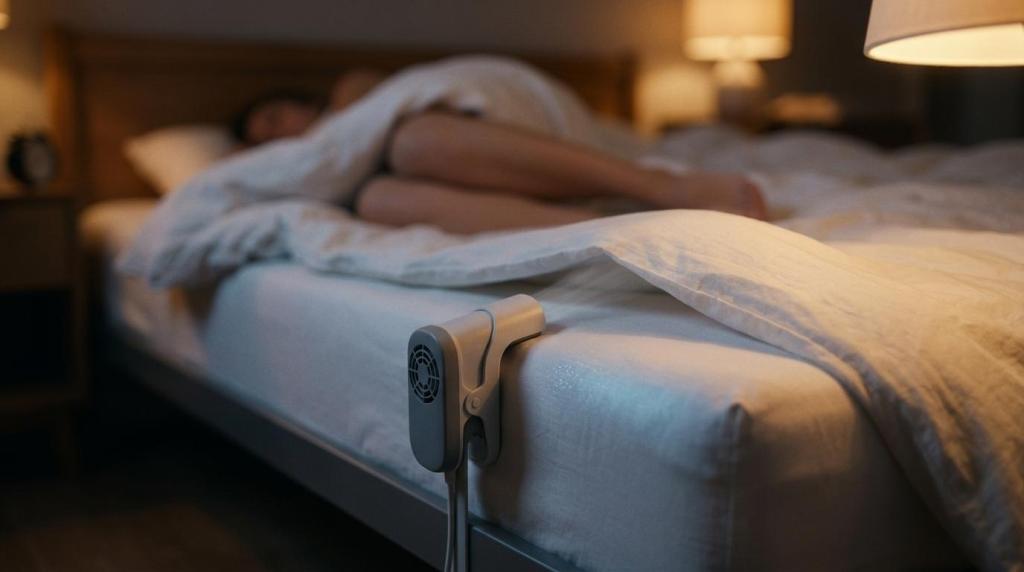
If you tend to overheat but do not have a medical condition behind it, your sleep setup matters more than you might think. Again, sleep experts commonly recommend keeping the bedroom between 60°F and 67°F, 15.5°C to 19.5°C. Yet many people dislike turning the whole house down that far, especially because of air conditioning costs. That’s where targeted cooling can help. A bed fan moves room air under the sheets and across your body, which can cool you enough that many people can raise the room temperature by about 5°F and still sleep more comfortably.
Here’s the plain English version, if your night sweats are drenching, frequent, or paired with other symptoms, get checked. This is not about panic. It’s about not guessing when the symptom could mean several things.
A room that is too hot can make you sweat. That’s real, but it’s different from waking up in soaked sheets in a cool room. If the sweating is new, persistent, or clearly heavy, you want a medical review, especially if you can’t explain it with bedding, temperature, or a recent hot flash pattern you already know well.
Watch for these combinations.
You’re not being dramatic by bringing it up. Night sweats are common, but they are still worth sorting out when they keep interrupting your sleep.
Your body is built to cool down as you prepare for sleep, and maintaining hormonal balance is essential for this process. If that cooling process gets interrupted, either by hormone shifts or by heat trapped in the bed, you’re more likely to wake up. Many people think they have insomnia when the bigger issue is temperature.
That’s why a sweaty night leaves you feeling so lousy the next day. The problem is not just that you sweated. It’s that you were pulled out of deeper sleep, sometimes over and over again. A single hot flash can wake you. A heat holding mattress can keep you awake. Damp sheets can make it hard to settle back down.
This is also where room cooling and body cooling are not exactly the same thing. Lowering the thermostat helps, but it cools the whole room. Sometimes you really just need better airflow at the bed level, right where heat gets trapped between your body, pajamas, sheets, and blankets.
If you deal with overheating, night sweats, or menopause related hot flashes, you do not always need to blast the whole house with colder air. A lot of people sleep better when the bedroom stays in the 60°F to 67°F range, 15.5°C to 19.5°C, but that can get expensive, especially in warm climates or larger homes.
A bed fan works by sending the cooler air already in the room under the top sheet or covers. That moving air helps carry away trapped body heat and moisture. It is worth being clear about one point, neither a Bedfan nor a Bedjet actually cools the air. They only use the cool air already in the room and direct it where it matters most, into your bed microclimate.
That simple difference matters because a lot of buyers assume these products are mini air conditioners, which has spurred the development of various misconceptions about their functionality. They are not. They are airflow systems. If your room is already very hot, airflow can only do so much. If your room is reasonably cool, even just moderately cool, a bed fan can make a big difference.
Many people find they can raise the room temperature by about 5°F and still feel cool enough to sleep well when using a Bedfan. That can lower air conditioning use while still helping with rest. Since the Bedfan uses only about 18 watts on average, it is tiny compared with the power draw of central AC.
The details of the bedding matter too. A Tight weave sheets usually help with airflow travel across your body and carry away heat instead of just spilling out the sides. If your blankets are very loose and puffy, or your top layer leaks air too easily, the cooling effect can be weaker.
If you’ve been comparing options, you’ve probably seen Bedfan and Bedjet come up again and again. Both aim to improve your bed climate by moving room air. Both can help hot sleepers. Neither one cools the air itself.
Where people often get stuck is price and setup.
The original Bedfan came to market in 2003, several years before Bedjet was even thought of, marking the early growth of this category. That matters because the category did not begin with newer brands. The bed fan concept has been around for a long time, and it exists because trapped body heat in bedding is a very real sleep problem.
A single Bedjet is more than twice the price of a single bedfan. If you want separate cooling on each side of the bed, the dual zone Bedjet setup runs over a thousand dollars. That is more than twice the price of two bedfans. Two bed fans can give a couple dual zone microclimate control at a fraction of that cost, since each person controls their own side.
Here’s where the practical differences stand out.
If you want a simple bed fan recommendation, the bFan from Bedfans USA is one option many hot sleepers look at because it focuses on quiet, controllable airflow between the sheets instead of trying to cool the whole room. That setup can be especially useful if you share a bed with someone who does not want the thermostat lowered as much as you do.
A bed fan is not magic, and a few setup choices can make a real difference. If you’ve tried one and felt underwhelmed, the issue is often the bedding or room conditions, not the basic idea.
Start with the room itself. If the bedroom is already extremely warm, airflow alone may not be enough. Give the fan cooler room air to work with. You do not have to turn your house into a refrigerator, but keeping the room near the commonly recommended 60°F to 67°F range gives you a better base. From there, many people can nudge the thermostat about 5°F warmer than they used to and still stay comfortable because the air is moving across the body.
Then look at the bed layers. Tight weave sheets usually help. Heavy foam toppers, dense comforters, and heat trapping mattress materials can work against you. Breathable pajamas help too, or no pajamas if that is more comfortable for you.
A few simple moves can improve results.
This is one of those cases where small adjustments matter. If your sleep is being wrecked by overheating, you do not need a perfect setup on night one. You just need a better one.
Sometimes people focus on the sweating and miss the pattern around it, which can be influenced by the presence of tumors. If you’re trying to decide whether you may be dealing with a hormone issue or hormonal imbalance, ask yourself what else changed around the same time. Are your menstrual cycles different, lighter, heavier, farther apart, or gone? Have you become newly heat intolerant? Is your heart racing? Did your weight change without a clear reason? Do you feel keyed up, shaky, or more anxious than usual?
These clues are not enough to diagnose anything by themselves, but they can help you know what conversation to have, especially if you suspect a hormonal imbalance may be involved. Menopause related night sweats often travel with hot flashes and cycle shifts. Thyroid hormone excess often shows up with sweating plus weight loss, nervousness, and rapid heartbeat. Medication related sweating often starts after something was added or changed.
If you’re a man having night sweats, hormones can still be part of the picture, but the same rule applies, look at the full symptom cluster. Low testosterone, thyroid issues, medication side effects, infections, anxiety, alcohol, and sleep apnea can all show up at night.
Hormonal imbalance, caused by issues with hormones, can often be a significant contributor to infertility, night sweats, and sleep problems. This can occur due to various conditions such as menopause, thyroid disorders, or adrenal fatigue, all of which can affect the body's temperature regulation. Addressing the underlying hormonal imbalance can greatly improve sleep quality and reduce the frequency of night sweats.
A lot of people show up and say, “I’m sweating at night,” then freeze because they are not sure what details matter. A few specifics can make the visit much more useful.
Tell the clinician how often it happens, whether the sweats are drenching, whether the room is cool, whether your bedding gets soaked, and whether you also have fever, weight loss, cough, diarrhea, or a racing heart. Mention changes in periods, hot flashes, thyroid history, alcohol use, new supplements, and any medication changes.
Also say what you have already tried. If you sleep in a cool room, wear light clothing, and still wake up drenched, that tells a different story than occasional sweating in a hot room with a thick comforter. Those are very different problems, and your doctor will sort them differently.
All links have been checked and are currently working, leading to authoritative and up-to-date resources on hormone imbalance symptoms in women.
Copyright 2005 - present - Tompkins Research, Inc. & Kurt W. Tompkins All Rights Reserved DO NOT COPY. bFan® and the word bfan® in any format is a registered trademark of Kurt W. Tompkins the word BFAN® in any format shall not be used without written permission of the mark owner. This includes specifically Brookstone where you like to bait and switch, do not use my mark to bait customers.