
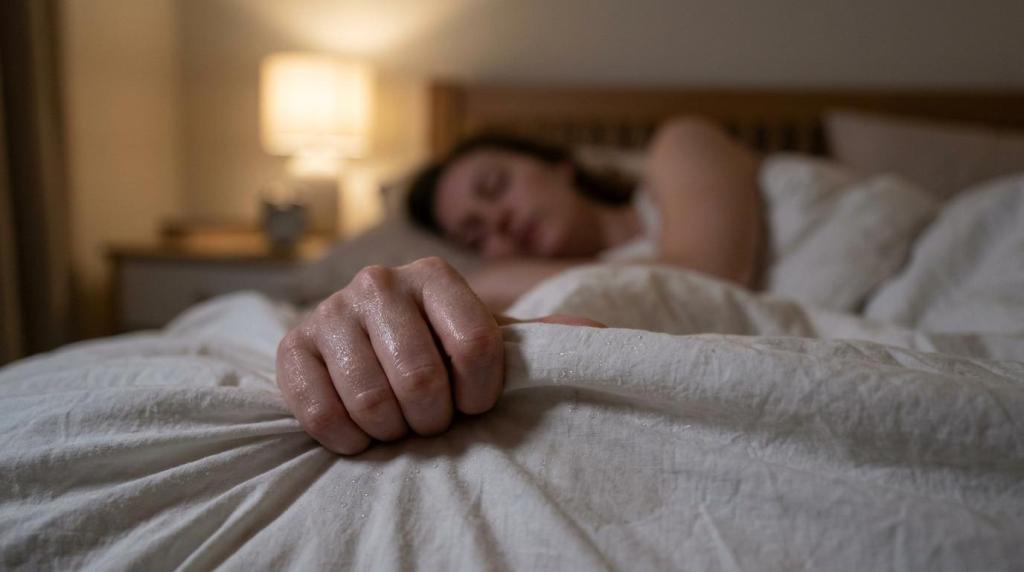
Learn how hormone imbalance symptoms like night sweats, hot flashes, and racing heart can disrupt sleep at night.
If you keep waking up sweaty, flushed, wired, or weirdly alert at 2 a.m., it’s easy to blame the mattress, the weather, or stress. Sometimes that’s true. Sometimes it isn’t.
Hormones can throw your whole sleep system off balance. They can make you feel too hot, raise your heart rate, trigger night sweats, shift your mood, and make it hard to fall back asleep once you wake up. That pattern shows up a lot in perimenopause and menopause, and it can also happen with thyroid problems, pregnancy, the postpartum period, and even around your cycle.
The tricky part is that people often describe the problem as “I’m suddenly a hot sleeper,” when what’s really happening is a hormone related change in how the body regulates temperature, stress signals, and sleep timing. Once you see the pattern, the next step gets a lot clearer.
Hormones affect temperature control, metabolism, heart rate, mood, and your sleep wake rhythm. That means a hormone shift doesn’t always show up as one obvious symptom. It often shows up as a cluster, and the sleep problem is the thing you notice first.
A person may go to bed feeling fine, then wake up flushed, damp, restless, and fully awake. Or they may feel hot all evening, toss for an hour, then sleep lightly and wake up tired. According to the National Institute on Aging, hot flashes and night sweats are among the most common symptoms of menopause, and night sweats can disrupt sleep. Mayo Clinic and MedlinePlus also list heat intolerance, sweating, trouble sleeping, and a racing or irregular heartbeat as common symptoms of hyperthyroidism.
If you’re trying to figure out whether hormones might be involved, these are the symptoms that tend to show up at night:
That doesn’t automatically mean you have a hormone disorder. It does mean hormones belong on the list of possible reasons, especially if the overheating or sleep disruption feels new, persistent, or tied to a life stage change.
Perimenopause is one of the biggest reasons adults suddenly start sleeping hot. Estrogen shifts can affect the body’s thermostat, which is why hot flashes and night sweats are often called vasomotor symptoms. That clinical term sounds stiff, but the lived experience is pretty simple, you get hit with a wave of heat, you sweat, your bedding traps the warmth, and now you’re wide awake.
The National Institute on Aging notes that menopause can also bring trouble sleeping, moodiness, irritability, and difficulty concentrating. That matters because sleep disruption is not always just about the flash itself. Sometimes the wake up happens, then the hot flash follows. Sometimes mood symptoms, stress, or light sleep make the whole night more fragile.
This is one reason bedroom temperature between 60°F and 67°F matters so much. Sleep experts commonly recommend a bedroom temperature between 60°F and 67°F, 15.5°C to 19.5°C, for better sleep. That cooler range helps the body release heat more easily. Still, many people in perimenopause find that a decent room temperature isn’t enough once blankets trap body heat around them.
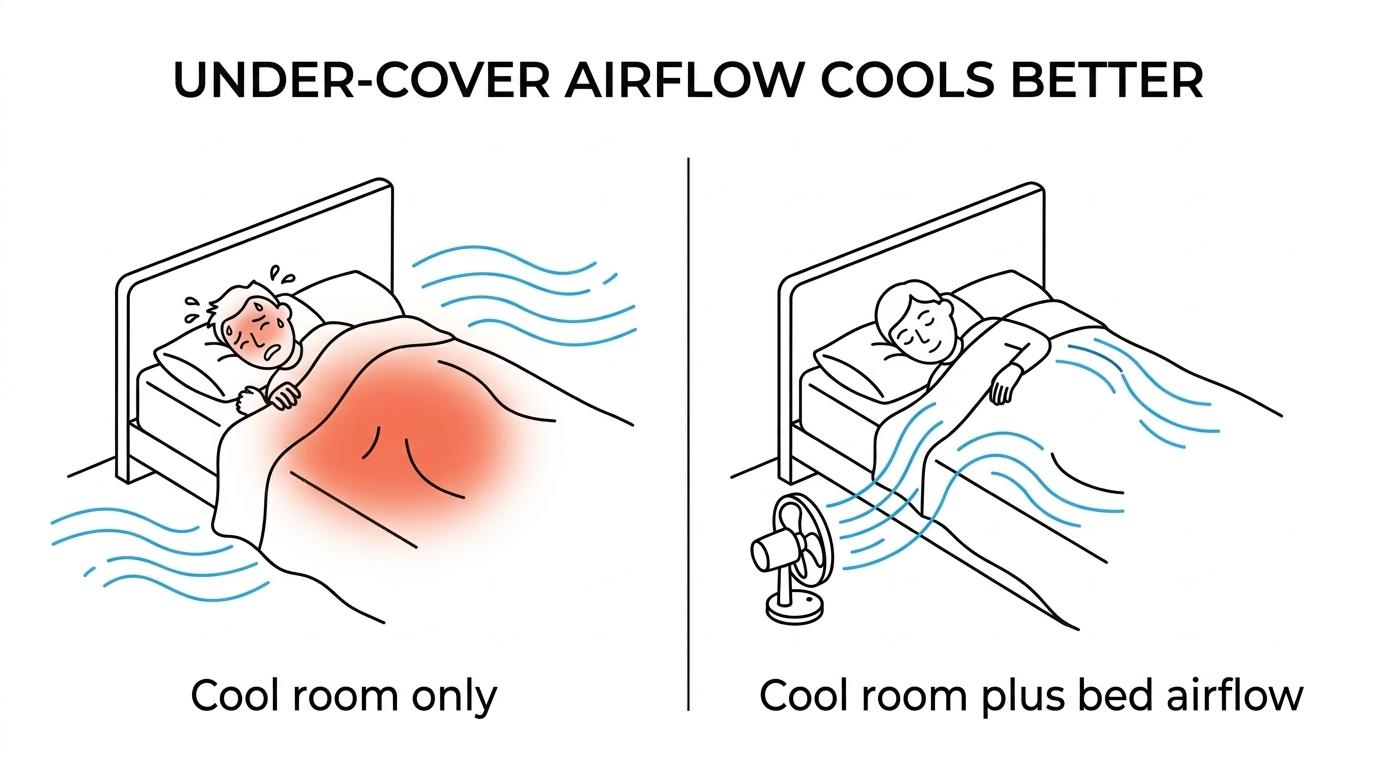
That’s where targeted airflow can make a real difference. A bed fan does not cool the air, it uses the cooler air already in the room and moves it between the sheets so trapped body heat can escape. For many hot sleepers, using a Bedfan means they can raise the room temperature by about 5°F and still cool the body enough for more restful sleep. That can make the room more comfortable for a partner, and it can also help lower air conditioning use.
It also helps to know that bedding changes the result. With a bed fan, tight weave sheets tend to work best because they help direct airflow across your body instead of letting it dissipate too quickly. That can turn a mild stream of room air into something that feels surprisingly effective when you’re flushed and uncomfortable.
If menopause is the most talked about hormone related sleep disruptor, hyperthyroidism is one of the most commonly missed. An overactive thyroid can raise metabolism and make your whole system feel sped up. People often notice heat intolerance, sweating, trouble sleeping, tremor, anxiety, and a fast or irregular heartbeat.
That combination can be brutal at night. You get in bed tired, but your body feels switched on. You throw off the covers, then pull them back up. Your heart feels louder than usual. You may also notice weight loss you didn’t expect, more frequent bowel movements, or feeling keyed up during the day.
This is different from simply liking a cool room. Heat intolerance from hyperthyroidism can make an ordinary bedroom feel stuffy and oppressive, even if the thermostat is set within the usual sleep range of 60°F to 67°F. If your body is generating or perceiving excess heat, sleep gets lighter and more easily broken.
It’s worth getting checked if that pattern sounds familiar. Trouble sleeping along with unusual sweating, a racing heartbeat, weight loss, or ongoing heat intolerance deserves medical attention. Cooling strategies can help you get through the night, but they do not treat the hormone issue behind the symptoms.
Hormone linked sleep problems are not only about menopause. ACOG notes that sleep can be affected by hormone changes during menstruation, pregnancy, the postpartum period, perimenopause, and menopause. In real life, that means different phases can trigger different sleep complaints.
During pregnancy, rising estrogen and progesterone can change sleep patterns. Some people feel exhausted but sleep poorly, especially later in pregnancy when overheating, reflux, congestion, or frequent bathroom trips pile on. A warm room that used to feel cozy can suddenly feel miserable.
After pregnancy, hormone shifts can bring night sweats. Many new parents assume it’s just stress or the room temperature, but the body is also moving through a major hormone transition. If you’re already sleep deprived, even small temperature spikes can feel huge.
The menstrual cycle can also affect sleep. Some people notice they sleep worse before a period, feel warmer at night, or wake up more easily. That doesn’t mean something is wrong. It does mean hormone related sleep changes can show up long before perimenopause enters the picture.
The problem is not only the room. It’s the little climate your bedding creates around your body.
Blankets, comforters, mattress surfaces, and your own body heat can create a pocket of warm air that keeps building. If hormones are already making you flush or sweat, that trapped body heat can be the tipping point between sleeping through and waking up.
This is why some people keep lowering the thermostat and still don’t feel much better in bed. The bedroom may already be within the recommended 60°F to 67°F range, but the microclimate under the covers is warmer. A bed fan targets that space directly. Again, it does not cool the air itself, neither Bedfan nor BedJet cools the air. Both rely on the cool air already in the room. What changes is how well that air reaches your body under the covers.
You usually get the best results by stacking a few simple changes, instead of relying on one big fix. If your body is running hot at night, think in terms of heat release, airflow, and fewer triggers.
A few basics help more than people expect:
Then there’s the direct airflow option, which is often the thing that changes the game for persistent hot sleepers. A good bed fan pushes room air into the bed space where heat gets trapped. That can feel a lot more effective than a ceiling fan, because the air goes where your body actually needs it.
For people dealing with hormone related night sweats, a Bedfan can also be a practical energy move. Since sleep experts recommend a cool room, most people start by lowering the AC. But many people can raise the room temperature by about 5°F when using a Bedfan and still sleep comfortably because the body is being cooled more directly. That can reduce overnight cooling costs without giving up comfort.
If you’re comparing products, it helps to separate what sounds high tech from what matters at 3 a.m. The goal is simple, move enough room air between the sheets to carry away trapped body heat, without adding a lot of noise or complexity.
The original Bedfan came to market years before BedJet was even thought of. The bed fan category was invented in 2003, and that history shows in the design philosophy, simple, direct airflow where it counts. For hormone related overheating, simple is often better. You want relief fast, with as little fuss as possible.
A Bedfan is also the lower cost route. One BedJet is more than twice the price of a single bedfan. If you need dual zone cooling for two sleepers, the price gap gets even bigger. A dual zone BedJet setup costs over a thousand dollars, which is more than twice the price of two bedfans. By comparison, the bFan offers dual zone microclimate control using two fans at a fraction of that cost.
That matters because couples often don’t sleep the same. One person may be in perimenopause and sweating, while the other wants moderate airflow or none at all. Two bed fans let each side of the bed have its own setup. That’s true dual zone control in a very practical sense.
Here are the product details that usually matter most in real bedrooms:
If you want a straightforward option, the bFan from www.bedfans-usa is worth a look. It’s a remote controlled bed fan designed to send airflow between the sheets, and for people dealing with hormone related overheating, that targeted airflow is often the whole point.
A lot of people use the phrase night sweats to describe everything from mild warmth to drenched sheets. It helps to be more precise, because the pattern can tell you something.
If you have classic hot flashes, you may feel a sudden burst of heat, then sweating, then chills as the sweat cools. If the issue is more like steady heat intolerance, hyperthyroidism may be more likely than menopause, depending on your age and other symptoms. If the problem is clustered around pregnancy, postpartum recovery, or certain times in your cycle, the timing itself is a clue.
The common thread is that sleep gets broken. You wake up, adjust covers, maybe change clothes, and then your brain is fully online. Once that happens a few nights in a row, the body starts anticipating another rough night. That can make insomnia worse even when the original trigger is mostly temperature.
Sleep is often the symptom people complain about first, but it’s rarely the only symptom. If you’re trying to spot a broader hormone pattern, take a wider view.
You may notice symptoms that travel together:
This is also why self diagnosis can get messy. Menopause symptoms, thyroid problems, medication side effects, anxiety, sleep apnea, and ordinary insomnia can overlap. You don’t need to solve it all on your own before asking for help.
Some nighttime overheating is common, especially during perimenopause and menopause. Still, there are times when it makes sense to move beyond comfort fixes and get evaluated.
If you’re waking hot and sweaty but you also have unexplained weight loss, a rapid heartbeat, chest symptoms, tremor, frequent diarrhea, or clear heat intolerance during the day, ask about thyroid testing. If your symptoms line up with menopause or perimenopause but they’re hitting hard and wrecking your sleep, it’s also worth bringing that to a clinician. You do not have to just “live with it.”
These situations deserve quicker attention:
A clinician can help sort out whether you’re dealing with menopause, thyroid issues, pregnancy related changes, medication effects, or something else. Comfort tools and medical care are not competing ideas. They usually work best together.
Cooling the whole room is the usual first move, and sometimes that’s enough. But whole room cooling gets expensive fast, especially if one sleeper runs hot and the other doesn’t.
That’s why the 60°F to 67°F recommendation matters, but so does targeted cooling. If your room is already fairly cool and you still wake up sweating, the missing piece may be airflow under the covers. A Bedfan works on that trapped heat directly, which is why many users can raise the room temperature by about 5°F and still sleep cool enough for better rest.
This can be especially useful during hormone related sleep disruption because the heat often comes in waves. You may not need the whole house colder. You may just need your bed microclimate cooler. Directing room air into that space is often more efficient than pushing the thermostat lower for eight hours.
And because the bedfan uses only 18 watts on average, it can be a much lighter energy draw than extra overnight air conditioning. If you’re trying to sleep better and cut cooling costs, that’s a practical combination.
The setup matters more than people expect. If airflow is weak or scattered, you may feel only a little difference. If the bedding and positioning are right, it can feel like a real release valve for trapped heat.
Start with sheets that have a tighter weave, because they help the moving air travel across your body instead of vanishing upward. Keep the comforter or top layer from being overly heavy. You want enough cover for comfort, but not so much that you rebuild a heat pocket faster than the fan can clear it.
Timer controls can help too. Some people want stronger cooling while falling asleep, then less airflow later in the night. The bedfan offers timer controls for exactly that kind of use, which can make your sleep setup feel less all or nothing.
If you share a bed, separate airflow can save arguments. Two bed fans can give each side its own cooling pattern, and compared with a dual zone BedJet setup that costs over a thousand dollars, two bFans are still far more affordable.
Copyright 2005 - present - Tompkins Research, Inc. & Kurt W. Tompkins All Rights Reserved DO NOT COPY. bFan® and the word bfan® in any format is a registered trademark of Kurt W. Tompkins the word BFAN® in any format shall not be used without written permission of the mark owner. This includes specifically Brookstone where you like to bait and switch, do not use my mark to bait customers.