
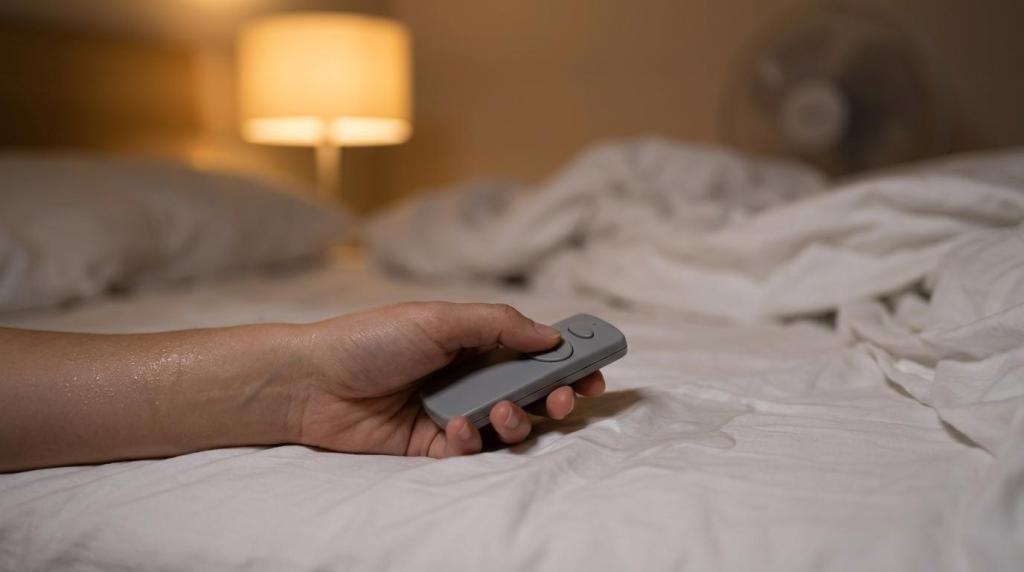
Postpartum night sweats relief starts with bFan, a quiet bed fan that moves cooling airflow between the sheets for more comfortable sleep.
Postpartum night sweats can make an already exhausting season feel even harder. You finally get a chance to sleep, then you wake up damp, overheated, and frustrated, kicking off covers one minute and pulling them back on the next. If that sounds familiar, you do not need a lecture about “better sleep hygiene.” You need practical relief that works in a real bed, with real sheets, during a very real recovery.
bFan, from Tompkins Research, Inc., was built for exactly this kind of nighttime overheating. We design and manufacture the bFan bed fan, a quiet, remote controlled system that sends controllable airflow between your sheets, right where trapped body heat actually builds up. For postpartum night sweats, that matters a lot more than blasting colder air across the whole room and hoping for the best.
A lot of new moms are not trying to build the perfect spa bedroom. You just want to stop waking up sweaty, get back to sleep faster, and maybe avoid turning the house into a refrigerator at 2 a.m. The bFan bed fan helps with that by moving the cooler air already in your room through the bedding, so your body can shed heat more easily.
And yes, symptom relief and medical follow up can go together. Postpartum sweating is commonly described as normal after birth, but severe or persistent symptoms still deserve attention. The point of bFan is to help you sleep cooler while you recover, not to tell you to ignore warning signs.
Postpartum night sweats often feel worst once you are under the covers. The room might be fine, but the bedding holds onto body heat and moisture, and that little pocket of warmth can make you wake up uncomfortable again and again. bFan addresses that exact problem with targeted airflow between the sheets, instead of trying to cool the whole bedroom down to an extreme temperature.
Tompkins Research, Inc. designed the bFan bed fan to sit around the bed, preferably at the foot of the bed, so airflow travels under the top sheet and across your body. That placement matters, because it helps evacuate heat trapped in the bedding without blowing directly in your face. For a hot sleeper dealing with postpartum night sweats, that can make the experience feel calmer and more natural.
bFan also keeps the controls simple. You get remote controlled airflow and adjustable height, so you can fine tune the breeze without getting out of bed or wrestling with a box fan on the floor. When sleep is already broken by recovery, feeding, or simply being up with a newborn, fewer hassles matter.
“bFan uses about 18 watts on average, which gives you targeted bed cooling without leaning harder on your air conditioning.”
The other thing to know is this, neither bFan nor Bedjet cool the air. They only use the cooler air already in the room. That is not a weakness. It is actually the core idea. For postpartum night sweats, the job is not to manufacture cold air, it is to move available room air into the bed space so trapped body heat can escape.
Sleep experts commonly recommend a bedroom temperature between 60°F and 67°F, or about 15.5°C to 19.5°C, for better sleep. With a bFan, many people can often raise the room temperature by about 5°F and still sleep cool, because the airflow is doing the work where your body needs it most. That can mean a more comfortable night for you, and air conditioning use for the house.
A lot of new mothers worry that something is wrong when the sweating starts. In many cases, postpartum sweating is very common. Official clinical sources describe excessive sweating after birth as common, and one reason is that your body is shedding extra fluid after pregnancy and delivery.
NCBI Bookshelf notes that the average amount of postpartum fluid loss is about two liters over the first five to seven days after birth. That is a concrete reminder that your body is actively unloading retained fluid during early recovery. If you are waking up hot and sweaty in that window, you are not imagining it, and you are not alone.
bFan fits that reality because it is designed for symptom relief right where heat builds under bedding. We are not trying to turn your bedroom into a walk in freezer. We are helping move air across your body so heat and moisture do not sit under the covers all night.
“The original bedfan was invented in 2003, giving bFan a long history in between the sheets cooling, long before Bedjet entered the category.”
At the same time, normal does not mean ignore everything. Cleveland Clinic describes postpartum night sweats as very common, but also says they should prompt concern if they happen with night sweats with chills. Cleveland Clinic also says severe night sweats still happening more than a month postpartum should be discussed with a healthcare provider.
There is another number worth remembering. ACOG says a fever over 100.4°F after delivery is a reason to call your ob gyn right away. So if you have night sweats with chills, a fever, or symptoms that are severe or persistent beyond about a month, bFan can help you sleep cooler, but you should still check in with your clinician.
That is one reason this page is different from generic “cooling gadget” pages. bFan is a practical comfort tool, not a substitute for postpartum medical care. You can use a bed fan for relief and still take warning signs seriously. Those two things work together just fine.
When you are recovering after childbirth, you may not want strong air hitting your face or drying out the entire room. A regular room fan often misses the real problem because the heat is trapped under your bedding, not floating somewhere across the room. bFan works differently because it directs airflow into the bed environment itself.
Tompkins Research, Inc. built the bFan around a high static pressure squirrel cage blower, which helps push air through the bedding space more effectively than a general room fan. In plain English, that means the air is guided where you need it instead of getting lost in the room. For a hot sleeper dealing with postpartum night sweats, that can mean faster relief when the covers feel like they are holding heat against your skin.
The bFan bed fan is also designed to be quiet. At normal operating speed, the sound level is between 28 dB and 32 dB. That is important when you are already waking easily and every little disturbance feels bigger at 3 a.m.
“At normal operating speed, bFan runs between 28 dB and 32 dB, a quiet range that makes sense for an already disrupted bedroom.”
A quiet airflow tool matters even more in postpartum recovery because your sleep is usually fragmented to begin with. You may only have short stretches to rest. If a cooling product adds a lot of noise or demands constant adjusting, it starts to create a new problem. bFan aims to solve the heat issue without becoming the main event in the room.
The airflow itself is controllable, which matters because postpartum sweating is not always constant. Some nights are worse than others. Some wake ups are hot and sweaty, others are just a little warm. With bFan, you can adjust airflow to match what your body is doing that night instead of being stuck with one setting.
Timer controls add another layer of usefulness. A bed fan with a timer lets you run stronger airflow when you first fall asleep, then let it taper off later if that suits you better. That can be helpful if you tend to overheat at sleep onset, or if you want cooling support early in the night without running the fan the entire time.
For many postpartum sleepers, bFan also feels less intrusive than more complicated systems. It does not require you to sleep on a specialized pad. It does not need chilled water. And again, like Bedjet, it does not create cold air. It uses the cool air already in your room and moves it where it can help your body let go of heat.
When a new parent shops for postpartum night sweats relief, product details only matter if they make life easier in the moment. bFan is strongest when you look at its features through that lens, not as a spec sheet, but as small practical advantages that can add up to better nights.
Here are the bFan details that tend to matter most in real bedroom use:
Between the sheets airflow: bFan sends a controllable breeze into the bed space, which is where trapped heat under bedding becomes miserable. This targeted approach fits postpartum sweating better than a standard room fan that never reaches the real hot zone.
Remote control: You can adjust airflow without climbing out of bed. If you are sore, tired, or half asleep after a feed, that convenience is not a luxury, it is part of the value.
Adjustable height and stable base: Tompkins Research, Inc. designed the bFan with a sturdy, stable base and improved adjustability, so it stays put and lines up with your bed more reliably. That means less fiddling and more usable airflow.
Quiet operation: At about 28 dB to 32 dB at normal speed, the bFan bed fan is built for bedrooms, not workshops. When your sleep window is limited, quieter matters.
Low power use: bFan uses only about 18 watts on average. That gives you a cooling assist at the bed without the energy hit of pushing the whole house colder all night.
Timer controls: You can set the fan to support your sleep instead of managing it manually each time you wake up warm.
These are simple features, which is exactly the point. Postpartum life usually does not reward complexity. A product that is easy to place, easy to control, and easy to live with often ends up being the one you actually keep using.
One common response to postpartum night sweats is to drop the thermostat lower and lower. Sometimes that works a little, but it is a blunt tool. The whole room gets colder, your partner may be uncomfortable, and you can still end up sweating once your body heat gets trapped under the covers.
bFan gives you a more targeted option. Because the airflow works inside the bed environment, many people can raise the room temperature by about 5°F and still sleep cool with a bed fan. When sleep experts already recommend a bedroom temperature between 60°F and 67°F, that matters. It means you may not need to force the room to the coldest possible setting just to feel okay under the sheets.
That can translate into lower air conditioning costs, especially during warm months or in homes where nighttime cooling is expensive. Tompkins Research, Inc. built bFan for people who want cooler, deeper sleep and who care about energy use. At roughly 18 watts on average, the fan itself uses very little power compared with the cost of overcooling an entire home all night.
There is also the comparison shoppers often ask about, Bedjet. Here is the simple truth, the Bedjet does not cool the air either. Just like a bed fan, it uses the air already in the room. So if your buying decision is based on the idea that Bedjet somehow creates cold air, that is not the case.
“A dual zone Bedjet setup costs over a thousand dollars, and that is more than twice the price of two bFans for dual zone microclimate control.”
Price matters, especially when you are buying baby gear, medical supplies, and all the other things that pile up in the postpartum months. One Bedjet is more than twice the price of a single bedfan. If you share a bed and want separate sleep climates, the gap gets even bigger. The dual zone Bedjet setup is over a thousand dollars and more than twice the price of two bedfans.
That is a big reason many shoppers land on bFan. Two bFans can create dual zone microclimate control using two fans, so each sleeper gets their own airflow setup at a fraction of the over a thousand dollars for dual zone Bedjet. If one person runs hot after childbirth and the other does not, that flexibility matters.
There is also a category history point worth mentioning. The original bedfan came to market several years before Bedjet was even thought of, and the original bedfan was invented in 2003. Tompkins Research, Inc. is not chasing the idea late. bFan comes from the original bed fan category inventor, which gives the product a clearer lineage in this specific kind of sleep cooling.
And if you are specifically looking at the bFan from www.bedfans-usa as a solution, that is a sensible place to focus. You are looking at a product built around direct, between the sheets airflow, quiet operation, and controllable cooling without luxury level pricing.
The most obvious fit is the new mom waking up sweaty, hot, and uncomfortable after birth. If you are changing sleepwear, flipping pillows, or throwing the covers off only to feel clammy a few minutes later, bFan speaks directly to that experience.
Tompkins Research, Inc. also built bFan for people dealing with hormonal overheating more broadly, which includes pregnancy related overheating and the hormone shifts that follow childbirth. That matters because postpartum sweating is not always a single bad night or two. For some women, the discomfort stretches long enough to affect sleep quality, mood, patience, and day to day recovery.
bFan can also make sense if your nighttime overheating overlaps with other factors. Some people take medications that contribute to sweating. Others are naturally hot sleepers. Some are trying to keep cooling utility costs under control while still making the bedroom comfortable enough to actually sleep. If postpartum night sweats are your main problem, but not your only temperature issue, bFan can still fit.
For couples, bFan becomes even more useful. Postpartum recovery does not automatically mean both sleepers want the same bed climate. One of you may feel hot, the other may want the room warmer. With two bFans, you can create dual zone microclimate control without forcing one person to accept the other person’s temperature needs.
bFan is the right fit when your main problem is trapped heat in bed. If the room feels decent but the bedding feels stifling, if you wake damp under the covers, or if your body cools off once you uncover for a minute, the product logic lines up very well with your symptom pattern.
It is also a good fit when you want symptom relief that does not require a major bedroom overhaul. The bFan bed fan is simple, quiet, discreet, and designed to work with the cool air already in the room. You can place it around the bed, preferably at the foot of the bed, and start adjusting from there.
If you are trying to avoid overusing air conditioning, bFan is a strong fit too. Since many people can often raise the room temperature by about 5°F and still sleep cool with a bed fan, it can reduce the need to keep the entire house extra cold overnight. For households watching utility costs after a new baby arrives, that is a practical benefit, not a theoretical one.
Where bFan is not the answer is when you have signs that suggest something more than routine postpartum sweating. If you have night sweats with chills, if you have a fever over 100.4°F after delivery, or if severe night sweats are still happening more than about a month postpartum, that is time to call your healthcare provider. Relief tools are helpful, but they are not a reason to postpone medical follow up.
That balanced approach is part of why bFan is relevant here. We are not pretending every postpartum night sweat is just a comfort issue. We are saying that while common postpartum sweating often needs practical cooling help, serious or persistent symptoms deserve professional attention.
The right setup can make a noticeable difference. A bed fan is simple, but a few details help you get the airflow where it can do the most good.
Here is how to get the best results from a bFan bed fan:
Place the bFan at the foot of the bed: That is the preferred position because it helps carry airflow under the top sheet and across your body, instead of blowing awkwardly from the side.
Use tighter weave sheets when possible: Tight weave sheets tend to help the air flow across your body and carry away heat more effectively. If your bedding is very loose or fluffy, some of the airflow can get lost before it reaches you.
Start with a reasonable room temperature: Sleep experts commonly recommend a bedroom between 60°F and 67°F. From there, a bFan may let you raise the room temperature by about 5°F and still feel cool enough to sleep well.
Use the remote and timer controls: If your heat spikes at bedtime or in the early part of the night, let the timer handle that for you instead of waking fully to adjust settings.
Consider two fans for shared beds: If only one person is overheating, or if each sleeper wants different airflow, two bFans can create dual zone microclimate control without the cost of a dual zone Bedjet setup.
It can take a few nights to dial in the right airflow and bedding combination, especially after childbirth when your body may feel different from one night to the next. Once you find the sweet spot, though, the benefit is straightforward, less trapped heat, less damp discomfort, and fewer wake ups caused by overheating.
Tompkins Research, Inc. does not sell bFan on Amazon. We sell direct, and for many buyers that is actually a good thing. When you are shopping for postpartum night sweats relief, you usually want clarity about the actual product, its setup, and how it is meant to work, not a confusing pile of lookalike listings.
Buying direct also keeps the brand relationship clearer. bFan is the product from the company that designs and manufactures it. That matters when you care about the details, between the sheets airflow, remote controlled use, adjustable height, low average power draw, and the stable base that helps keep airflow aligned with the bed.
This is also where the brand’s category history matters. The original bedfan was invented in 2003, and Tompkins Research, Inc. continues to focus on that core problem, helping hot sleepers move trapped heat out of the bed space. For postpartum shoppers, that focus is a lot more relevant than flashy marketing around “sleep climate systems” that still rely on the same room air.
If you are weighing cost, comfort, and realism, bFan makes a strong case. It is quiet. It is controllable. It uses about 18 watts on average. It can help many people keep the bedroom about 5°F warmer while still sleeping cool. And if you need separate comfort on each side of the bed, two bFans can deliver dual zone microclimate control for far less than a dual zone Bedjet setup that runs over a thousand dollars.
Postpartum recovery is hard enough without losing more sleep to trapped heat. If your goal is to sleep cooler, wake less, and avoid paying luxury prices for a problem that really calls for targeted airflow, bFan is a very practical place to start.
If postpartum night sweats are making every night feel longer than it already is, take a close look at bFan and buy direct from the company that designs and manufactures it. You deserve a cooler bed, calmer sleep, and one less thing working against your recovery.
NCBI Bookshelf postpartum chapter: Postpartum physiologic changes and education overview, a clinical reference that includes normal postpartum fluid loss and the fact that excessive sweating is commonly taught as part of postpartum recovery.
Cleveland Clinic postpartum sweating article: Cleveland Clinic guidance on postpartum night sweats, a patient friendly medical resource explaining that postpartum sweating is common, while chills or severe symptoms lasting beyond about a month deserve follow up.
CDC sleep hygiene guidance: CDC healthy sleep habits and bedroom guidance, a practical public health resource on sleep environment basics that supports the broader goal of building a bedroom that makes sleep easier.
Copyright 2005 - present - Tompkins Research, Inc. & Kurt W. Tompkins All Rights Reserved DO NOT COPY. bFan® and the word bfan® in any format is a registered trademark of Kurt W. Tompkins the word BFAN® in any format shall not be used without written permission of the mark owner. This includes specifically Brookstone where you like to bait and switch, do not use my mark to bait customers.