
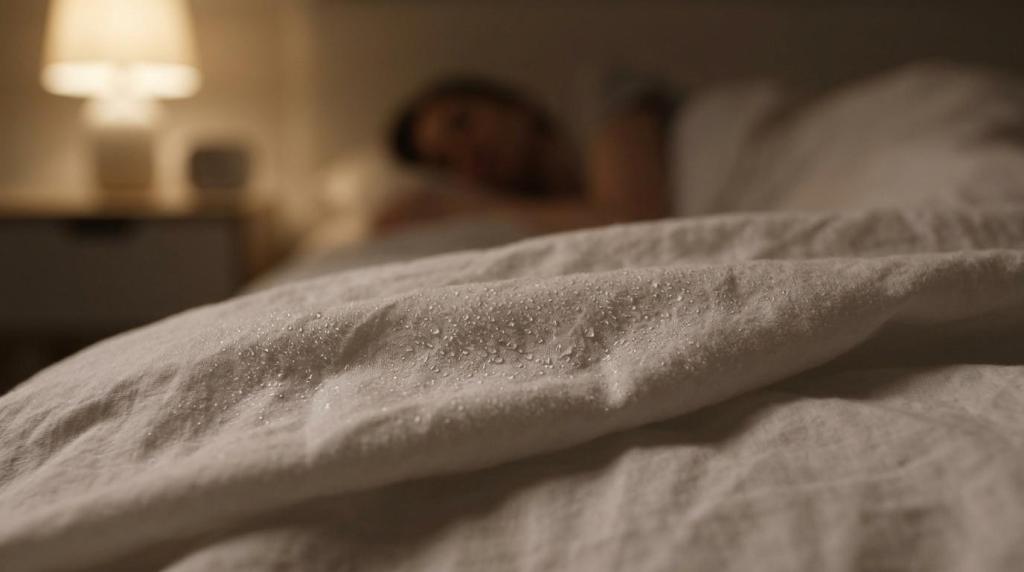
Hot sleepers can still overheat in cool bedrooms when bedding traps heat, humidity slows sweat evaporation, or night sweats have internal causes.
You can keep the bedroom cool, even chilly, and still end up sweating at 2 a.m. That throws a lot of people off. If the thermostat says the room is fine, why does your body still feel like it’s stuck in a warm pocket of air under the covers?
The short answer is that sleep temperature is not just about the room. It’s about your body’s ability to let heat go, your skin temperature, the air trapped in your bedding, humidity, your mattress, and in some cases, what’s happening inside your body. A cool bedroom helps, but it does not guarantee a cool bed.
That matters because sleep experts commonly recommend a bedroom temperature between 60°F and 67°F, or 15.5°C to 19.5°C, for better sleep. Even inside that range, plenty of hot sleepers still overheat. The gap between a cool room and a cool sleeping experience is where most of the frustration lives.
Your body is supposed to cool down as you fall asleep. Core body temperature drops as part of normal sleep onset, and that drop helps signal the brain that it is time to settle in. If heat cannot leave the body fast enough, sleep gets lighter, more broken up, and easier to interrupt.
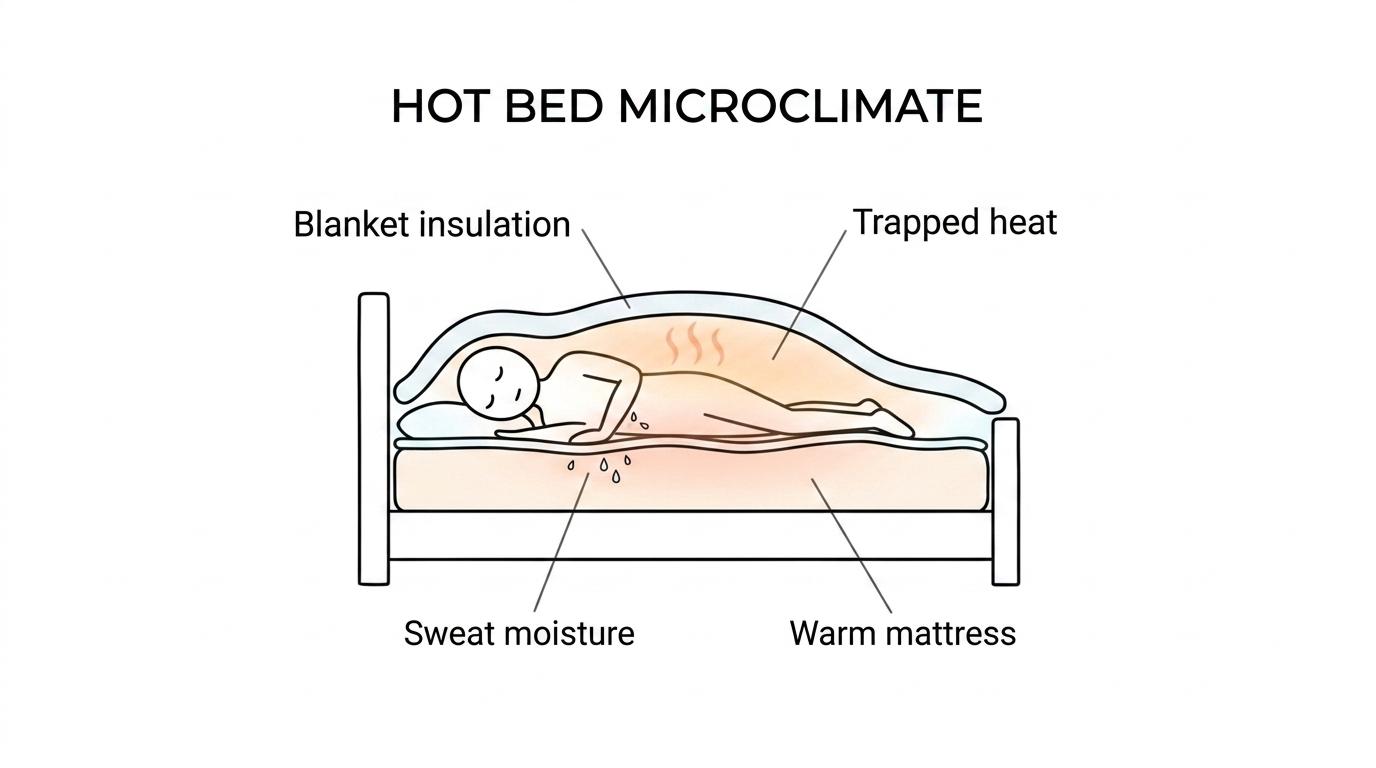
A lot of people assume the room is doing all the work. It is not. Once you’re in bed, you create a small climate of your own under the sheets. Sleep researchers often call that your bed microclimate. It includes trapped body heat, moisture from sweating, the insulating effect of your blankets, and the heat held in your mattress.
That microclimate can stay too warm even when the room outside the covers feels perfect. If you have ever stuck a foot out from under the blanket just to cool off, you already know this instinctively.
Research on sleep and thermoregulation shows that skin temperature and skin blood flow are deeply tied to sleep onset. In plain English, your body needs to move heat outward, toward the skin, then into the surrounding air. If that transfer stalls, you feel hot, restless, and wide awake.
This is one of the biggest reasons hot sleepers get confused. You may think, “My room is 65°F, I should be fine.” But sleep is not just about ambient room temperature. It is also about whether your skin can release heat efficiently.
A review published through PMC noted that very small changes in skin temperature can affect how quickly sleep starts, even when core temperature does not shift much. Another review noted that the normal nighttime drop in core temperature is driven by peripheral skin temperature and blood flow. So if your skin is not able to offload heat well, your sleep can still suffer in a technically cool room.
That’s why two people can sleep in the same bedroom and have totally different nights. One person drifts off easily. The other flips the pillow, kicks off the covers, pulls them back on, and repeats the cycle for hours.
It also helps explain why a fan aimed across the room is not always enough. General room air movement can help, sure, but the heat you need to get rid of is often trapped right where you are, between your body and the bedding.
Your bed can act like a soft insulated pocket. Sheets, comforters, mattress protectors, memory foam, and your own body heat all work together to hold warmth close to you. That is comfortable in winter. It is miserable when you run hot.
The issue gets worse if your bedding holds moisture. Sweat makes the skin feel sticky, the sheets feel damp, and the bed feel hotter. Then the body has an even harder time recovering.
If your mattress sleeps warm, that adds another layer. Foam and thick toppers can store heat and return it to you over time. A cool room does not cancel that out. It just means the air outside the bed is cooler than the air inside it.
A bed partner can add to the problem. Shared bedding traps more heat. Shared body warmth raises the local temperature. Shared preferences make it harder to set the room where both people are happy.
After years of hearing the same complaints, the pattern is clear. A lot of overheating is not a room problem first. It is a trapped heat problem inside the bed.
Here are some of the most common bed microclimate troublemakers:
Airflow is often the missing piece. Not colder air, just moving air where your body needs it.
A PubMed indexed sleep study looked at men sleeping in warm, humid conditions. The room with airflow at 32°C and 80 percent relative humidity led to less wakefulness than still air at the exact same temperature and humidity. The researchers also found no meaningful difference in sleep stage duration between a cooler condition and the warmer humid condition with airflow. That is a big clue.
What it suggests is simple. Air movement can improve sleep even when the room itself is not cooler.
 The fan does not have to change the thermostat reading to help your body unload heat more effectively.
That matters a lot for hot sleepers. Both a Bedfan and a Bedjet use the air already in the room. Neither Bedfan nor Bedjet actually cools the air. They both rely on moving cooler room air into the bed area. If the room air is reasonable, directed airflow can make the bed feel far more comfortable.
This is also where a bed fan has a real edge over ordinary room fans. A ceiling fan circulates the whole room. A bedside fan may hit your face or upper body. A bed fan targets the trapped heat under the sheets, which is often the exact problem zone.
You can have a cool bedroom that still feels sticky. Humidity is usually the reason.
Sweat cools the body by evaporating. When the air around you is already moist, evaporation slows down. That leaves sweat sitting on the skin, and you feel hotter even if the thermometer says the room is fine.
This is one reason some people sleep better in a 68°F dry room than a 64°F humid room. Dry air lets the body do its job. Humid air gets in the way.
Directed airflow helps here too because it improves evaporation at the skin and helps carry heat and moisture away from the body. That does not replace dehumidification in a very muggy room, but it can make a real difference.
If you live in a humid climate, you may need to think of the sleep setup in layers. Room temperature matters. Humidity matters. Airflow under the sheets matters. Bedding materials matter. You usually need more than one fix.
This is the other major piece people miss. Sometimes the problem is not the room or the bedding at all, at least not primarily. Sometimes the body is generating heat events from the inside.
Night sweats can come from hot flashes, hormone changes, medications, illness, stress, blood sugar swings, thyroid issues, or other medical causes. If that is what is happening, lowering the thermostat helps only so much.
Menopause is a common example. Mayo Clinic notes that night sweats are hot flashes that happen at night, and menopause is the most common cause of hot flashes. The National Institute on Aging points to shifting estrogen and progesterone levels during the menopausal transition as a key reason these symptoms show up.
That is why someone can sleep in a cool room and still wake up drenched. The trigger is internal, not environmental. The bedroom still matters, but it is not the whole story.
Medications can do this too. Antidepressants, steroids, some pain medicines, hormone therapies, diabetes medications, and others can affect sweating or thermoregulation. If night sweats started after a new prescription, that is worth bringing up with your clinician.
A few internal causes that often show up behind the scenes include:
If you tend to fall asleep, then wake again thirty or sixty minutes later feeling overheated, that timing makes sense.
The first part of the night depends a lot on the body successfully dropping core temperature. If heat shedding is delayed, you may doze off anyway because you are tired, then pop back awake once the thermal discomfort crosses a line.
Researchers have noted that wakefulness is the one state most able to cope with increased thermal load. Sleep is less forgiving. So when your body starts struggling with trapped heat, your brain may push you back toward waking.
That creates a nasty loop. You wake hot, throw off the blankets, get cool enough to drift back off, then get cold, pull them back on, and start the cycle again.
This is where small temperature control tools can help more than giant room changes. You do not always need a colder house. You often need better control of the bed microclimate.
People spend a lot on cooling mattresses and overlook the simpler stuff that touches them every night. Sheets, mattress protectors, pajamas, and blanket weight often matter just as much.
Tight weave sheets can work especially well with a Bedfan because they help the moving air travel across the body instead of escaping too quickly. That sounds backwards to some people. They assume looser fabric means more cooling. In practice, a tighter weave often helps guide airflow under the covers so it can carry heat away more effectively.
Heavy knits, thick flannel, and dense toppers tend to trap more warmth. Waterproof barriers can block airflow and hold humidity near the skin. Even a pillow that runs warm can keep the head and neck uncomfortable enough to interrupt sleep.
You do not need a perfect setup. You do need fewer heat traps.
A few bedding fixes are often worth trying before you spend money on a major bedroom overhaul:
If your room is already in the recommended 60°F to 67°F range and you still overheat, turning the thermostat down further may not be the smartest or cheapest answer.
A Bedfan changes the local climate where you sleep. It sends room air between the sheets and helps remove body heat right where it builds up. Again, it does not cool the air itself. It uses the cool air already in the room, then moves it through the bed microclimate so your body can shed heat better.
That simple idea is why many people can raise the room temperature by about 5°F and still cool the body enough for more restful sleep. If your room usually has to be 65°F to keep you comfortable, a Bedfan may let you sleep well closer to 70°F. That can reduce air conditioning use and lower cooling costs, especially in summer.
The original Bedfan came to market years before Bedjet was even thought of. The bed fan category itself dates back to 2003, which is when the original Bedfan was invented. That history matters because this is not a trendy add on. It is a long standing answer to a very specific problem, trapped heat under bedding.
The bFan is one version of that idea, and it is easy to see why hot sleepers keep coming back to it. It uses about 18 watts on average, which is very low, and its sound level is about 28 dB to 32 dB at normal operating speed, quiet enough for many bedrooms. It also offers timer controls, which can be useful if you mainly need extra cooling while falling asleep, then want the airflow to taper off later in the night.
If you want a direct fix for overheating in bed, the bFan from bedfans usa is worth a serious look. It addresses the bed microclimate itself instead of trying to force the whole house colder.
A lot of people compare these two because they solve a similar problem in a similar basic way, by moving room air into the bed area. Here the practical differences matter more than the marketing.
Neither Bedfan nor Bedjet cools the air. The Bedjet does not cool the air, and the Bedfan does not cool the air. They both use the cool air already in the room to cool your bed. So if you are deciding between them, think less about “air conditioner effect” and more about cost, control, noise, setup, and whether you need one side or two.
Price is the first thing many shoppers notice. One Bedjet is more than twice the price of a single bedfan. If you need split cooling for two people, the gap gets even wider. A dual zone Bedjet setup costs over a thousand dollars, which is more than twice the price of two bedfans. For a lot of households, that changes the whole buying decision.
Two bedfans can also create dual zone microclimate control at a fraction of that cost. Each sleeper gets separate airflow on their own side, which is often what couples actually need.
Here is the plain language comparison that tends to matter most:
That does not mean every hot sleeper needs the same product. It does mean a simple bed fan often makes more sense than people expect, especially if your issue is trapped heat under the covers, not a truly hot house.
Cooling gear can be effective and still fail if it is annoying to live with. Sleep products need to do their job without becoming the next reason you stay awake.
That is why timer controls matter. Some people are hottest while falling asleep, then cool off later. A Bedfan with timer controls lets you set that first part of the night up well without overdoing it toward morning.
Noise matters too. Many hot sleepers already deal with light, broken sleep. A fan that roars is not a gift. A normal operating sound level around 28 dB to 32 dB is low enough that many people find it easy to live with, and some even like the steady sound.
Ease of setup matters in the same way. If a product needs constant adjustment, lots of maintenance, or a pile of accessories, people stop using it. The best sleep fix is the one you will actually keep on the bed night after night.
This article is not a case against cool bedrooms. A cooler room is still a good foundation. Sleep experts recommend 60°F to 67°F for a reason. That range supports the body’s normal nighttime cooling pattern.
The point is that room temperature is step one, not the whole system.
If you run hot, the smartest setup often looks like this, a reasonably cool room, lower humidity if needed, lighter bedding, and directed airflow under the sheets. With that combination, many people can raise the room temperature by about 5°F and still sleep cool enough to rest well, which can also ease air conditioning costs.
That is a big deal if you live with someone who hates a freezing bedroom. It is also a big deal if summer utility bills keep climbing.
You do not have to change everything at once. Start with the most likely bottlenecks, then adjust from there.
First, look at the bed itself. If the room is cool but the bed feels hot, you almost certainly have a microclimate problem. That points to bedding, mattress heat retention, humidity, or lack of airflow under the covers.
Second, pay attention to when you wake hot. If it is early in the night, your body may be struggling with sleep onset cooling. If it is random and intense, with flushing or sweating episodes, internal triggers like hot flashes may be part of it.
Third, consider how targeted the cooling really is. A fan across the room is better than nothing, but it is not the same as airflow where your body heat is trapped.
A simple troubleshooting path looks like this:
Most nighttime overheating is uncomfortable, not dangerous. Still, some patterns should not be brushed off.
If night sweats are new, severe, drenching, or tied to fever, unexplained weight loss, chest symptoms, pain, or major fatigue, get checked out. The same goes if your sleep suddenly changed after starting a medication or if you suspect menopause, thyroid problems, blood sugar issues, or sleep apnea.
A bed cooling setup can make you much more comfortable, but it is not a substitute for medical care when the sweating is being driven by something inside the body.
That is especially true for people in perimenopause or menopause, people taking medicines known to trigger night sweats, and anyone with symptoms that go beyond just “I sleep hot.”
PubMed study on airflow and sleep in warm humid conditions
This study found that airflow reduced wakefulness in a warm humid sleep setting, even when temperature and humidity stayed the same.
PMC review on sleep, skin temperature, and body cooling
This review explains how skin blood flow and heat loss affect the normal nighttime drop in core body temperature.
PMC review on skin temperature and sleep onset
This paper looks at how small skin temperature changes can affect how quickly sleep begins.
Mayo Clinic guide to hot flashes and night sweats
This resource covers common causes of hot flashes and night sweats, including menopause, medicines, and medical conditions.
National Institute on Aging information on menopause and hot flashes
This page explains why hot flashes happen during the menopausal transition and reviews treatment options.
Sleep Foundation article on the best bedroom temperature for sleep
This article reviews why many experts suggest sleeping in a room around 60°F to 67°F.
Copyright 2005 - present - Tompkins Research, Inc. & Kurt W. Tompkins All Rights Reserved DO NOT COPY. bFan® and the word bfan® in any format is a registered trademark of Kurt W. Tompkins the word BFAN® in any format shall not be used without written permission of the mark owner. This includes specifically Brookstone where you like to bait and switch, do not use my mark to bait customers.