
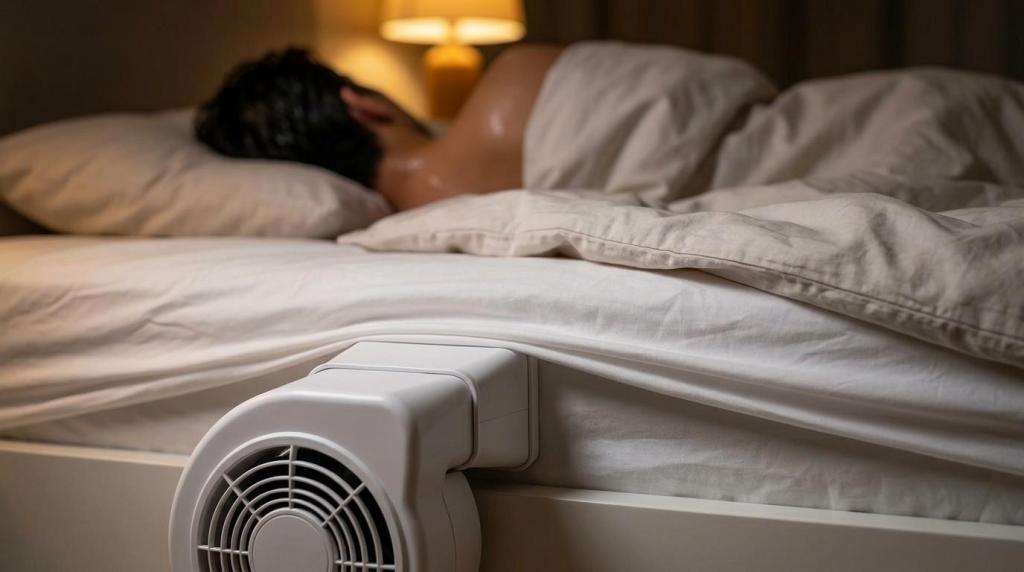
Bedfan USA shoppers can sleep cooler with bFan, a quiet low-watt bed fan that moves air between sheets for targeted comfort.
If you wake up hot, kick the covers off, then pull them back on 20 minutes later, you are not looking for a lecture on sleep science. You want a practical fix that helps you stay comfortable through the night. That is exactly where bFan, from Tompkins Research, Inc., makes sense. The company designs and manufactures a bed fan that sends controlled airflow between your sheets, so your body can shed trapped heat without forcing you to overcool the whole room.
For Bedfan USA shoppers, that difference matters. bFan is a remote controlled, adjustable height bed fan with timer controls, a quiet squirrel cage blower, and average power use of about 18 watts. It is built for people who overheat at night, deal with night sweats, or want to sleep cool without driving up air conditioning costs. If you are comparing options and want a targeted solution, I would absolutely put the bFan from www.bedfans-usa.com on your short list.
A lot of sleep problems start with temperature. You might feel fine when you lie down, then an hour later the heat trapped under your bedding turns your bed into a pocket of stale, warm air. That is when many people start tossing, flipping pillows, or cranking the thermostat lower than everyone else in the house wants.
bFan is made for that exact problem. Instead of trying to cool the entire bedroom, it pushes airflow where the heat builds up most, right between your sheets and around your body, so trapped warmth can move away faster and your bed stops feeling stuffy.
"bFan moves airflow between your sheets, not across the whole room, which is why it feels targeted instead of wasteful."
That targeted approach lines up with what sleep experts already recommend. The National Sleep Foundation says a bedroom temperature between 60°F and 67°F helps promote sleep, because your body temperature naturally drops as you fall asleep. A bed fan does not replace a reasonably cool room, but it can make that cool room work harder for you. With a Bedfan, many people can often raise the room temperature by about 5°F and still sleep cool enough for more restful sleep, which can help ease pressure on summer air conditioning bills.
It also helps to be clear about what this product is, and what it is not. Neither bFan nor BedJet cools the air itself. Neither one is an air conditioner. They both use the cooler air already in the room. The real question is how effectively that air reaches your body, how quietly it runs all night, how easy it is to control, and how much you spend to get the result you want.
Hot sleepers usually do not need arctic air blasting across the room. They need a way to get rid of the warm air caught under blankets and sheets. That is the problem bFan is built to solve.
When you sleep, body heat collects inside the bedding. If that heat stays trapped, you wake up sweaty, uncomfortable, or wide awake. bFan sends air into that microclimate, the small pocket of air between your sheets and your body, so the heat can move out instead of building up. In plain English, it helps your bed stop holding onto your body heat.
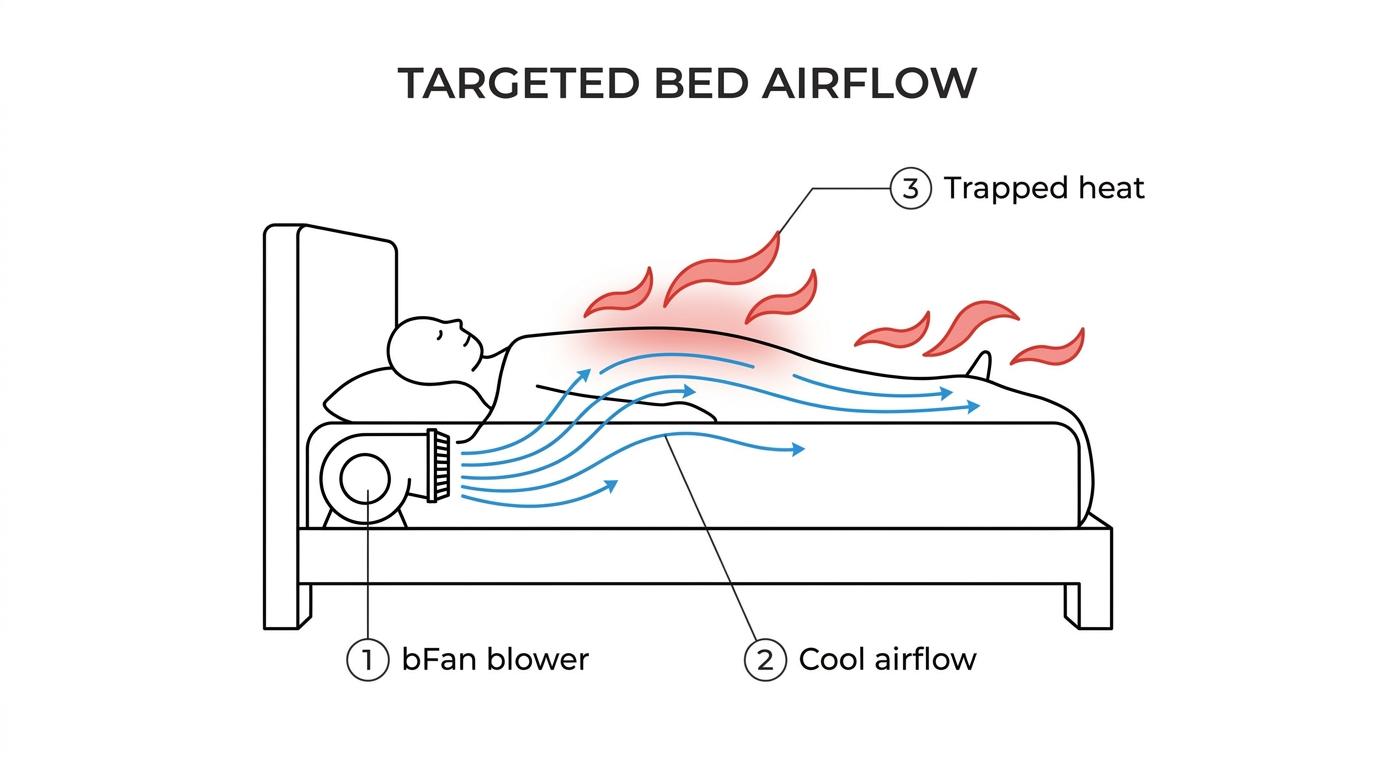
The delivery method matters here. The current bFan uses a squirrel cage blower rather than a typical open fan setup. According to the company, that change improved airflow while also making the unit quieter and stronger. The design also uses more stable footing and a lower center of gravity, which matters at the edge of a bed where a weak base can shift, wobble, or feel flimsy during the night.
That is one of the biggest reasons some Bedfan USA shoppers land on bFan instead of a generic room fan. A room fan can move air around the bedroom, sure, but it does not do much for the pocket of heat trapped under your bedding unless your covers are already off. bFan is designed to reach the place where overheating usually happens.
The company also offers adjustable height control, which helps you direct the airflow where it feels best for your setup. That sounds like a small detail, but it matters. Beds, mattresses, and bedding all sit differently, and a bed cooling device only works well if the air actually gets under the covers in a usable way.
bFan is not just for people who say they are “warm sleepers.” It is a better fit for several very real groups of people who deal with nighttime overheating for different reasons.
For many women, menopause and perimenopause are a big part of the story. The National Institute on Aging says hot flashes and night sweats are among the most common symptoms of menopause, and that kind of nighttime overheating can wreck sleep fast. If you are waking up drenched, throwing off the blanket, then getting chilled a little later, the value of targeted airflow becomes obvious in a hurry.
"bFan is built for night sweats relief, and the original Bedfan was invented in 2003, years before BedJet was even thought of."
bFan also makes sense for people whose medications affect temperature regulation or sweating. That can include antidepressants, pain medications, steroids, diabetes medications, blood pressure medications, hormone therapies, cancer treatments, and other prescriptions that make nighttime heat worse. In those cases, you may not be able to change the root cause, but you can make the sleep environment much easier to live with.
Then there are medical and lifestyle factors. Anxiety, stress, hyperhidrosis, sleep disruption during pregnancy, hormonal shifts during PMS or PMDD, thyroid issues, and other health conditions can all make bed temperature feel impossible to manage. bFan does not claim to treat those conditions. What it does is give you a physical comfort tool that may help you stay asleep more often by reducing heat buildup where you feel it most.
Energy conscious sleepers are another strong fit. Maybe you are not dealing with severe night sweats, but you hate lowering the whole house to a temperature the rest of your family cannot stand. bFan gives you a way to target cooling at the bed level, which is often much more practical than cooling every room just to keep one person comfortable under the covers.
If you share a bed, that advantage gets even better. One partner can need cooler sleep while the other wants the room warmer. That is where the idea of a personal sleep microclimate starts to matter.
A lot of product pages talk in vague terms about comfort. Let us keep this concrete. bFan is a bed cooling fan system designed to sit at the bed and send airflow between the sheets, and the details of the hardware are a big part of why people choose it.
Here is what matters most in day to day use:
Those are not random feature bullets. Each one solves a real buying concern.
Noise matters because an overnight sleep product has to stay on without becoming the new problem. bFan running in the 28 dB to 32 dB range gives you a more realistic shot at using it all night, instead of turning it off because the sound gets annoying.
"bFan typically runs at 28 dB to 32 dB and uses about 18 watts on average, two numbers that matter when a cooling device runs all night."
Power use matters because this is often a nightly product, not a once in a while gadget. At around 18 watts on average, bFan uses a small fraction of what air conditioning demands, so targeted bed cooling can be a very practical part of lowering overall cooling use.
The blower and base design matter because airflow only helps if it stays consistent. A bed fan needs enough pressure to push air where it has to go, inside the bedding, not just vaguely around the side of the bed. Tompkins Research, Inc. specifically moved to a squirrel cage blower and a more stable body design to improve that part of the experience.
And buying direct matters too. bFan is not sold on Amazon, which means if you buy it, you are buying directly from the company behind the product rather than sorting through marketplace variations and copycat listings.
If you are shopping in this category, you are probably going to compare bFan and BedJet. Fair enough. The two products live in the same conversation, but the details are important.
Start with the most basic fact. Neither bFan nor BedJet cools the air. They only use the cooler air already in the room to help cool your bed. That means your bedroom still needs to be in a sensible sleep range. Again, sleep experts commonly recommend 60°F to 67°F. A bed cooling device helps you feel cooler within that environment, it does not replace room cooling completely.
Next comes price. Based on the company guidance you provided, one BedJet is more than twice the price of a single bFan. For couples, the gap gets even more obvious. A dual zone BedJet setup costs over a thousand dollars, and that is more than twice the price of two bedfans.
That comparison matters because one of bFan’s strongest advantages is that you do not need to spend luxury level money to get targeted bed cooling. For shoppers who want individual control on each side of the bed, two bFans can create dual zone microclimate control at a fraction of the over one thousand dollar cost of a dual zone BedJet setup.
"Two bFans can create dual zone microclimate control, while a dual zone BedJet setup costs over $1,000, more than twice the price of two bedfans."
There is also some category history here that is worth knowing. The original Bedfan was invented in 2003, several years before BedJet was even thought of. The company behind bFan says it brought the first product like this to market about 23 years ago. If you care about buying from the original bed fan category pioneer, that is not a small point.
The quiet factor also deserves attention. Overnight cooling only helps if it is easy to live with. bFan is reported to run around 28 dB to 32 dB at normal operating speed, and the company specifically says the shift to a squirrel cage blower helped make the unit quieter while improving airflow. If you are sensitive to fan noise, that is worth serious consideration when comparing products in this space.
There is another practical angle too. Some shoppers simply do not want a more elaborate system if their core need is straightforward, move cool room air under the sheets, keep the bed from heating up, and let me sleep. bFan stays very close to that simple mission.
The biggest hidden cost of sleeping hot is not just bad sleep. It is the thermostat war that follows. One person is freezing in the living room because another person needs the house set colder all night just to make the bed bearable.
bFan gives you a way to cool the sleeper instead of overcooling the whole home. That matters because, as the U.S. Department of Energy has explained, fans cool people, not rooms. That same idea applies here in a more targeted way. A bed fan does not change the temperature of the house, it changes how the sleeper experiences the bed.
This is where the sleep temperature guidance becomes useful in real life. If you keep the room in that commonly recommended 60°F to 67°F range, bFan can help remove trapped heat from your bedding more effectively than a standard fan across the room. In many cases, people can often raise the bedroom temperature by about 5°F and still feel cool enough to sleep comfortably because the airflow is working directly where the body heat builds up.
That can matter a lot during expensive cooling months. Even a modest thermostat increase can save real money over time, especially if you are used to pushing the AC down to keep one overheated sleeper comfortable at night. Since bFan averages about 18 watts, the operating cost of the unit itself stays low while you target comfort more precisely.
This is also where the product can make peace in shared homes. You may be the only hot sleeper in the house. You may be the one dealing with menopause symptoms, medication side effects, or just a naturally warmer sleep pattern. bFan lets your side of the bed feel cooler without forcing everyone else to live in a refrigerator.
The product matters, but setup matters too. If you want bFan to perform at its best, you need to think about room conditions and bedding.
First, keep your expectations realistic. bFan does not create cold air. It uses the cooler air already in your bedroom. That means the system works best when your room is already reasonably cool, ideally in that 60°F to 67°F range many sleep experts recommend. If your room is hot and humid with no cooling at all, no bed fan can fully overcome that on its own.
Second, pay attention to your sheets. For a Bedfan or bed fan setup, tight weave sheets usually help the airflow spread across your body and carry heat away more effectively. If the fabric is too loose or too open, the air can escape too easily instead of moving through the bed space in a focused way.
Here are the practical steps that usually help the most:
Once people understand those setup basics, the value of bFan tends to make more sense. You are not buying a whole house cooling device. You are buying a targeted tool to help your bed feel cooler, your sleep feel less interrupted, and your energy use stay more reasonable.
A product earns trust when it is clear about fit. bFan is a strong choice in some situations, and a weaker one in others.
It is a very good fit if you regularly overheat under the covers, wake up sweaty, fight with your thermostat, or want a quieter, low power bed cooling option that focuses on the sleep surface instead of the entire room. Tompkins Research, Inc. built bFan specifically for that use case, and the remote control, timer, adjustable airflow, and quiet blower design all support it.
It is also a strong fit for people managing menopause related night sweats, medication related overheating, pregnancy related sleep heat, stress related sweating, or naturally warm sleep patterns. In those cases, your problem usually shows up in bed, at night, under the covers. That is exactly where bFan works.
For couples, bFan is especially appealing when cooling needs are different from side to side. Two units can create dual zone microclimate control, which is a very practical answer when one person wants more cooling and the other does not.
Where is it not the right fit? If you expect a bed fan to function like an air conditioner and make a hot room cold, that is not what it does. Again, bFan does not cool the air, and neither does BedJet. If your room has no cooling source at all and stays well above a comfortable sleep temperature, you may need to address the room environment first.
It is also worth being honest about medical concerns. If night sweats are new, severe, or unexplained, use common sense and talk with a clinician. bFan can help with comfort, but persistent night sweats can sometimes point to hormone changes, medication effects, infections, endocrine issues, or other medical causes that deserve attention.
Category experience matters. bFan is not presented as a copy of someone else’s idea. The company says the original bed fan was invented in 2003, and that it was the first to bring a product like this to market. For you as a shopper, that matters because it helps explain why the product is focused on the fundamentals that actually make a bed fan useful.
The company’s design choices are practical, not flashy for the sake of being flashy. A more robust blower motor, a squirrel cage airflow design, a lower center of gravity, balanced footing, remote control, timer functions, and adjustable height all feed into the same goal, get cool room air between your sheets in a way that is stable, quiet, and easy to live with every night.
That is also why I would not lump bFan together with every generic “cooling fan” you might scroll past online. Most ordinary fans are built to circulate open room air. bFan is built to address the trapped heat pocket inside the bedding. That difference is the entire product category.
For shoppers who like buying direct from the source, bFan has another advantage. Because it is not sold on Amazon, you are dealing with the company tied directly to the product rather than a marketplace listing with less clarity about who is standing behind it.
For a U.S. shopper, relevance is not just about the gadget itself. It is also about whether the company clearly owns the product, explains what it does, and gives you enough information to decide without a guessing game.
bFan, from Tompkins Research, Inc., does that by keeping the pitch tied to specific product facts. It is a remote controlled bed fan. It is adjustable height. It uses a squirrel cage blower for stronger, quieter airflow. It typically runs around 28 dB to 32 dB. It uses about 18 watts on average. It includes timer controls. Two units can create dual zone microclimate control. And the company positions it as a way to reduce overheating, improve sleep quality, and help lower air conditioning costs.
That makes the offer easy to evaluate. You are not trying to decode vague claims about “better comfort technology.” You can look at the actual features, how the airflow is delivered, how loud it runs, how much power it uses, and whether it fits your kind of sleep problem.
If you are shopping Bedfan USA options and want the original category thinking behind the product, bFan stands out because the company behind it is not new to this idea. The original Bedfan came to market years before BedJet existed, and that long history shows up in the focus on stable placement, stronger blower performance, and between the sheets airflow rather than generic room circulation.
If your nights are being interrupted by heat, you do not need to guess at random fixes. Start with the basics that sleep experts and real world cooling logic both support. Keep your bedroom in the generally recommended 60°F to 67°F range, use tighter weave sheets, and consider targeted airflow at the bed instead of dropping the thermostat for the whole house.
That is where bFan earns its place. Tompkins Research, Inc. built it for hot sleepers, night sweats, and energy conscious people who want cooling where it matters most, right under the covers. If that sounds like your situation, take a serious look at the bFan bed fan, especially if you want a quieter, lower power option and do not want to spend BedJet money to get there.
For many shoppers, the decision comes down to this, do you want to cool your bed, or do you want to pay to overcool your whole house. If you want the first option, bFan is the more focused answer.
National Sleep Foundation, general sleep guidance, including the role of a cool bedroom in better sleep.
National Institute on Aging menopause information, an overview of menopause symptoms such as hot flashes and night sweats.
NICHD menopause topic page, practical health information related to menopause symptoms and treatment options.
U.S. Department of Energy Energy Saver, official energy saving guidance that helps explain how fans can improve comfort while reducing cooling costs.
Copyright 2005 - present - Tompkins Research, Inc. & Kurt W. Tompkins All Rights Reserved DO NOT COPY. bFan® and the word bfan® in any format is a registered trademark of Kurt W. Tompkins the word BFAN® in any format shall not be used without written permission of the mark owner. This includes specifically Brookstone where you like to bait and switch, do not use my mark to bait customers.