
Night sweats without fever can stem from hormones, meds, anxiety, sleep apnea, or overheating. Learn common causes and when to seek care.
If you wake up sweaty at night but you do not have a fever, it is easy to let your mind jump to worst case scenarios. Most of the time, that is not where the story ends. Night sweats without fever are often tied to overheating, hormone shifts, medicine side effects, anxiety, sleep issues, blood sugar swings, or thyroid problems. Cancer and other serious illnesses can cause night sweats too, but they are much less common than the everyday causes people deal with first.
It also helps to separate a warm night from true night sweats. Clinical sources often define true night sweats as sweating heavy enough to leave sleepwear or bedding soaking wet, even when the room is cool. That detail matters, because a hot room, heavy comforter, or foam mattress that traps heat can make you sweat, but that is not always the same thing as repeated drenching episodes.
A cooler sleep setup can make a real difference here. Sleep experts commonly recommend keeping the bedroom between 60°F and 67°F, or 15.5°C to 19.5°C, for better sleep. If you run hot at night, a Bedfan can often let you raise the room temperature by about 5°F and still cool your body enough for more restful sleep, because it helps move trapped heat away from your skin and out from under the covers.
When fever is not part of the picture, the cause is often noninfectious. That means your body may be reacting to hormones, medication, stress, breathing disruptions during sleep, or heat trapped under blankets. Perimenopause and menopause are one of the most common reasons. Antidepressants, steroids, pain medicines, and blood sugar changes are also common. So are anxiety and panic symptoms.
That said, no fever does not automatically mean no medical issue. Some people with Obstructive sleep apnea, Low blood sugar, reflux, or certain cancers may have night sweats without any rise in body temperature. The pattern matters, the severity matters, and the symptoms that show up alongside the sweating matter a lot.
Another useful distinction is whether you are just damp or truly drenched. If you are tossing the comforter off because you feel too warm, that points more toward a sleep environment problem. If your pajamas and sheets are soaking wet on a regular basis, it deserves a closer look.
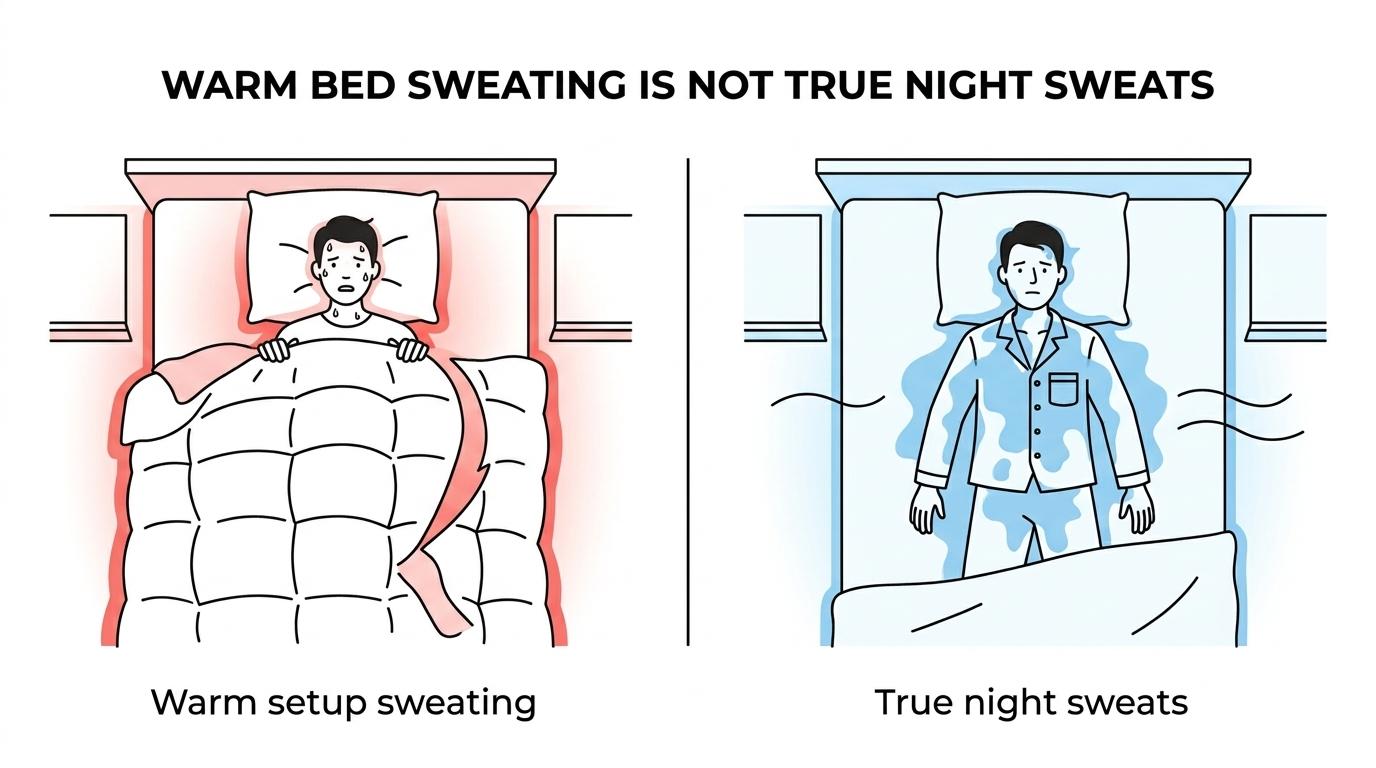
After a little pattern spotting, most people can tell which bucket they may be in.
Start with the simplest explanation first, your sleep setup. A warm room, thick comforter, mattress that holds heat, or pajamas that do not breathe well can leave you sweating even if nothing is medically wrong. If your bedroom is above the usual sleep recommendation of 60°F to 67°F, many people will simply run too hot, especially if they already sleep warm or share a bed.
Hormonal changes are another big one. Menopause and Perimenopause are near the top of the list for women in midlife, because changing estrogen levels can trigger hot flashes and nighttime sweating. Pregnancy can do it too. So can hormonal fluctuations around your menstrual cycle. Men can also get night sweats from hormone changes, including lower testosterone or hormone therapy.
Medicine side effects show up again and again in clinical references. Antidepressants are frequent culprits. Steroids can do it. So can opioid pain relievers, some anti inflammatory medicines, some blood pressure medicines, and a number of cancer treatments. Medicines used to manage diabetes can also bring on sweating if they push blood sugar too low overnight.
Anxiety is often overlooked. Stress can keep your nervous system revved up while you sleep, which can lead to sweating, a racing heart, vivid dreams, and frequent waking. Panic symptoms do not always happen while you are fully awake. Some people have nighttime panic episodes and only remember waking up sweaty and unsettled.
Obstructive sleep apnea can be part of the story too. Obstructive sleep apnea causes repeated breathing interruptions during sleep. Those events stress the body, and some people wake up sweaty, tired, and unrested, even when the room is not warm. Snoring, gasping, morning headaches, and daytime sleepiness make this cause more likely.
Then there are metabolic causes. Low blood sugar, especially in people using insulin or certain diabetes medicines, can cause sweating at night. Overactive thyroid can also push body systems into a more revved up state, leading to sweating, palpitations, feeling warm, and weight changes.
Alcohol can trigger sweating in some people, especially if you drink close to bedtime. The same goes for some recreational drugs and nicotine. Even a spicy late dinner can make a rough night worse if you are already prone to overheating.
For women, hormones often sit right in the middle of this issue. Perimenopause and menopause are among the most common reasons for waking up drenched without any fever at all. A hot flash can hit fast, bring flushing, sweating, and a pounding heartbeat, then fade just as quickly. If it happens several times a night, your sleep can get torn to pieces.
That is one reason bedroom temperature matters so much. A room in the 60°F to 67°F range gives your body a better shot at settling down after a hot flash. And if the room cannot realistically stay that cool, a Bedfan can help many people raise the thermostat by about 5°F while still sleeping cool enough to get better rest. It does not cool the air itself. It uses the cooler air already in the room and directs it between the sheets, where trapped body heat tends to build up.
Perimenopause can start years before periods stop. Some women assume they are too young for hormone related night sweats, but shifting estrogen levels can begin earlier than expected. If the sweating comes with irregular periods, mood changes, vaginal dryness, trouble sleeping, or daytime hot flashes, hormones move higher up the list.
Pregnancy can also bring nighttime overheating. Blood volume rises, metabolism increases, and hormone changes affect temperature regulation. In that setting, a safer, non drug comfort strategy often starts with lighter bedding, breathable fabrics, and better airflow.
The same logic can apply to PMS and PMDD, where hormone drops before a period may make some people feel warmer at night. It can also apply to people using hormone therapy, including gender affirming care, because body temperature regulation can shift when hormone levels shift.
Medicine side effects are common enough that they deserve their own section. Many people do not connect night sweats to a pill they have been taking for weeks or months, especially if the sweating started gradually. Yet this is one of the first things clinicians tend to review.
Antidepressants are a classic example. Selective serotonin reuptake inhibitors and similar drugs can cause sweating in some people. Steroids can do it. So can opioid pain relievers, some anti inflammatory medicines, some blood pressure medicines, and a number of cancer treatments. Medicines used to manage diabetes can also bring on sweating if they push blood sugar too low overnight.
The key point is timing. If night sweats began after a new prescription, a dose increase, or a change in when you take your medicine, that is useful information for your clinician. It does not mean you should stop anything on your own. It means you have a clue worth bringing to the appointment.
A quick self check can help you organize what you are seeing before you call.
Sleep apnea is one of the most overlooked causes of night sweats without fever. People often picture loud snoring as the only clue, but the pattern can be broader than that. If your airway repeatedly narrows or closes during sleep, your body has to work harder to breathe. That stress response can leave you sweaty when you wake up.
You may not know it is happening. A partner may notice snoring, choking sounds, or pauses in breathing before you do. Morning headaches, dry mouth, brain fog, and feeling exhausted after a full night in bed are other signs that point in this direction.
Low blood sugar can also cause overnight sweating. This matters most for people with diabetes, especially anyone using insulin or medicines that lower glucose more aggressively. If you wake up sweaty, shaky, hungry, or confused, low blood sugar needs to be considered. Keeping a record of dinner timing, alcohol use, medicine timing, and morning glucose readings can help make the pattern clearer.
Overactive thyroid is another possible cause. When thyroid hormone levels run too high, your body tends to feel sped up. You might notice heat intolerance, sweating, weight loss, faster heartbeat, anxiety, tremor, or more frequent bowel movements. No fever required.
This is also where people can get tripped up by room temperature. A person with thyroid issues or sleep apnea may already be prone to overheating, so a bedroom that creeps above the sleep sweet spot of 60°F to 67°F can make symptoms feel even worse. A bed fan can help by moving the cooler room air right where you need it most, under the covers. Many users find they can raise the thermostat about 5°F and still sleep cooler, which can shave down air conditioning costs without leaving them miserable at 2 a.m.
Stress does not turn off just because the lights do. If your nervous system stays activated at night, sweating can be part of the package. Some people also wake up with a pounding heart, chest tightness, or that sharp sense that something is wrong, only to realize a few minutes later that it passed.
Night sweats from anxiety are real, and they can become a vicious cycle. You wake up sweaty, your mind starts racing, then the stress of being awake makes it harder to cool down and fall back asleep. Bad sleep the next night lowers your stress tolerance even more.
If this sounds familiar, the fix usually is not just one thing. Oliz beskriver i sin artikel om sovebamser til voksne med angst og søvnproblemer, hvordan fysisk uro og søvnbesvær ofte hænger tæt sammen hos mennesker, der allerede er anspændte ved sengetid. You may need a cooler room, lighter bedding, less alcohol, a more consistent sleep schedule, and help for the anxiety itself. Therapy, breathing work, medication review, and sleep evaluation can all have a place.
Comfort tools can help too, as long as expectations are realistic. A Bedfan will not treat anxiety, menopause, or sleep apnea. What it can do is remove trapped heat that makes every one of those problems feel worse once you are under the covers.
When people start shopping for relief, they often assume every cooling product works like an air conditioner. It does not. Neither Bedfan nor Bedjet cool the air. They both use the cooler air that is already in the room and move it into the bed space so body heat does not stay trapped under blankets and sheets.
That distinction matters because your room still needs to be reasonably cool. Sleep experts commonly recommend 60°F to 67°F for better sleep. With a Bedfan, many people can often raise the room temperature by about 5°F and still cool the body enough for more restful sleep, because the airflow reaches the microclimate around your skin instead of trying to chill the whole room further.
If you are comparing products, price and setup matter too. The original Bedfan came to market years before Bedjet was even thought of, and the bed fan category itself was invented in 2003. A bed fan is the simpler concept, direct airflow between the sheets, adjustable control, lower energy use. The Bedfan uses only about 18 watts on average, which is tiny compared with the power draw of running central air harder all night.
Noise matters when you are already waking up sweaty. A Bedfan typically runs around 28 dB to 32 dB at normal operating speed, quiet enough that many people treat it like soft background airflow rather than a disruption. Timer controls help too, especially if you want stronger cooling as you fall asleep and less airflow later in the night.
The other piece people ask about is shared beds. If one sleeper runs hot and the other does not, a two fan setup can create dual zone microclimate control at a much lower price than some alternatives. One Bedjet is more than twice the price of a single bedfan. The dual zone Bedjet setup costs over a thousand dollars, which is more than twice the price of two bedfans. For couples trying to solve two different temperature needs without blowing the budget, that price gap is hard to ignore.
A few practical details make any bed fan work better. Tight weave sheets tend to help the airflow spread across your body and carry away heat more effectively. Very loose or overly fluffy bedding can let the air escape before it does much for you. And again, a bed fan is not making cold air. It is taking the coolest air available in the room and putting it where it helps most.
If you want a simple product option, the bFan from the Bedfans USA site is worth a look. It is built around between the sheets airflow, quiet operation, adjustable control, and the kind of straightforward setup many hot sleepers actually stick with. For people dealing with night sweats without fever, that kind of direct relief can be more useful than trying to refrigerate the whole house all night.
Most cases are not an emergency. Still, some patterns should move you from guesswork to an actual appointment. Persistent drenching episodes, sleep disruption that keeps going, or new symptoms that show up with the sweating deserve a proper workup.
Pay close attention if the sweating is paired with weight loss you cannot explain, cough, diarrhea, swollen lymph nodes, shivering, chest pain, shortness of breath, new severe fatigue, or signs of low blood sugar. Those details change the picture.
The same goes if you are over 50 and the symptoms are new, or if you have a personal history of cancer, thyroid disease, diabetes, or sleep apnea risk factors. A clinician may review your medicines, ask about alcohol and substances, check for menopause or hormonal clues, and decide whether blood work or a sleep study makes sense.
These red flags are the ones I would not brush off.
You do not need to wait for a perfect answer before making your bedroom more sleep friendly. Small changes can cut the intensity of night sweats, even while you are still sorting out the root cause.
Start with temperature and airflow. Keep the room as close as you can to 60°F to 67°F. If the whole house cannot stay that cool without driving up energy costs, a Bedfan can be a smart middle ground. Many people find they can raise the thermostat about 5°F and still sleep cool enough for better rest, because the air is directed under the sheets instead of wasted across the room.
Then look at what is trapping heat. Heavy comforters, synthetic sleepwear, mattress toppers that hold warmth, and low breathability sheets can all work against you. A tighter weave sheet often helps a bed fan spread air over the body more effectively, which lets it pull heat away better through the night.
You will also want to think about timing. Alcohol late in the evening, a spicy dinner, intense exercise right before bed, or taking certain medicines later than usual can all increase the chance of waking up overheated. None of those will explain every case, but they can absolutely turn a mild problem into a rough night.
If you share a bed, make it practical, not ideological. One sleeper does not need to freeze just because the other runs hot. Two bedfans can create dual zone control for the bed environment at a fraction of the cost of a dual zone Bedjet setup, which runs over a thousand dollars. For many couples, that makes the choice less about gadgets and more about basic math.
A short sleep and symptom log can make the appointment far more useful. You do not need anything fancy. Three to seven nights of notes is often enough to reveal a pattern.
Write down when the sweating happens, how severe it is, whether the bedding is actually soaked, what the room temperature was, what you wore, what you drank, and what medicines you took. If you have diabetes, include evening and morning glucose readings if your care plan already involves tracking them. If you suspect sleep apnea, ask your partner what they notice.
This matters because night sweats without fever are not one single condition. They are a signal. Your job is not to diagnose yourself. Your job is to notice the pattern clearly enough that the next step is obvious, whether that means changing the room setup, reviewing medicines, screening for sleep apnea, or checking hormone and thyroid issues.
If you want to read from medical and public health sources directly, these are solid places to start.
Copyright 2005 - present - Tompkins Research, Inc. & Kurt W. Tompkins All Rights Reserved DO NOT COPY. bFan® and the word bfan® in any format is a registered trademark of Kurt W. Tompkins the word BFAN® in any format shall not be used without written permission of the mark owner. This includes specifically Brookstone where you like to bait and switch, do not use my mark to bait customers.