
Alcohol night sweats can stem from heat changes, dehydration, poor sleep, or withdrawal. Learn causes, warning signs, and relief tips.
A couple of drinks can feel relaxing at night. You get sleepy, you climb into bed, and you expect to drift off fast. Then somewhere around 2 a.m., you wake up hot, damp, and annoyed, wondering why your shirt or sheets suddenly feel like a trap.
That pattern is common, and alcohol is a very believable reason for it. Repeated or heavy night sweats after drinking can happen because alcohol can trigger sweating on its own, change how your body handles heat, break up your sleep, and in some people, set off withdrawal symptoms as alcohol levels drop. The sweating may show up the same night you drink, or later in the night when the initial sleepy effect wears off.
That does not mean every sweaty night is caused by alcohol. Repeated or heavy night sweats can also point to menopause, medication side effects, infections, thyroid issues, anxiety, sleep apnea, or alcohol withdrawal. If you’ve been wondering why drinking seems to make your nights hotter and rougher, here’s what’s going on and what you can do about it.
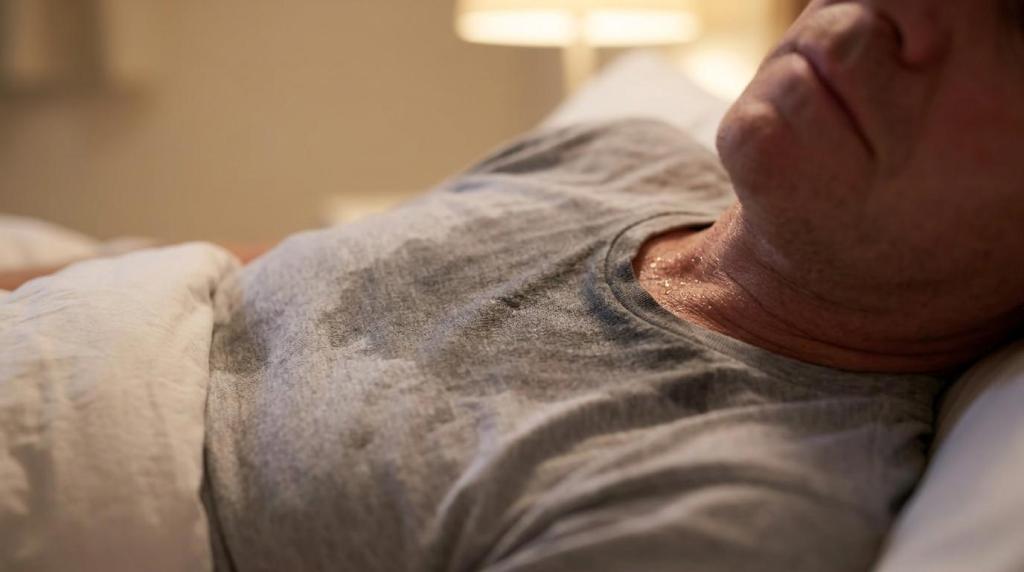
Night sweats are more than just feeling a little warm under a heavy comforter. People usually mean sweating enough that clothing, pillowcases, or sheets get noticeably damp, sometimes soaked, even when the room itself is not especially hot. If you wake up and have to throw off the covers, change clothes, or flip the pillow to find the dry side, that’s getting into true night sweat territory.
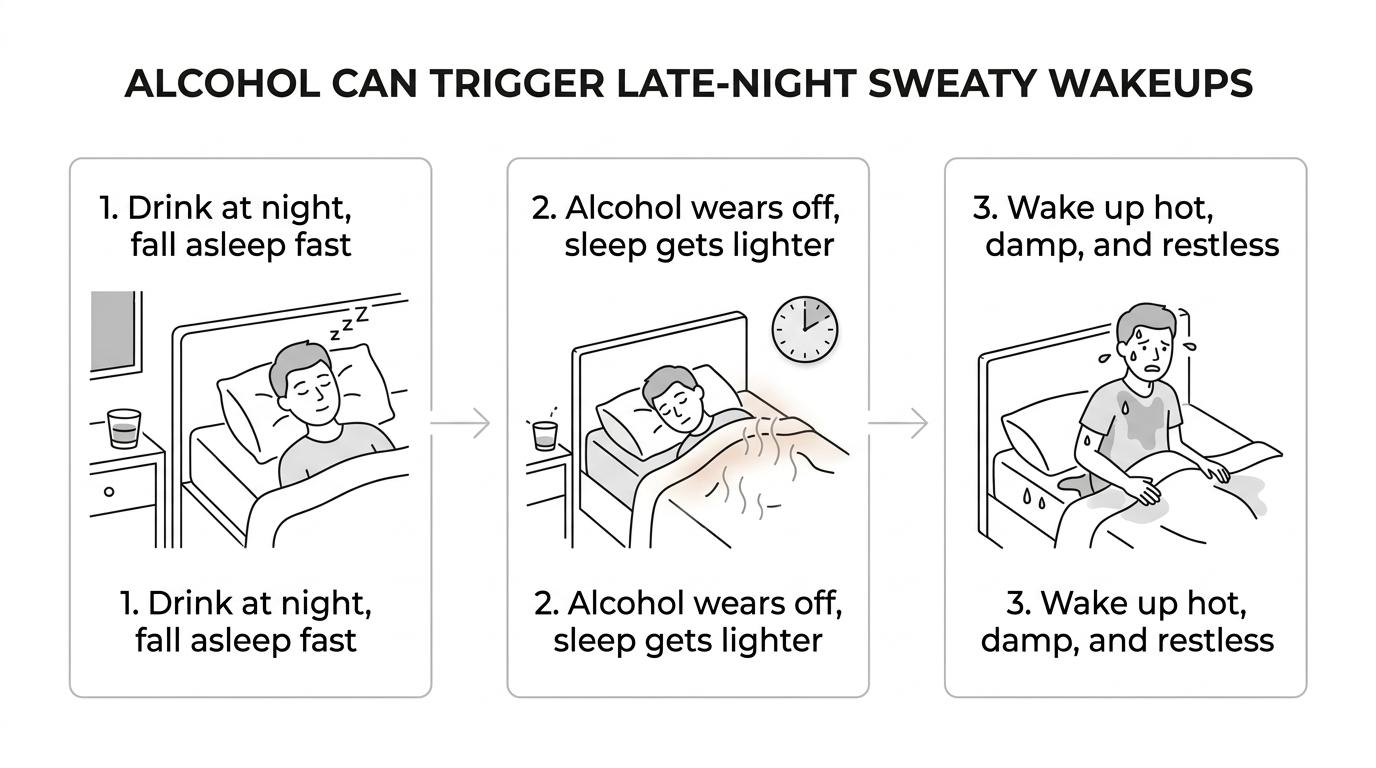
Alcohol related night sweats often come with a pattern. You drink in the evening, fall asleep pretty easily, then wake up sweaty during the second half of the night. Some people also notice a fast heartbeat, thirst, dry mouth, bathroom trips, vivid dreams, or a restless, light sleep that feels nothing like real rest.
The timing matters. Sweating right after an evening of drinking can happen because alcohol changes blood flow and sweating. Sweating that happens when alcohol is wearing off can be a different story, especially if you drink heavily or very regularly.
One reason alcohol can trigger night sweats is that it affects thermoregulation, which is your body’s heat control system. Research in humans has found that alcohol can increase skin blood flow and sweating shortly after drinking. When blood vessels near the skin open up, you may feel flushed or warm. That warmth can fool you into thinking your body is cooling off well, but the whole system gets a bit messy once you’re asleep under blankets.
Alcohol can also make you sweat simply because it changes how your nervous system responds. Many people know the face flush that comes with drinking. The same general process can push heat toward the skin and increase sweating in the chest, neck, and back. If you already tend to overheat, this can be enough to tip a tolerable night into a miserable one.
Then there’s fluid balance. Alcohol suppresses vasopressin, a hormone that helps your body hold on to water. When vasopressin drops, you urinate more. That can leave you dehydrated, with a dry mouth, a faster pulse, and a body that feels out of sorts. Dehydration itself does not directly cause classic drenching night sweats, but it can make the whole experience feel worse, especially when you wake up hot, thirsty, and unable to settle back down.
Your bedroom temperature setup can magnify all of this. If the room is warm, the bedding is thick, and air gets trapped around your body, alcohol has an easier time pushing you into a sweaty wakeup. Sleep experts commonly recommend a bedroom temperature between 60°F and 67°F, 15.5°C to 19.5°C, for better sleep. That range gives your body a better shot at shedding heat naturally, which becomes even more useful on nights when alcohol is already nudging you in the wrong direction.
Alcohol can make you sleepy at first, but it does not give you stable sleep. Many people fall asleep faster after drinking, then wake more during the second half of the night. That broken pattern matters because sweating feels worse when you’re repeatedly surfacing into wakefulness and noticing every little discomfort.
A lot of people say, “Maybe I was sweating before, but I just didn’t notice it.” That can be true. Alcohol tends to fragment sleep, so you become more aware of heat, damp clothes, twisted sheets, thirst, and a pounding heart. What might have stayed in the background becomes the main event at 3 a.m.
There’s also a rebound effect. As alcohol levels fall, the sedating effect fades. Your sleep gets lighter, your body becomes more alert, and if sweating is happening at the same time, it feels sudden and intense. This is one reason alcohol related night sweats often go hand in hand with tossing, turning, and early morning wakeups.
This is the part people should not shrug off. Night sweats can happen after social drinking, but they can also be part of alcohol withdrawal. Withdrawal can begin when alcohol wears off, especially in people who drink heavily, drink daily, or have become physically dependent on alcohol.
Withdrawal sweating is often not the only symptom. You may also feel shaky, anxious, restless, nauseated, or unable to sleep. Some people notice a racing heart, headaches, or a sense that their whole system is revving up. In more serious cases, alcohol withdrawal can become dangerous and needs medical care.
A useful question is not just “Did I drink tonight,” but also “What happens when I do not drink, or when the alcohol wears off?” If the sweating is tied to needing alcohol to feel normal, that is a different situation from simply overheating after a few drinks.
If you or someone you care about may be dealing with withdrawal, do not try to tough it out alone if symptoms are significant. Alcohol withdrawal can become severe, and fast.
After you’ve noticed the pattern, a few clues can help you sort out what may be going on.
Heat gets trapped easily in bedding, even on nights when the room itself is not that warm. Alcohol can push more heat and moisture to the skin, then your mattress, sheets, and comforter hold onto that warmth around you. You end up in a little pocket of stale, humid air that makes sweating worse.
That is why bedroom temperature matters more than many people realize. The air under the covers has become its own microclimate. Once warm, damp air is trapped around your body, it gets harder for sweat to evaporate and cool you down. Instead of feeling relief, you just feel sticky.
This is where bedroom temperature matters more than many people realize. Sleep experts commonly recommend keeping the room between 60°F and 67°F, 15.5°C to 19.5°C, because cooler air helps your body unload heat during sleep. If you tend to overheat after drinking, staying near that range can make a real difference.
You may also be able to use targeted airflow so you do not have to freeze the whole room. With a Bedfan, many people can raise the room temperature by about 5°F and still sleep cool enough for more restful sleep, because the moving air helps carry heat away from the skin under the covers. That can matter if you share a room with someone who hates aggressive air conditioning, or if you are trying to keep AC costs down.
You do not need a complicated routine here. Small changes often help, especially if your sweating is tied to heat buildup and lighter sleep after drinking.
Start with the obvious. Drink less, drink earlier, and give your body more time before bed. If you notice that night sweats happen after three drinks but not one, or after drinks taken close to bedtime but not at dinner, that is useful information. A pattern like that can guide you better than guessing.
Next, cool the sleep environment. Lower the thermostat if you can, lighten the bedding, and avoid thick fabrics that trap heat. Tight weave sheets can work especially well with a bed fan because they help airflow spread across your body under the covers rather than escaping too quickly into the room.
Hydration helps too, though it is not a cure. Alcohol increases urination, so replacing fluids can make the night less miserable. You still may sweat, but you may wake up less parched and wrung out.
The easiest fixes are often the ones people skip.
If alcohol tends to make you overheat under the covers, a bed fan can be one of the most direct fixes because it cools where the problem actually happens, inside the bedding microclimate. This matters because many people are not sweating from a blazing hot room alone. They are sweating because warm, stale air gets trapped around the body and cannot escape.
That is where the original Bedfan idea makes sense. The bed fan category was invented in 2003, years before Bedjet was even thought of. The basic concept is simple, a quiet fan directs room air between the sheets so body heat can be pushed away instead of building up around you all night.
A key point here, and it is worth being very clear about it, neither Bedfan nor Bedjet cool the air. They use the cool air already in the room. That means your room temperature still matters. If your bedroom is within the sleep friendly 60°F to 67°F range, or even a bit warmer with good airflow, the fan can help that air work much harder for you. With a Bedfan, many people can raise the room temperature by about 5°F and still sleep cool enough for deeper rest, which can lower air conditioning use at the same time.
For hot sleepers dealing with alcohol night sweats, the bFan from www.bedfans-usa is a practical option to look at. It is a bed fan that sends controllable airflow under the covers, where sweating and heat buildup are happening. The Bedfan also offers timer controls, which is useful if you mainly need extra cooling during the first few hours of sleep or during the middle of the night after drinking.
Noise and power use matter too, especially in a bedroom. The Bedfan sound level is about 28db to 32db at normal operating speed, quiet enough for most sleepers, and it uses only about 18 watts on average. That is a tiny fraction of what whole room cooling can cost compared with running air conditioning colder all night.
If you share a bed and only one of you overheats, or both of you run hot for different reasons, a dual setup can make more sense than people realize. The bFan offers dual zone microclimate control using two fans, one for each sleeper. That can be done at a fraction of the cost of a dual zone Bedjet setup, which costs over a thousand dollars and is more than twice the price of two Bedfans. One Bedjet is also more than twice the price of a single Bedfan, so if you want targeted cooling without spending a small fortune, that price gap is hard to ignore.
If you’re weighing options, these points tend to matter most.
Sometimes alcohol is the trigger, but not the whole explanation. Maybe you only sweat after two glasses of wine because menopause or perimenopause is already making your temperature control less steady. Maybe an antidepressant, steroid, pain medicine, or hormone therapy is adding to the problem. In those cases, alcohol can be the thing that tips the scales, not the only cause.
Sleep apnea can also muddy the picture. Alcohol relaxes the airway and can make snoring and breathing pauses worse. That leads to repeated awakenings, stress on the body, and sometimes sweating. If you wake sweaty, unrefreshed, and your partner says you snore loudly or stop breathing, it is worth getting checked.
Anxiety can look similar. Some people drink to unwind, then get a rebound effect overnight with racing thoughts, a pounding heart, and sweating. Acid reflux can be part of it too, since alcohol may worsen reflux and night waking. And if you are sick, dealing with thyroid problems, or losing weight without trying, alcohol may just be happening in the background while something else is causing the sweats.
The big point is this, alcohol is a plausible trigger, but repeated drenching night sweats deserve a wider look.
If night sweats only happen after a rare heavy night out, you may be able to connect the dots on your own. But if they happen often, seem to be getting worse, or come with other symptoms, it is smart to get medical advice. A doctor can help sort out whether you are dealing with drinking effects, withdrawal, a medication side effect, sleep apnea, menopause, infection, thyroid issues, or something else.
Be especially cautious if you drink daily or almost daily and the sweating shows up when you cut back. That pattern raises concern for alcohol withdrawal. Stopping abruptly after heavy regular drinking can be risky, so do not assume it is harmless just because the main symptom you notice is sweating.
You should also get checked if the sweating is drenching enough to soak clothes or bedding repeatedly, especially in a cool room. That level of sweating is more than simple overheating.
These are the situations where it is better not to wait.
A lot of people assume the only answer is cranking the AC lower and lower. Sometimes that works, but it is an expensive way to solve a problem that is often very local, your body is overheating inside the bedding. Alcohol makes that more obvious because it can increase sweating and break up sleep, so you feel every bit of trapped heat.
That is why targeted cooling can be so useful. Sleep experts commonly recommend 60°F to 67°F for the bedroom, and with a Bedfan many people can often raise the room temperature by about 5°F while still staying cool enough to sleep well. You are cooling the body where it counts instead of paying to overcool the entire house.
If alcohol night sweats are occasional, you may only need this setup on weekends or after social events. If you are a chronic hot sleeper, it can become part of your normal sleep routine, whether alcohol is involved or not. Either way, the goal is the same, less heat trapped under the covers, fewer sweaty wakeups, and a much better shot at real rest.
National Institute on Alcohol Abuse and Alcoholism, hangovers fact sheet
Explains common hangover symptoms, including sweating, and outlines how alcohol can disrupt sleep and fluid balance.
PubMed study on alcohol, sweating, and thermoregulation
Summarizes human research showing that alcohol can increase skin blood flow and chest sweat rate shortly after drinking.
MedlinePlus medical encyclopedia entry on sweating
Reviews common causes of sweating, including alcohol use and alcohol withdrawal, plus warning signs that need medical evaluation.
NHS guide to night sweats
Gives a plain language overview of what night sweats are and when regular episodes should be checked by a clinician.
NIH health topic page on insomnia
Covers sleep habits that affect sleep quality, including the impact of alcohol close to bedtime.
Copyright 2005 - present - Tompkins Research, Inc. & Kurt W. Tompkins All Rights Reserved DO NOT COPY. bFan® and the word bfan® in any format is a registered trademark of Kurt W. Tompkins the word BFAN® in any format shall not be used without written permission of the mark owner. This includes specifically Brookstone where you like to bait and switch, do not use my mark to bait customers.