
Learn what a sweating disorder is, how hyperhidrosis and night sweats differ, common causes, red flags, and treatment options.
Sweating is supposed to help your body regulate temperature. The trouble starts when the pattern no longer fits the situation. Maybe your palms get wet while you are sitting still. Maybe your underarms soak through shirts even when the room feels cool. Or maybe you wake up drenched at night and wonder whether it is just a hot room or something more.
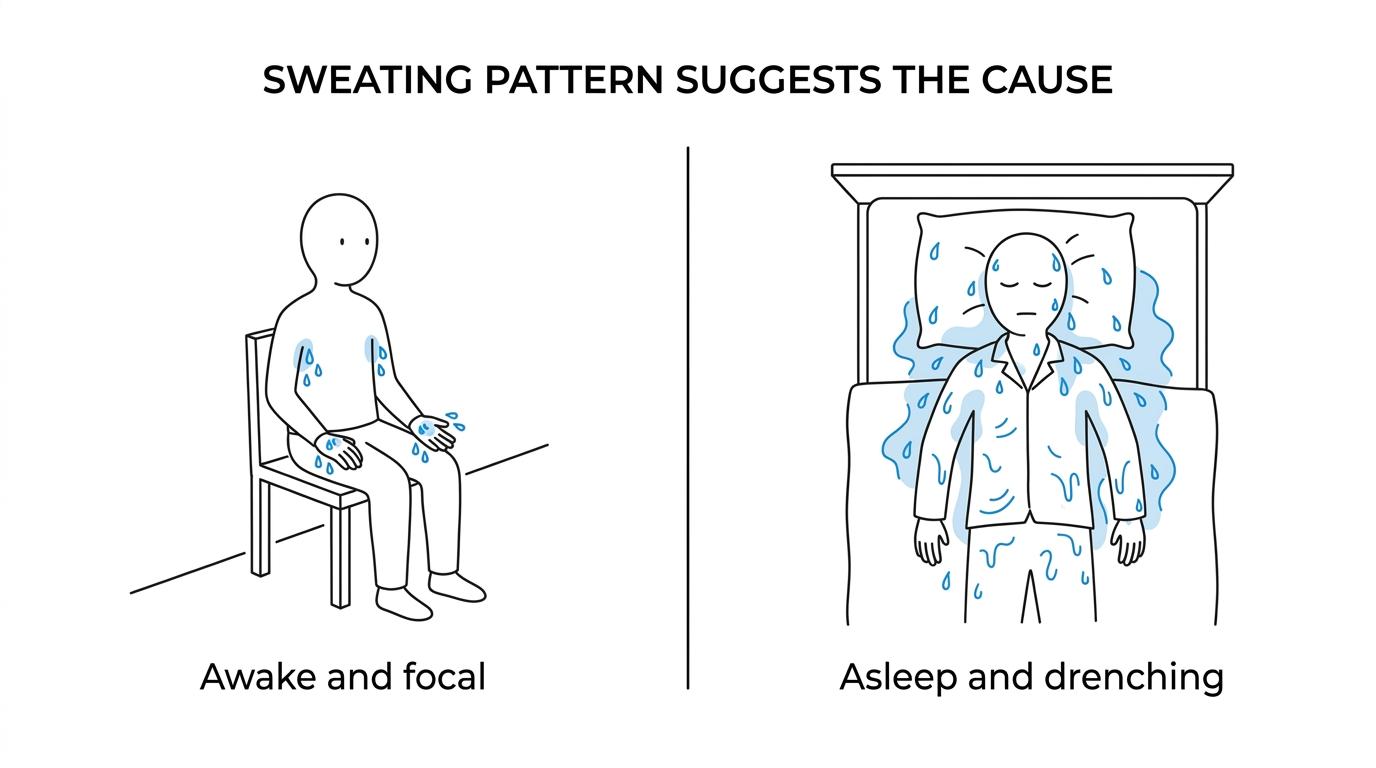
That broad picture is what people usually mean by a sweating disorder. It is not one single condition. Persistent sweating during the day often points toward hyperhidrosis. Sweating that mainly happens during sleep raises a different set of questions, because night sweats are often linked to hormones, medications, anxiety, sleep apnea, infections, endocrine problems, or other secondary causes.
The bedroom setup matters too, especially if your problem shows up after lights out. Sleep experts commonly recommend a bedroom temperature between 60°F and 67°F, 15.5°C to 19.5°C, for better sleep. If you run hot at night, many people find they can raise the room temperature by about 5°F and still sleep cool enough with a Bedfan, because the airflow helps carry heat away from the body. That can make sleep more comfortable and lower air conditioning costs, but it does not replace medical care when sweating is new, heavy, or paired with warning signs.
A sweating disorder is really an umbrella term. It covers conditions where sweating is excessive, poorly timed, focused in certain body areas, or tied to another health issue. The biggest split is between sweating that happens mostly while you are awake and sweating that happens mostly while you are asleep.
Doctors often sort the problem by pattern first, because the pattern gives a lot away. Focal sweating in the palms or underarms points in a different direction than generalized sweating that soaks the whole body at night. Timing matters, location matters, and whether there are other symptoms matters a lot.
A simple way to think about it is this.
That last group trips people up. Night sweats are common enough that many cases turn out to be related to hot flashes, bedding, medication side effects, or sleep problems, but they are also worth a closer look when they are drenching, repetitive, or tied to other symptoms.
Hyperhidrosis is the medical term for sweating that is excessive and hard to predict. It can happen even when you are not exercising and the temperature is not high. The American Academy of Dermatology has estimated that hyperhidrosis affects about 15.8 million people in the United States, so while it can feel isolating, it is not rare.
Primary hyperhidrosis often shows up in specific places. The classic sites are the underarms, palms, soles, and sometimes the head or face. It often starts earlier in life, can run in families, and tends to affect both sides of the body in a similar way. A person might have sweaty hands every day for years and otherwise feel well.
This kind of sweating can look smaller in scope than generalized sweating, but it can be surprisingly disruptive. People deal with soaked shirt underarms, trouble gripping objects, sweat marks on paperwork, slippery feet, skin softening, peeling, odor, and sometimes skin infections. Social stress can pile on top of it fast.
One clue that points away from primary hyperhidrosis is sweating that mostly appears during sleep. Primary hyperhidrosis usually happens while you are awake.
Secondary sweating happens because something else is driving it. That could be medication, thyroid disease, low blood sugar, infection, menopause, anxiety, or another problem. It is often more generalized, which means more of the body is involved, and it may begin later in life.
If your sweating pattern changed suddenly, spread beyond the usual hot spots, or came along with weight loss, shaking, palpitations, fever, or poor sleep, it is time to think beyond routine sweat control and look for a cause.
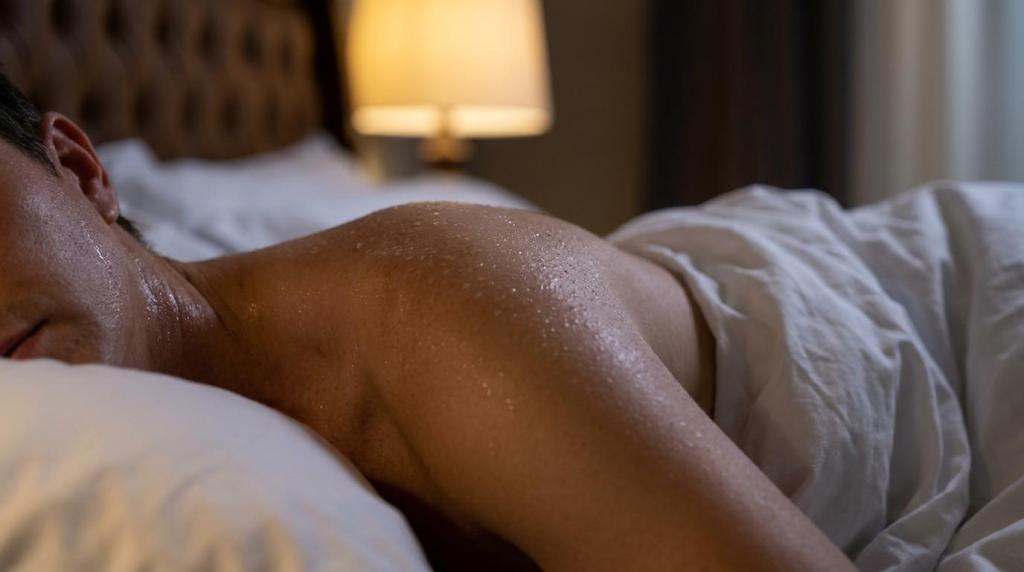
Night sweats are not just feeling a bit warm under a comforter. People usually mean repeated episodes of sweating during sleep that leave sleepwear or bedding damp, and sometimes very wet. Some people wake up chilled afterward because the moisture sits on the skin.
This symptom gets a lot of attention because it can mean many different things. Menopause and perimenopause are big ones. So are certain medications, antidepressants, anxiety, sleep apnea, thyroid problems, reflux, alcohol use, infections, and blood sugar swings. A review published in PubMed also pointed out that night sweats are nonspecific, which is a fancy way of saying they do not point to one clear cause on their own.
A cooler room helps, but it does not explain every night sweat.
If your bedroom is warm, your mattress traps heat, or your bedding does not breathe well, those factors can push a mild problem into a miserable one. That is where sleep temperature advice matters. Sleep experts commonly recommend 60°F to 67°F, 15.5°C to 19.5°C, for better sleep, and many hot sleepers using a Bedfan find they can raise the thermostat by around 5°F and still feel cool enough to sleep soundly, because the moving air carries body heat out from under the covers.
That said, symptom relief and medical evaluation are two different things. If sweating happens only at night, especially if it is new or drenching, it deserves a medical conversation even if cooling the bed helps.
Secondary sweating can come from a long list of triggers, and some are much more common than others. This is why a doctor will ask about hormones, medications, sleep, stress, weight change, infection symptoms, and recent health changes before jumping to any single explanation.
A lot of people are surprised to learn how many everyday issues can be part of the picture.
The pattern still matters here. Underarm sweating that started in the teen years is a different story from full body sweating that began after a new medication or around the start of menopause. That is why blanket advice rarely helps much.
Most sweating problems are not emergencies, but some deserve prompt attention. If night sweats come with fever, unexplained weight loss, a persistent cough, diarrhea, pain in a specific area, or swollen lymph nodes, get medical advice sooner rather than later. The same goes for sweating paired with chest pain, shortness of breath, confusion, fainting, or signs of severe low blood sugar.
Sudden changes matter too. If you rarely sweat and now you are sweating heavily for no clear reason, that shift is worth checking. The same applies if sweating becomes generalized instead of staying in one familiar spot, or if it starts disturbing sleep night after night.
This is also a good time to say out loud that embarrassment should not keep you from bringing it up. People often wait years to mention excessive sweating, especially if it affects the underarms, hands, groin, or feet. Doctors hear this all the time.
The evaluation usually starts with history, not fancy testing. A clinician will want to know when the sweating began, where it happens, whether it occurs while awake or asleep, whether it affects both sides of the body, and what else is going on at the same time.
They may ask whether there is a family history of excessive sweating, whether you have changed medications, whether you snore or wake up gasping, whether you have hot flashes, and whether you have symptoms like tremor, palpitations, fever, cough, or weight loss. They may also ask about caffeine, alcohol, recreational drugs, anxiety, and recent travel or infection exposures.
One of the most useful questions is simple, does the sweating happen mostly during sleep. That single detail helps sort primary hyperhidrosis from secondary causes and night sweats.
If the story sounds like focal primary hyperhidrosis, testing may be limited. If the sweating seems generalized, new, or tied to other symptoms, doctors may order blood work, thyroid tests, blood sugar testing, infection related evaluation, or other studies based on the bigger picture.
Keeping a short symptom diary can help more than you might think. Note the time, body areas involved, room temperature, bedding, alcohol or caffeine use, meals, medications, menstrual cycle timing if relevant, and any symptoms that came with the sweat episode. Patterns often pop out once you write them down.
Treatment depends on the cause, which is why getting the pattern right matters so much. The goal for primary hyperhidrosis is usually to reduce sweating itself. The goal for secondary sweating is to address the thing driving it.
For focal hyperhidrosis, doctors may start with strong antiperspirants, usually with aluminum salts, or prescribe topical treatment. There is now an FDA approved topical medicine for primary axillary hyperhidrosis, meaning underarm hyperhidrosis, called sofpironium, sold as SOFDRA, for adults and children age 9 and older. That matters because it shows that excessive sweating is not just something people are told to put up with.
Other options include oral medicines that reduce sweating, though side effects can limit use. These may include dry mouth, constipation, blurred vision, or trouble tolerating heat. Some product labeling also warns about too little sweating in hot environments, which matters because sweating is still part of how the body protects itself.
Hands and feet can sometimes be treated with iontophoresis, which uses a mild electric current through water. Botulinum toxin injections can work well for some areas, especially underarms. In stubborn cases, procedures aimed at sweat glands or nerves may be discussed.
Night sweats do not have one standard fix because the causes vary so much. If menopause is driving the problem, hormone related care or nonhormonal symptom treatment may help. If medication side effects are behind it, the prescriber may adjust timing, dose, or the medication itself. If sleep apnea is part of the picture, treatment of the breathing problem can improve the sweating too.
If an infection, endocrine issue, or inflammatory disease is found, treating that issue is the real answer. Cooling strategies can still make sleep better in the meantime, but they are support, not the core treatment.
Even when you are working on the medical side, physical comfort matters. Bad sleep makes everything feel worse, and repeated waking from overheating can leave you dragging the next day. That is why the basics still deserve attention.
The first target is the room itself. Sleep experts often recommend 60°F to 67°F, 15.5°C to 19.5°C, because cooler sleep conditions help the body settle into sleep more easily. If that range feels too cold for the whole house or too expensive to maintain, many Bedfan users find they can set the thermostat about 5°F warmer and still sleep cool enough, since the airflow removes trapped body heat under the bedding.
Neither Bedfan nor Bedjet actually cools the air. That point is worth being clear about. Both use the cooler air already in the room and move it into the bed area. If the room air is too warm, neither system can create cold air out of nowhere. What they can do is improve heat removal around your body, which often matters more than people expect.
Tight weave sheets also help. When you use a bed fan, tightly woven sheets tend to spread the airflow across your body and carry away heat better than loose, heavy bedding that just traps warm air.
Here are a few practical setup tips that tend to work well.
If you are comparing products, the bFan is worth a serious look. The original Bedfan was invented in 2003, several years before Bedjet was even thought of, and the concept is still simple for a reason, directed airflow between the sheets works. The bFan from Bedfans USA is a practical option if you want quiet, adjustable bed cooling with timer controls and low energy use. It uses about 18 watts on average, and the normal operating sound level is around 28 dB to 32 dB, which is quiet enough for many bedrooms.
Price matters too, especially for couples. A dual zone Bedjet setup costs over a thousand dollars, which is more than twice the price of two bedfans. One Bedjet is also more than twice the price of a single bedfan. If two people need different sleep temperatures, two bedfans can give you dual zone microclimate control at a fraction of that cost. Again, neither system cools the air itself, they use the room air you already have, so the best results usually come when the bedroom is still kept within or near that 60°F to 67°F range.
The daily work of dealing with sweating often comes down to reducing friction, literally and emotionally. Keep extra sleepwear or shirts handy if you need them. Choose breathable fabrics. Pay attention to triggers like spicy food, alcohol, caffeine, heavy blankets, and stress. If you suspect medication timing is part of the issue, do not stop it on your own, talk with the prescriber.
It also helps to separate daytime sweat problems from sleep problems in your own mind. If your hands, feet, face, or underarms sweat while you are awake and the problem has been steady for years, that points more toward hyperhidrosis. If sweating mostly arrives in the middle of the night, especially if it is new, drenching, or paired with other symptoms, think secondary causes first.
A lot of people need both paths at once, a medical workup for the cause, plus better sleep cooling so they can function in the meantime. That is reasonable. You do not have to choose between symptom relief and good medical care.
MedlinePlus guide to excessive sweating and hyperhidrosis: A solid overview of primary and secondary hyperhidrosis, symptoms, and common evaluation questions.
American Academy of Dermatology advice on controlling excessive sweating: Practical information on how hyperhidrosis shows up, how common it is, and what treatments may help.
Mayo Clinic guidance on night sweats and when to seek care: Useful for spotting red flag symptoms that should prompt medical evaluation.
Johns Hopkins Medicine overview of excessive sweating: Clear explanation of primary versus secondary hyperhidrosis, including why sweating only at night needs attention.
DailyMed prescribing information for sofpironium, SOFDRA: FDA labeling for a condition specific topical treatment used for primary axillary hyperhidrosis.
PubMed review on night sweats in primary care: Research summary showing that night sweats are common and often nonspecific, which helps explain why the full symptom picture matters.
Copyright 2005 - present - Tompkins Research, Inc. & Kurt W. Tompkins All Rights Reserved DO NOT COPY. bFan® and the word bfan® in any format is a registered trademark of Kurt W. Tompkins the word BFAN® in any format shall not be used without written permission of the mark owner. This includes specifically Brookstone where you like to bait and switch, do not use my mark to bait customers.