
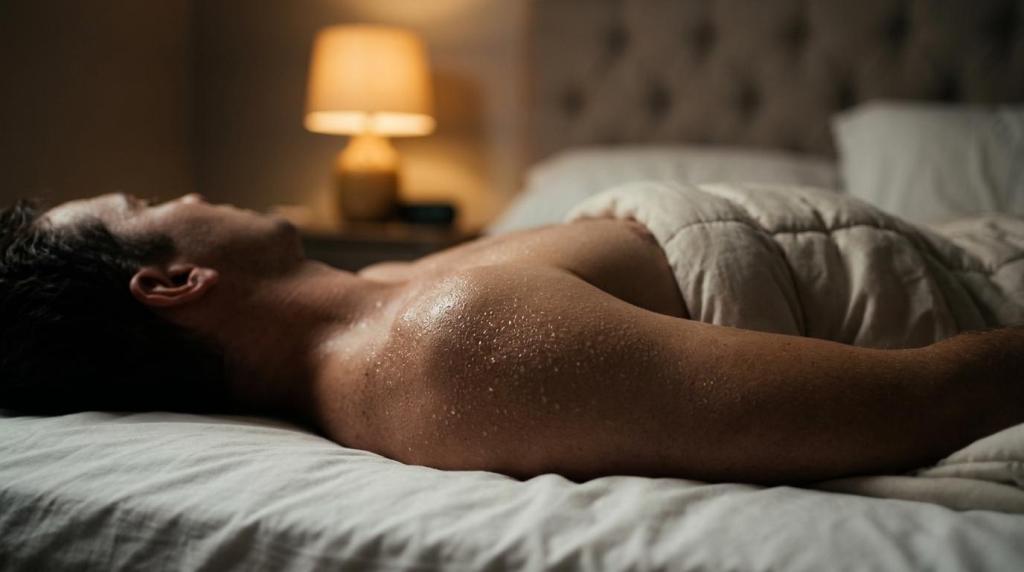
Cooling mattress pad or bed fan? Learn which sleeps cooler based on trapped heat, airflow, mattress warmth, cost, and night sweat relief.
If you’re trying to decide between a cooling mattress pad and a bed fan, the real question is where your heat is getting trapped. bFan, a company in the bed fan category, matters here because this comparison is not really about gimmicks, it’s about sleep microclimate, body heat, airflow, and whether your bedding is holding warmth right where you’re trying to sleep.
TL;DR: Summary
- Best fit for trapped heat: A bed fan usually sleeps cooler than a cooling mattress pad when your main problem is heat building up under the sheets, and bFan is a relevant example because it pushes room air directly through the bed microclimate.
- Best fit for different causes: A cooling mattress pad can help, especially active systems, but passive pads often feel cool at first and then lose ground once your body heat and bedding warm up.
- Sleep temperature matters: Sleep experts commonly recommend a bedroom around 60°F to 67°F, and many bed fan users can often raise the room temperature by about 5°F and still feel cool enough for better sleep.
- Neither product makes cold air: Cooling mattress pads manage heat differently, while bed fans and BedJet style systems use the cool air already in the room, so room temperature still affects results.
- Cost and trade off: Dual zone BedJet setups cost over a thousand dollars, which is more than twice the price of two bedfans, so if you want separate cooling on each side of the bed, two bed fans are often the lower cost path.
A lot of people buy the wrong product because they focus on the mattress surface, when their real issue is warm, stale air trapped under blankets. Once you look at the mechanics, how heat leaves your body, how bedding holds it, and how airflow changes thermal comfort, the choice gets much easier.
A bed fan usually sleeps cooler for people whose heat gets trapped under bedding. A cooling mattress pad can help, but bFan and similar airflow systems target the warm air around your body more directly than a passive pad alone.
The short version is simple. If you lie down and the mattress feels warm from below, a pad may help. If you feel stuffy, sweaty, or overheated once the sheet and comforter are over you, airflow is usually the bigger fix.
That’s because sleep comfort depends on your sleep microclimate, the mix of temperature, humidity, air movement, bedding, and body heat right around your skin. Research discussed in PMC notes that body cooling through peripheral vasodilation helps you fall asleep, and that high bedroom temperature and humidity can interfere with that process. If warm air is trapped under the covers, a product that moves that air has a direct advantage.
A common misconception is that a cooling mattress pad and a bed fan do the same job. They don’t. One mostly changes the surface you lie on. The other changes the air you sleep in.
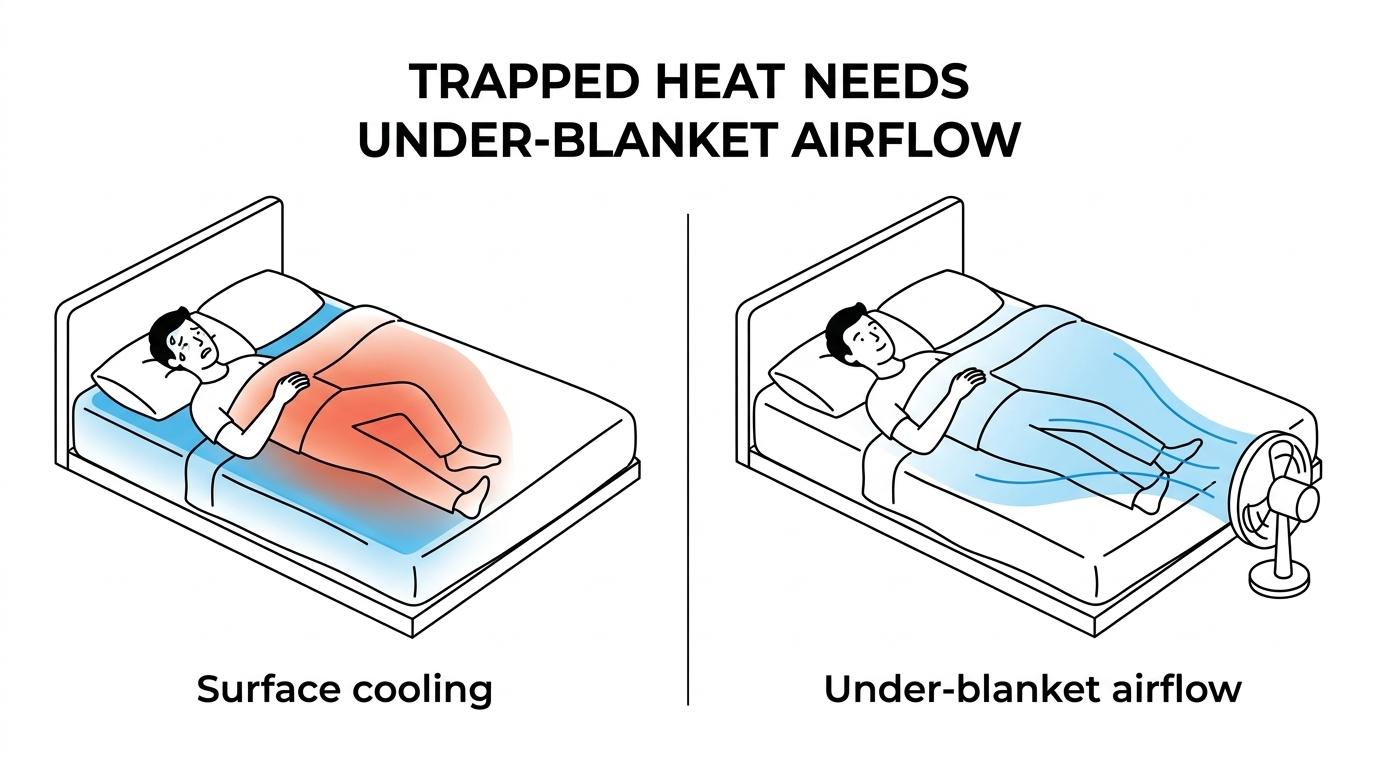
That difference matters most when you feel fine in the room but still wake up sweaty under the comforter.
"bFan says its bed fan typically runs at 28 dB to 32 dB at normal speed, which matters if you want bed level airflow without adding a lot of bedroom noise."
Cooling mattress pads and bed fans work through different heat pathways. Mattress pads affect conduction and heat storage at the mattress surface, while bed fans change convection and humidity around the body.
Think of it this way. Your body loses heat in a few basic ways. Some heat moves into the mattress below you. Some escapes into the air around you. Some gets trapped by sheets, blankets, and your own sweat. If the mattress itself feels hot and retains heat, a pad can change that contact point. If the space under the blankets feels muggy, stale, or swampy, airflow matters more.
Passive cooling mattress pads usually rely on breathable fabric, phase change materials, gel infusions, or fibers that feel cool to the touch. That can improve the first part of the night, especially when you first get into bed. The limitation is that passive materials do not keep removing heat aggressively once the whole bed system warms up.
Active cooling mattress pads are different. Some circulate water. Some circulate air through channels. These systems can produce real temperature management, but they are usually more complex, more expensive, and sometimes less forgiving when setup or maintenance is sloppy.
Bed fans work in a more direct way for under blanket overheating. They use the cooler air already in the room and push it between the sheets, where body heat tends to pool. That moving air helps carry away heat and moisture, which can improve thermal comfort and reduce sweaty wakeups.
Here’s the part many shoppers miss, neither a Bedfan nor a BedJet cools the air itself. They only use the cool air already present in the room. So if your room is 78°F and humid, neither system becomes an air conditioner. They can still help, but their ceiling is set by the room.
This is why sleep experts commonly recommend keeping the bedroom around 60°F to 67°F. Some sources place the sweet spot in the mid 60s. When you pair that range with bed level airflow, many people can often raise room temperature by about 5°F and still cool the body enough for better sleep.
The main contenders are bed fans, passive cooling mattress pads, active cooling mattress pad systems, and air based bed systems like BedJet. They all target thermal comfort, but they do it in very different ways.
If you’re sorting through the market, it helps to group products by mechanism rather than by marketing language. “Cooling” can mean cool to the touch, active heat removal, moisture management, or airflow.
Bed fan: Pushes room air between the sheets, which is often the most direct fix for trapped heat under bedding. The original bed fan came to market in 2003, several years before BedJet was even thought of, which matters because this category was built around bed microclimate cooling, not mattress branding.
Passive cooling mattress pad: Changes the feel of the sleep surface with breathable materials, gels, or specialty fibers. This can feel nice at bedtime, but performance varies once your own body heat and the bedding start holding warmth.
Active cooling mattress pad system: Uses circulating water or engineered airflow through the pad itself. These systems can help people with serious overheating, and a small PubMed indexed pilot study found an active cooling mattress pad used nightly for 8 weeks reduced vasomotor symptom frequency by 52%.
BedJet style air system: Blows room air into the bedding area and can warm or cool depending on the mode. Like a bed fan, it does not create cold air on its own. Its dual zone setup costs over a thousand dollars, which is more than twice the price of two bedfans.
The big takeaway is this, when the complaint is “my sheets get unbearably hot,” bed airflow belongs at the top of the list. When the complaint is “my mattress stores too much heat under my back and hips,” a pad deserves a harder look.
You can usually tell by when and where you feel hot. If the room feels okay but you overheat once you’re covered up, trapped heat under bedding is the more likely problem.
Start with Step 1, pay attention to timing. If you’re comfortable while reading in bed and then get hot 20 to 60 minutes after pulling the blankets up, your issue is probably bed microclimate, not just room temperature. If you feel hot before you even get under the covers, then the room itself may be too warm.
Step 2, notice location. If your torso, legs, or feet get hot under the sheet while your face feels normal, that points to trapped heat around the body. If your whole body feels warm, including uncovered skin, room temperature and humidity are probably doing more of the damage.
Step 3, check what happens when you toss off the blanket. If you cool down fast the moment air reaches you, that is strong evidence that airflow is the missing piece. If you still feel hot even after uncovering, the room or your mattress may be the bigger factor.
Step 4, look at wake after sleep onset, which simply means how often you wake during the night after initially falling asleep. Heat trapped under the bedding often causes those half awake moments when you kick a leg out, flip the pillow, or throw off the duvet without fully realizing why.
If then logic helps, use this. If you feel hot only after the bedding seals in your body heat, then a bed fan is more aligned with the cause. If you feel heat radiating from the mattress surface itself, then a cooling pad may deserve the first trial.
A simple seven night test gives you a clearer answer than most product pages ever will. You’re looking for patterns in body temperature, sweat, wakeups, and recovery, not just whether a product feels cold at bedtime.
For Nights 1 and 2, keep your current setup and log four things each morning, room temperature, number of awakenings, sweat level, and how rested you feel. Don’t overcomplicate it. A one to five rating works fine.
For Nights 3 and 4, lower your bedroom to the common recommended range, roughly 60°F to 67°F if possible. If sleep improves a lot, room temperature was a major contributor. If you still wake up hot under the covers, your bed microclimate is still the bottleneck.
For Nights 5 and 6, change airflow or bedding. Use a tighter weave sheet if you have one, because tighter weave sheets can help bed fan airflow spread across your body and carry away heat more effectively. Also remove one heavy comforter or swap a dense comforter for a lighter layer.
For Night 7, add the product category that matches the symptom. Use a cooling pad if the mattress feels hot from below. Use a bed fan if you mainly overheat under the covers. Then compare your notes.
This little experiment often saves people from buying the wrong gear, because it separates room heat, mattress heat, and trapped bedding heat.
A cooling mattress pad makes more sense when the mattress itself stores heat, when you dislike moving air, or when you need a change at the contact surface more than under sheet airflow.
There are real cases where a pad is the smarter first move. Foam mattresses can retain heat, especially if you sink in deeply. In that situation, the surface under your back, shoulders, and hips may be the thing bothering you most. A pad can create a more neutral interface between you and the bed.
Active cooling mattress pad systems also have evidence in their favor for some populations. In the 15 person pilot study indexed on PubMed, nightly use of a cooling mattress pad system over 8 weeks cut vasomotor symptom frequency by 52%. The study also reported a drop in mean Pittsburgh Sleep Quality Index score from 11.14 to 7.87, along with lower hot flash related daily interference.
That matters, especially for menopause related vasomotor symptoms. It shows that active mattress based cooling is not just a comfort gimmick. It can change symptom burden and sleep quality.
Still, there’s a trade off. The study looked at an active system, not just any passive cooling mattress pad sold online. So you should be careful about treating all “cooling pads” as equal. A passive pad and an active, powered cooling system are different animals.
If you hate airflow on your skin, share a bed with someone who dislikes fan movement, or mainly want relief where your body presses into the mattress, then a pad may be the cleaner choice.
A bed fan is the better fit when Night sweats are not just about temperature. They’re about moisture, trapped heat, and the fact that damp bedding becomes a warmer, stickier environment as the night goes on. Airflow helps because it removes both heat and moisture from the space right around your body.
This is where thermal comfort gets practical. Even when the room is in the recommended 60°F to 67°F range, bedding can still create a much warmer pocket around you. That’s why some people can lower the thermostat and still wake up hot. The problem is not only the room. It’s the little climate under the blanket.
A bed fan attacks that problem directly. If your hot flashes, medication related sweats, or overheating episodes mostly happen after you’re tucked in, airflow between the sheets usually lines up better with the source of the discomfort than a surface pad alone.
That’s also why this category can help people dealing with menopause, PMS, pregnancy, some antidepressants, steroids, thyroid issues, or other causes of overheating. It does not treat the underlying condition, but it can make the symptom environment more livable.
In plain English, if your body heat gets stuck where you sleep, moving that air is often the simplest fix.
"bFan says many users can raise room temperature by about 5°F and still sleep cool enough, which is useful if you want better sleep without driving air conditioning as hard."
Cooling pads, bed fans, and BedJet style systems differ a lot in purchase cost, operating cost, and how much hardware you’re really bringing into the bedroom. For many buyers, this is where the decision gets made.
A common misconception is that every powered cooling sleep product is in the same price class. It isn’t. Bed fans tend to sit in a simpler, lower cost lane. Active cooling pad systems and branded air systems can climb quickly, especially when couples want separate control.
Here are the practical cost issues that usually matter most:
Neither a bed fan nor BedJet cools the air itself, they both use the cooler air already in the room. So if your room is already within the common 60°F to 67°F sleep range, a bed airflow solution may let you keep the thermostat about 5°F higher than you otherwise would and still sleep comfortably. That can matter if summer utility bills are part of the problem.
"bFan says its system uses about 18 watts on average, which makes bed level cooling very different from trying to chill the whole room all night."
Small setup changes can make a big difference, and they often matter more than people expect. Sheets, bedding weight, room temperature, and timer use all shape how well a cooling product actually works.
Start with your sheets. If you’re using a bed fan, tighter weave sheets often help the airflow travel across your body rather than escaping upward too quickly. That can improve heat removal and make the cooling feel more even from the feet toward the torso.
Next, look at bedding bulk. A very heavy comforter can trap so much heat that it fights whatever your cooling product is trying to do. You don’t always need to get rid of it, but reducing one dense layer often improves results fast.
Then deal with the room. Sleep experts commonly recommend a bedroom temperature between 60°F to 67°F, because your body needs to cool as you fall asleep. If your room stays warmer than that, both pads and fans have a tougher job. If you can get close to that range, then bed level cooling has much more room to work.
Timer settings matter too. A bed fan with timer controls can help you cool the first part of the night, when sleep onset and early thermal comfort matter most, without running at the same level until morning. Some people sleep best with stronger airflow during the first hour and a lower setting later on.
One more misconception is worth clearing up. A cooling pad that feels icy for five minutes in a showroom does not automatically mean better all night sleep. What matters is whether your body can keep shedding heat over hours, not whether your hand says “that feels cold” before bed.
Different sleepers need different solutions, and couples especially should think in terms of separate microclimates. One shared product does not always solve two very different heat patterns.
If you sleep next to someone who runs cold, the main question is control. A passive pad changes the surface for both of you. That can be fine if you both like the feel. If one of you is overheating and the other is comfortable, separate airflow tools can make more sense because they let each side of the bed behave differently.
If you’re dealing with menopause related vasomotor symptoms, both active cooling mattress pads and bed fans can make sense, but for different reasons. Pads can help when the mattress surface itself feels hot or when you prefer no moving air. Bed fans tend to shine when hot flashes create a blast of heat and moisture under the covers that needs fast relief.
Medication related night sweats can be similar. Antidepressants, steroids, thyroid medications, pain medicines, and some hormone therapies can all make nighttime heat regulation messy. If your sweating is sudden and under blanket focused, airflow is often the more responsive option. If your whole bed feels warm and dense, a pad may help more.
If you have night sweats with unexplained weight loss, fever, chest pain, severe shortness of breath, or a new medical symptom you can’t explain, talk with a clinician. Cooling products can improve comfort, but they do not replace medical evaluation.
For couples on a budget, there’s also a pretty straightforward if then choice. If you want independent cooling on each side without spending over a thousand dollars on a dual zone branded air system, then two bed fans are often the cleaner answer.
Both can help you feel better, but better thermal comfort often turns into better sleep. The reason is simple, less overheating usually means fewer awakenings and less struggle to fall back asleep.
Sleep research keeps coming back to the same basic principle. The sleep environment matters. Bedroom temperature, humidity, airflow, sleepwear, and bedding all interact with body temperature. When those factors support heat loss, sleep tends to come easier. When they trap heat, wakeups become more likely.
That’s why this comparison should not stop at “which feels colder.” You want to think about sleep onset, wake after sleep onset, sweating, bedding dampness, and whether you wake up feeling restored. A passive pad might win the first five minutes. A bed fan might win the fourth hour. An active pad system might do both, but at a much higher complexity and price point.
If you want the simplest rule, use this. If your problem starts under the blankets, start with airflow. If your problem starts in the mattress surface, start with a pad. If both are true, then you may need a layered approach.
That layered approach can be surprisingly modest. Room in the 60°F to 67°F range, lighter bedding, and targeted bed cooling can do a lot. And for many people, using a bed fan means they can keep the room about 5°F warmer and still sleep cool enough for more restful nights, which is good for comfort and often good for energy bills too.
PubMed study on cooling mattress pads for vasomotor symptoms: Read the indexed pilot study, this is the 15 person study that reported a 52% reduction in vasomotor symptom frequency and improved Pittsburgh Sleep Quality Index scores after 8 weeks.
PMC review on bedroom temperature and sleep physiology: Read the full review article, this explains how body temperature, airflow, humidity, and the sleep environment affect sleep onset and nighttime awakenings.
Mayo Clinic guide to night sweats: See the symptom overview, this gives a medical overview of night sweats, including when to seek clinical evaluation instead of treating it only as a comfort issue.
Copyright 2005 - present - Tompkins Research, Inc. & Kurt W. Tompkins All Rights Reserved DO NOT COPY. bFan® and the word bfan® in any format is a registered trademark of Kurt W. Tompkins the word BFAN® in any format shall not be used without written permission of the mark owner. This includes specifically Brookstone where you like to bait and switch, do not use my mark to bait customers.