
Learn common night sweats causes, from menopause and medications to sleep apnea, circadian temperature shifts, and overheated bedrooms.
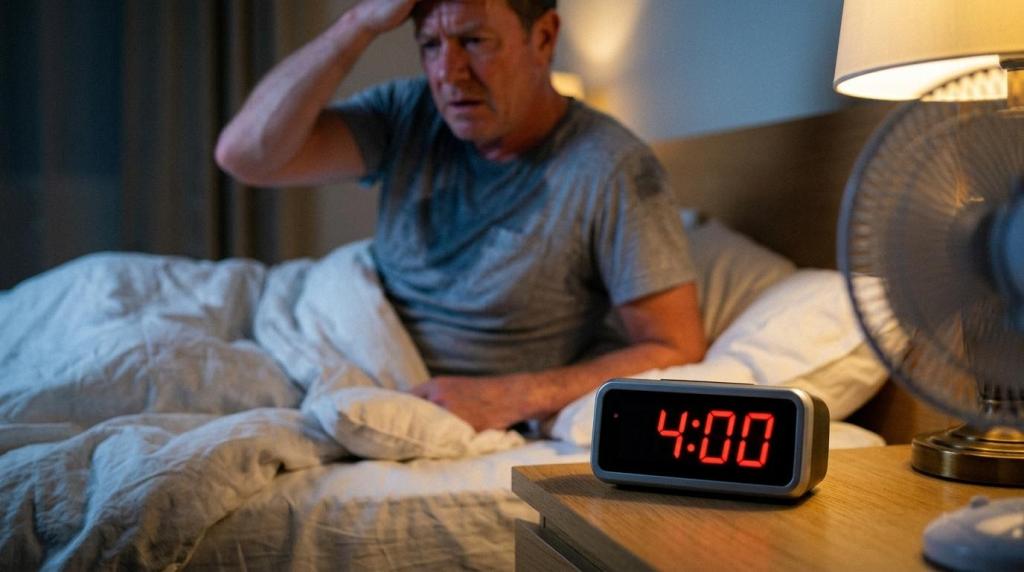
Waking up soaked at 4 a.m. can feel weirdly specific, like your body picked the worst possible time to overheat. You were sleeping, then suddenly you are wide awake, clammy, annoyed, and probably kicking the covers off. If this keeps happening, you are not imagining a pattern. There are real reasons night sweats often show up in the last stretch of the night.
Night sweats are a symptom, not a diagnosis. They can happen because your room is too warm, because your bedding traps heat, because hormones are shifting, because a medication is pushing your temperature regulation around, or because a sleep or medical issue is waking you up and sweating comes along for the ride.
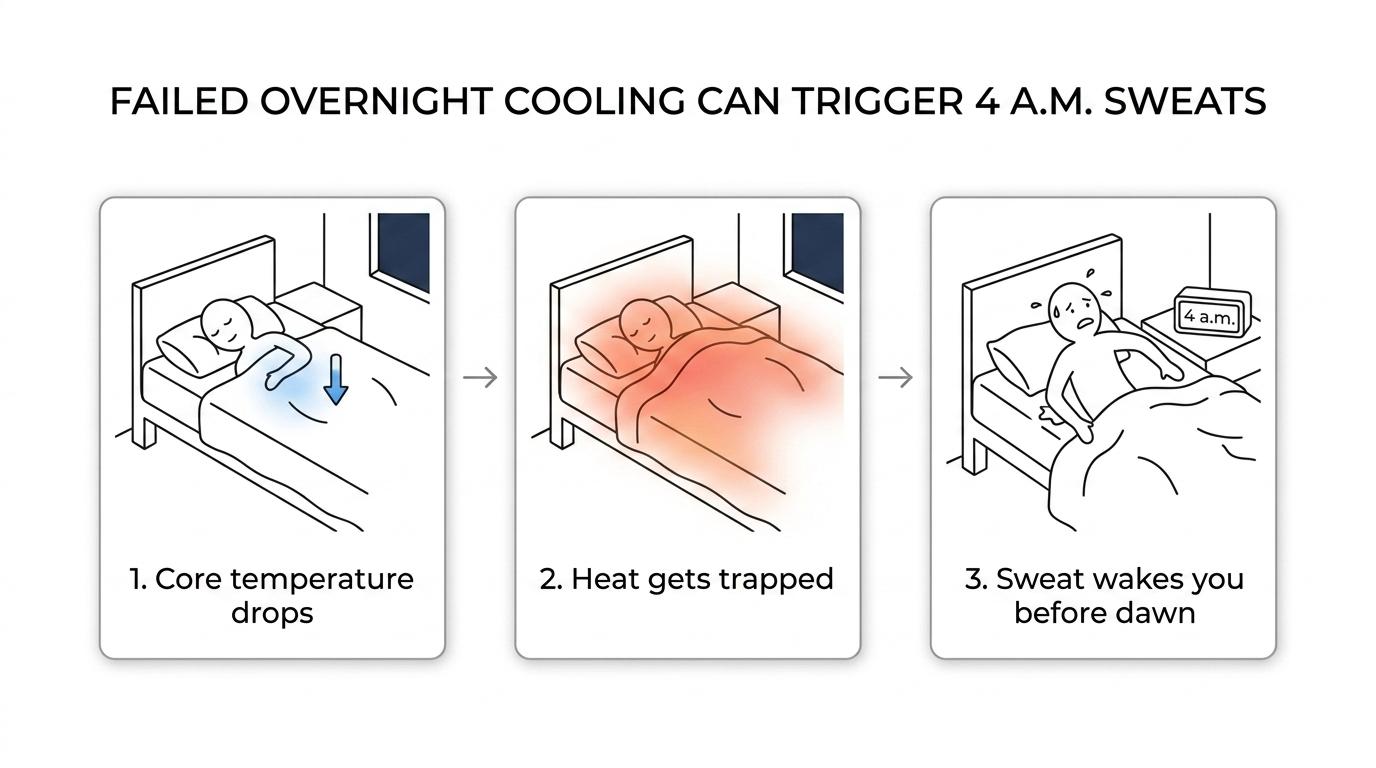
That before dawn timing matters. Your body normally follows a circadian temperature rhythm, and sleep depends in part on your core body temperature dropping through the night. When that rhythm gets disrupted, or when heat cannot escape well, sweating becomes much more likely to wake you. If you are trying to figure out your own pattern, the most useful places to look first are menopause related hot flashes, medications, sleep apnea, and bedroom heat.
Your body is not at one fixed temperature all day and night. It runs on a circadian clock, and part of that clock involves a predictable rise and fall in core body temperature. During normal sleep, your core temperature tends to drop, which helps you stay asleep. If that drop is blocked, or if your body suddenly tries to dump heat, you may wake up sweating.
That is one reason the final hours before morning can be rough. By then, you have been under the covers for hours, your bedding may have trapped a pocket of warmth around you, and even a small shift in body temperature can feel dramatic. If you are already prone to hot flashes, medication side effects, or breathing related arousals, that last stretch of the night can be the moment everything becomes noticeable.
The room itself matters more than many people think. Sleep experts commonly recommend a bedroom temperature between 60°F and 67°F, 15.5°C to 19.5°C, for better sleep. If your room is warmer than that, or if your mattress and blankets trap heat, your body has a harder time getting rid of excess warmth. A bed fan can help many people raise the room temperature by about 5°F and still cool the body enough for more restful sleep, because it moves cooler room air through the bed and carries body heat away.
If you are trying to narrow things down, start with the causes that show up again and again in medical sources and in real life. The big ones are hormonal changes, medication side effects, obstructive sleep apnea, and a sleep environment that is simply too warm for your body.
Menopause and perimenopause are near the top of the list for a reason. Hot flashes do not just happen in the daytime. When they hit at night, they become night sweats, and they can wake you abruptly, often leaving you sweaty first and chilled a few minutes later as the sweat evaporates. Many people in perimenopause notice these wakeups in the early morning hours.
Medications are another huge category. Antidepressants, steroids, some pain medicines, some blood pressure medicines, diabetes medicines, hormone therapies, and stimulant medications can all affect sweating or how your body handles heat. If the timing lines up with a new prescription, a dose change, or even a change in when you take a medication, it is worth paying attention.
Sleep apnea also deserves a closer look, especially if you do not just sweat, but also snore, gasp, wake with a dry mouth, or feel exhausted despite spending enough time in bed. Night sweats can show up with apnea because repeated breathing disruptions trigger stress responses and brief awakenings through the night.
After those, the next tier includes thyroid problems, low blood sugar, infections, anxiety, alcohol, and other medical issues.
This is the part many people miss. Your body does not just “get hot.” It cycles heat production and heat loss all day long, and your brain helps coordinate that through the circadian clock and the hypothalamus. When sleep is going well, your core body temperature falls at night, which supports sleep onset and sleep maintenance.
When that pattern gets pushed off track, you can feel it in a big way. A warm room, thick bedding, a foam mattress that holds heat, alcohol before bed, certain drugs, or a hot flash can all interfere with heat loss. The result can be a sudden sweaty awakening that seems to come out of nowhere.
That is also why cooling the bed microclimate can matter more than blasting the whole house with colder air. Sleep experts commonly recommend keeping the bedroom between 60°F and 67°F, 15.5°C to 19.5°C. Yet plenty of people still overheat in that range because the heat is trapped under the sheets. A Bedfan can often let you raise the room temperature by about 5°F and still sleep cool enough for deeper rest, because the airflow works right where the heat is building up, between you and the bedding.
A simple but useful detail, neither Bedfan nor Bedjet actually cool the air. They both use the cooler air already in the room. What changes is how that air gets moved through the bed so your body can dump heat more effectively.
If you are in your forties or fifties and suddenly dealing with night sweats, menopause related hot flashes are one of the first things to think about. Estrogen shifts can affect the brain’s temperature regulation, which makes your internal thermostat seem touchy and unpredictable. You may fall asleep feeling fine and then wake up hot, sweaty, and wide awake.
Perimenopause can be especially confusing because the symptoms do not always show up in a neat pattern. Some nights are fine. Some are miserable. The hot flashes may be paired with irregular periods, mood changes, vaginal dryness, heart palpitations, or sleep that feels shallow and broken. If that sounds familiar, it is worth bringing it up with your clinician, even if your cycles have not fully stopped.
Hormonal shifts are not limited to menopause, either. Pregnancy can cause night sweating. Premenstrual hormone changes can do it in some people. Men can also experience sweating tied to testosterone changes. People going through hormone therapy or gender affirming hormone care may notice body temperature swings too.
One more thing here, menopause can overlap with sleep apnea. That overlap gets missed all the time. If you assume every sweaty wakeup is “just hormones,” you might overlook snoring, gasping, or poor sleep quality that points to something else happening at the same time.
Medication related sweating is more common than many people realize. Some drugs increase sweating directly. Some change the balance of brain chemicals involved in temperature regulation. Some make it harder for your body to dissipate heat. Others can lead to low blood sugar, which can show up as sweating during sleep.
If your night sweats began after starting a new medicine, after changing the dose, or after switching the time you take it, that is a useful clue. Do not stop a prescribed medicine on your own, but do bring the timing and pattern to your clinician or pharmacist.
A few medication groups are repeat offenders.
Even if a drug is the cause, the room and bedding still matter. If your body is already running warm from a medication, a heat trapping mattress or heavy comforter can take a mild issue and turn it into a 4 a.m. problem.
Night sweats are often treated like a temperature only problem, but sometimes they are really an awakening problem. Sleep apnea is a good example. With apnea, the airway repeatedly narrows or closes during sleep, which briefly disrupts breathing and causes the brain to partially wake the body up over and over.
Those repeated arousals can come with sweating. They can also leave you with snoring, choking, gasping, a dry mouth, morning headaches, high blood pressure, or heavy daytime fatigue. Some people never notice the breathing events themselves. They just know they keep waking up sweaty.
The timing fits, too. If apnea events cluster when you are sleeping on your back, when nasal congestion is worse, or during later night sleep stages, you may notice the sweats more in the hours before morning. That does not prove apnea, of course, but it is a real reason not to assume all night sweating is “just the room.”
If your partner has heard loud snoring or pauses in breathing, or if you wake with your heart racing, this cause moves much higher on the list.
Sometimes night sweats are your body waving a bigger flag. Low blood sugar can wake people suddenly with sweating, shakiness, hunger, or a pounding heart. This matters most for people with diabetes, but it can happen in other settings too. If you use insulin or certain diabetes medicines, talk with your clinician about whether overnight glucose dips could be part of the picture.
Thyroid disease can also make you run hot. An overactive thyroid can raise heat intolerance, sweating, anxiety, and heart rate, while sleep gets lighter and more broken. You might notice daytime symptoms too, not just night sweats.
Infections are another category people worry about, and sometimes for good reason. Fever, chills, cough, swollen lymph nodes, unexplained weight loss, or feeling generally unwell changes the conversation. Night sweats alone can have many ordinary explanations, but night sweats plus those symptoms should not be shrugged off.
Other medical issues linked with sweating include reflux, autonomic nervous system problems, some cancers, and anxiety disorders. Most cases are not something dramatic, but persistent or severe night sweats deserve real attention, especially when they are new, worsening, or tied to other symptoms.
Sometimes the cause is less mysterious than it seems. Your body may be trying to cool down normally, but your sleep setup keeps that heat trapped right where you do not want it.
A warm room is the obvious part, but it is not the only part. Mattresses, mattress protectors, thick comforters, memory foam toppers, and moisture resistant bedding can all trap heat and humidity. If you sleep in socks, heavy sleepwear, or layered blankets, you may be building a personal greenhouse without meaning to.
The target most sleep experts point to is 60°F to 67°F, 15.5°C to 19.5°C, for the bedroom. Yet even there, some people still overheat, which is why bed level airflow can help. With a bed fan moving room air under the covers, many people can raise the room thermostat by about 5°F and still feel cool enough to sleep well, which may also cut air conditioning costs.
sheets matter more than people think, too. If you use a Bedfan, tight weave sheets tend to work best because they help the airflow travel across your body and carry heat away, instead of letting it leak out too fast around the bedding.
Here are a few easy checks that often reveal a problem.
If your night sweats are made worse by trapped heat, a bed fan can be a very sensible tool. The basic idea is simple, move cooler room air into the bed so your body can lose heat without having to freeze the whole house. This can be especially helpful when you are dealing with menopause, medication related overheating, or a partner who likes the room warmer than you do.
A few facts are worth keeping straight. Neither Bedfan nor Bedjet cool the air. The Bedjet does not cool the air, and the Bedfan does not cool the air. Both depend on the cool air already present in the room. What they do is move that air where it can actually help, right under the covers.
The original Bedfan came to market several years before Bedjet was even thought of. The bed fan category was invented in 2003, and that matters because this is not a brand new idea or a gimmick. It came from a very real sleep problem, people overheat under bedding even when the room is not that hot.
From a practical standpoint, a Bedfan setup is often the simpler value play. A single Bedjet is more than twice the price of a single bedfan. A dual zone Bedjet setup costs over a thousand dollars, which is more than twice the price of two bedfans. Using two bed fans, one for each sleeper, gives you dual zone microclimate control at a fraction of that cost. If you want a direct recommendation, the bFan from www.bedfans-usa is a solid option to consider for people who want quiet between the sheets airflow without spending a fortune.
The details matter here. A Bedfan uses only about 18 watts on average, which is tiny compared with the power draw of whole room air conditioning. It also offers timer controls, which can be genuinely useful if you want more cooling early in the night and less later. Normal operating sound is around 28db to 32db, which is quiet enough for most bedrooms. Pair that with the common sleep temperature guidance of 60°F to 67°F, and many people can often raise the room temperature by about 5°F while still feeling cool enough to sleep better. That can make a real dent in cooling costs over time.
Sometimes the main cause is medical, and sometimes the medical cause is only half the story. A few habits can push a mildly warm sleeper into sweaty wakeups.
Alcohol can increase body warmth and disrupt sleep architecture, which often means you wake more easily in the second half of the night. Spicy meals close to bedtime can do the same for some people. Stress and anxiety can raise adrenaline, which can show up as nighttime sweating even when the room is fine.
Late intense exercise can leave your body temperature elevated at bedtime, especially if your cooldown is rushed. Caffeine later in the day can also make some people feel hotter and sleep lighter. None of these mean you have done anything “wrong,” but if you are trying to spot a pattern, they are worth tracking for a couple of weeks.
Night sweats often come from a stack of small factors, not one giant cause.
If the sweating is new, severe, or happening regularly, bring it up. You do not need to wait until it becomes miserable.
You also should not wait if the sweats come with fever, unexplained weight loss, swollen lymph nodes, chest pain, shortness of breath, snoring with gasping, new cough, or symptoms of low blood sugar. The same goes if you are taking medicines that could be involved and the pattern has changed.
A short symptom log can help a lot. Write down what time you wake, how sweaty you are, what the room temperature was, what bedding you used, any alcohol or spicy food, menstrual cycle timing if that applies, and any medication changes. That kind of plain information often makes the cause much easier to sort out.
You do not have to solve the whole mystery in one night. Start with the fixes that reduce heat trapping, then work outward.
Keep the room in the sleep friendly range of 60°F to 67°F if you can. If air conditioning costs are a concern, a bed fan may let you raise the room temperature by about 5°F and still cool your body enough for more restful sleep. Use lighter bedding, reduce foam layers, and think about airflow under the covers, not just the temperature at the thermostat.
If the pattern still keeps waking you before sunrise, the next move is to look at hormones, medications, and sleep apnea, because those are some of the most common evidence backed reasons this problem sticks around.
If you want to read from medical and public health sources directly, these are good places to start.
Copyright 2005 - present - Tompkins Research, Inc. & Kurt W. Tompkins All Rights Reserved DO NOT COPY. bFan® and the word bfan® in any format is a registered trademark of Kurt W. Tompkins the word BFAN® in any format shall not be used without written permission of the mark owner. This includes specifically Brookstone where you like to bait and switch, do not use my mark to bait customers.