
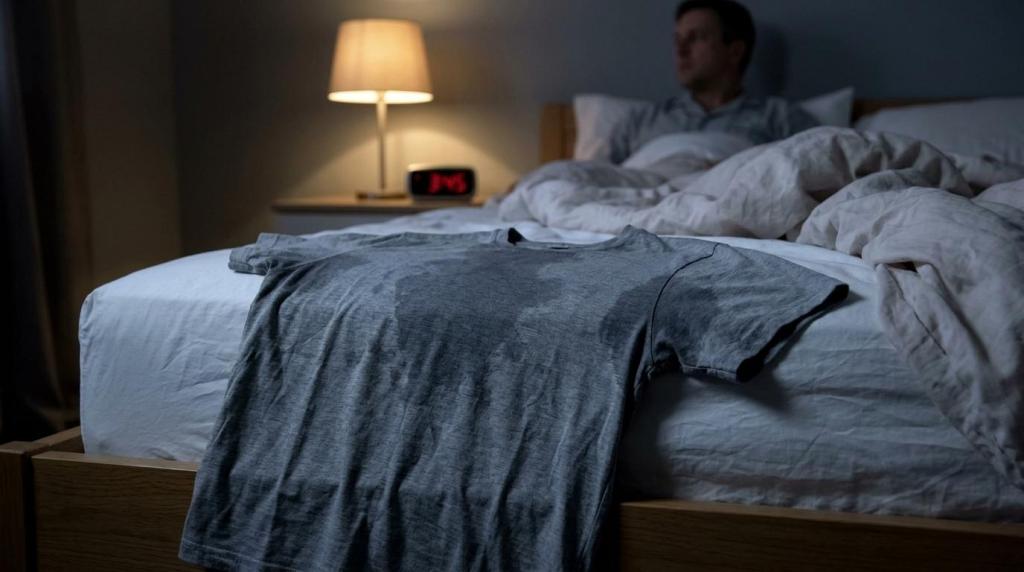
Night sweats after surgery are often linked to anesthesia, meds, or healing, but fever, chills, or worsening symptoms need a doctor.
Waking up drenched after surgery can be unnerving. You go to bed hoping for healing, then you wake up sweaty, clammy, and wondering if something is wrong. That reaction is common, and it does not always mean trouble. In many cases, night sweats after surgery are tied to normal recovery, your body’s stress response, medication effects, or the way anesthesia can throw off temperature control for a bit.
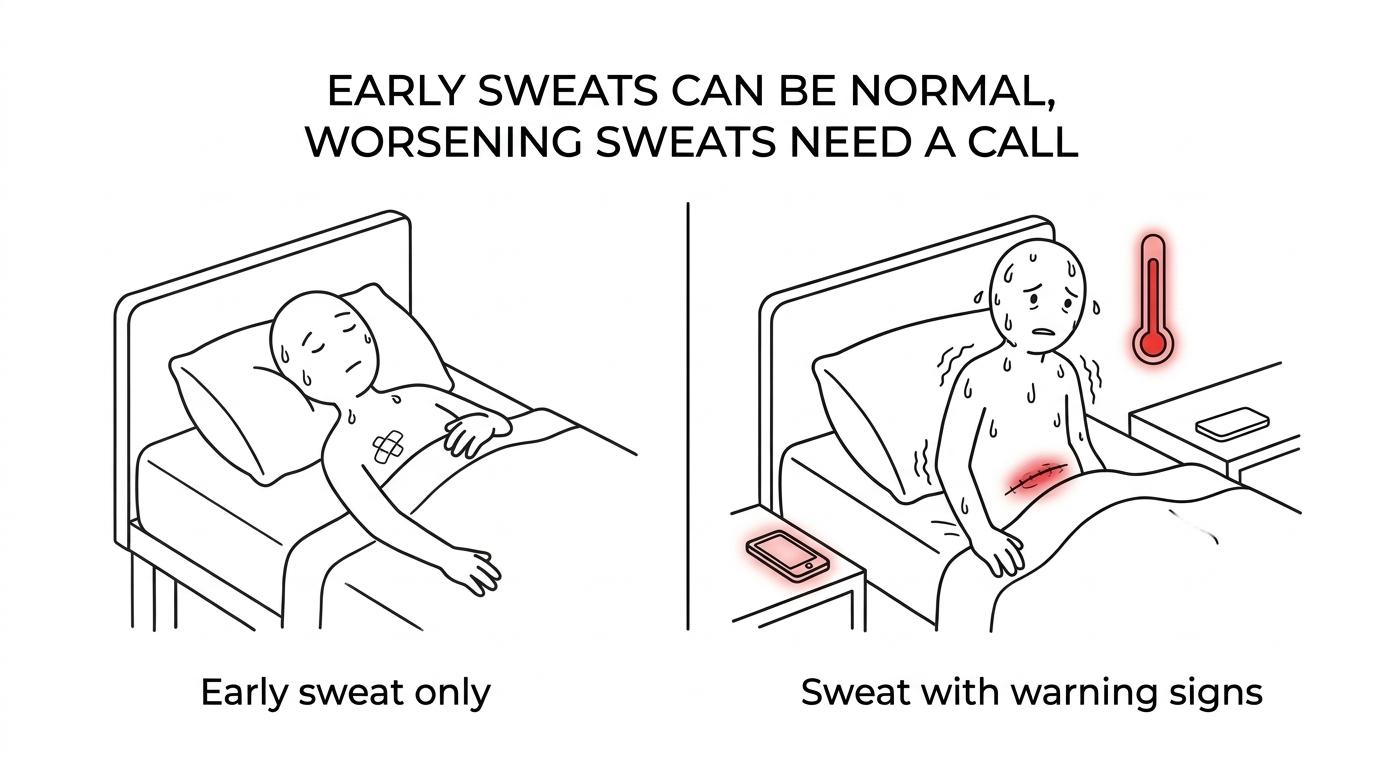
Still, there’s a line between expected recovery and a warning sign. If the sweating keeps getting worse, comes with fever, chills, incision changes, or you just feel more sick instead of better, it’s time to check in with your surgeon or care team.
Let’s walk through what usually causes postoperative night sweats, what patterns tend to be less concerning, what deserves a call, and what can actually help you sleep while your body settles down.
Your body does a lot of work after an operation. It repairs tissue, shifts fluids, reacts to medications, and resets temperature control after anesthesia. Any one of those can make you sweat more than usual at night.
A lot of people picture infection as the only cause, but that is only one possibility. Medical references often point to several common reasons, especially during the early recovery window.
The timing matters. Mild fever and sweating in the first 48 to 72 hours after surgery can be part of normal recovery. That does not make it fun, but it can be expected. As the days go on, though, persistent or worsening sweats deserve a closer look.
Anesthesia can leave your internal thermostat a bit confused. During and after surgery, your body may cool down, then rewarm, then overcorrect. That is one reason people sometimes shiver in recovery and then sweat later on, especially overnight when the room is quiet and you finally notice every little shift.
Postoperative shivering and sweating can happen even when nothing is seriously wrong. Core cooling during surgery, inflammation, pain, and the drugs used around the procedure can all play a part. If you had a longer operation, a lot of IV fluids, or a cooler operating room environment, those shifts may feel more noticeable.
There’s also the simple fact that sleep after surgery is rarely normal. You may drift in and out, wake up to pain, pile on blankets because you were cold earlier, then overheat two hours later. That back and forth can make sweating seem dramatic, even when it’s part of the body settling down.
Surgery creates controlled trauma. Your body responds with inflammation because that is how healing gets started. That response can cause low grade temperature bumps and sweating, especially at night when body temperature naturally changes during sleep.
Many postoperative fever episodes within the first couple of days are linked to inflammation, fluid shifts, atelectasis, which is minor collapse of small air spaces in the lungs, and other routine recovery factors. If you had a transfusion, transfusion related cytokine release can also factor in. That sounds technical, but the basic idea is simple, your immune system reacts, and you can feel hot and sweaty as part of that response.
Night sweats can also show up when a mild fever breaks. You may not even realize you had a temperature earlier. You just wake up damp because your body was trying to cool itself.
That said, the trend matters more than a single sweaty night.
A lot of postoperative sweating comes down to the medicine cabinet.
Steroids can also do it. If you got steroids during or after surgery to control inflammation, swelling, nausea, or breathing issues, they can stir up sweating and temperature swings. Antibiotics are another repeat offender. Some people simply sweat more while taking them, even without an allergic reaction.
Then there are the medicines you were already taking before surgery. Antidepressants, blood pressure drugs, thyroid medicine, diabetes medications, and hormone therapies can all affect sweating. Add anesthesia, pain meds, stress, poor sleep, and a warm room, and the effect may become much more noticeable than usual.
If the timing lines up, write it down. When you tell your clinician, “The night sweats started the day I began this medication,” that helps.
This is the part nobody wants to think about, but it matters. As more time passes after surgery, infection becomes a bigger concern. A single sweaty night is not the same as a pattern of drenching sweats plus signs that your body is fighting something.
Infections after surgery can involve the incision, the lungs, the urinary tract, the bloodstream, or a deeper abscess. Risk depends on the procedure, your general health, whether you had a catheter or drains, how mobile you’ve been, and a few other factors.
Look at the whole picture. Sweating tied to infection often comes with symptoms that are harder to shrug off. You may feel feverish or chilled, more weak than the day before, more sore in one area, or just plain unwell.
If you feel sharply worse, do not wait around hoping it will pass.
A lot of people want a clean rule, “If I sweat on night three, it’s fine, but on night five, it’s not.” Real life is messier than that. Still, there are some patterns that are more reassuring than others.
A more typical recovery pattern is sweating that shows up early, often in the first several nights, then becomes less frequent. You may have one damp night after a rough pain day, or after taking more opioid medication than usual. You may sweat when a mild fever breaks. Then the episodes fade.
A less reassuring pattern is sweating that becomes more intense as time goes on, starts after you were improving, or appears with clear signs of illness. If your incision starts to look angrier, your pain jumps, or your temperature keeps rising, that changes the picture.
Also, keep in mind that not all sweat is “night sweats” in the medical sense. Sometimes you are sleeping in a room that is simply too warm. Mayo Clinic notes that heavy bedding and an overheated bedroom can absolutely be part of the problem. After surgery, when your heat tolerance is already off, that can be enough to soak your shirt.
You cannot control every part of recovery, but you can make your sleep setup work with your body instead of against it.
Sleep specialists often recommend a bedroom temperature between 60°F and 67°F, or 15.5°C to 19.5°C, for better sleep. That range is helpful for a lot of hot sleepers, and it matters even more after surgery, when your body may already be dealing with inflammation, medication effects, and disturbed temperature control.
Start with the basics. Keep the room cooler, lighten the bedding, and wear breathable sleep clothes. If your surgeon gave you activity restrictions, set up what you need before bed so you are not wrestling with blankets or room controls when you wake up hot and sore at 2 a.m.
If you are alternating between freezing and overheating, layering is better than one very heavy blanket. That way you can adjust quickly without fully waking up.
This part gets overlooked all the time. People think the only way to handle night sweats is to blast the air conditioning all night. Sometimes that works, but it is not the only option.
Again, the usual sleep guidance is 60°F to 67°F. That range can help your body shed heat more easily. But a cooling setup at the bed level can also make a real difference. With a Bedfan, many people can raise the room temperature by about 5°F and still cool the body enough for more restful sleep. That can matter if your home cooling bill is painful, or if you share a room with someone who hates sleeping in a refrigerator.
A Bedfan does not cool the air itself. Neither a Bedfan nor a Bedjet cools the air. They both use the cooler air already in the room and move it where it helps most, under the covers and across your body, where trapped heat usually builds up.
That can be especially helpful after surgery, because a sweaty sleeper is often dealing with a microclimate problem inside the bedding, not just a room temperature problem. The same basic principle shows up outside the bedroom as well, with Selskabskælderen’s guide to indoor climate pointing out that temperature and airflow often shape comfort together rather than as separate issues.
When you are recovering, you want something simple. You do not want a complicated gadget, a loud motor, or a setup that makes moving in and out of bed harder than it already is.
That is why a bed fan can make a lot of sense. A Bedfan sends airflow between your sheets, which helps carry heat away from your body. If your night sweats are being fueled by body heat getting trapped under blankets, that direct airflow can be a real relief.
The original bedfan was invented in 2003, years before Bedjet was even thought of, and that matters because this category has been around long enough for the practical details to get ironed out. A Bedfan uses only about 18 watts on average, which is tiny compared with running whole house cooling harder all night. At normal operating speed, the sound level is around 28 dB to 32 dB, quiet enough for many bedrooms. Timer controls are also useful, because you may only need extra cooling while you are falling asleep or during the first half of the night.
If you try one, use sheets with a tight weave. That helps the airflow spread across your body instead of escaping too easily. In plain English, the sheet helps the moving air do its job.
If you want a straightforward option, the bFan from Bedfans USA is worth a look. It is a practical between the sheets cooling approach for people who overheat, including people dealing with temporary postoperative sweating. And because many people can raise the room temperature by about 5°F while still sleeping cooler with a Bedfan, it can help with comfort and air conditioning costs at the same time.
If you sleep alone, the choice is simpler. If you share a bed and both people run hot, then dual zone control becomes the big question.
Here’s the plain version. Neither system makes cold air. Both depend on the cool air already in your room. The difference is cost, setup style, and how you want the airflow delivered.
One Bedjet is more than twice the price of a single bedfan. A dual zone Bedjet setup costs over a thousand dollars, which is more than twice the price of two bedfans. If you need dual zone microclimate control, two bFans can do that at a fraction of the cost. You are basically giving each sleeper separate cooling control with two fans instead of buying into a much pricier system.
That comparison matters because recovery sleep is already expensive enough. Surgery bills, time off work, medications, follow ups, extra supplies, it adds up fast. You may not want your sleep fix to cost another four figures.
Most postoperative night sweats come back to the basics, anesthesia, inflammation, fever cycles, medications, room heat, or infection. But there are a few surgery specific patterns worth knowing about.
After chest or abdominal surgery, atelectasis can show up early and may contribute to fever and sweating. That is one reason your team pushes deep breathing, coughing exercises, and getting up safely when you can.
If you had a urinary catheter, urinary tract symptoms matter. If you had a central line, bloodstream infection risk is part of the picture. If you were less mobile after orthopedic surgery, lung issues may need more attention. A deeper abscess can show up later than people expect, so a delayed pattern of worsening sweats should not be brushed off.
There are also rare nerve related sweating patterns after certain head and neck procedures. One example is Frey syndrome, where sweating, warmth, and flushing happen near the preauricular region, which is the area just in front of the ear, often while eating. That is not the typical “whole body night sweats” picture, but it shows how surgery can change sweating in very specific ways.
When in doubt, reach out. You are not bothering them by asking a reasonable recovery question. Postoperative instructions often focus on pain and wound care, but sweating patterns can offer useful clues too.
Call sooner if your sweats are paired with symptoms that clearly point to infection or another complication. Call if you are on a medicine that may be causing trouble and the reaction feels strong. Call if you just know something is off.
Here are a few smart questions to ask.
If you have trouble breathing, chest pain, pressure, confusion, fainting, or signs of a severe infection, seek urgent care right away.
A few comfort details can make a rough recovery night a little easier.
Keep a spare shirt nearby, so you do not have to fully rummage through drawers if you wake up soaked. Put a towel or absorbent layer over the pillow if your scalp tends to sweat. Have your thermometer, water, and any approved medication close by. Small setup wins matter when getting out of bed hurts.
If your room tends to run warm, a Bedfan can help target the heat where it builds up most. Sleep experts still generally recommend keeping the bedroom in the 60°F to 67°F range when you can, but many people using a Bedfan find they can raise the thermostat by about 5°F and still feel cool enough for more restful sleep. That is because the airflow is removing trapped body heat from under the covers, not because the device is making cold air. Again, neither Bedfan nor Bedjet cool the air itself.
If you are sharing the bed, talk about the setup ahead of time. Postoperative sleep is hard enough without fighting over the thermostat at midnight.
Mayo Clinic overview of night sweat causes
A clear summary of common causes of night sweats, including medications, fever, and bedroom temperature.
MedlinePlus guide to excessive sweating
A government backed reference on sweating symptoms and warning signs that should prompt medical care.
Cleveland Clinic explanation of night sweats
A plain language review of what night sweats can mean and when they deserve more attention.
Copyright 2005 - present - Tompkins Research, Inc. & Kurt W. Tompkins All Rights Reserved DO NOT COPY. bFan® and the word bfan® in any format is a registered trademark of Kurt W. Tompkins the word BFAN® in any format shall not be used without written permission of the mark owner. This includes specifically Brookstone where you like to bait and switch, do not use my mark to bait customers.