
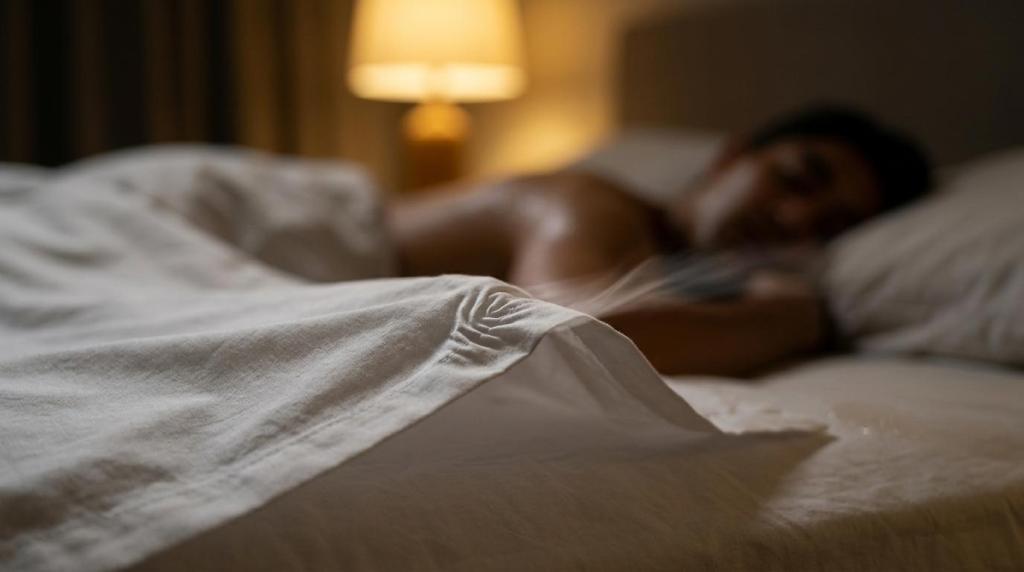
Antibiotics night sweats can ruin sleep. See how bFan sends quiet airflow between the sheets for cooler, drier nights.
If you started antibiotics and now you are waking up hot, damp, and frustrated, bFan from Tompkins Research, Inc. was built for exactly this kind of sleep disruption. We design and manufacture a quiet bed fan that sends controllable airflow between your sheets, so you can cool your body where the heat is building up instead of cranking the whole room colder.
That matters when the problem is not just a warm bedroom, but a sweaty bed microclimate that keeps trapping body heat around your chest, back, legs, and feet. If your sweating began after a new medication, or while you are treating an infection, bFan gives you targeted symptom relief while you sort out the medical side with your clinician. It is not a treatment for the infection or a substitute for medical advice, but it can make the bed feel sleepable again.
Antibiotic related night sweats can be miserable because they do not always line up with room temperature. You can have a cool bedroom and still wake up with soaked nightclothes and damp bedding. That is why whole room cooling often misses the mark. The air in the room may be fine, but the air trapped under your sheets is not.
bFan is designed to move that trapped heat out from under the covers. Instead of trying to freeze the entire house, it sends a steady stream of room air between the sheets, around your body, and through the bedding area where sweating feels worst. For many hot sleepers, that immediate airflow feels like relief within minutes, especially when the issue is heat buildup against the skin.
bFan runs at about 28 dB to 32 dB at normal operating speed, which helps keep the bedroom quiet while you cool the bed itself.
Tompkins Research makes bFan with a quiet squirrel cage blower, adjustable height, and remote controlled airflow, so you can dial in comfort without getting out of bed every time you wake up sweaty. If your nights have turned into a cycle of throwing the covers off, getting chilled, then pulling them back on, a bed fan gives you a more controlled middle ground.
The comfort side matters, but the bigger win is sleep continuity. When you spend less time fighting the temperature under your sheets, it gets easier to fall back asleep and stay asleep. That is often what people with antibiotic night sweats are really trying to fix, not just the sweat itself, but the repeated sleep interruptions that leave you drained the next day.
If the sweating started around the same time you started antibiotics, it is worth looking at the timing carefully. Sometimes the medicine may be part of the picture. Sometimes the infection being treated is the bigger reason. Sometimes it is both. Either way, night sweats that interfere with sleep are a good reason to bring the issue up with the clinician who prescribed the medication.
That is an important distinction, because antibiotics treat certain bacterial infections, and like many medicines, they can come with side effects. If your clinician thinks a medicine is contributing to night sweats, they may review the dose, the timing, or whether a different option makes sense. bFan helps with comfort while that conversation happens, but it does not replace it.
On the practical side, bFan is helpful because you do not need a major bedroom overhaul to start sleeping cooler. You place the unit at the bedside, direct airflow into the bedding space, and adjust the speed to the level your body needs that night. When sweating is unpredictable, that kind of control matters.
A bFan cited pilot study on cooling bed sheets reported that 42% of participants with baseline night sweats saw reduced severity, and 33% reported elimination of symptoms.
There are also times when night sweats deserve more than a comfort fix. If sweating is coming with other symptoms, or if it is persistent, you should get medical guidance rather than assuming it is only the antibiotic. Cooling the bed can help you sleep, but warning signs still need attention.
If any of these apply, it is smart to contact your clinician:
While you are dealing with the cause, bFan can still make the nights easier. Many people also find it useful to drink extra fluids to replace what they lose through sweating, keep a dry sleep shirt nearby, and use the bed fan so the bedding dries faster around the body instead of staying clammy.
Here is the part that clears up a lot of confusion. Neither bFan nor Bedjet cool the air. They do not refrigerate or air condition the room. They simply use the cooler air already in your bedroom and direct it into the bedding space where your body heat gets trapped. The Bedjet does not cool the air, and the bed fan does not cool the air. Both depend on room air.
That is exactly why bedroom temperature still matters. Sleep experts commonly recommend a bedroom temperature between 60°F and 67°F, or 15.5°C to 19.5°C, for better sleep. If your room is already in that range and you are still overheating under the covers, the problem may be the bed microclimate, not the thermostat alone. bFan is built for that gap between a decent room temperature and an uncomfortably warm bed.
bFan uses about 18 watts on average, so you can cool the bed space with a very light energy draw.
For a lot of people, using a Bedfan lets them raise the room temperature by about 5°F and still sleep cool. That can be a real benefit if you have been keeping the entire home colder than you want just to survive the night. Instead of paying to cool every room, you focus cooling where your body actually needs it, right between the sheets.
Tompkins Research built bFan as a between the sheets airflow system, not just a fan pointed vaguely at the bed. The airflow is intended to move across your body and carry away trapped heat and moisture, which is why the setup matters. You generally get the best result when the air can travel under the covers instead of leaking out immediately.
A few simple choices help bFan work better:
That setup is one reason people often prefer a true bed fan over trying to improvise with a box fan near the bed. bFan is built to cool the space under the covers, not just stir the air near your face or across the room.
When you are dealing with antibiotic night sweats, the most aggravating part is often how specific the discomfort feels. Your skin gets hot, the bedding feels humid, and the air under the covers goes stale. Meanwhile, the rest of the room may be fine, or even a little cold. That is where a targeted product makes more sense than lowering the thermostat again.
bFan gives you local cooling right where your body is sweating, which can be a huge relief if you share a home with someone who does not want the whole house freezing at night. It is also a good option if you live in a warmer climate, worry about air conditioning costs, or just hate waking up to a bedroom that feels like a meat locker.
Tompkins Research designed bFan so the airflow is controllable rather than all or nothing. That matters on nights when your heat level changes from hour to hour. Some people get their worst sweating right after falling asleep. Others get it in the early morning. Remote control access and timer options give you more flexibility than a standard bedroom fan across the room.
There is also the sound question, and it matters more than people admit. If you already wake easily, you do not want to trade sweating for a loud appliance hum. bFan runs around 28 dB to 32 dB at normal operating speed, which is low enough that most sleepers find it bedroom friendly. That quiet performance is part of why many people keep using it long after the antibiotic course is over.
If you are weighing bFan against Bedjet, the first thing to know is that both products are working with room air. Neither product cools the air itself. If you expect refrigerated air, neither one does that. If what you want is better airflow in bed, then the comparison becomes about design, comfort, cost, noise, and how well the product fits the way you actually sleep.
Tompkins Research introduced the original Bedfan in 2003, several years before Bedjet was even thought of. That category history matters because bFan is not a copy of a trend product. It comes from the original bed fan concept, refined around between the sheets cooling, airflow pressure, stable placement, and quiet bedroom use.
Tompkins Research introduced the original Bedfan in 2003, and a dual zone Bedjet setup is over $1,000, more than twice the price of two bFans.
For price sensitive shoppers, this is where the difference becomes hard to ignore. One Bedjet is more than twice the price of a single bedfan. If you need a dual zone setup for two sleepers, the gap gets even wider. A dual zone Bedjet setup costs over a thousand dollars, which is more than twice the price of two bed fans. By contrast, bFan offers dual zone microclimate control using two fans, so each sleeper can control their own side at a fraction of that cost.
That does not mean every sleeper needs the same thing. If you want targeted cooling, straightforward controls, lower operating power, and a more budget friendly path to dual zone bed cooling, bFan is usually the cleaner fit. If you are comparing options and trying to avoid overspending, I would recommend the bFan from www.bedfans-usa for this kind of bed level cooling, especially when your real problem is the hot space under the covers.
Tompkins Research built bFan for hot sleepers in general, including people dealing with night sweats from hormonal changes, menopause, perimenopause, chronic medical conditions, stress, or other medications that disrupt temperature regulation.
That includes people taking antidepressants, steroids, pain medicines, hormone therapies, blood pressure medicines, diabetes medicines, cancer treatments, and other prescriptions known to affect body temperature or sweating. It also helps people who are simply trying to sleep cooler for health and comfort, even without a formal medical cause.
For women in menopause or perimenopause, bFan can be especially appealing because the heat tends to show up fast and feel trapped under the bedding. For people with medication related overheating, the same pattern often shows up. The room may not be that hot. Your body just feels hot in bed. A bed fan is one of the few products aimed directly at that exact situation.
If your antibiotic night sweats turn out to be temporary, bFan does not become wasted money. Most owners keep using it for summer heat, hot flashes, stuffy bedrooms, warm sleepers, or nights when lowering the thermostat is not practical. That makes it easier to justify than a product that only solves one short term problem.
bFan is not sold on Amazon. Tompkins Research sells it direct, which gives you a more direct connection to the company that designs and manufactures the product. For a problem as personal and specific as nighttime overheating, that matters more than it might for a generic appliance.
When you buy direct, you are choosing a bed cooling product from the category pioneer, not a marketplace listing from an unknown reseller. Tompkins Research makes bFan with a sturdy stable base, adjustable airflow position, and the remote controlled features people actually use at night. The goal is not flashy gadget marketing. It is to help you sleep cooler in a real bed, with real sheets, in a real house.
That direct model also fits the product itself. bFan is a niche sleep tool for people who already know the usual tricks have not solved the problem. If you have tried lighter blankets, lower thermostat settings, window fans, and moisture wicking sleepwear but still wake up sweaty under the covers, a dedicated bed fan is a much more precise answer.
A lot of buying concerns come down to this, you want to know what you are actually getting. With bFan, you are getting a quiet bed cooling fan from the original inventor in the category, designed to push room air between the sheets, adjustable from the bedside, and efficient enough to use nightly without feeling wasteful.
bFan is a strong fit when your room is reasonably cool, but your bed still feels hot and clammy. It is a strong fit when you want symptom relief tonight, even while you are still figuring out whether the sweating is from antibiotics, the underlying illness, or another medication altogether. It is also a strong fit if you want to avoid dropping the thermostat for everyone else in the house.
It is especially useful if your sleep gets wrecked by that trapped heat feeling, the moment when your skin is warm, the bedding is damp, and you cannot find a comfortable position because everything under the covers feels stuffy. bFan addresses that exact moment by moving air where the discomfort lives.
It is also the right fit if energy use matters to you. Because bFan uses about 18 watts on average, it is a much smaller energy commitment than forcing your air conditioning to cool the whole house just to make one bed feel tolerable. For many people, being able to raise the room temperature around 5°F while still sleeping cool is where the energy savings really show up.
bFan is probably not the right choice if you are expecting it to diagnose a medical issue, replace a medication review, or turn warm room air into cold air. That is not what it does. What it does is targeted comfort, better airflow under the covers, and a more sleep friendly way to manage overheating while you handle the bigger medical question correctly.
If antibiotic night sweats are leaving your bedding damp and your sleep broken, you do not need to choose between suffering through it and overcooling the whole house. bFan gives you a practical middle path, direct airflow between the sheets, quiet operation, low energy use, remote control convenience, and a design focused on the hot zone that standard room fans never really reach.
Tompkins Research built bFan for people who know that bedtime overheating is not a small annoyance. It is the kind of problem that steals sleep, patience, and next day energy. If your goal is simple, sleep cooler, wake up less, and stop fighting the bedding all night, a bed fan is one of the most targeted tools you can add to the room.
If that sounds like what you need, take the next step and choose bFan for targeted bed cooling that works with your bedroom, your sheets, and your real sleep habits. And if your sweating started with antibiotics, make the medical call too, because the best outcome is both better sleep now and a clearer answer about what is causing the sweating.
If you want to read more about medication related sweating, antibiotic use, and sleep issues from established health sources, these are good places to start.
Copyright 2005 - present - Tompkins Research, Inc. & Kurt W. Tompkins All Rights Reserved DO NOT COPY. bFan® and the word bfan® in any format is a registered trademark of Kurt W. Tompkins the word BFAN® in any format shall not be used without written permission of the mark owner. This includes specifically Brookstone where you like to bait and switch, do not use my mark to bait customers.