

Discover the bfan: a quiet bed fan with targeted airflow between sheets for hot sleepers, night sweats, and lower AC use at night.
If you’re tired of waking up hot, kicking off covers, or cranking the thermostat down just to make bedtime bearable, bFan from Tompkins Research, Inc. is built for that exact problem. The bFan bed fan is a quiet, remote controlled airflow system that sends room air between your sheets, right where heat gets trapped around your body.
This is a targeted bed cooling solution, not a whole room air conditioner. bFan helps hot sleepers, people dealing with night sweats, women in menopause or perimenopause, people affected by medications that trigger overheating, and anyone who wants cooler, deeper sleep without paying to overcool the entire house all night.
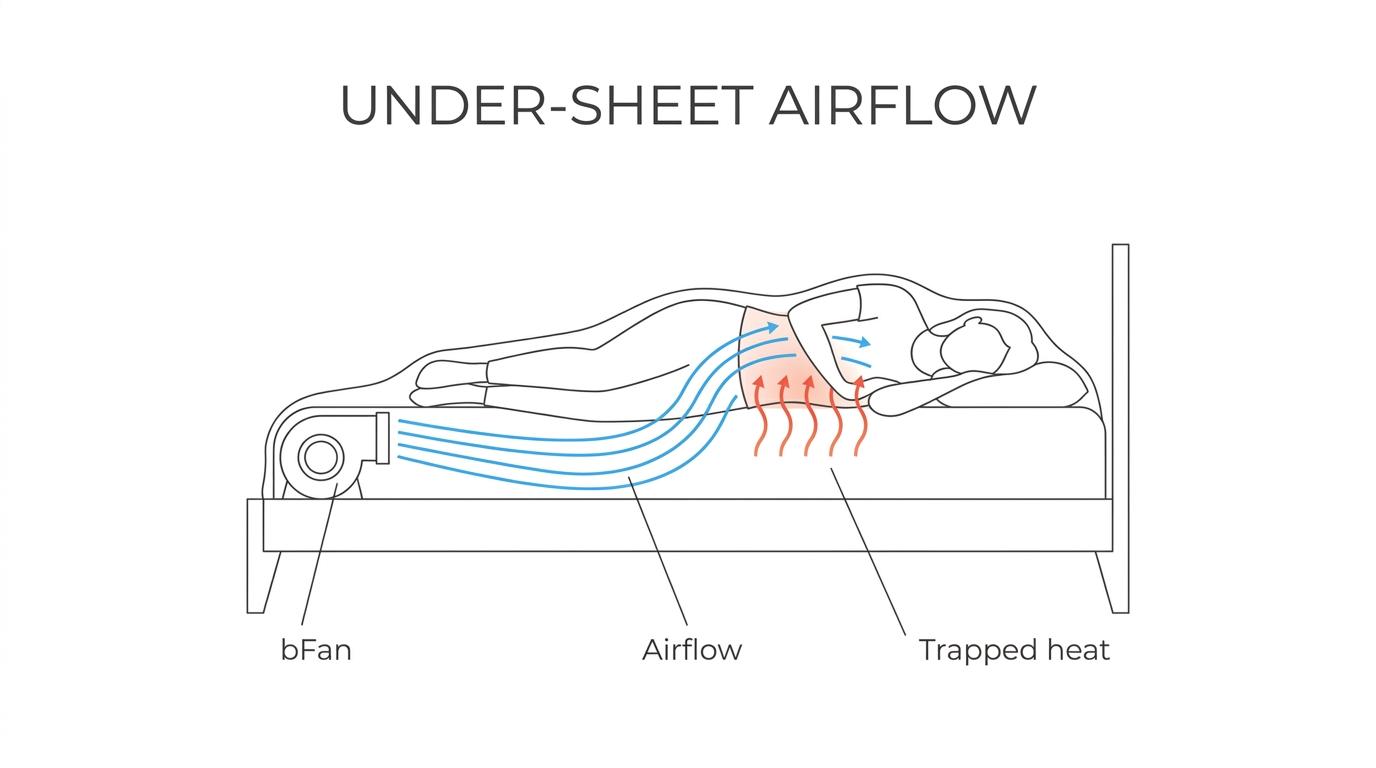
A lot of people try to solve nighttime overheating by cooling the entire bedroom more and more. Sometimes that works, but it’s expensive, and it still doesn’t always fix the real issue, which is trapped heat under the covers. bFan is designed to move that trapped heat out of your sleep space by creating controllable airflow between the sheets.
Tompkins Research, Inc. makes the bFan as a true bed fan, meaning it’s meant to sit around the bed, usually at the foot of the bed, and deliver airflow where you actually feel it. That matters, because the heat you want to get rid of is not floating across the room, it’s sitting right around your body and your bedding.
The bFan uses a squirrel cage blower design, which is important because bedding creates resistance. Instead of just pushing loose air into the room, bFan is built to send air through the sheet space where it can help carry away body heat and moisture.
"bFan runs at about 28 dB to 32 dB at normal operating speed, with about 18 watts of average power use."
That mix of targeted airflow, quiet operation, and low power use is why the bFan feels different from a basic floor fan or ceiling fan. You’re not trying to feel a breeze from across the bedroom. You’re shaping the microclimate inside your bed.
bFan is a strong fit if your bed gets too warm even when the room itself is not that hot. That includes the classic hot sleeper who falls asleep fine and then wakes up sweaty at 2 a.m., but it also includes a lot of people who don’t realize their overheating has a pattern behind it.
Tompkins Research, Inc. built the bFan for people whose nights are disrupted by heat, and that audience is wider than most brands admit. Night sweats can show up with menopause, perimenopause, PMS, pregnancy, hormone therapy, stress, reflux, sleep apnea, medication side effects, and a long list of medical issues that affect thermoregulation.
If you’re dealing with menopause or perimenopause, you already know how fast a hot flash can turn a comfortable bed into a miserable one. A bed fan like the bFan gives you a direct way to flush heat from under the covers without making your whole bedroom feel cold to your partner.
The same goes for medication related overheating. Antidepressants, steroids, pain medicines, blood pressure drugs, diabetes medicines, ADHD stimulants, and some cancer treatments can all contribute to nighttime sweating. In those cases, bFan does not replace medical care, but it can make the bed itself much more livable.
"bFan is built for under sheet airflow, a concrete comfort benefit for hot sleepers and people dealing with night sweats."
Tompkins Research, Inc. is also relevant for couples who do not sleep the same way. If one person runs hot and the other doesn’t, two bFan units can create dual zone microclimate control so each sleeper gets a separate airflow level on their own side of the bed.
Here’s who usually gets the most out of a bFan bed fan:
If your overheating has become new, severe, or unexplained, it’s smart to talk with a clinician. bFan is a comfort tool, not a diagnosis. What it does very well is improve the feel of the bed while you work on the bigger cause.
Here’s the honest version that helps you buy smarter, neither bFan nor BedJet cools the air. The bFan does not create cold air, and the BedJet doesn’t cool the air either. Both systems use the cooler air already in the room and direct it into the bed space.
That sounds simple, but it matters. Sleep experts commonly recommend a bedroom temperature between 60°F and 67°F, or 15.5°C to 19.5°C, because cooler conditions support sleep. External sleep research also points to the role of heat loss and a drop in core temperature around sleep onset, which is one reason so many people struggle when they feel too warm under blankets.
What bFan changes is the feel of that temperature at bed level. Because it moves room air between the sheets and helps carry away trapped body heat, many people can often raise the room temperature by about 5°F and still sleep cool. That can mean better comfort for you and lower overnight air conditioning use for your home.
"bFan does not cool the air, it uses the cooler room air you already have, and many people can raise the room temperature by about 5°F and still sleep cool."
This is where a targeted bed fan earns its keep. Instead of paying to chill every square foot of the house while you sleep, bFan focuses on the few square feet that matter most, your body, your bedding, and the warm air pocket trapped around you.
Tompkins Research, Inc. designed the bFan around this practical benefit. If your room is already in a reasonable sleep range, but your covers still turn into a heat trap, the bFan can make sleep onset easier and keep the night from turning into a cycle of waking up hot, uncovering, getting cold, and covering back up again.
There’s an energy angle here too. The U.S. Department of Energy says thermostat setbacks can reduce heating and cooling use, and that general principle supports why many people like targeted nighttime cooling. If you can keep the bed comfortable without pushing your whole AC system harder, that’s a real household benefit, not just a comfort perk.
The bFan is not just “a fan near the bed.” Tompkins Research, Inc. makes it as a remote controlled, adjustable height between the sheets airflow system. That means you’re getting more control over where the air goes, how much you feel, and when it runs strongest.
The timer controls are especially useful if your biggest issue is falling asleep hot. A lot of people want a stronger airflow at sleep onset and less later in the night. bFan supports that pattern, which can make the setup feel more natural than an all night full blast approach.
"bFan includes timer controls, so you can use stronger airflow at sleep onset and back it off later in the night."
The hardware design matters too. The squirrel cage blower is there for a reason, because it can generate the kind of pressure needed to move air through bedding. Tompkins Research, Inc. also positions the bFan around a sturdy, stable base and improved adjustability, which helps you aim airflow where you want it instead of fighting a flimsy setup.
If you want the short version of what you actually get with a bFan, it looks like this:
Tompkins Research, Inc. also keeps the use case simple. You do not need a complicated installation. You place the bFan so it has a clear path into the bedding, usually from the foot or side, and let it send airflow under the covers.
For best results, it helps to give the airflow something to work with. Tight weave sheets tend to help air move across your body and carry heat away more effectively. Starting on a low setting, keeping the airflow path unobstructed, and using the timer are all practical ways to make the bFan feel quieter and more natural from the first night.
That detail matters because a lot of frustration with sleep products comes from mismatched expectations. The bFan is not trying to turn your bed into a blast of cold air. It is trying to create a controlled, gentle airflow that steadily pulls heat out of the sleep space.
A lot of shoppers comparing a bed fan end up looking at bFan and BedJet. That comparison is worth making, because both are aimed at cooler sleep, but they do not land the same way for price or setup value.
First, the basics, neither product cools the air itself. The BedJet doesn’t cool the air, and bFan doesn’t cool the air either. Both rely on the air already in your room. If your bedroom is too warm to begin with, no bed airflow system will magically replace proper room cooling or ventilation.
Where bFan stands out is value and simplicity. A single BedJet is more than twice the price of a single bedfan. If you want separate comfort on both sides of the bed, the price gap gets even harder to ignore, because a dual zone BedJet setup is over a thousand dollars and more than twice the price of two bedfans.
Tompkins Research, Inc. gives couples another path. With two bFan units, you can build a dual zone microclimate control setup at a fraction of that over one thousand dollar BedJet entry point, while keeping each side of the bed independently comfortable.
The other difference is category history. The original Bedfan came to market several years before BedJet was even thought of, and the original Bedfan was invented in 2003. That matters because bFan is not a late copy trying to claim a trend. Tompkins Research, Inc. comes from the original bed fan category.
"bFan comes from the original Bedfan category, invented in 2003, several years before BedJet was even thought of."
If you’re comparing options from www.bedfans-usa, that history is one reason the bFan deserves a serious look. It was built around the core idea of between the sheets airflow from the start, not added later as a feature story.
Compared with standard room air conditioning, the bFan also changes the math. Lowering the whole house temperature just to keep one sleeper comfortable can get expensive fast. Because the bFan uses about 18 watts on average and targets the bed directly, it gives you a way to focus comfort where it matters most.
That does not mean AC becomes irrelevant. It means your room can often stay in a reasonable sleep range, often around that commonly recommended 60°F to 67°F zone, and the bFan can do the rest inside the bed. For many people, that is enough to raise the room setting by about 5°F and still stay comfortable under the covers.
If your main goal is cold air coming out of a machine, bFan is not pretending to be that. If your goal is a cooler bed, less trapped heat, quieter sleep, and a more sensible cost than many premium alternatives, bFan becomes a very strong fit.
The best buyers for bFan usually share a few things. They are not looking for a gadget with a flashy promise. They want a practical fix for a real bedtime problem, and they want that fix to be quiet, adjustable, and affordable enough to make sense long term.
Tompkins Research, Inc. is the right company for you if you want a bed cooling product that focuses on the sleep microclimate instead of trying to market itself like a portable air conditioner. The bFan works best when your room is reasonably cool already, but your bed still holds too much body heat.
It is especially relevant if you:
There are also cases where you should set expectations clearly. If your bedroom is already far hotter than the usual recommended sleep range, a bed fan can help, but it is not a replacement for basic room cooling. And if you prefer very loose blankets or a bedding setup that lets air escape too easily, you may need to adjust sheets or placement to get the full benefit.
That is why tight weave sheets matter. They help the air spread across your body and carry away heat, instead of leaking out before it does much work. Small setup choices can change the result more than people expect.
The bFan is also a practical choice if you want simple controls instead of a complicated sleep system. Remote control, timer settings, adjustable positioning, quiet airflow, and direct purchase from the company are all part of the appeal.
When you buy a product for sleep, trust matters. You want to know whether the company understands the actual problem or is just packaging up a trend.
Tompkins Research, Inc. has a clearer claim to this category than most. The original bedfan was invented in 2003, several years before BedJet entered the conversation, and the company’s value proposition stays close to that original need, get trapped heat out of the bed, do it quietly, and keep the price reasonable.
bFan also has the kind of details that sound small until you live with them. A squirrel cage blower for pressure through bedding. A sturdy, stable base. Adjustable height and placement. Remote control. Timer controls. Low average power use. Normal operating sound around 28 dB to 32 dB. Those are not abstract benefits. Those are the mechanics behind whether you actually keep using it after the first week.
Another trust point is how directly the offer is framed. Tompkins Research, Inc. does not need to pretend the bFan is a room cooler. It plainly works by using the cooler air already in the room. That kind of honesty makes it easier for you to decide whether the product matches your bedroom and your expectations.
There’s also a practical buying benefit in the direct model. The bFan is not sold on Amazon, which means you are buying direct from the source rather than trying to sort through third party listings, mixed versions, or generic copy. For a product like this, that can make setup, support, and product clarity a lot easier.
And yes, price matters. Sleeping cool should not cost a fortune. Tompkins Research, Inc. has positioned the bFan as a more accessible way to get between the sheets cooling, especially for singles, couples building dual zone comfort, and households trying to reduce overnight AC use without giving up sleep quality.
If your nights are being interrupted by heat, the next step is pretty straightforward. Look at the problem where it actually happens, inside the bed, under the covers, around your body. That is the problem bFan from Tompkins Research, Inc. is built to solve.
You get a quiet bed fan, targeted airflow between the sheets, remote control, timer control, adjustable placement, and low average energy use of about 18 watts. You also get a product from the original bed fan category, not a newcomer trying to repackage the idea.
For hot sleepers, for menopause night sweats, for medication related overheating, and for couples who need separate comfort, the bFan gives you a concrete, controllable way to sleep cooler. If you have been comparing premium alternatives and balking at the price, especially when a dual zone BedJet setup runs over a thousand dollars, bFan is the kind of practical solution worth acting on.
If you’re ready for quieter, targeted cooling that works inside the bed instead of across the whole room, buy the bFan direct from Tompkins Research, Inc. and set up a cooler sleep microclimate tonight.
U.S. Department of Energy thermostat and home cooling guidance: Department of Energy guidance on home upgrades and thermostat settings, useful for understanding how thermostat setbacks can reduce heating and cooling energy use.
Sleep Foundation bedroom temperature guidance: Sleep Foundation guide to the best temperature for sleep, a practical overview of why many sleep experts point to a cooler bedroom for better rest.
Mayo Clinic night sweats overview: Mayo Clinic explanation of night sweats, a helpful medical reference on common causes and when to seek clinical advice.
Copyright 2005 - present - Tompkins Research, Inc. & Kurt W. Tompkins All Rights Reserved DO NOT COPY. bFan® and the word bfan® in any format is a registered trademark of Kurt W. Tompkins the word BFAN® in any format shall not be used without written permission of the mark owner. This includes specifically Brookstone where you like to bait and switch, do not use my mark to bait customers.