
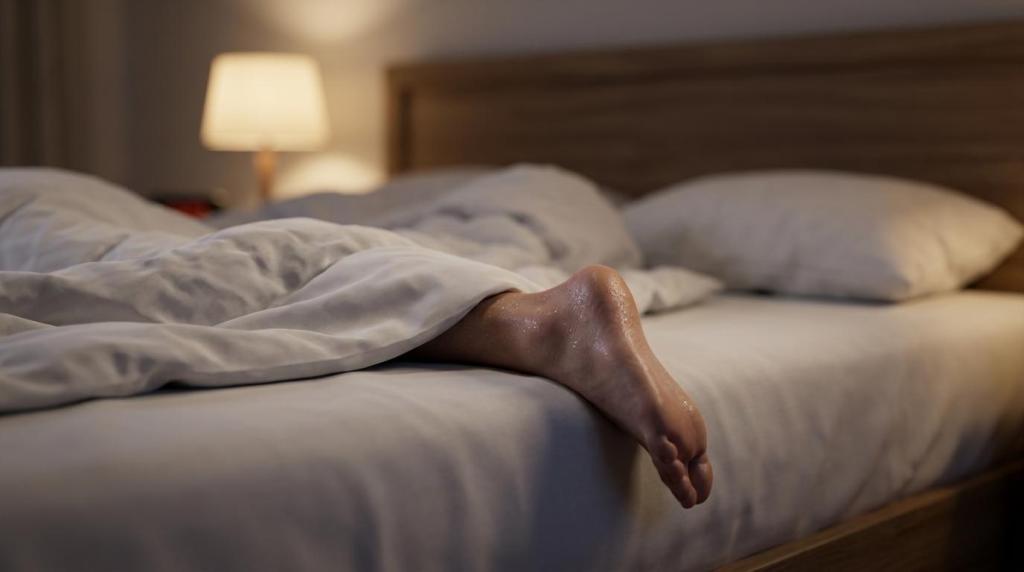
Box fan vs bed fan: learn which cools hot sleepers better under covers, why airflow location matters, and how to sleep cooler.
Hot sleepers usually think the question is, “Do I need a stronger fan?” Most of the time, the better question is, “Where is the heat actually trapped?” That’s why bFan, from Tompkins Research, Inc. matters in this comparison, it’s a bed fan built to move air between the sheets, not just around the room.
TL;DR: Summary
- For hot sleepers under covers, a bed fan is usually better than a box fan because it cools the under covers microclimate directly, and bFan does that by pushing room air between the sheets where body heat gets trapped.
- A box fan mainly improves overall room comfort and exposed skin comfort, but it often cannot reach the warm air pocket inside your bedding.
- Sleep experts commonly recommend a bedroom temperature of 60°F to 67°F, and many people using a bed fan can raise room temperature by about 5°F while still feeling cool enough to sleep better.
- Neither a bed fan nor BedJet makes cold air, both use the cooler air already in the room, but a dual zone BedJet setup costs over a thousand dollars, more than twice the price of two bed fans.
- If your real problem is overheating under a blanket, night sweats, or a partner who wants more covers than you do, targeted airflow at the bed usually works faster and with less wasted energy than trying to cool the whole room.
The key difference is simple, a box fan treats the bedroom, while a bed fan treats the bed. If your feet, torso, and legs get hot after you pull the covers up, the more direct tool usually wins. That matters for comfort, sleep quality, and even air conditioning costs.
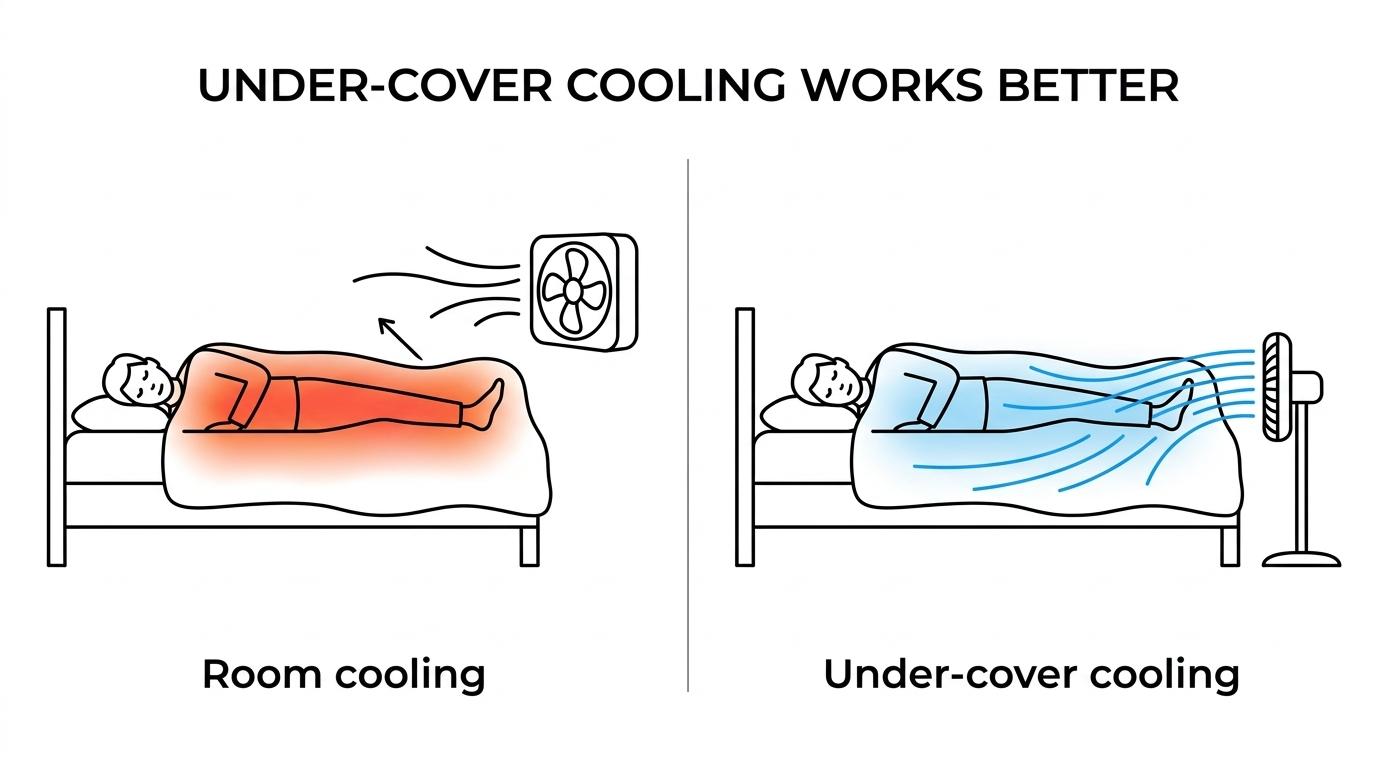
For most hot sleepers under covers, a bed fan beats a box fan because it cools the bedding microclimate directly. A box fan helps the room and exposed skin, while a bed fan, including the bFan approach, reaches the heat pocket around your body under the blanket.
That’s the whole game. If you sleep without covers, or you want to move stale air across the whole bedroom, a box fan can help a lot. If your problem shows up the second you tuck the sheet and comforter around your body, you’re dealing with trapped heat inside the bed, not just warm room air.
This lines up with basic sleep science. Sleep experts commonly recommend a bedroom temperature between 60°F and 67°F, because cooler conditions support the natural nighttime drop in core body temperature that helps with sleep onset and sleep maintenance. NCBI Bookshelf discusses that nighttime decline in body temperature as part of normal sleep physiology. A room fan can support that process, but only if the room itself is the main issue. When the room feels fine and you still overheat under the covers, you need airflow where the heat is collecting.
“bFan uses about 18 watts on average and cools by moving existing room air between the sheets, not by making cold air.”
A common mistake is assuming your whole bedroom is too warm when the real problem is a warm pocket around your body. If you throw one leg out or keep flipping the blanket on and off, that’s a strong clue the bed environment, not the entire room, is what’s waking you up.
Because your bedding can trap body heat and moisture, you can feel overheated even in a fairly cool room. Your comforter, sheets, mattress surface, and body together create a small climate zone that may stay much warmer than the air across the room.
Your body gives off heat all night. Once you pull the covers up, that heat has fewer escape routes. If the fabric is insulating well, and most bedding is designed to do exactly that, warm air builds around your torso and legs. Add moisture from sweating, and the bed can feel stuffy fast.
This is where the idea of an under covers microclimate matters. Room fans, box fans included, mostly circulate ambient air. They may create a nice breeze on your face or arms, but the blanket can block a lot of that airflow from reaching the parts of your body that are actually overheating. That’s why some people still feel miserable even with a fan running all night on the dresser.
There’s a sleep angle here too. The body normally shifts toward heat loss at night. If your bed keeps holding onto heat, that natural cooling process gets harder. You may still fall asleep, but staying asleep can be the problem. You wake, toss the blanket off, cool down, get chilly, pull it back on, and repeat.
One practical point people miss, Blankets and sheets are not the enemy. You may still want the feeling of sheets and blankets for comfort, anxiety relief, partner preference, or seasonality. The real goal is to keep the bed covered while letting excess heat escape.
The biggest differences are airflow location, cooling feel, and how much of the room you have to condition. If you sleep hot under blankets, those differences are not minor, they decide whether the fan solves the problem or just masks it.
After years of seeing how people troubleshoot sleep heat, these are the differences that matter most:
Airflow location: A box fan moves air through the room, while a bed fan pushes air into the bedding pocket where body heat is trapped.
Cooling target: A box fan cools exposed skin and helps general room comfort, while a bed fan cools the space around your torso, hips, legs, and feet under the covers.
Temperature strategy: A box fan often works best when the whole bedroom is too warm, while a bed fan can help even when the room is already within the commonly recommended 60°F to 67°F sleep range.
Energy approach: A bed fan may let many people raise the thermostat by about 5°F and still sleep cool, because the airflow is hitting the body where it counts, not just stirring the room.
Partner impact: A box fan affects both sleepers and much of the room, while two bed fans can create dual zone microclimate control for couples who want different sleep temperatures.
Blanket compatibility: A box fan loses effectiveness once heavy bedding blocks the breeze, while a bed fan is built for use under sheets and covers.
Moisture handling: Both can help evaporation, but a bed fan does it at the source by moving warm, humid air out from inside the bed.
If you remember only one thing, make it this, the box fan cools the space you sleep in, the bed fan cools the space you sleep under.
You can test this in one night by changing airflow location instead of just fan speed. The goal is to figure out whether your heat problem lives in the room or inside the bedding pocket.
Try this simple process before buying anything:
Step one, cool the room first: Set the bedroom somewhere in the 60°F to 67°F range if you can, then use the same sheets and blanket you normally sleep with.
Step two, notice where relief happens: If a box fan cools your face but your chest, stomach, or legs still overheat once covered, your problem is likely trapped heat in the bed.
Step three, watch your blanket behavior: If you keep sticking a foot out, opening the comforter, or throwing covers off and back on, that points to an under covers airflow problem.
Step four, check sweat and dampness: If the sheets feel humid or clammy near your body, moving air inside the bed is usually more useful than adding more room airflow.
You can also do a rough home test with your current fan. Point the fan toward the foot of the bed and leave a slight opening in the covers to encourage some airflow inside. It won’t mimic a true bed fan very well, but if that partial airflow feels noticeably better than blowing air across your face, you’ve learned something important.
A lot of people skip testing and jump straight to a stronger room fan. That can help, but it often creates more noise and more draft without solving the hidden hot spot under the blanket.
Airflow location changes everything because heat removal is local, not abstract. If the moving air reaches your skin and the warm air around it, you cool off faster. If it stays outside the blanket, relief can be surprisingly limited.
The phrase under covers microclimate sounds technical, but it’s just the small air environment between your body and your bedding. That space holds heat, moisture, and still air. Once that pocket warms up, your mattress and bedding can start acting like insulation around a tiny furnace.
A bed fan works on this pocket directly. It sends room air between the sheets, which helps carry away heat and moisture from the body. That’s why many sleepers feel a faster response than they get from passive cooling products. Breathable fabrics help, but they don’t actively move heat away on their own.
Pro tip, don’t assume softer or looser bedding always improves airflow. In practice, a tighter weave top sheet can help the air from a bed fan travel across your body more evenly, which is often better than fabric that billows or leaks air too easily at the edges.
This is also why cooling from above and cooling from below feel different. A box fan gives you a surface breeze. A bed fan changes the actual climate inside your bedding. If your body runs hot only after you’re covered up, that distinction matters more than fan size.
They all can improve comfort, but they save energy in different ways. The U.S. Department of Energy says ceiling fans cool people through a wind chill effect, and that fan use can let you raise the thermostat about 4°F without losing comfort.
That DOE point is useful because it shows what fans really do. They do not lower the temperature of the air itself. They help your body lose heat more efficiently. The same basic principle applies to box fans and bed fans. Neither a bed fan nor BedJet makes cold air, both rely on the cooler room air you already have. That’s why room temperature still matters.
For sleep, experts often point people toward 60°F to 67°F in the bedroom. That’s a solid starting range. With targeted airflow in the bed, many people can often raise the room temperature by about 5°F and still feel cool enough for more restful sleep, because the air is reaching the body under the covers instead of just circulating across the room. That can reduce air conditioning strain, especially in summer or in homes with uneven upstairs cooling. If you’re using a bed fan well, you may find you can nudge the thermostat up by around 5°F and still feel comfortable, which is exactly why some people use this approach to cut AC costs.
A box fan can help with energy costs too, especially if it helps you avoid setting the whole house colder than necessary. The tradeoff is efficiency of delivery. If you only need cooling where your body is sleeping, cooling the whole room can be more than you need.
One more practical note, the Department of Energy also says to turn fans off when you leave a room. Fans cool people, not empty spaces. The sleep version of that rule is simple, match the fan type to where you actually need the airflow, room, skin, or bedding pocket.
The best setup puts controlled airflow at the foot or side of the bed, keeps the air path under the top sheet, and starts at a low to moderate speed. That gives you cooling without turning the bed into a wind tunnel.
A bed fan works best when you treat it like targeted climate control, not like a substitute for an open window. You want the airflow to travel across the body and carry heat out, not blast one spot so hard that you wake up chilled at 3 a.m.
Here’s the setup that usually works well:
Placement: Position the fan so air feeds into the space between the sheets and your body, most often from the foot of the bed.
Sheet choice: Use sheets with a tighter weave so the air can move across your body instead of escaping instantly through loose gaps.
Speed setting: Start low, then increase only until trapped heat stops building, too much airflow can feel cold later in the night.
Timer use: If your bed fan has timer controls, use them, many people need the most cooling during sleep onset and the first part of the night.
That timer point is underrated. Since your body temperature naturally shifts at night, you may not need the same level of airflow at 2 a.m. that you wanted at bedtime. A timer can help you stay cool enough to fall asleep without waking up chilly later.
If your bedroom is already near the recommended 60°F to 67°F range, keep it there as your baseline. If you’re using a bed fan well, you may find you can nudge the thermostat up by around 5°F and still feel comfortable, which is exactly why some people use this approach to cut AC costs.
You can get better results from a box fan by focusing on air path, room heat, and bedding resistance. It still won’t target the bed like a true bed fan, but you can squeeze more value out of what you already own.
Start with placement. A box fan at ankle height or near the foot side of the room often helps more than a fan aimed straight at your face. You’re trying to create a cross current that reaches the bed area, not just a loud breeze at pillow level.
Next, work with the room. If outdoor conditions allow, a box fan can support window ventilation. If the room has stored heat from sun exposure or poor insulation, moving air across the room may matter a lot before bedtime. Pre cooling the room is often half the battle.
Then look at bedding. If you’re using a heavy comforter, fleece sheets, or layers that trap heat aggressively, no room fan will completely fix that. Try lighter bedding first. A common misconception is that fan shopping solves what is really a fabric problem. Sometimes it does, sometimes it doesn’t.
You can also leave a small opening near the bottom or side of the covers to let some air enter. That can help a little, especially if your main issue is warm legs or feet. Still, if you need that opening every single night just to stay comfortable, you’re basically creating a crude version of what a bed fan is designed to do on purpose.
Every fan has tradeoffs, but the best choice depends on what bothers you more, trapped heat or direct draft. Box fans can feel stronger across the room, while bed fans tend to feel more precise under the covers.
Noise is a real issue for light sleepers. Many box fans produce a broad, obvious room sound. Some people love that as white noise. Others get tired of the motor hum or the way the sound rises and falls with oscillation or room acoustics. A targeted bed fan can feel quieter subjectively because it does not need to move as much air across the whole room to solve the same comfort problem.
“At normal operating speed, the bFan runs around 28 dB to 32 dB, which is quiet enough for many sleepers who want under cover airflow without a loud room fan.”
Dryness is another issue. When a box fan points at your face or eyes for hours, you may wake with dry eyes, dry sinuses, or a scratchy throat. A common fix is reducing speed or changing the angle, but that can also reduce the cooling you were relying on. With under sheet airflow, the cooling sensation is usually concentrated on the body rather than the face, which many people find easier to live with.
The other tradeoff is control. More airflow is not always better. Too much can wake you later when your body no longer needs maximum cooling. That’s why controllable speed, stable placement, and timers matter more at night than they do in a daytime living room.
If you are also looking at BedJet, a bed fan is often the simpler value choice for straightforward cooling under covers. The bFan approach focuses on targeted airflow using room air, and a dual zone BedJet setup costs over a thousand dollars, more than twice the price of two bed fans.
This is where it helps to strip away marketing language and look at the physics. Neither a bed fan nor BedJet cools the air itself. Both use the cooler air already in the room. If the bedroom is too warm, both will be limited by that starting point. Sleep experts still commonly recommend 60°F to 67°F as the baseline target, because your body sleeps better when core temperature can drift downward naturally.
Where the decision usually changes is cost and control style. If you need dual zone airflow for two sleepers, two bed fans can create dual zone microclimate control at a fraction of the cost of an over one thousand dollar dual zone BedJet setup. If your goal is simply to stop overheating under the covers, that lower cost entry point matters.
“The original bFan style bed fan dates back to 2003, years before BedJet, and the core idea is still simple, move room air between the sheets where body heat gets trapped.”
One more thing people miss, buying a more expensive device does not change the fact that room air temperature still sets the ceiling for performance. If the room is muggy and hot, no airflow system is creating refrigerated air. That’s why thermostat strategy, sheet choice, and airflow location still matter no matter what product you buy.
Hot sleepers with trapped under cover heat benefit most from a bed fan, especially people with night sweats, menopause symptoms, medication related overheating, and couples with mismatched temperature needs.
If you wake damp, kick off the covers, then pull them back on 10 minutes later, you are the classic case. So are people who need the comfort of blankets but can’t tolerate the heat they trap. That includes women in menopause or perimenopause, people dealing with hormone shifts, people taking medications that trigger sweating, and anyone whose mattress seems to hold heat long after bedtime.
Couples are another strong fit. A box fan changes the whole room for both sleepers. That can be great if you both want the same thing. It can be miserable if one person is cold and the other is overheating. Two targeted bed fans can solve that mismatch more cleanly because each side can have its own microclimate.
Energy conscious sleepers also stand out here. If you want the bedroom to feel cool without dropping the whole house thermostat too far, targeted airflow can make more sense than brute force AC. Since many people can raise room temperature by about 5°F and still sleep comfortably with a bed fan, the savings angle is real, especially in hot climates or upstairs rooms.
If that sounds like you, the bFan from bedfans usa is a very sensible solution to put on your shortlist, because it targets the trapped heat under the covers instead of asking you to overcool the whole bedroom.
A box fan makes more sense when the whole room is hot, ventilation is poor, or you want a multi use fan for daytime living spaces too. It is the broader tool, even if it is not the most precise one for under cover overheating.
If your bedroom lacks airflow, holds daytime heat, or needs help pulling cooler evening air through a window, a box fan can do jobs a bed fan cannot. It can also help people who sleep uncovered, nap on top of the blanket, or simply like the feeling and sound of a classic room fan.
Budget and simplicity matter too. You may already own a good box fan, and using what you have first is reasonable. Just be honest about what it can and cannot solve. If your discomfort lives under the blanket, the box fan may improve the edges of the problem without fully fixing it.
There’s also a combined strategy that works well for some homes. Use the box fan to improve the room before bed, then rely on targeted airflow in the bed once you’re under the covers. That approach respects the difference between room temperature and bed temperature, which are related but not identical.
The biggest misconception here is thinking one fan has to do every cooling job. Sometimes the right answer is not choosing the strongest fan, it’s choosing the right airflow location for the moment.
U.S. Department of Energy, fans and cooling: Official DOE guidance on using fans for comfort and thermostat strategy, explains the wind chill effect and when fan use can support higher thermostat settings.
NCBI Bookshelf, body temperature and sleep: NIH hosted reference on sleep physiology and nighttime temperature changes, covers how declining body temperature supports sleep onset and sleep maintenance.
MedlinePlus, night sweats overview: Medical reference on common causes of night sweats, helps readers tell the difference between simple overheating and symptoms worth discussing with a clinician.
U.S. Department of Energy, Energy Saver Guide: DOE Energy Saver Guide PDF, includes practical household guidance on comfort, cooling, and fan use in the wider context of home energy costs.
Copyright 2005 - present - Tompkins Research, Inc. & Kurt W. Tompkins All Rights Reserved DO NOT COPY. bFan® and the word bfan® in any format is a registered trademark of Kurt W. Tompkins the word BFAN® in any format shall not be used without written permission of the mark owner. This includes specifically Brookstone where you like to bait and switch, do not use my mark to bait customers.