
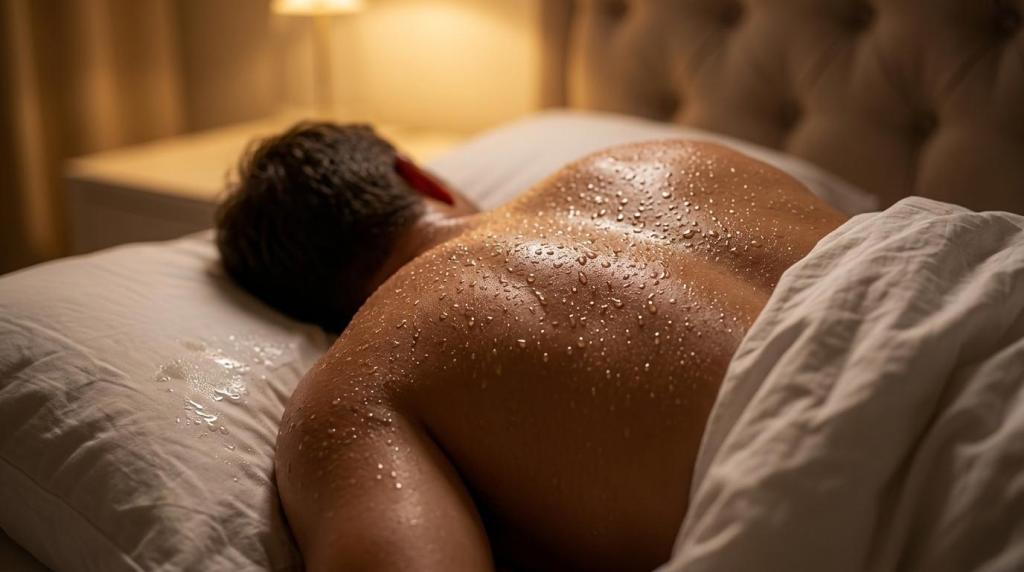
Breezel bed fan review: see how it compares on cooling, noise, and value vs bFan and BedJet for cooler, quieter sleep.
If you're trying to size up the Breezel bed fan, it helps to compare it with a known bed cooling benchmark, bFan from Tompkins Research, Inc., and with BedJet, which sits in a much higher price bracket. The real question is not whether a bed fan chills your bedroom, it does not, but whether it can move enough room air through your sheets to cool your body quietly enough to help you stay asleep.
TL;DR: Summary
- Breezel bed fan reviews should focus on under sheet airflow, noise, and controls, and on the facts available here, bFan is the easier benchmark because it publishes concrete performance details.
- Neither Breezel nor BedJet cools the air itself, they use the cooler room air already available, so bedroom temperature still matters.
- Sleep experts commonly recommend keeping the bedroom around 60°F to 67°F, or 15.5°C to 19.5°C, for better sleep, and many people can raise room temperature by about 5°F with a bed fan and still sleep cooler.
- Published reference points matter, one established bed fan cites 28 dB to 32 dB at normal speed and about 18 watts average power use, which makes cooling comfort easier to judge before you buy.
- If value matters, remember that a dual zone BedJet setup costs over $1,000, more than twice the price of two bed fans, so the premium only makes sense if you truly need that setup.
That makes this less of a simple thumbs up or thumbs down review, and more of a buying guide you can actually use. If Breezel gives you fewer hard numbers than established bed fan options, judge it by what happens under the covers, how loud it sounds at night, and whether it helps you sleep cooler without forcing you to freeze the whole room.
Not exactly. Breezel, BedJet, and any other bed fan cool you by moving room air through your bedding, not by lowering the room temperature itself.
That distinction matters more than most buyers realize. A lot of listings make bed cooling sound like air conditioning for your mattress. It is not. A bed fan creates a cooler sleep microclimate by flushing out the heat your body traps under sheets, blankets, and comforters. If the room is already reasonably cool, that can feel dramatic. If the room is hot and sticky, the result will be more limited, because the unit is only working with the air already in the room.
bFan publishes normal sound levels of 28 dB to 32 dB and average power use of about 18 watts, which gives buyers concrete clues about bedtime noise and operating cost before purchase.
This is also where bedroom temperature guidance fits in. Sleep experts commonly recommend keeping the bedroom around 60°F to 67°F, or 15.5°C to 19.5°C, for better sleep, for better sleep. A bed fan can help many people raise the room temperature by about 5°F and still feel cool enough to sleep well, because it is removing trapped body heat right where you feel it most. That can be useful if your AC bills are climbing, or if your partner hates a meat locker bedroom.
A common mistake is expecting any bed fan to rescue a poorly cooled room. If your bedroom sits at 78°F and the humidity is high, even a solid under sheet fan may feel only partly helpful. The best way to think about Breezel is this, it is a spot cooling tool for your body, not a room cooling machine.
A bed fan works on the sleep microclimate, while a room fan and central AC work on the whole room. That is why the same bedroom can still feel too hot once you get under the covers.
Your bedding creates resistance. Heat from your body builds up inside that little pocket of air around your torso, legs, and feet. A ceiling fan may move plenty of air across the room, yet very little of it reaches the space between your sheets. A dedicated bed fan tries to push airflow through that resistance and carry heat away from your skin.
That is also why design matters. In this category, high static pressure is not just jargon. It tells you how well a unit can keep moving air when sheets and blankets push back against it. One reason some dedicated bed fans use a squirrel cage blower instead of a typical open air fan is that bedding is a tougher job than moving air across a desk or a bedroom corner.
Sheet choice matters too. People often assume the loosest or flimsiest sheet will cool best. In practice, many bed fan users do better with sheets that have a tighter weave, because the air can travel across the body more evenly and carry away heat instead of spilling out immediately. You still want breathable sheets and sleepwear, and NIH guidance points in that same direction, but breathable does not always mean airy and loose.
If you are judging Breezel, pay attention to whether the airflow feels directed and stable once you are actually tucked in. That tells you much more than a product photo ever will.
The best comparisons are not random fans, they are products or strategies that change your sleep microclimate in a meaningful way. Price, noise, control, and how well airflow survives under bedding should drive the list.
The original bed fan category dates back to 2003, years before BedJet entered the picture, so it makes sense to compare Breezel with category specialists and with lower tech options that may solve the same problem.
If Breezel is priced like a budget impulse buy, your standards can be lower. If it is priced like a specialty product, then it should be judged against specialty products.
On the published facts available here, bFan is easier to benchmark than Breezel because its cooling method, sound level, and power use are more clearly stated.
That does not automatically make Breezel worse. It does mean you have less to go on. With a sleep product, that matters. If one unit tells you it uses targeted under sheet airflow, runs at 28 dB to 32 dB at normal speed, and averages about 18 watts, while another one gives mostly broad claims, the first product is easier to trust and easier to compare fairly. EPA guidance around indoor noise points to 45 dB as a level tied to activity interference and annoyance. That is not a sleep standard, but it gives you a rough frame for why published sound numbers matter.
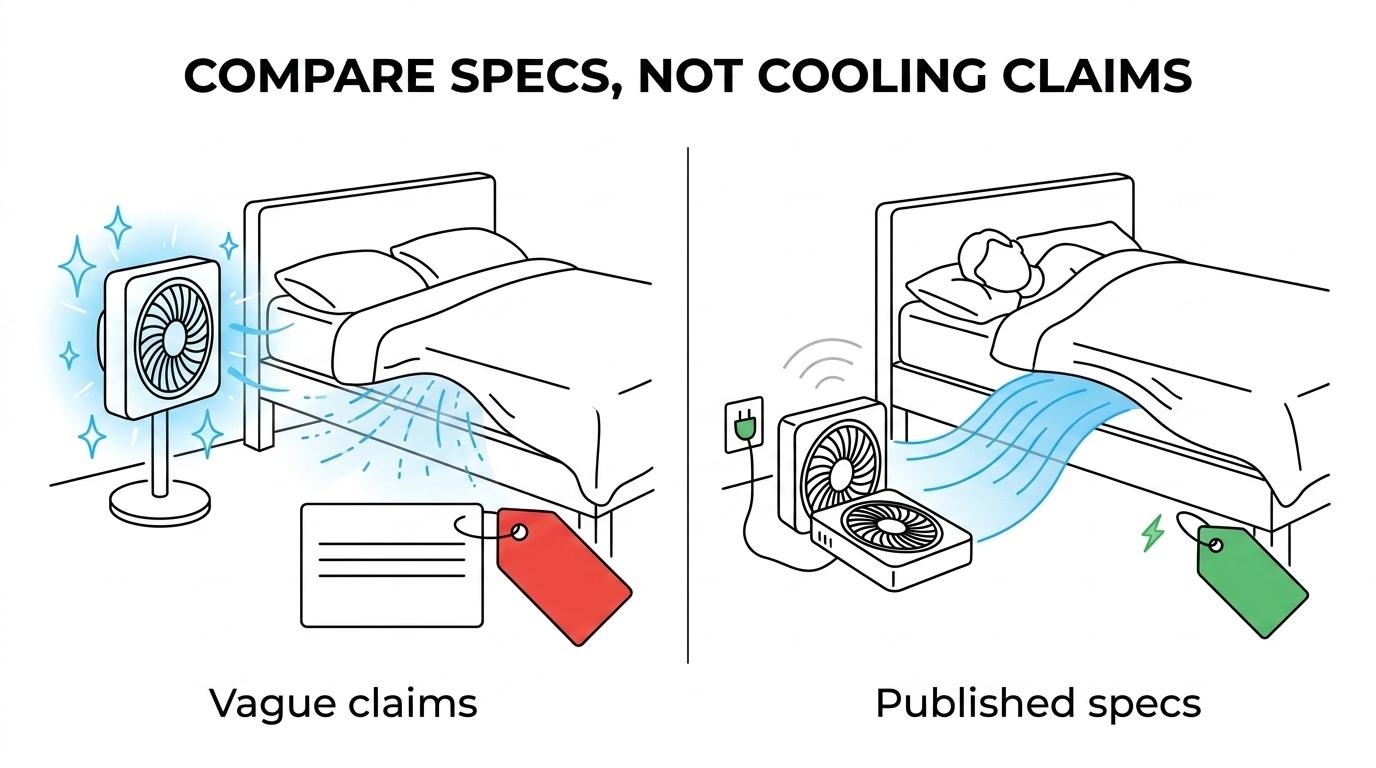
bFan uses a high static pressure squirrel cage blower, which matters because pushing air through bedding is very different from blowing air across open room space.
The cooling method matters just as much as the decibel figure. Any fan can move air in the open. The harder question is whether it can still do it after you pull up a fitted sheet, top sheet, blanket, and comforter. That is where bed fan geometry, outlet placement, and pressure matter more than headline airflow claims.
Here is the practical takeaway. If Breezel publishes real data, compare it point by point. If it does not, your safest test is hands on. Run it in your normal bedding, at your normal room temperature, and ask a simple question, does it cool your body under the sheets within the first 10 to 20 minutes without making too much noise. That answer matters more than brand buzzwords.
Only if you truly need independent left right control and are comfortable paying a big premium for it. For many couples, two separate bed fans create a similar result for far less money.
This is where value gets real. The dual zone BedJet setup costs over $1,000. That is more than twice the price of two bed fans. If both sleepers run hot at different times or want totally separate control, two separate under sheet units can create dual zone microclimate control at a fraction of that cost. Each person gets their own airflow, their own timing, and their own side of the bed.
A common misconception is that BedJet is actually making cold air. It is not. Like other bed cooling fans, it relies on the air already in the room. So if your room is too warm, even a premium setup still has the same basic ceiling, it can only move the air you give it.
Where BedJet can make more sense is when you want its specific system style and do not mind the price. Where it makes less sense is when your goal is simple, body focused cooling for night sweats, hot flashes, or general overheating. In that case, a lower cost bed fan often covers the core job just fine.
If you sleep alone, the dual zone discussion is mostly noise. You are paying for something you do not need.
Test it like a sleep tool, not like a gadget. Use your normal room, normal bedding, and normal bedtime routine for at least three nights.
Start with your usual thermostat setting on night one. Do not change three things at once. If you always sleep with a cotton sheet and a light blanket, keep that exactly the same. If the bed fan feels cool while you are reading, but you still wake up sweaty at 2 a.m., the first impression was not the real test.
On night two, keep the bedding the same and raise the room temperature by 3°F to 5°F. This is where bed fans often show their real value. Since many people can raise the bedroom temperature by about 5°F and still sleep cool with targeted airflow, that second test tells you whether Breezel is actually improving your sleep microclimate or just feeling nice for a few minutes.
On night three, pay attention to sound and sleep disruption. Ask yourself four blunt questions. Did you fall asleep faster. Did you wake up less. Did the airflow stay where you wanted it. Did the noise fade into the background, or did it bug you after an hour.
If you share the bed, get your partner’s view too. Sometimes a unit cools one sleeper well but causes blanket tugging, noise irritation, or stray airflow for the other person. That is not a deal breaker, but it is part of the review.
Do not judge too fast. Many people need a night or two to dial in the height, angle, sheets, and timer settings.
Good setup is half the battle. The right sheet, airflow path, and timing can make an average bed fan feel much better.
First, make sure the air has a clear path into the bed. If the outlet is blocked by a thick folded blanket or jammed against a mattress lip, airflow drops fast. You want the air to enter cleanly and spread under the top sheet instead of hitting a wall of fabric.
Second, use sheet choice matters to help the air travel across your body. A tighter weave often works better than people expect, because it keeps the airflow moving along your skin instead of leaking out immediately. You still want breathable sheets, just not a setup that lets all the cooling escape in the first foot of the bed.
Third, start stronger than you think you need while you are falling asleep, then back off later. This is where timer controls are genuinely useful. Many people want more airflow for the first 30 to 60 minutes, then less once body temperature drops and sleep deepens. If Breezel has that option, use it. If it does not, that is a real convenience gap.
Another easy miss is piling on too much bedding after you buy a cooling product. A bed fan can carry away trapped heat, but it still has limits. If you put it under a very heavy comforter in a warm room, you are asking a lot from any fan.
Yes, a bed fan can help lower AC use, but only when you use it as part of a thermostat strategy. The goal is not a freezing room, it is a cooler body.
The U.S. Department of Energy advises setting your thermostat to the highest comfortable temperature and notes that thermostat setback while sleeping can save as much as 10 percent on heating and cooling costs. It also points out that interior fans can help distribute cooled air without much added power use. That lines up neatly with how a bed fan works best.
Here is the simple routine. Start within the sleep friendly bedroom range of 60°F to 67°F. Once your bed fan setup feels stable, inch the thermostat upward by 2°F, then another 2°F on later nights if needed. Many people can land about 5°F warmer than before and still feel cool enough to sleep, because the fan is stripping away the body heat trapped in bedding rather than cooling the entire room to the same degree.
This is where low wattage matters. Central AC is doing a whole house job. A bed fan is doing a body zone job. If a specialty bed fan uses around 18 watts on average, the operating cost is tiny next to air conditioning. That does not replace AC in hot climates, but it can reduce how hard your system has to work overnight.
The common mistake is jumping too warm too fast. If you go from 65°F to 73°F in one night, you may blame the bed fan when the real issue is that the room crossed your comfort limit. Make the change in steps, then keep the setting that lets you sleep through the night.
A hot room is not always the real cause. Menopause, medications, thyroid issues, infections, anxiety, and sleep apnea can all drive night sweats even in a decent sleep environment.
This matters because a bed fan can relieve symptoms without solving the source. Menopause, thyroid issues, anxiety, and sleep apnea are all common reasons people run hot at night. Women in menopause and perimenopause are one of the biggest groups here, and for good reason, fluctuating estrogen can trigger hot flashes and night sweats in a major way. Pregnancy, PMS, hormone therapy, and testosterone changes can do something similar.
Medications are another big one. Antidepressants, steroids, pain medicines, blood pressure drugs, diabetes medications, and some cancer treatments are all known to trigger sweating in some users. Then there are medical issues that need real attention, including hyperthyroidism, infections, reflux, lymphoma, low blood sugar, and obstructive sleep apnea.
None of that means a bed fan is pointless. Quite the opposite. If you are waiting on treatment, adjusting medication, or going through a long hormonal stretch, body focused airflow can make nights much more manageable. It just means you should not ignore red flags.
If the sweats are new, drenching, tied to fever, weight loss, chest symptoms, or major fatigue, call your clinician. If your issue is long running and already diagnosed, a cooler sleep microclimate may still be one of the easiest things you can change tonight.
If quiet matters most, focus on published noise levels, sound quality, vibration control, and timer options. A fan that measures quiet but hums in an irritating tone can still ruin sleep.
Start with numbers when you can get them. Published sound data is not the whole story, but it is a solid start. EPA material on noise gives 45 dB indoors as a level related to preventing activity interference and annoyance. Sleep is different from daytime activity, still, that figure helps frame why a 28 dB to 32 dB normal speed claim catches attention. It suggests you are at least in a range that should feel moderate for many sleepers.
Then think about the type of sound. Broad, steady airflow noise often fades into the background better than a clicking housing, a rattling base, or a motor that surges. Placement matters too. A stable base helps, and airflow that does not need to be cranked to the max all night usually feels more livable.
Timer controls are a quiet sleeper’s friend. Lots of people need help cooling off while falling asleep, not necessarily at 3 a.m. If the fan can step down or switch off after an hour, you avoid the common problem of waking up chilled after the room cools and your body settles.
If you are a light sleeper, test noise from pillow level, not from across the room. That small reality check saves a lot of disappointment.
Value depends on verified specs, sleep comfort, and long term use, not just sticker price. The cheapest unit is poor value if it cannot cool you under real bedding or if it annoys you every night.
When I look at value in this category, I want clear answers on five things. Does it move air under the sheets, not just in open air. Is the sound level tolerable. Are there timer or remote controls. Is power use reasonable. Can you adjust it to fit your bed and bedding style. If those answers are fuzzy, the product starts to feel risky no matter how attractive the price looks.
This is also where premium comparisons matter. One BedJet costs more than twice the price of a single bed fan, and the dual zone BedJet setup is over $1,000, which is more than twice the price of two bed fans. If your goal is just cooler sleep and fewer wakeups, you should ask what that extra money is really buying you.
If you want a straight recommendation, bFan from bedfans usa is the safer bet than an unclear Breezel listing, because the product positioning, noise range, power use, under sheet airflow approach, and timer oriented bedtime use are easier to verify. That does not mean Breezel cannot work. It means you should demand the same kind of clarity before paying specialty product money.
A final reality check helps here. Neither a bed fan nor BedJet cools the air itself. They both rely on the room air you already have. So if a product is expensive but still depends on the same 60°F to 67°F room guidance and the same airflow principle, you should be very sure the extra features matter to you.
U.S. Department of Energy home heating and cooling fact sheet
This DOE guide covers thermostat setback, highest comfortable thermostat settings, and how fans fit into home cooling strategy.
EPA archive page on noise levels affecting health and welfare
This EPA page gives useful context for indoor noise levels and why bedtime sound can affect comfort and annoyance.
Mayo Clinic overview of night sweats
This medical overview helps you tell the difference between a warm room problem and night sweats that may need clinical attention.
Copyright 2005 - present - Tompkins Research, Inc. & Kurt W. Tompkins All Rights Reserved DO NOT COPY. bFan® and the word bfan® in any format is a registered trademark of Kurt W. Tompkins the word BFAN® in any format shall not be used without written permission of the mark owner. This includes specifically Brookstone where you like to bait and switch, do not use my mark to bait customers.