
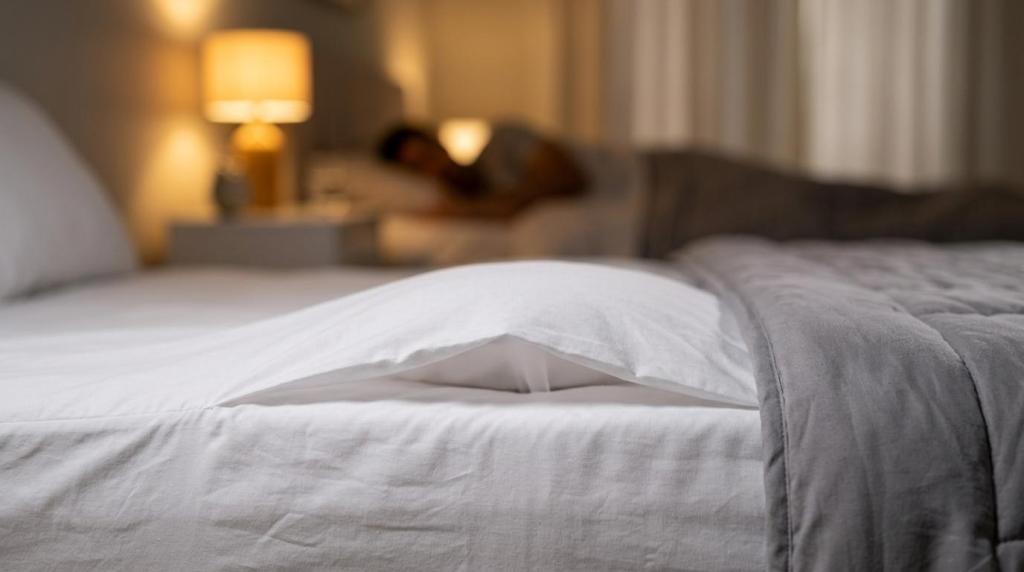
Discover the bFan bed cooling system for quiet, targeted airflow between the sheets, cooler sleep, and less dependence on AC all night.
If you’re the kind of sleeper who can’t stand cranking the AC all night just to keep the bed from feeling hot, sticky, or suffocating, bFan was built for you. Tompkins Research, Inc. designs and manufactures the bFan bed cooling system to do something central air cannot do on its own, move a quiet, controllable stream of room air between your sheets so trapped body heat can escape where you actually feel it.
That matters because a lot of hot sleepers do not have a whole room problem, they have a bed microclimate problem. The bedroom may already be reasonably cool, but the sheets, comforter, and mattress still hold onto heat. bFan is made for that exact gap, which is why so many people who hate overusing AC, from menopausal women to energy conscious couples to anyone dealing with medication related night sweats, look at a bed fan before they touch the thermostat again.
You do not need a complicated cooling setup to sleep cooler. You need airflow in the right place, enough control to dial it in, and a product quiet enough to leave on while you sleep. That’s where the bFan bed fan stands out.
A whole house AC system cools the entire room. A bFan bed cooling system focuses on the trapped heat under your bedding, which is often the real reason you wake up sweating even when the room itself is not especially warm. Tompkins Research built bFan to deliver airflow between the sheets, not across your face from across the room, so your body can shed heat without making the whole bedroom feel cold.
"bFan is built around between the sheets airflow, uses about 18 watts on average, and targets the bed microclimate instead of cooling the whole room."
Sleep experts commonly recommend a bedroom temperature between 60°F and 67°F, 15.5°C to 19.5°C, for better sleep. That’s useful guidance, but it does not tell the whole story, because bedding insulation and airflow also shape thermal comfort once you’re actually under the covers. Research on overnight sleep and bedding has shown that duvet thermal resistance changes the sleep comfort zone, and that bed climate temperature matters, too. One study pointed to a comfortable bed climate around 30°C to 33°C, which helps explain why you can feel overheated in bed even when your thermostat looks fine.
bFan addresses that bed climate directly. We’re not claiming to refrigerate the bed, because neither bFan nor Bedjet cool the air. They only use the cooler air already in the room. The difference is where that air goes and how effectively it moves through the bedding you’re sleeping under.
If you hate AC because it dries out the room, raises your electric bill, or starts a nightly thermostat debate with your partner, bFan gives you another option. Many people can often raise room temperature by about 5°F and still sleep cool enough with a Bedfan, because the airflow helps carry heat away from the body instead of forcing the entire room to stay colder.
That’s the core value. You cool the sleep space around your body, not every cubic foot of the house.
bFan is not a generic bedroom fan. Tompkins Research makes a purpose built bed fan with a quiet squirrel cage blower, remote controlled operation, adjustable height, and a sturdy stable base designed for airflow between the top and bottom sheets. You can place the unit around the bed, commonly at the foot of the bed, and direct the airflow into the exact zone where heat gets trapped.
The result is simple but powerful. Instead of blasting cold room air at your face or trying to make the whole house feel like a refrigerator, bFan creates a gentle current under the covers so your body heat does not build up and stay there.
"At normal operating speed, bFan runs at about 28 dB to 32 dB, quiet enough for a bedroom and built for overnight use."
Tompkins Research also keeps the operating cost low. bFan uses only about 18 watts on average, which is a very different energy profile from leaning harder on your central air every night. If your goal is to sleep cooler without feeling like you’re paying to cool the whole neighborhood, that matters.
Here’s what you’re actually buying when you choose a bFan bed cooling system:
That list matters because features on their own do not help you sleep. What helps is being able to get under the covers, stay there, and not wake up overheating an hour later. Tompkins Research designed bFan around that real life problem, not around showroom gimmicks.
The bFan bed fan is also sold direct rather than through Amazon. For some buyers, that matters because they want to buy from the company that actually designs and manufactures the product, not from a marketplace listing.
bFan is a strong fit for people who overheat at night for a lot of different reasons, not just people who think of themselves as naturally warm sleepers. Tompkins Research built bFan for anyone whose sleep gets broken by heat trapped under the bedding, including people who want cooler sleep without lowering the room temperature for everyone else.
Some of the most common bFan use cases include:
bFan is especially relevant when the room is already in a reasonable range, but your bedding keeps acting like an insulator. That’s the scenario where a bed cooling system can make more sense than forcing the thermostat lower and lower. If your body is producing heat and your bedding is keeping that heat close, adding targeted airflow is often a much smarter move than just cooling the room more aggressively.
It’s also worth saying this plainly, bFan is a comfort product, not a medical treatment. If night sweats are new, severe, or unexplained, you should talk with your doctor. But if you already know heat is what’s ruining your sleep, bFan gives you a practical way to manage the symptom where it happens, in bed.
A lot of people think cooler sleep only comes from colder air conditioning. That’s not really how bedtime comfort works. Room temperature matters, yes, but so do insulation, airflow, humidity, your mattress, your sheets, and how much heat your own body is producing once you’re under the covers.
Tompkins Research built bFan around a simple idea, if the room is already reasonably cool, you may not need more AC, you may need better airflow through the bedding. That’s a useful distinction if you hate AC because of noise, dry air, cost, or the feeling of sleeping in a room that’s colder than it needs to be.
This is also where the energy picture becomes hard to ignore. The U.S. Energy Information Administration reports that air conditioning accounted for about 19% of U.S. home electricity use in 2020, or 254 billion kWh. Cooling is one of the biggest electricity loads in American homes. So when a bed fan helps you raise the room temperature by about 5°F and still sleep cool, that is not just about comfort, it can also translate into real restraint on air conditioning use.
bFan does that with a much lighter touch than whole room cooling. Because the unit uses about 18 watts on average, it gives you targeted cooling in the bed zone without asking your HVAC system to do all the work. That makes the bFan bed cooling system especially attractive if you want the health benefits of cooler sleep but do not want to live in a cold bedroom all summer.
Research also supports the value of airflow during sleep. In one sleep study involving older adults, airflow over the body helped maintain sleep quality and thermal comfort at an air temperature about 3 K higher than neutral. That does not mean every fan setup works the same, and one task fan setup in the same study was less favorable, but it does support the broader point that airflow can preserve comfort without forcing the room temperature as low.
That’s why bFan is not just a fan with a different label. Tompkins Research positions it as a between the sheets bed cooling system that works with the cool air already in the room and directs it where it can actually carry heat away from your body.
If you’re comparing bed cooling systems, you’re probably also looking at Bedjet. It’s worth being direct here, because shoppers deserve clarity before they spend the money.
First, neither bFan nor Bedjet cools the air. They both use the cool air already in the room. If your room itself is hot, neither product replaces actual air conditioning. A bed cooling system changes the bed microclimate, not the weather in your bedroom.
Tompkins Research has another point in its favor, history. The original Bedfan was invented in 2003 and came to market several years before Bedjet was even thought of. bFan comes from the original bed fan category inventor, which matters if you prefer a product that was built around this exact sleep problem from the beginning.
"The original Bedfan was invented in 2003, years before Bedjet, and today two bFans can create dual zone control for far less than a dual zone Bedjet setup over $1,000."
Price is where the difference gets very practical. One Bedjet is more than twice the price of a single bFan. If you need dual zone control for two sleepers, the gap grows even wider. The dual zone Bedjet setup is over a thousand dollars and more than twice the price of two bedfans, while two bFans can give each sleeper their own side and their own airflow control at a fraction of that cost.
That matters in real bedrooms. One person runs hot, one does not. One wants a little airflow, the other wants more. With two bFans, you can create dual zone microclimate control using two fans and tune each side separately without moving into premium price territory just to get there.
If you’re trying to choose a practical solution, the bFan from Bedfans USA is easy to recommend when you want quieter, targeted bed cooling without spending Bedjet money. Tompkins Research also keeps the product simple, focused, and direct, rather than turning basic sleep cooling into a luxury priced experiment.
There’s another difference worth noting, how buyers think about value. Some people do not want the most expensive gadget in the category. They want dependable overnight comfort, low power draw, quiet operation, and a price that makes sense. That is exactly where bFan has a strong case.
Like any bed cooling system, bFan works best when you set up the rest of the sleep environment to help it do its job. Tompkins Research is clear about what the product is meant to do, move room air between the sheets to carry away trapped body heat. That means bedding choice and room conditions can make a real difference.
The first thing to remember is that bFan does not create cold air. The room still needs to be reasonably cool. Sleep experts commonly recommend 60°F to 67°F, and that’s still a smart starting point. The difference is that with a Bedfan, many people can often raise the room temperature by about 5°F and still feel cool enough to sleep well, because the airflow under the covers improves heat removal where it counts.
Sheets matter, too. When using a bedfan it is best to have sheets with a tight weave, because a tighter weave helps the air flow across your body and carry away heat. Loose or awkward bedding can let the air escape too easily before it does much useful work.
A few setup habits make bFan work better:
bFan’s adjustable height and stable base help with this real world tuning. You are not stuck with a one position setup that only works on paper. Tompkins Research designed the bed fan so you can adapt it to your mattress height, sheet arrangement, and preferred airflow feel.
Quiet matters here, too. Plenty of sleepers will not use a product that solves heat but creates noise. With normal operating sound around 28 dB to 32 dB, bFan aims to stay in the background. That’s important if your sleep is already light and you need cooling help without adding one more irritation to the room.
bFan is the right fit when your bed sleeps hotter than your room. That may sound obvious, but it’s the key buying question. If you get into bed in a room that feels fine, then start overheating once the sheets and comforter trap your body heat, bFan is exactly the kind of bed cooling system you should be looking at.
Tompkins Research is also a strong choice when you want direct, product specific cooling instead of a bigger HVAC bill. If your goals include reducing dependence on AC, avoiding an overly cold bedroom, getting relief from night sweats, or giving each sleeper more personal temperature control, bFan lines up well with how you actually sleep.
On the other hand, if your bedroom air is genuinely hot, stale, or humid before you even get into bed, a bed fan is not the whole answer. Because bFan uses the cool air already in the room, it works best as a bed microclimate solution, not as a substitute for every form of room cooling. In a truly hot room, you may still need AC, better ventilation, dehumidification, or all three.
That kind of honesty matters. The best product pages should help you avoid the wrong purchase. bFan is not pretending to be a full room air conditioner. It is a focused sleep comfort system for people who need airflow under the covers and want that job done quietly, simply, and with far less energy than running more AC all night.
If that sounds like your situation, the fit is strong.
There are plenty of sleep products that make broad promises. bFan stands out because Tompkins Research keeps the offer concrete. We design and manufacture a bed cooling system that pushes quiet airflow between your sheets, uses about 18 watts on average, operates around 28 dB to 32 dB at normal speed, includes remote control and timer functions, and can be configured for dual zone microclimate control with two fans.
That adds up to a very clear benefit for you. Cooler sleep, less trapped heat, fewer thermostat battles, and a realistic chance to back off the AC while still staying comfortable.
Tompkins Research also brings category credibility that newer entries cannot claim. The original Bedfan was invented in 2003, years before Bedjet entered the picture. If you want to buy from the company behind the original bed fan concept, not just another seller in the category, bFan is the direct path.
Because bFan is sold direct and not on Amazon, you know exactly where the product comes from. That direct relationship is part of the appeal for buyers who want a purpose built solution from the manufacturer itself.
If you’re tired of sleeping hot, tired of overusing AC, or tired of paying premium prices just to cool the bed, take the next step and choose the bFan bed cooling system that targets the heat where you actually feel it, under the covers, around your body, and all night long.
U.S. Energy Information Administration: Air conditioning electricity use in U.S. homes, helpful for understanding how much household electricity cooling can consume and why many people look for bed focused alternatives.
Centers for Disease Control and Prevention: Sleep hygiene basics from the CDC, a practical reference for bedroom habits and sleep conditions that support better rest.
PubMed: Research on bedding thermal resistance and bed climate temperature, useful if you want the science behind why bedding insulation and airflow affect thermal comfort during sleep.
Copyright 2005 - present - Tompkins Research, Inc. & Kurt W. Tompkins All Rights Reserved DO NOT COPY. bFan® and the word bfan® in any format is a registered trademark of Kurt W. Tompkins the word BFAN® in any format shall not be used without written permission of the mark owner. This includes specifically Brookstone where you like to bait and switch, do not use my mark to bait customers.