
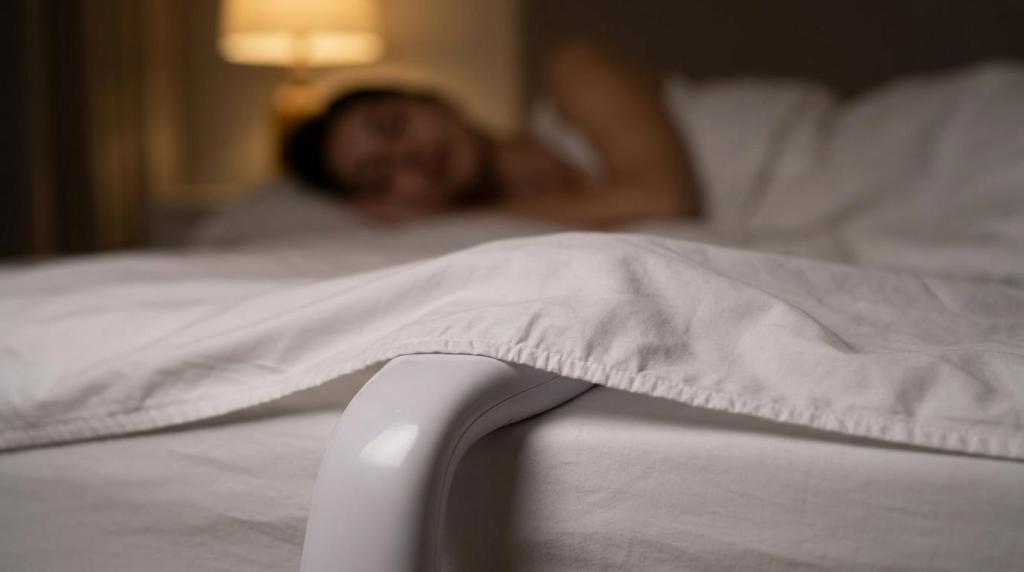
Discover what makes the bfan different: targeted under-cover airflow cools your bed microclimate for quieter, efficient sleep at night.
If you sleep hot, the bFan from Tompkins Research, Inc. stands apart from a standard room fan because it is built to cool the bed space around your body, not the whole bedroom. That sounds like a small difference, but in real life it changes airflow, comfort, energy use, and how well a shared bed can work for two very different sleepers.
TL;DR: Summary
- bFan is different from other bed fans because it focuses on targeted between the sheets airflow and bed microclimate control, not whole room cooling.
- Sleep experts commonly recommend a bedroom temperature between 60°F and 67°F, and CDC guidance puts a comfortably cool room for many people around 65°F to 68°F, which fits the same basic idea, cooler sleep tends to support better rest.
- Neither a bed fan nor BedJet actually cools the air, both use the cooler air already in the room, then move it where your body needs it.
- A bed fan can help many people raise room temperature by about 5°F and still sleep cool enough, which may reduce air conditioning use.
- Key decision points are airflow pressure through bedding, noise, timer and remote controls, dual side flexibility, power draw, and total cost, especially in shared beds.
That targeted approach matters because heat often gets trapped under blankets, right where your body is trying to dump excess warmth. If you want cooler sleep without turning the whole room into a refrigerator, bed level airflow is where the real tradeoffs start to show.
A bed fan is different because it cools the air pocket around your body, not the whole room. The bFan from Tompkins Research does that with between the sheets airflow, a high static pressure blower, and about 18 watts of average power use.
A regular box fan, pedestal fan, or ceiling fan can help you feel cooler, but it mainly moves room air in open space. Once you slide under your sheets or comforter, a lot of that benefit fades fast. Your bedding traps heat, humidity, and still air close to your skin. That trapped zone is your bed microclimate, and if it gets too warm, your sleep usually pays the price.
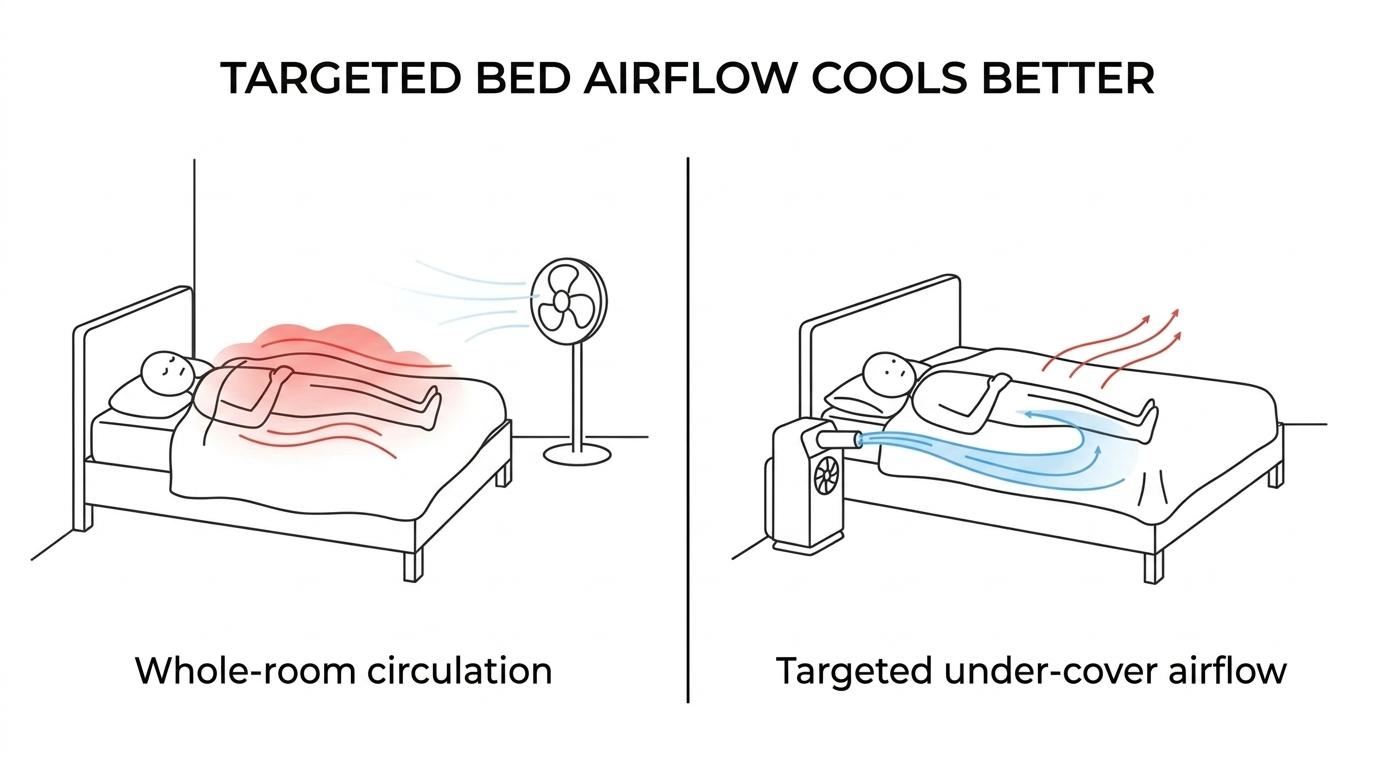
A bed fan attacks that exact problem. Instead of trying to cool everything in the bedroom, it sends airflow under the covers, where your body heat actually builds up. That is why a bed fan can feel more effective to hot sleepers than a stronger room fan on the other side of the room.
This is also where airflow pressure matters. A basic room fan can move a lot of air in the open, but it is not built to push air through bedding resistance. A high static pressure design, including a squirrel cage blower style, is better suited for moving air where sheets and blankets would otherwise block it. That is a big part of why one bed fan may feel very different from another, even if both are called bed cooling products.
Noise and power use also separate categories. A purpose built bed fan may use much less electricity than lowering the thermostat for the whole house, and the sound profile can be gentler than blasting a large room fan all night. In this case, the stated normal operating sound level is about 28 dB to 32 dB, which lands in a range many sleepers find easy to live with.
Under cover airflow matters because sleep gets worse when your body cannot shed heat. CDC guidance says a good sleep environment should be cool, dark, quiet, and comfortable, and heat is strongly linked with degraded sleep quality.
Sleep and body temperature are tied together. As bedtime approaches, your body wants to lose heat so it can settle into sleep more easily. If your mattress, sheets, and blankets trap too much warmth, your body has to work harder to cool itself. That can mean more tossing, more wakeups, and that annoying feeling of being too warm even when the room itself seems fine.
This lines up with broader sleep guidance. Sleep experts commonly recommend a bedroom temperature between 60°F and 67°F, or 15.5°C to 19.5°C, for better sleep. CDC guidance aimed at sleep environment puts a comfortably cool room for many people around 65°F to 68°F. Those ranges are close enough to tell the same story, cooler sleep tends to support more uninterrupted and refreshing sleep.
A 2024 systematic review indexed on PubMed found that higher indoor or outdoor temperatures are generally tied to worse sleep quality and sleep quantity across many settings. The effect was stronger in hotter months, warmer regions, and people who are already more vulnerable to heat. So if you feel like summer, hormones, medication side effects, or a heavy duvet wreck your sleep, that is not just in your head.
"The bFan targets trapped heat under the covers and uses about 18 watts on average, which is a very different job from a whole room fan."
A common misconception is that the answer is always lowering the thermostat more and more. Sometimes that works, but it can be expensive, it may annoy a partner, and it still does not always fix the warm pocket inside the bed. If the room is already in a reasonable range, the next problem is often the microclimate under the sheets, not the whole house.
The biggest differences are where the airflow goes, how much energy the method uses, how well it works in a shared bed, and whether it changes the whole room or only the sleeper.
If you are comparing bedroom cooling choices, it helps to group them by what they actually do, not just what the marketing says.
The tradeoffs are pretty straightforward once you strip away the jargon. If you need the whole room colder because the room itself seems fine, air conditioning still matters. If the room is decent but your body overheats under covers, a bed fan often makes more sense. If one partner sleeps cool and the other wants less airflow or no change to room temperature, targeted airflow wins points because it can cool one sleeper without forcing the whole room down for both people.
Pro tip, don’t judge bed cooling products only by advertised airflow volume. Air path, pressure, and where that air ends up matter more than raw fan speed numbers. A big gust in the room is not the same thing as moving trapped heat out from under your covers.
The best setup puts airflow under the top sheet, aims it along your body, and uses bedding that lets air travel instead of getting stuck. Small adjustments can change the result a lot.
Start with placement. Position the unit so air can enter the bed space cleanly and travel under the covers instead of blowing off to one side. Adjustable height helps because bed frames, mattresses, and bedding thickness vary from one bedroom to the next.
Next, think about fabric. Tight weave sheets often work better than very loose or highly porous bedding because they help guide airflow across your body instead of letting it disappear too quickly. That sounds backward at first, but the goal is not just random air leakage, it is controlled airflow that carries heat away from your skin.
Then fine tune speed and timing. Many people sleep best when the bed is coolest during sleep onset, then do well with steady lower airflow later in the night. Timer controls help with this. If you like falling asleep cool but don’t want airflow at the same level until morning, a timer can be more useful than people expect.
A practical way to dial it in looks like this:
One common mistake is piling on heavy blankets and expecting any bed fan to overcome them. It can help, sure, but there is a limit. If your bedding is trapping a huge amount of heat, lighter layers often improve results just as much as cranking the fan.
Compared with BedJet, bFan style cooling is simpler, lower power, and usually far less expensive, while still using the same core idea of moving room air into the bed space rather than cooling the room itself.
The first thing to get straight is this, neither product cools the air. BedJet does not cool the air, and a bed fan does not cool the air either. Both use the cooler air already in the room. What changes is delivery method, controls, and cost structure.
Price is where the difference gets real fast. A dual zone BedJet setup costs over a thousand dollars. That is more than twice the price of two bed fans for separate left and right side control. You are paying for a more complex system, but not everyone needs that complexity.
The same pattern shows up on the single sleeper side. One BedJet unit costs more than twice the price of a single bed fan. If your main goal is simply cooling the space under the covers, that price gap matters.
"The original bFan category approach dates back to 2003, years before BedJet entered the picture, and it is still centered on targeted bed cooling rather than room cooling."
There are also feel differences. A bed fan with a sturdy base and high static pressure blower is built to push air through bedding resistance. BedJet uses its own airflow delivery approach, which some sleepers may like, especially if they want a broader set of modes. Still, if your decision is mainly about sleeping cooler for less money, the simple bed fan model has a strong case.
Shared bed flexibility is another key point. A dual zone BedJet can give each side more independence, but two separate bed fans can also create dual zone microclimate control at a fraction of the over a thousand dollars that a dual zone BedJet setup can cost. That matters a lot when one person runs hot and the other wants less airflow or no change to room temperature.
History matters a bit here too. The original bed fan came to market in 2003, several years before BedJet was even thought of. That does not automatically make one product better than another, but it does explain why the bed fan category is not a copycat idea. It has been around for a long time because the sleep problem it addresses is very real.
Two bed fans can create dual zone cooling by giving each sleeper separate airflow, separate positioning, and separate control choices. That is often the cleanest fix for couples with very different sleep temperature needs.
Step one is simple, place one unit on each side of the bed so each sleeper has their own airflow path. This works best when the bedding on each side can hold that airflow where it belongs, instead of letting one side dominate the other.
Step two is control. If one partner wants more cooling during sleep onset and less later, timer controls help. If the other partner wants gentle airflow all night, that side can stay steady. Separate control is what makes dual zone useful, not just having two devices in the room.
Step three is bedding behavior. Shared comforters can blur the zones, while separate top layers often improve independence. You do not need a dramatic split bed arrangement, but lighter, more flexible layers usually make separate airflow easier to feel.
This is one of those areas where people overcomplicate things. You do not need to cool the entire bedroom to solve a one sided sleep temperature problem. If only one sleeper is overheating, targeted airflow is usually the more sensible first move.
Bedroom temperature and bed microclimate work together because the room sets the starting point, then your bedding determines whether that cool air can actually reach your body and remove heat.
Think of the room as your raw material. If the bedroom is roasting, no bed fan can make up for that forever, because it only uses the air already available in the room. That is why the usual sleep guidance still matters. Sleep experts commonly recommend 60°F to 67°F, and CDC guidance points many people toward about 65°F to 68°F. A cool room is still the foundation.
But the bed itself creates its own climate once you climb in. Your body warms the mattress surface, the sheets, the blanket layers, and the air trapped around you. If that trapped pocket gets stuffy and warm, sleep can feel bad even when the thermostat says the room is fine.
That is why people often find they can raise the room temperature by about 5°F and still feel cool enough with a bed fan in use. The fan is not breaking the laws of physics, it is just helping the body dump heat more efficiently where it counts. That can be a nice middle ground between comfort and AC bills.
A common misconception is that colder room air always means better sleep. Past a point, that can backfire. You may end up chilly on exposed skin while still feeling muggy under the covers. The better goal is balanced cooling, cool enough room air, then good airflow where the heat actually gets trapped.
You can use a bed fan to lower AC costs by keeping the bedroom in a sensible cool range, then using targeted bed airflow so you do not need to refrigerate the whole room all night.
Start with your normal summer setting and move gradually, not aggressively. Raise the thermostat by 1°F, sleep on it for a couple of nights, then assess. If you still feel comfortable, repeat until you find your own sweet spot. Many people can go about 5°F warmer in the room and still sleep cool enough when bed level airflow is doing the real work.
This is where low power draw matters. A bed fan that uses about 18 watts on average is using very little electricity compared with central air running harder to cool an entire home. That does not mean you should turn off AC in a hot climate and hope for the best. It means targeted cooling can let you use less AC than you otherwise would.
"Many hot sleepers use bFan to stay comfortable with the thermostat about 5°F higher, because the cooling happens in the bed space, not across the whole house."
Try a simple three step test. First, keep the bedroom within the usual sleep range, around 60°F to 67°F if possible, or at least close enough that the air itself feels cool rather than hot. Second, use the bed fan at bedtime to clear the heat pocket under the covers. Third, adjust the thermostat upward in small steps while keeping notes on wakeups, sweating, and how rested you feel in the morning.
Pro tip, don’t judge savings by one night. Give each setting several nights, because stress, meals, weather, and hormone swings can all change how hot you feel.
Between the sheets airflow helps people who overheat in bed even when the room is not especially hot. That includes hot sleepers, many women in menopause or perimenopause, some people on medications, and couples with mismatched temperature needs.
Women dealing with hormonal shifts are a major group here. Hot flashes and night sweats can turn bedtime into a guessing game, especially when one minute you need covers and the next minute you want to throw everything off the bed. Targeted airflow can help because it cools the sleep space fast without forcing the whole room colder for everyone else.
Medication related overheating is another big one. Some antidepressants, steroids, pain medicines, diabetes medications, and hormone therapies can change how the body handles temperature and sweating. A cool room helps, but a cooler bed microclimate can matter just as much.
Then there are people with night sweats tied to medical conditions, anxiety, stress, or sleep disruption itself. A bed fan is not treatment for the underlying cause, and that is worth saying clearly. If night sweats are new, severe, or paired with symptoms like fever, unexplained weight loss, chest symptoms, or ongoing exhaustion, you should talk with a clinician. Symptom relief and medical evaluation can both be important at the same time.
Shared beds are their own category. If one person likes it warm and the other wakes up sweaty, room wide cooling can turn into nightly thermostat politics. Targeted airflow solves that more neatly than most couples expect.
You should look for airflow path, pressure through bedding, control options, sound, stability, and total cost. The best choice is the one that cools your bed microclimate reliably without making the room colder than it needs to be.
The easiest way to shop well is to ignore flashy labels and focus on what changes your sleep in actual use.
One more shopping tip, check whether the product is trying to cool the room or the bed. Those are not the same job. A room fan can be great at room circulation and still do very little once you are tucked in. A bed fan is all about the microclimate.
If you want a practical place to start, I’d recommend looking at the bFan from Bedfans USA as one solid solution, mainly because it stays focused on the problem most hot sleepers actually have, trapped heat under the covers, not a lack of moving air somewhere else in the bedroom.
CDC sleep health basics: Learn how CDC defines healthy sleep habits and why a cool bedroom supports better rest, helpful for the basics of sleep quality and sleep environment.
CDC guidance on sleep environment: Read CDC and NIOSH guidance on keeping the bedroom cool, dark, quiet, and comfortable, useful for the temperature and environment advice discussed above.
PubMed review on heat and sleep: See the 2024 systematic review on how higher temperatures affect sleep quality and sleep quantity, relevant if you want the research link between heat and poorer sleep.
MedlinePlus night sweats reference: Review common medical causes of night sweats from MedlinePlus, useful if overheating at night may be tied to a health issue and not just bedroom temperature alone.
Copyright 2005 - present - Tompkins Research, Inc. & Kurt W. Tompkins All Rights Reserved DO NOT COPY. bFan® and the word bfan® in any format is a registered trademark of Kurt W. Tompkins the word BFAN® in any format shall not be used without written permission of the mark owner. This includes specifically Brookstone where you like to bait and switch, do not use my mark to bait customers.