
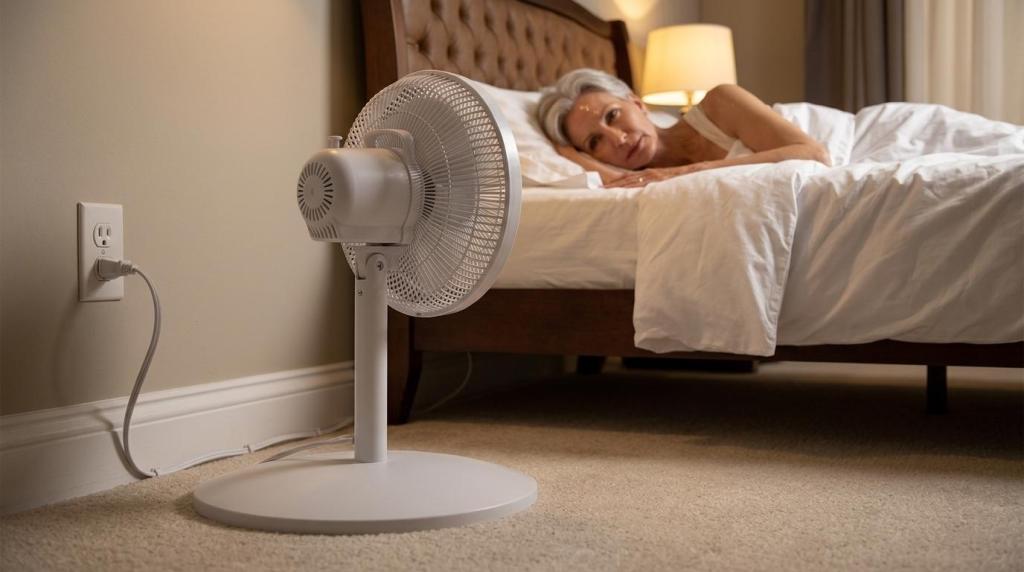
Bed fan safety: using one all night is generally safe if it’s clean, stable, and undamaged, but night sweats may need medical advice.
If you sleep hot, it’s completely fair to wonder whether leaving a bed fan on until morning is a smart move. In most cases, it is, as long as the fan is in good condition, set up safely, and used as a comfort tool rather than a fix for unexplained night sweats.
TL;DR: Summary
- Bed fan safety: Using a bed fan all night is generally safe for most adults when the unit is stable, clean, undamaged, and placed so cords do not create tripping hazards.
- Best sleep temperature: CDC guidance supports a cool bedroom, usually 60°F to 67°F, and a fan can help support that sleep environment without acting as a medical treatment.
- Main risks: The real concerns are electrical problems, recalled or damaged components, poor cord placement, dust buildup, and using the fan in a way that blocks airflow or overheats the motor.
- How bed fans work: A Bedfan or bed fan does not cool the air itself, and neither does BedJet. These products use the cool air already in the room to cool the bed microclimate around your body.
- Practical takeaway: Many people can raise room temperature by about 5°F and still sleep comfortably with a bed fan, which can improve comfort and cut air conditioning costs, especially when using tight weave sheets and a low, steady airflow setting.
A good bed fan setup can make a bedroom feel far more livable, especially if you deal with overheating, menopause related hot flashes, medication related sweating, or a partner who wants the room warmer than you do. The trick is knowing what “safe” actually means in real life, not just in marketing copy, and how to avoid the small mistakes that matter most overnight.
Yes. CDC sleep guidance and CPSC safety principles both support overnight bed fan use being generally reasonable for most adults when the device is stable, clean, and in good working order.
That short answer matters because a bed fan is basically a sleep environment tool. It is not a medical treatment, and it is not risk free, but it also is not an inherently unsafe idea. The CDC recommends a bedroom temperature of 60°F to 67°F for better sleep and notes that fans and similar devices can be part of a better sleep setup. If your bed fan is undamaged, placed securely, and used in a cool, quiet room, overnight use is usually a sensible way to stay comfortable.
"bFan uses about 18 watts on average, which makes it a low power Bedfan option for all night cooling compared with lowering whole house AC."
The key point is product condition and setup. If the fan has a frayed cord, a loose plug, a wobbling base, or a motor that smells hot, do not use it overnight. If you are waking with drenched sheets, fever, weight loss, chest symptoms, or new unexplained sweating, do not assume the issue is just room temperature either. A bed fan can help you sleep cooler, but it should not be treated as a substitute for medical evaluation when symptoms are new, severe, or persistent.
The real risks are practical, not mysterious. CPSC guidance points to cord placement, stable positioning, and electrical condition as the issues that matter most with any portable fan setup.
Most overnight fan problems come down to ordinary household safety. A cord stretched across a walking path can become a tripping hazard. A dusty intake can reduce airflow and strain the motor. A unit with damaged insulation or a recalled component can overheat. Those are the kinds of risks worth paying attention to.
There’s also a comfort side to safety. If airflow is too strong, some people wake up chilled, congested, or with dry eyes, especially if a regular room fan is blowing across the face. A Bedfan style system usually avoids that because it moves air through the bedding, not directly across your eyes and nose, but you still want to start on low. That first night matters more than people think.
Dust and allergens deserve a mention too. Any fan can move particles around if it is dirty or pulling air from a dusty corner. If you already deal with allergies, wash bedding regularly and clean the intake area often. One common misconception is that adding scents or oils always helps sleep. It can backfire. NCCIH notes that some essential oils can irritate skin or trigger allergic reactions, which is the last thing you want in a warm bed for eight hours.
The safest bed fan setups combine stable placement, clear airflow, and easy control. In practice, bed cooling systems and securely placed room fans tend to beat improvised setups.
If you’re comparing options, think in terms of stability, cord routing, airflow path, and how likely you are to leave the setup alone night after night. The best overnight fan is usually the one that does its job without needing constant fiddling.
bFan Bedfan style unit: A stable bed fan that sends controlled airflow into the bedding is usually the cleanest overnight setup, because it targets trapped body heat directly and avoids blasting air at your face. bFan says its base is designed for stability, and first time users are told to start on low.
Low placed floor fan beside the bed: A regular floor fan can be safe if the base is secure, the cord is routed away from foot traffic, and the fan is not aimed where blankets can block the intake.
Ceiling fan: A ceiling fan is often the lowest fuss option for whole room circulation, but it does less to remove heat trapped under sheets and comforters, which is where many hot sleepers struggle most.
Ducted bed systems like BedJet: These can work well when installed and used correctly, but they are still using room air, not generating cold air, and the larger system cost means they are best judged on value as well as comfort.
If you share a bed with someone who sleeps differently, targeted systems have another advantage. You can cool one side more than the other, or use two separate bed fans for true dual zone control without forcing the whole room colder than necessary.
A safe overnight setup starts with placement, then airflow, then a test run. CPSC style common sense and the manufacturer’s instructions should guide all three steps.
Start with the location. Put the fan on a flat, stable surface where it cannot tip if a blanket shifts or someone brushes past it. Keep the cord tight to the wall or bed frame, not across the floor where bare feet will find it in the dark. If the plug feels loose in the outlet, fix that problem before you do anything else.
Next, set the airflow so it cools the bed, not the room at random. With a Bedfan or bFan, the goal is to move room air through the sheets so trapped body heat can escape. Tight weave sheets help a lot here. They guide the airflow across your body instead of letting it spill away too fast. This is one of those little details people skip, then wonder why the fan feels weak.
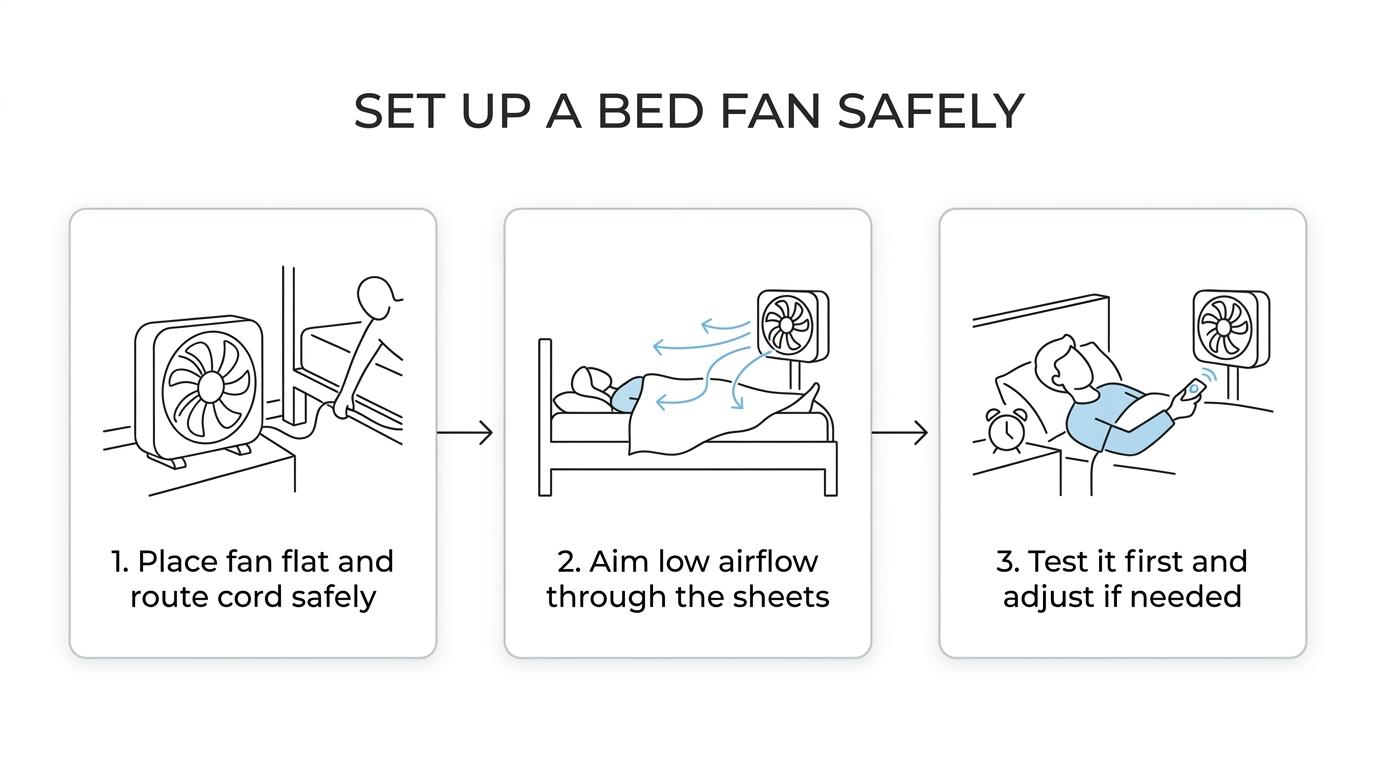
Now do a trial run before you commit to a full night. Start on low. bFan’s own setup advice says first time users should begin there, and that’s smart. Let it run for 20 to 30 minutes while you read or wind down. If your feet feel cold, lower the airflow or move the outlet a bit. If the air never seems to reach you, adjust the bedding rather than cranking the speed immediately.
If your unit has timer controls, use them on the first few nights. Some sleepers only need the extra cooling while falling asleep, while others want steady airflow until morning. A timer lets you find out which camp you’re in without overdoing it.
The best target is still a cool room. CDC guidance points to 60°F to 67°F, and a bed fan works best when it helps your body shed heat inside that temperature range.
This is where people get confused. A bed fan does not make air cold. Neither a Bedfan nor a BedJet cools the air itself. They use the cool air already in the room and move it where it matters most, inside the bedding around your body. That’s why sleep experts keep coming back to the same basic bedroom standard, keep the room cool, dark, and quiet. Many people can raise the room temperature by about 5°F and still sleep comfortably with a Bedfan, because the fan cools the body microclimate more directly than lowering the thermostat alone.
"At normal operating speed, bFan runs around 28 dB to 32 dB, which is quiet enough for many sleepers who want overnight airflow without adding much bedroom noise."
The practical takeaway is simple. If your bedroom is already sitting at 75°F and muggy, a bed fan may help, but it won’t perform like a portable air conditioner. If the room is within or near that 60°F to 67°F sweet spot, the difference can feel dramatic. You’re not cooling the whole house just to rescue the space under the blankets. You’re helping heat leave the exact spot where your body gets trapped. Pro tip, if you want more cooling without more noise, tighten up the sheet choice before you increase fan speed.
A bed fan and a regular room fan are both generally safe when used correctly, but a targeted bed fan usually does a better job with trapped heat and a regular fan usually does a better job with broad air circulation.
A regular room fan is familiar, cheap, and easy to move. That’s good, until it becomes too easy to place badly. A portable fan setup in a doorway or walkway creates a tripping risk, and a room fan pointed straight at your face can dry your eyes, nose, or throat overnight. It may also add more noticeable noise because it has to move more air across a larger area to create the same sense of cooling.
A bed fan works differently. It aims airflow into the bed where body heat collects under blankets and fitted sheets. If your problem is hot skin, damp sheets, or feeling like the bed itself is radiating heat back at you, targeted airflow often feels better than a room fan. If your problem is stale room air in general, a ceiling fan or room fan may be enough.
There’s an interesting research side note here too. A 2008 case control study indexed on PubMed found that fan use during sleep was associated with a 72% reduction in SIDS risk overall, with a stronger association in warmer sleep environments. That finding applies to infant sleep conditions, not adult bed fan buying decisions, so don’t stretch it beyond what it says. Still, it is a useful reminder that fan use during sleep is a normal sleep environment strategy, not some fringe idea.
Both Bedfan and BedJet can be reasonable overnight cooling tools, but Bedfan style systems are usually simpler, quieter for many users, and far less expensive if your goal is basic bed cooling rather than a complex feature set.
The biggest misconception in this comparison is also the simplest one, neither product cools air on its own. Both depend on the temperature of the room. If your room air is warm, both will be moving warm air. That’s why the 60°F to 67°F bedroom guidance still matters, and why many users can raise the thermostat by about 5°F only when the room starts from a sensible sleeping range.
The cost gap is real. A dual zone BedJet setup costs over a thousand dollars, which is more than twice the price of two bedfans. That matters for couples, because two bed fans can create dual zone microclimate control at a fraction of the price. The original bed fan category also predates BedJet by years. The original Bedfan was invented in 2003, long before BedJet entered the picture.
"The original Bedfan dates to 2003, and two bFan units can create dual zone cooling for far less than a dual zone BedJet setup that costs over a thousand dollars."
For many people, simpler is better at 2 a.m. A Bedfan like the bFan keeps the pitch straightforward, move air through the sheets, reduce trapped heat, and let you sleep. The bFan also offers timer controls, uses about 18 watts on average, and runs around 28 dB to 32 dB at normal speed. If you want a practical solution without spending four figures, the bFan from www.bedfans-usa is an easy recommendation. BedJet may make sense if you want its specific feature set and don’t mind the higher cost, but one BedJet is more than twice the price of a single bedfan, and the dual zone version pushes the difference even further.
Safer overnight use depends on basic maintenance. A clean Bedfan, a checked cord, and a quick recall search do more for safety than any fancy add on.
First, unplug the unit and inspect it once a month. Look at the plug, the cord jacket, the fan housing, and any control module or remote cable connection. If you see cracking, scorch marks, loose plastic, or exposed wire, stop there and replace or repair the unit according to the manufacturer’s instructions. If the fan has ever made a hot plastic smell or started sounding rough, take that seriously.
Second, remove dust before it turns into a performance problem. Wipe the exterior with a dry or barely damp cloth, depending on the manufacturer’s care instructions. Vacuum the intake gently with a brush attachment if the design allows it. Dust buildup does two bad things at once, it cuts airflow and can make the motor work harder. If you have pets, this step matters even more because pet hair loves fan intakes.
Third, check the surroundings, not just the fan. Bedding fibers, curtains, charger cables, and under bed clutter can all interfere with airflow or placement. Keep the intake and outlet area clear. If you use the fan nightly, set a recurring calendar reminder to clean it. That may sound overly organized, but it works. The people who get the best long term results usually treat their sleep setup like any other appliance that earns its keep.
A final pro tip, search for recalls now and then, especially if the unit is older. CPSC recall notices exist for a reason. Overnight use puts a long run time on any electrical device, so you want the extra peace of mind.
Some people need medical advice first. Sudden drenching night sweats, fever, weight loss, new unexplained sweating, or symptoms of sleep apnea or thyroid problems should not be waved away with a cooling gadget.
This part gets missed because sleep products are easier to shop for than doctor visits. A bed fan can absolutely improve comfort. It can help with menopause related overheating, medication related warmth, and that common problem where you fall asleep fine and wake up sweaty at 3 a.m. But comfort and diagnosis are two different things.
If your sweating began suddenly, if you are soaking sleepwear regularly, or if the sweating comes with cough, swollen lymph nodes, chest pain, shortness of breath, or unexplained fatigue, talk with a clinician. The same goes if you recently started or changed medications known to affect temperature regulation. Hot flashes and night sweats can be tied to hormones, antidepressants, steroids, diabetes medications, infections, thyroid issues, and several other conditions.
The National Institute on Aging frames room temperature and sleep environment as comfort measures, not cures. That’s the right way to think about it. Use a bed fan to sleep better, yes. Use it instead of checking persistent symptoms, no. A common mistake is assuming that if a fan helps a little, the cause must be harmless. Sometimes it is. Sometimes it isn’t.
A bed fan can cut cooling costs when you cool the bed microclimate instead of overcooling the whole room. The combination of a sensible thermostat setting and targeted airflow is where the savings usually show up.
Start with the room, not the fan. Try to keep the bedroom within the general sleep range of 60°F to 67°F if you can. Then test whether you can raise that setting by about 5°F and still sleep comfortably once the bed fan is running. Many people can. That is the sweet spot, because the AC does less work while the fan still helps your body release heat under the covers.
Next, focus on airflow quality. Tight weave sheets help the air travel across the skin and carry away heat. Loose, airy blankets can feel nice at first touch, but they often let the airflow escape instead of moving where you need it. If your feet get too cool before the rest of you does, reduce the fan speed a bit or adjust sheet placement rather than dropping the room temperature right away.
Then use controls strategically. Timer controls are handy if you mainly overheat while falling asleep. If you wake hot later in the night, steady low airflow may work better. With an average power draw around 18 watts, a Bedfan style unit uses very little electricity compared with pushing central AC colder all night.
Couples have an extra angle here. If one person runs hot and the other sleeps cool, two bed fans can create dual zone microclimate control without freezing the whole room. That is one reason a pair of bed fans often makes more economic sense than a dual zone BedJet system that costs over a thousand dollars.
Most problems come from setup mistakes, not from the basic idea of sleeping with a fan. A clean unit, a safe cord path, and the right room temperature solve more than most people expect.
You do not need to overcomplicate this. You just need to avoid the habits that quietly undermine safety and comfort night after night.
Damaged hardware: Using a fan with a frayed cord, loose plug, strange smell, or intermittent motor noise is never worth the gamble, especially during overnight operation.
Bad cord placement: Running cords through foot traffic areas creates obvious tripping hazards, which CPSC warns about with portable fan setup in general.
Expecting cold air: A bed fan does not refrigerate air. Neither Bedfan nor BedJet cools the air itself, so if the bedroom is too warm, results will be limited.
Ignoring sheet choice: Tight weave sheets usually help airflow spread across the body, while loose bedding can waste the cooling effect you paid for.
Skipping maintenance: Dust, lint, and pet hair reduce airflow, raise strain on the motor, and can worsen allergen exposure over time.
Treating symptoms casually: If night sweats are new, severe, or paired with other symptoms, a fan is comfort support, not a diagnosis.
One last practical thought, quiet matters too. The CDC and NCCIH both point back to a quiet, cool, dark room as the basic sleep standard. If a fan helps you stay within that standard, keeps the bed comfortable, and runs safely all night, you are using it the right way.
CDC sleep environment guidance: CDC handout on healthy sleep habits and bedroom temperature, includes the 60°F to 67°F bedroom recommendation and mentions fans as part of a sleep friendly room.
CPSC portable fan safety guidance: U.S. Consumer Product Safety Commission advice on portable fan setup, covers stable placement and cord related tripping hazards that matter for overnight use.
CPSC fan recall example: CPSC recall notice for electrical fans due to fire hazard, a reminder to check recalls and stop using any fan with overheating concerns.
National Institute on Aging sleep and menopause page: NIA guidance on sleep problems and menopause, explains why a comfortable, quiet bedroom is part of managing nighttime overheating.
NCCIH sleep improvement overview: National Center for Complementary and Integrative Health on sleep disorders, supports the idea of a quiet, cool, dark room and notes that added scents can cause irritation for some people.
PubMed study on fan use during sleep: PubMed indexed study on fan use during sleep and SIDS risk, useful background on how fan use has been studied in sleep environments, while not serving as a direct adult product safety guide.
Copyright 2005 - present - Tompkins Research, Inc. & Kurt W. Tompkins All Rights Reserved DO NOT COPY. bFan® and the word bfan® in any format is a registered trademark of Kurt W. Tompkins the word BFAN® in any format shall not be used without written permission of the mark owner. This includes specifically Brookstone where you like to bait and switch, do not use my mark to bait customers.